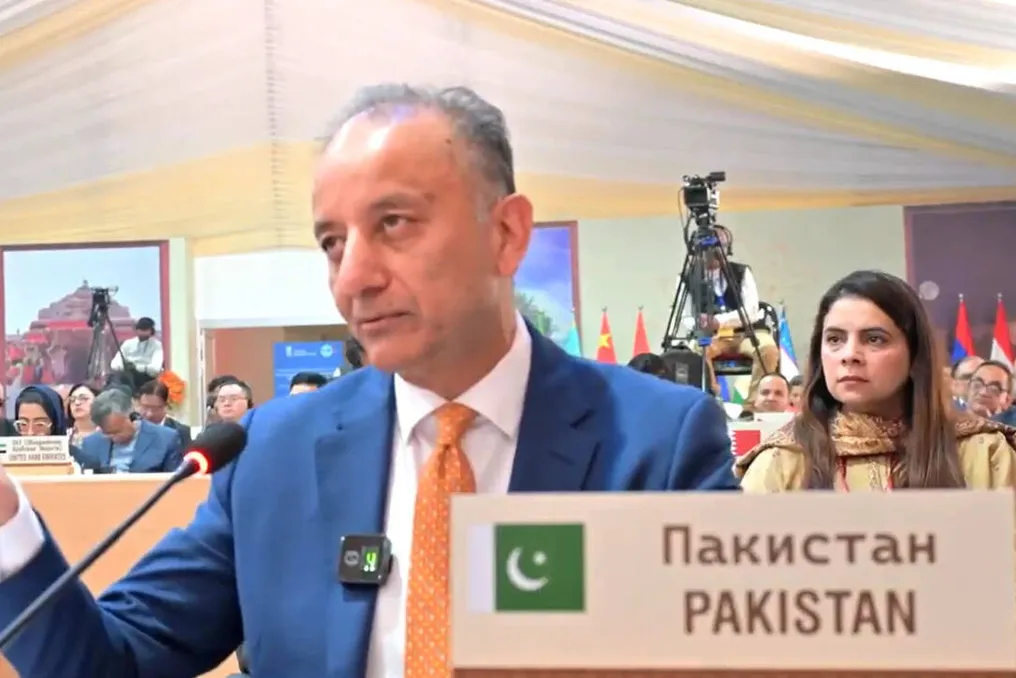
Pakistan's Minister Discussed the History of Purana Qila at SCO Forum, Highlighting Cultural Diversity
Read more
The times of India
timesofindia.indiatimes.com

Pakistan's Minister Discussed the History of Purana Qila at SCO Forum, Highlighting Cultural Diversity

Purana Qila, the venue for the first civilizational dialogue within the Shanghai Cooperation Organisation (SCO) Forum, symbolized the continuity of civilizations; however, this was perceived differently in Pakistan. Unlike India, Minister Musaddiq Masud Malik emphasized on Saturday that the foundations of the Old Fort were laid by Humayun, whose roots trace back to Central Asia, and the construction was continued by Sher Shah Suri, who came from Afghanistan, as he sought to highlight the cultural diversity of the subcontinent.

Malik stated: 'Its foundation was laid by Humayun, who belonged to the Timurid dynasty and came from Central Asia. Its construction was further continued by Sher Shah Suri, who came from Afghanistan. Thus, in one wall, one can find the art of two different rulers, two cultural layers, and traces of two traditions.'

India presented the Old Fort as an ideal meeting place due to its multilayered history and the identity of the ancient city of Indraprastha, mentioned in the epic 'Mahabharata'. In describing the history of this site, which spans about 3000 years, India demonstrated nine layers of continuity. Among these are the preserved fortress walls built by Sher Shah Suri between 1538 and 1545 CE after the demolition and reconstruction of Dipnaha, a city founded here by Humayun around 1533 CE.

Commenting on the excavations in this area, Malik noted that 'Delhi has not been weakened by the civilizations and people who came from outside; on the contrary, it has become stronger.' During his opening speech on Friday, Prime Minister Narendra Modi also spoke about the history of Purana Qila to emphasize India's civilizational journey spanning thousands of years back to the era of 'Mahabharata'. He also visited the 'Mahabharata Pavilion - Anant: Rare 18th Century Mahabharata Manuscript' and the 'Astitva' exhibition, which offers a complete picture of Delhi's history through archaeological evidence prepared for SCO leaders.

On the second day of the Forum, ministers from all participating nations made statements. Malik, who is the coordinator for climate change and environment, mentioned the archaeological remains from different periods discovered during excavations in Purana Qila, noting that the fort itself, where the delegates sat, is history. He highly praised the event's description as 'Tehzeeb Ki Guftagu,' or 'Dialogue of Civilizations.'
Similar stories

Indian Culture Minister expresses hope for Pakistan's participation in SCO forum and criticizes claims over Indus Valley heritage
Read more
timesofindia.indiatimes.com

Indian Culture Minister expresses hope for Pakistan's participation in SCO forum and criticizes claims over Indus Valley heritage

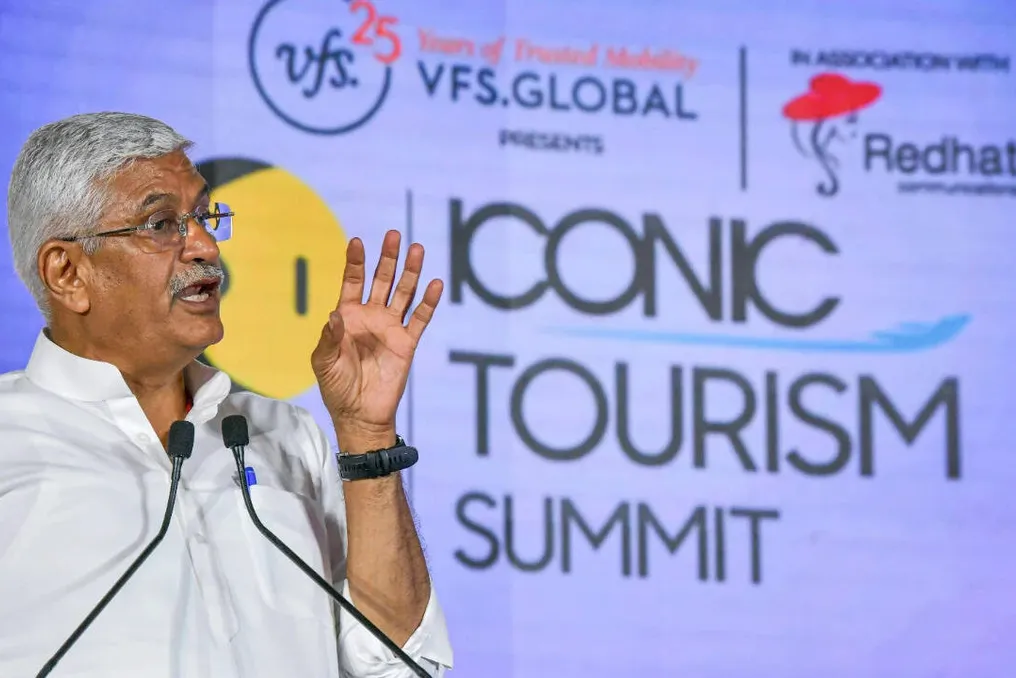
Culture Minister Gajendra Singh Shekhawat expressed hope on Friday that Pakistan will participate in the first SCO Civilizational Dialogue Forum, which will be held in Delhi from November 20 to 22. He criticized attempts by the neighboring country to claim the heritage of the Indus Valley civilization, noting that this country only emerged about 80 years ago.

Fifteen countries, including China, Iran, UAE, Saudi Arabia, and Turkey, have confirmed their participation in the event, which India will host at the Purana Qila historical complex. Pakistan has not yet responded to the invitation. Prime Minister Narendra Modi will attend the opening ceremony of the forum, where India will present its 5000-year civilizational journey.

Shekhawat emphasized that the Prime Minister had previously proposed establishing the Civilizational Dialogue Forum at the SCO summit in Tianjin in 2025, and this initiative was subsequently approved, after which India took on the commitment to host it as the first.

The invitation to Pakistan is particularly significant as it is the first invitation Delhi has sent following the Sindoor operation last year. Invitations were sent to ministers from 25 countries, of which 15 have currently confirmed their attendance.

When asked about the attempts by the 'neighboring country' to claim the Indus Valley civilization, he stated that if any country tries to make such claims, one should ask: 'did they even exist then?' He added: 'They (Pakistan) came into existence only about 80 years ago...'

The minister noted that the civilizational and cultural development of Pakistan is not different from that of India, as the latter became a separate country after the Partition in 1947. He concluded: 'Thus, at least in this aspect, there should be no room for differences... Moreover, regardless of geopolitical, strategic, and bilateral ties between the countries, a step forward must be taken to strengthen cultural relations so that it can help in building better dialogue and coordination between the peoples of the two countries.'

The minister also mentioned that Purana Qila is a suitable venue for the forum because archaeological excavations in this area have uncovered cultural layers and evidence of early settlements dating back to approximately 1200 BCE. The four main themes of the dialogue include civilizational and cultural manifestations; art and architecture; linguistic, literary, scriptural, and manuscript traditions; and monastic routes.

Popular