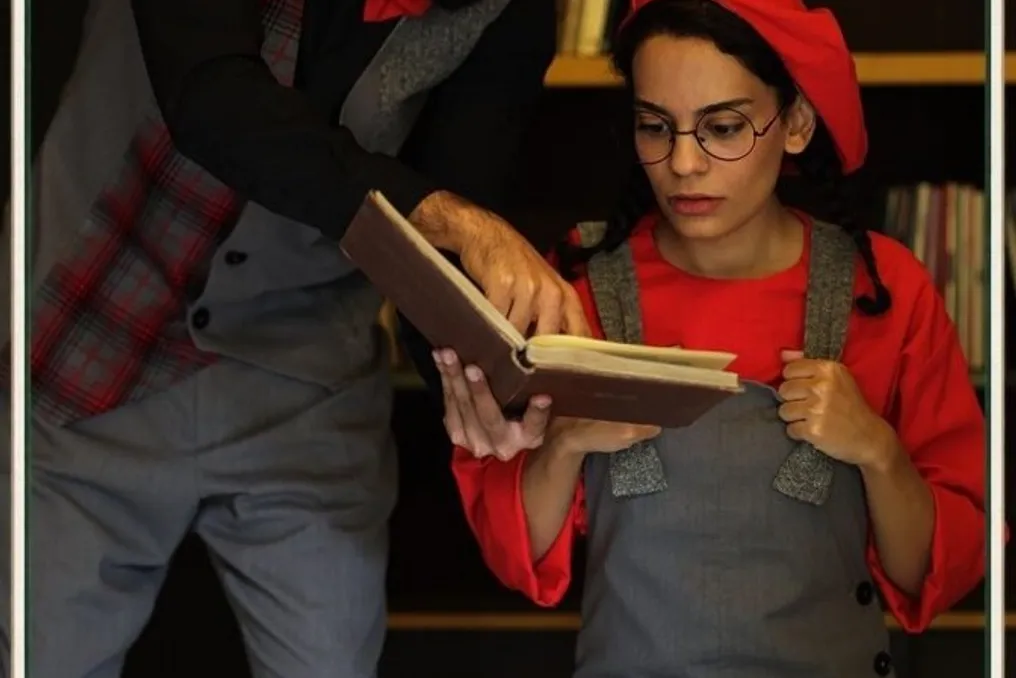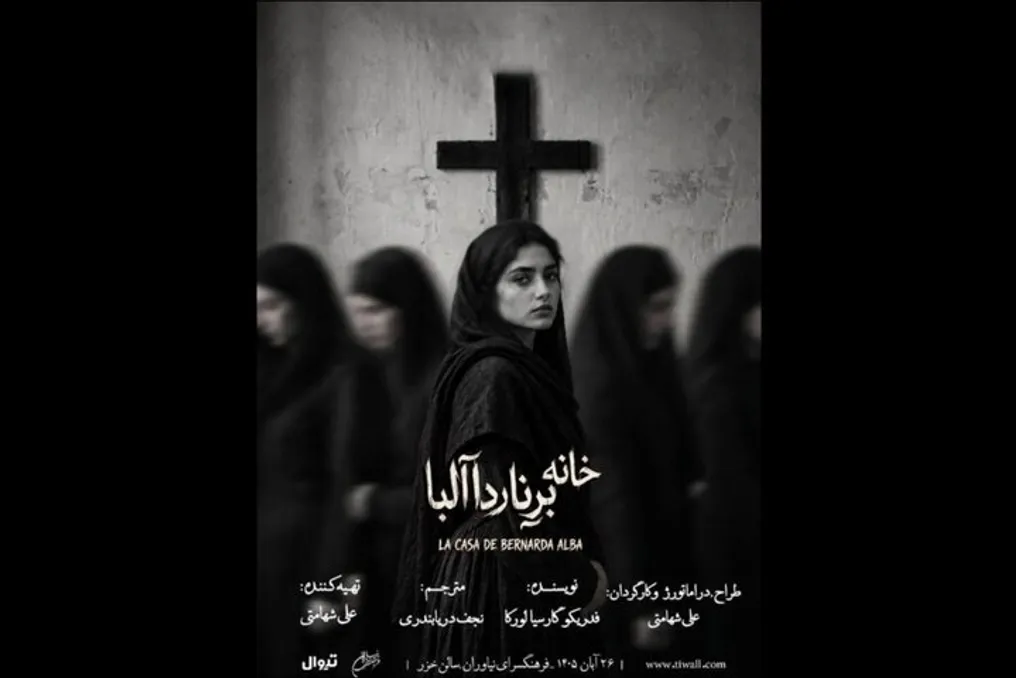
In Tehran, at the theater of the Niavaran Cultural Center, the play 'The House of Bernarda Alba' is currently being performed. This renowned work by Spanish playwright Federico García Lorca was staged based on a translation by Najaf Darbandari and directed by Ali Shahamati. According to a report from Mehr on Saturday, the performance will run until December 11th.
The cast includes Dina Matin, Sahel Deziani, Leila Nematollahi, Rafat Hassan-Nejad, Rezvan Karimi, Fatemeh Khalili, Mahdieh Hoshfezat, Nasa Amini, Lillian Esmaeili, Venus Asadi, Khanieh Tahmasbi, Saba Mohammadi, and Soheila Keidi.
'The House of Bernarda Alba' is considered one of the most significant works by Federico García Lorca (1898–1936), who was a key figure in 20th-century literature and theater in Spain. Lorca, as a poet, playwright, and theater director, gained recognition for his ability to combine poetic language, symbolism, and elements of Spanish folk culture in his works. His plays often address themes of oppression, social norms, desire, freedom, and the conflict between personal aspirations and rigid traditions.
Completed in 1936, shortly before Lorca's execution during the early stages of the Spanish Civil War, 'The House of Bernarda Alba' is typically viewed as the concluding piece of his rural trilogy, alongside 'Blood Wedding' and 'Yerma.' The play was first shown in Buenos Aires in 1945, nearly a decade after the playwright's death, and has since become an iconic event in modern world theater.
This three-act tragedy centers on the oppressive house of Bernarda Alba, a powerful matriarch who imposes strict rules after the death of her second husband. In accordance with family traditions, she enforces an eight-year mourning period, isolating her five daughters—Angustias, Magdalena, Amelia, Martirio, and Adela—from the outside world and any romantic prospects, leading to mounting tension within the household.
Bernarda's eldest daughter, Angustias, inherits a substantial fortune from her deceased father, making her the object of desire for the young suitor Pepe el Romano. This inheritance sparks jealousy among her sisters, especially given that they received little from their father. Angustias' wealth grants her a sense of independence that irritates her sisters, particularly the youngest, Adela, who craves freedom and happiness, symbolized by her decision to defy her mother's mourning dress code by wearing a bright green dress.
As the plot develops, the dynamic in the house becomes increasingly tense. Adela's initial spirit and yearning for liberation fade when she realizes Angustias' impending marriage to Pepe. Poncia, the family maid, advises Adela that Angustias might not survive childbirth, hinting at a grim possibility for Adela to fulfill her desires. When the sisters occasionally see Pepe, anticipation and tension heighten as Adela struggles between a budding love for him and loyalty to her family.
Emotional instability reaches a critical point when Bernarda discovers that Angustias is using cosmetics, which violates her strict mourning rules. In a fit of rage, she rips off the makeup, demonstrating her tyrannical control and suppression of her daughters. The situation escalates when Bernarda's elderly mother, Maria Josefa, usually withdrawn in her room, expresses her own longing for freedom and warns Bernarda about the destructive nature of her oppression.
Adela's secret relationship with Pepe, contrasting with the family's rigid moral code, further intensifies the tension. Adela's rebellion manifests in destructive ways, particularly in her conflict with her sisters, notably Martirio, who harbors her own feelings for Pepe. The atmosphere in the family is filled with envy, resentment, and despair, as gossip about local women severely punished for public transgressions deepens their collective horror.
As the play approaches its tragic conclusion, Bernarda's refusal to acknowledge her daughters' emotional turmoil leads to a violent confrontation. When a gunshot is heard from outside, it is initially assumed that Pepe was killed by Bernarda's order. In a heartbreaking twist, Adela, believing Pepe is dead, takes her own life by hanging in despair, unaware that he survived.
Following Adela's tragic death, Bernarda orders the remaining daughters to mourn in seclusion, refusing to acknowledge the true nature of their struggle or the profound consequences of her repressive rule. The play ends with a haunting reminder of the destructive influence of tyranny and societal expectations on personal freedom and emotional connection.
Through the confined domestic setting and the growing tension between the characters, Lorca explores the suffocating impact of patriarchal authority, social expectations, and rigid codes of honor. The enduring relevance of the play lies in its examination of the struggle for personal freedom against authoritarian control, making it a frequently staged work on international theater stages.