A large-scale program for the intensification and modernization of plantations is being implemented in Uzbekistan, opening opportunities for suppliers of irrigation systems, cold storage equipment, planting material, and processing equipment.
However, the long-term competitiveness of the sector will depend on how effectively all these elements are integrated into a single production chain. Uzbekistan's agricultural sector is approaching an important stage of structural transformation, which will require not only an increase in the area under vineyards, berry, and fruit plantations but also a change in the production model itself.
These changes include replacing aging plantations, increasing resource efficiency, developing post-harvest infrastructure, and ensuring more reliable access to both domestic and international markets.
Industrial Horticulture Development Program
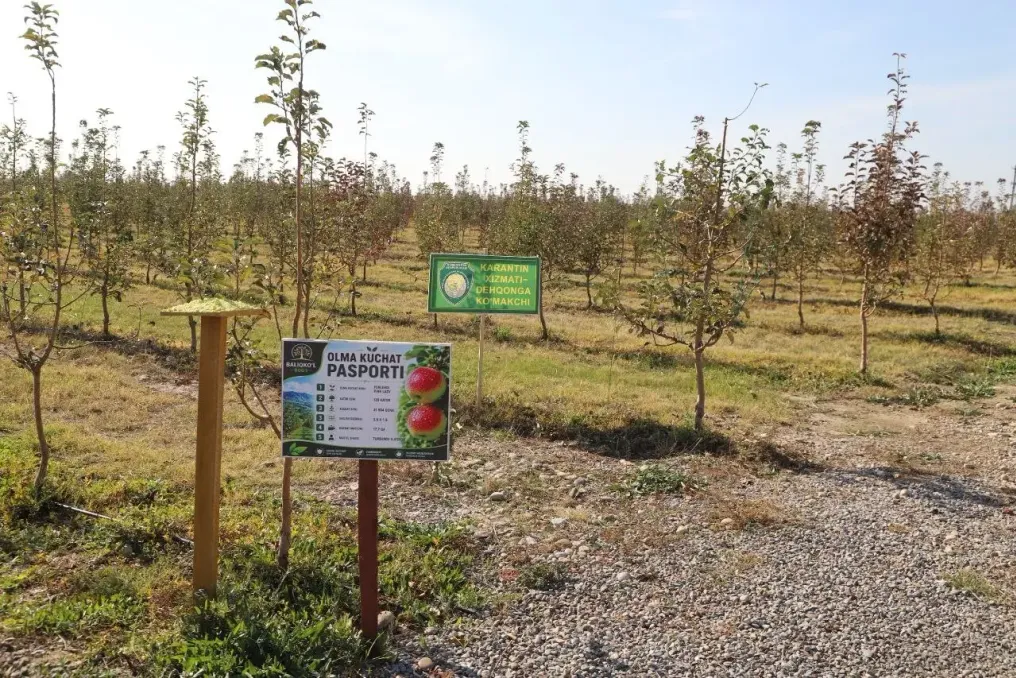
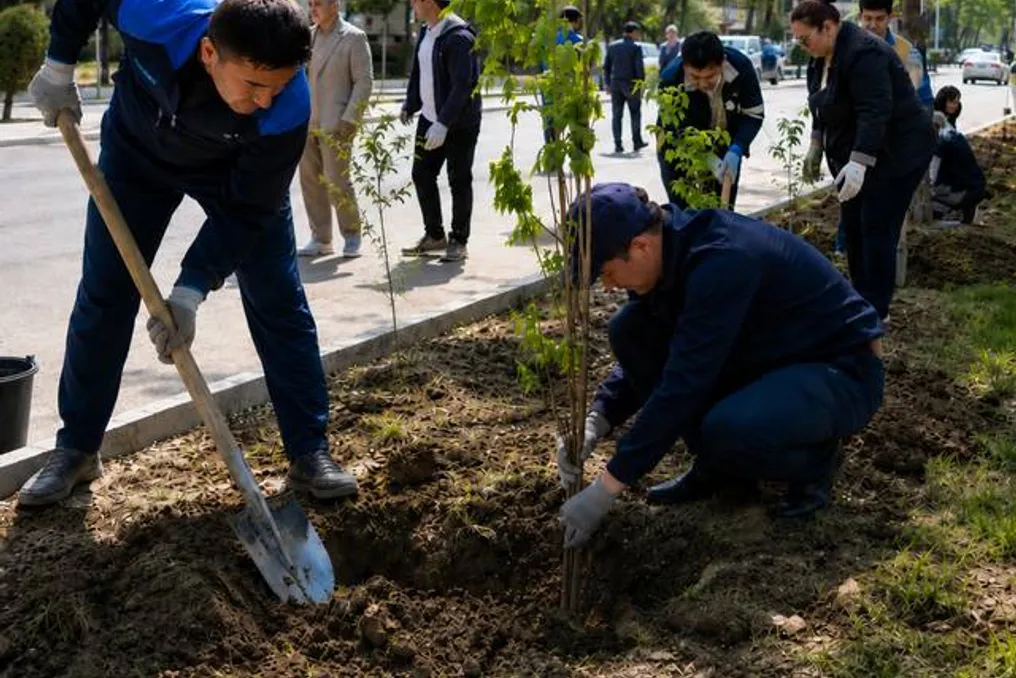
The scale of planned transformations is reflected in the industrial horticulture development program for the period 2026–2028. According to data presented in the Vostock Capital industry report for 2026, 172,127 hectares have been allocated for intensive industrial orchards. Of this area, 95,234 hectares are designated for updating existing plantations, and 76,893 hectares are for creating new orchards.
This distribution is significant because a large part of the investment opportunities is related not to developing new agricultural land, but to increasing the productivity and technological potential of already operating farms.
Regional Differences Determine Investment Needs
The program provides for different levels of horticultural development in the regions of Uzbekistan. Fergana region has planned the largest area—37,080 hectares. Namangan region will receive 19,283 hectares, and Chirchik region—18,307 hectares, while Tashkent region will also receive 18,126 hectares. Significant areas are also allocated for Surkhandarya and Samarkand regions.
The balance between updating old plantations and creating new ones varies from region to region. For example, 15,697 hectares are allocated for replacing old orchards in Namangan region, whereas 3,586 hectares are for new plantations. In Surkhandarya region, conversely, out of the planned 14,436 hectares, 8,936 hectares are set aside for new orchards.
For investors and technology suppliers, this means that demand will vary depending on the region. Areas focused on plantation renewal will require replacement of planting material, irrigation modernization, and reconstruction of existing infrastructure. New orchards, however, will create demand for design, land preparation, seedlings, support structures, irrigation and fertigation systems, mechanization, and monitoring equipment.
The concentration of projects in specific regions can also create opportunities for service centers capable of serving multiple farms, not just individual clients.
Planting Material and Water Efficiency as Separate Investment Areas
One of the problems identified in the industry study is the availability of high-quality planting material and suitable varieties. According to the report, annual seedling imports amount to about $60 million USD. The development of domestic nurseries is seen as a way to reduce dependence on imports and form a new production base.
It is planned that projects related to microclonal propagation and mother nurseries in the Bektemir and Yukorichirkich districts will reach a cumulative capacity of up to 27 million seedlings per year. These facilities are expected to start operating by the end of 2026.
Investment opportunities in this area go beyond nursery construction. Producers need varieties adapted to local conditions, consistently high-quality planting material, technical support, and the ability to obtain seedlings in industrial batches.
Another key factor is efficient water resource management. The expansion of intensive orchards increases the importance of precision irrigation, fertigation, monitoring, and water consumption control. The report notes that water-saving technologies are an area of state support, and survey participants also cited water use efficiency as a practical problem for farms.
For investors, this means that the orchard economy depends not only on initial creation costs but also on the quality of agronomic and engineering solutions throughout the project's life cycle.
Storage and Processing: The Next Stage of the Production Chain
The expansion of production capacity generates another challenge: ensuring timely harvesting, processing, storage, and sale of crops while meeting quality requirements. Among the official goals for 2026 is the commissioning of 340 cold storage warehouses for fruits and vegetables with a total capacity of 87,000 tons.
The industry report also mentions a planned complex worth $50 million in the Beshhalyk area, which is expected to combine processing, storage, sorting, and logistics.
These changes reflect shifts in the horticulture economy. Post-harvest infrastructure is becoming increasingly important when planning berry and fruit cultivation projects. Without prior cooling, storage, sorting, packaging, and processing, increased production can lead to seasonal price drops, loss of quality, and limited access to buyers.
This is especially critical for crops with short harvest and sales periods. Cherries, berries, and apricots require coordinated cold chain operations and rapid logistics. Raisins and other processed products require appropriate drying and processing technologies, quality control, and export conditions.
According to the industry report, from January to June 2026, Uzbekistan exported 158,500 tons of fruits and berries. Exports of the broader category of fruits and vegetables reached 1.0867 million tons, valued at $872.9 million during the same period. Raisin exports amounted to 47,700 tons, estimated at approximately $60 million for the first six months of 2026, and were sent to 57 countries. Cherry exports reached 16,800 tons valued at $36.5 million from January to May, with deliveries to 11 countries.
These figures demonstrate the activity of the export sector while emphasizing the need to link production growth with consistent quality, logistics, and market access.
From Individual Purchases to Integrated Technological Systems
Results from the industry survey included in the Vostock Capital study indicate demand for a wide range of technological solutions. Modern nursery technologies entered the top requests, accounting for 14% among identified technology categories. Each area—drip and precision irrigation, cold storage, sorting and grading, processing, automation, and robotics—was mentioned 10% of the time. New varieties and breeding, packaging, and digital production management were mentioned 7% of the time.
These percentages reflect the distribution of mentions in the survey, not market shares or actual equipment sales. Nevertheless, they indicate that industry participants view modernization as a comprehensive task.
Investment requirements change as orchards develop. At the establishment stage, projects require work on design, land preparation, seedlings, support structures, irrigation and fertigation systems, pumping equipment, weather stations, and monitoring tools. Once plantations begin bearing fruit, the importance of harvesting equipment, containers, pre-cooling, cold storage, sorting, packaging, and processing increases.
In 2026, these investment cycles intersect. Existing farms are modernizing post-harvest infrastructure, while the industrial horticulture development program generates new demand for technologies used in establishing and renewing plantations. This creates opportunities for suppliers who can offer not only individual equipment components but also comprehensive solutions, technical support, staff training, maintenance services, and spare parts.
Industry Survey: Expectations and Practical Limitations
The survey conducted as part of the Vostock Capital report provides additional insight into market sentiment. About 70% of respondents expect increased investment attractiveness in the sector, while 20% predict no change. Another 10% remained undecided, and none of the respondents chose the option of deterioration.
These results reflect the expectations of the survey participants and are not a forecast of actual investment volumes. However, respondents highlighted several practical limitations. These include access to high-quality planting material and suitable varieties, insufficient or limited storage and processing infrastructure in some segments, difficulties with export contracts, logistics and customs clearance, water supply, labor and operational costs.
These problems are interconnected. A farm may use modern irrigation systems and high-quality planting material but still face commercial difficulties without storage and processing capacities or reliable buyers. Similarly, a processing company needs predictable raw material supply and efficient logistics. Thus, investment attractiveness depends not only on the characteristics of individual projects but also on the development of the entire production chain.
CIS Countries: Different Development Models and Common Investment Priorities
Development in neighboring markets shows that similar investment priorities are emerging in other CIS countries, although their conditions and focus areas differ. In Kazakhstan, Qazaq Global Food JV is implementing a large project for fruit and vegetable processing in the Almaty region. According to data in the report, the investment volume is $20.9 million, and the enterprise capacity reaches 70,000 tons per year.
In Kyrgyzstan, opportunities were identified in logistics, storage, and berry production. The report presents investment proposals for a logistics center and a blackcurrant cultivation project using drip irrigation and shock freezing infrastructure.
In Tajikistan, the creation of new orchards and vineyards, as well as the restoration of existing plantations, continued in 2026. Local processing, including juice production, is also developing.
In Azerbaijan, differentiated subsidies are available for planting certain types of intensive orchards. This is one of the tools used to stimulate technological development in the sector.
Common priorities in all these countries are increasing plantation productivity, developing post-harvest infrastructure, expanding processing, and increasing the added value of agricultural exports. For international investors and technology suppliers, this creates several potential market opportunities. However, successful operation requires understanding local project conditions, support measures, and commercial partners.
What Will Determine the Next Stage of Sector Growth?
The industrial horticulture development program includes a substantial portfolio of planned projects. However, turning these plans into a sustainable business will depend on the quality of their implementation. Three conditions will be particularly important. First—integrated planning across the entire production chain. Orchard creation, water management, harvesting, storage, processing, and marketing must be considered together, not as separate investment decisions.
Second—adapting technologies to regional and crop-specific conditions. The needs of a new industrial orchard in Surkhandarya region may differ from those of a farm modernizing its activities in Namangan region. Solutions must take into account water availability, varieties, climatic conditions, infrastructure, and market access.
Third—developing operational experience. Qualified specialists, agronomic support, maintenance services, financing, and reliable commercial ties are necessary to ensure long-term productivity growth from capital investments.