Minister states that Ashok Leyland will build a truck manufacturing plant in Singur
Read more
Business Standard
business-standard.com

Minister states that Ashok Leyland will build a truck manufacturing plant in Singur

Union Minister Sukanta Majumdar announced on Saturday that commercial vehicle manufacturer Ashok Leyland intends to establish a heavy truck manufacturing plant in Singur. Work on this project is expected to begin soon, reviving hopes for industrialization in the area where the Tata Nano project was abandoned nearly two decades ago.

Speaking to journalists after Prime Minister Narendra Modi's event at IIT Kharagpur, Majumdar emphasized that the Bharatiya Janata Party (BJP) government is keen to attract industry to Singur, and that the planned enterprise will focus on producing heavy vehicles.

The Union Minister of Education reiterated: 'We want to bring industry back to Singur. Our Chief Minister also said this. I state again today that Ashok Leyland is coming to Singur. He will build a truck factory, and work will start soon.'

This statement followed a comment by Chief Minister Suvendu Adhikari on November 5, who had stated that his government held preliminary discussions with Ashok Leyland regarding the establishment of a heavy vehicle manufacturing unit in Singur. However, Adhikari cautioned against premature announcements then, insisting that the government should prioritize projects that can be actually implemented, rather than publicity-driven memorandums of understanding.

The latest announcement is viewed as an attempt by the BJP government to transform Singur, once associated with the collapse of a major industrial investment, into a showcase of its industrial revival program in West Bengal. Nevertheless, the project has not been officially detailed; neither the investment volume, employment forecasts, nor implementation timelines have been announced yet.

Majumdar also blamed successive state administrations for Bengal missing out on major industrial opportunities, citing the semiconductor industry. He noted: 'Taiwan is there now in the semiconductor industry, a position we could have taken. The opportunity came to us earlier, but the government of that time was against computers, and consequently, the semiconductor industry did not emerge,' criticizing the then Left Front government.

He also accused the Trinamool Congress government of failing to translate its industrialization promises into real projects. The future of Singur remains politically significant in Bengal, as the withdrawal of the Nano project by Tata Motors in 2008 marked a turning point in the state's politics.

The Left Front government, led by then Chief Minister Buddhadeb Bhattacharjee, acquired about 997 acres for a proposed small car factory. However, prolonged protests against land acquisition, led by Mamata Banerjee, the then opposition leader, forced Tata Motors to abandon the project and relocate it to Sanand, Gujarat. These protests contributed to the arrival of Banerjee's Trinamool Congress to power in 2011, ending the Left Front's 34-year rule.

Subsequently, the government returned the acquired lands to the disgruntled farmers following a Supreme Court ruling, and the infrastructure of the abandoned factory was dismantled. Nearly 18 years after the Nano project left, the proposed Ashok Leyland venture gives the BJP an opportunity to politically reframe Singur as a symbol of industrial revival. However, the viability of the project will ultimately depend on this announcement translating into concrete investments and a functioning production unit.
Similar stories

Jetour set to take over Jaguar Land Rover factory in Rio de Janeiro state
Read more
autopapo.com.br

Jetour set to take over Jaguar Land Rover factory in Rio de Janeiro state

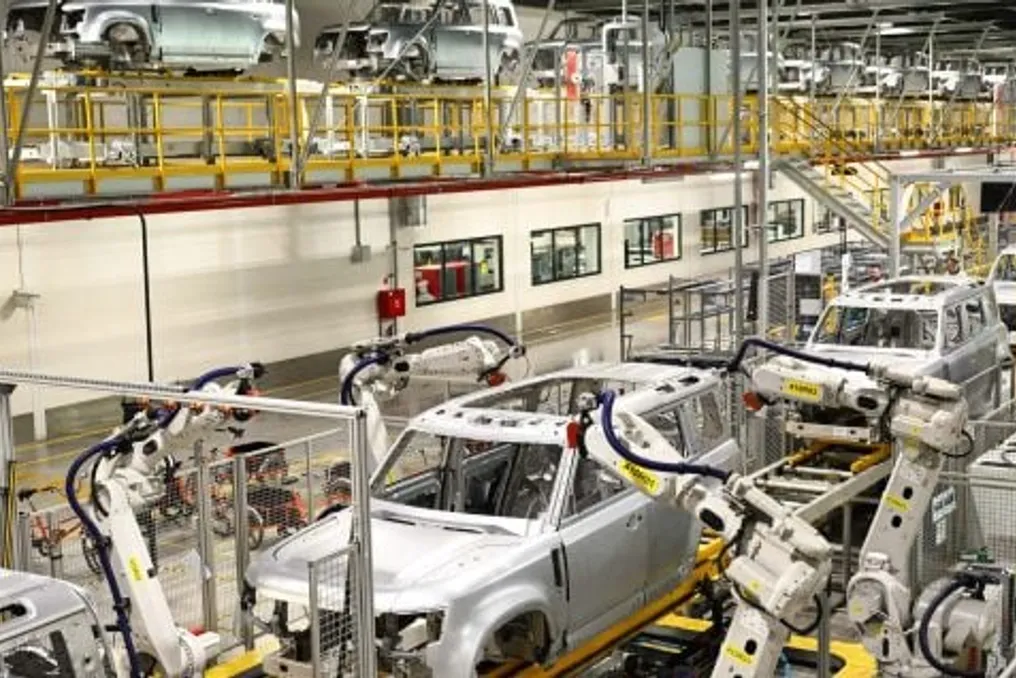
Jetour, a Chinese brand belonging to the Chery Group, is about to begin vehicle production at the factory currently owned by Jaguar Land Rover (JLR), located in Itatiaia, southern Rio de Janeiro. The British automaker had suspended SUV manufacturing at this site since June.

According to information obtained by the Reuters agency from two sources within the government of the state of Rio de Janeiro, Jetour has signed an agreement with the state to utilize this manufacturing unit, although the details of this pact have not been made public. Jetour itself opted not to comment on the matter. Meanwhile, the government of Rio de Janeiro confirmed that it continues negotiations with several companies interested in the factory, while JLR stated that it is working on the next stage of the unit's development.

This factory, inaugurated in 2016 with an announced investment of R$ 750 million, was responsible for assembling the Range Rover Evoque and Land Rover Discovery Sport models. Production was halted in June of this year due to low sales figures; between January and May, the two SUVs registered only 264 registrations in the national territory.

In April, the media speculated about the possibility of Omoda & Jaecoo, another brand from the Chery Group, becoming the new occupant of the plant. This connection between the companies is not unprecedented, given that in China, Chery and JLR have a partnership in a factory that produces the British brand's models.

Jetour began its sales in Brazil in March, presenting three plug-in hybrid SUVs (capable of external recharging): S06, T1, and T2, with starting prices around R$ 200 thousand. Since its arrival, the brand has expressed intentions to produce in the country. In August, a Jetour executive informed Reuters that the company was evaluating the possibility of sharing idle capacity from other manufacturers' factories.

As of October, Jetour recorded the sale of 7,640 vehicles in Brazil, according to data provided by the National Federation of Automotive Vehicle Distribution (Fenabrave). All these cars are imported from China, and the plug-in hybrid models have been subject to a 35% import tax since July.

Nammo Morni Mission project launched in Haryana to develop organic farming over 5600 hectares
Read more
www.aajtak.in

Nammo Morni Mission project launched in Haryana to develop organic farming over 5600 hectares

The Government of Haryana has initiated a new program to promote organic and natural agriculture in the state. Chief Minister Naib Singh Saini launched the 'Nammo Morni Mission' in Morni town, Panchkula district, on Tuesday. According to this plan, Morni will be transformed into a model zone for organic and natural farming by 2029.

The government's main objective is to change agricultural practices, increase farmers' incomes, and give their produce a unique identity. To achieve this goal, farmers will be provided with training, modern analytical laboratories, subsidies, and market opportunities.

During the opening of a two-day regional fair on natural and organic farming at the Morni State Polytechnic College, the minister announced several support measures for farmers. He launched a helpline to resolve farmers' issues at 01733-297010, and a joint office of the departments of agriculture, horticulture, and land and water conservation will also be opened in Morni.

This joint office will allow farmers to receive services from various departments in one place. Agronomists will train farmers in natural and organic farming methods and supply them with organic fertilizers, seeds, and other biological products.

Under the 'Nammo Morni Mission', four modern laboratories are planned to be installed to improve agricultural production. These laboratories will be equipped with equipment for soil analysis, study of organic elements, testing nutrient levels, and detecting pesticide residues in crops. Data from these laboratories will help farmers obtain information about soil and crop quality, which will also support the implementation of soil health card programs.

Considering the hilly and complex geographical landscape of the Morni region, the government has decided to provide a 75% subsidy on the purchase of small agricultural equipment. This is intended to ease the work of local farmers and reduce their production costs.

It is planned that the agricultural produce of Morni will gain special recognition. For this, a dedicated brand and local market for Morni produce will be created. The Haryana State Cooperative Supply and Marketing Federation Limited (HAFED) will be appointed as the nodal agency for the procurement of organic and natural produce.

The produce will be sold under the trademark 'Morni Organic Fresh'. Furthermore, a special application will be developed to promote online sales, and the Haryana State Agricultural Marketing Board will create a separate market for organic goods in Morni to ensure better sales channels for farmers.

According to the minister, the goal is to make the entire Morni block an organic farming zone. Over the next three years, approximately 5600 hectares of land will be included in this initiative, including 3360 hectares of cultivated land and 2240 hectares of horticultural land. Community Resource Persons working in Morni under the National Natural Farming Mission will also receive financial support. Previously, they received a monthly allowance of 5000 rupees, which will now increase by 5000 rupees, reaching a total monthly remuneration of 10000 rupees.

New technologies are also being introduced for growing potato seedlings in Morni. Local farmers, in collaboration with the International Potato Center in Haryana, are using the 'Apical Root Cutting' method to prepare potato seedlings. The government provides a 70% subsidy for greenhouse construction, with the remaining 30% covered by farmers. Currently, 15 such greenhouses are established in Morni, where about 15–20 million potato seedlings are prepared annually, which are supplied not only to Haryana but also to other states, providing local farmers with an additional source of income.

The minister noted that the natural farming program in Haryana started in 2022. To date, about 200 thousand farmers have registered approximately 300 thousand hectares of land under this program, with about 24 thousand farmers already practicing natural farming on an area of more than 44 thousand hectares. The state goal is to start practicing natural and organic farming on 1.5 million hectares by the financial year 2030–31.

On the occasion of the launch, the minister also initiated 'Mati Vandhan Pakhwada' and released its poster. As part of this campaign, 15 special events involving farmers, doctors, youth, traders, agronomists, and prominent public figures will be held across all of Haryana. The aim is to raise public awareness about soil conservation and natural farming. On World Environment Day, December 5, a regional event will be organized where agronomists from states like Sikkim will share their experience and successful models of natural farming.

Escorts Kubota plans new 60,000 tractor capacity plant in Uttar Pradesh
Read more
business-standard.com

Escorts Kubota plans new 60,000 tractor capacity plant in Uttar Pradesh

The Chief Financial Officer of Escorts Kubota Ltd, Bharat Madan, announced the company's plans to construct a new manufacturing complex in Uttar Pradesh. This facility, planned near the Jiwār airport, is expected to be completed in approximately two and a half years.

The company intends to begin construction of the tractor enterprise in Uttar Pradesh at the start of the next fiscal year. The initial capacity of the plant will be 60,000 units, with the possibility of increasing it to one hundred thousand units, aligning with the strategy of expanding production and capitalizing on future market opportunities.

Bharat Madan specified in an interview with PTI that commercial construction of the new facility, designed to produce another 60,000 tractors in the first phase, will commence within the next year, with completion anticipated between two and two and a half years.

This increase in production capacity comes as the company's current tractor business operates at an average utilization rate of about 80–85 percent, reaching nearly 90 percent during peak seasons.

In addition to the planned expansion of tractor production, Escorts Kubota is showing steady growth in related segments, including construction equipment and other agricultural mechanization products. Sales of construction equipment increased by 53 percent in the September quarter, while the combine harvester and seeder business grew by 20–30 percent. Furthermore, the engine business demonstrated double-digit growth over the year.

Madan noted exceptional results across all segments except for tractors. He emphasized that sectors other than tractors will continue to perform well. However, the tractor business has faced a short-term demand decline due to uneven monsoon conditions, the El Niño effect, and rising raw material costs.

The CFO pointed out that water scarcity in several rice-growing states, such as Telangana, Karnataka, and Maharashtra, negatively impacts demand prospects. Pressure on markets in Jharkhand and Chhattisgarh is also expected to persist. Nevertheless, he forecasts a recovery in tractor demand starting from the second quarter of the next fiscal year (July-September 2027), provided the monsoons proceed normally.

He also anticipates that the company's financial performance will begin to recover in the fourth quarter, and that margins are likely to return to normal levels next year.

Popular