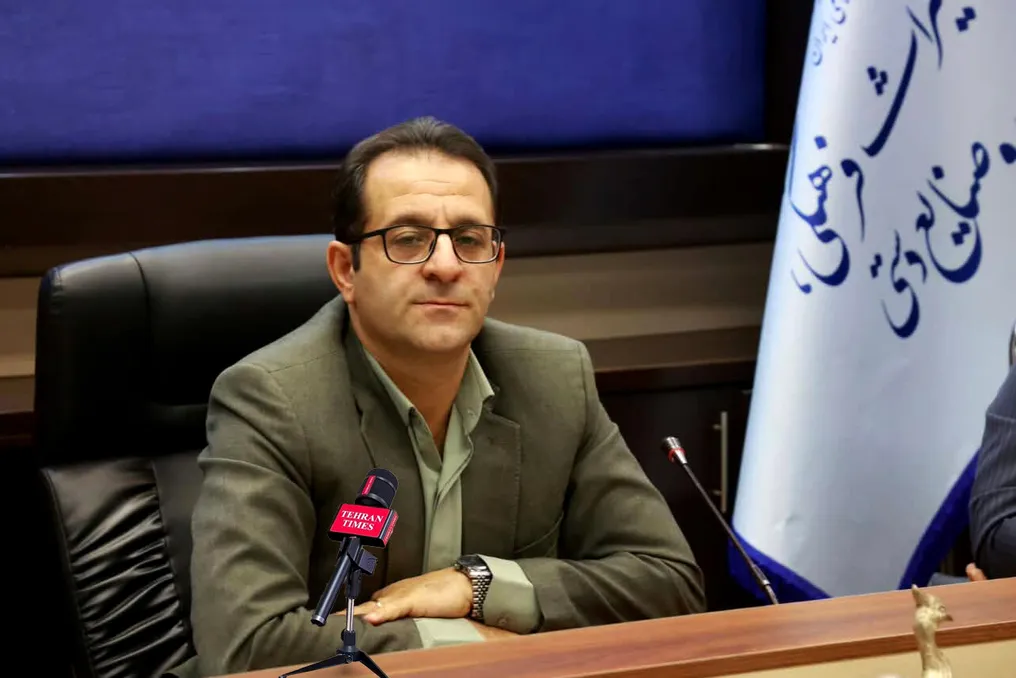
Iran intends to more effectively utilize the tourism potential of its border provinces by strengthening direct interaction with neighboring states, stated Moslem Shojaei, Director General for Marketing and Development of Foreign Tourism at the Ministry of Cultural Heritage, Tourism and Handicrafts.
In an interview with Tehran Times, Shojaei presented a new initiative aimed at forming tourism partnerships between Iranian border regions and neighboring territories. This program is designed to expand the role of local tour operators in international promotion, facilitate experience exchange among industry specialists, and transform long-standing cultural, linguistic, and commercial ties into new opportunities for attracting foreign visitors.
Amid significant regional uncertainty caused by tensions and the possibility of renewed conflict, the overall tourism environment is influenced by instability. Foreign Minister Abbas Araghi recently emphasized the importance of provincial diplomacy and closer cooperation between border provinces and neighboring countries. A question arises as to how this approach is reflected in tourism policy and the logic behind the initiative known as Gozar-As-Marz, which literally means 'Beyond Borders.'
When the general environment of the tourism industry changes due to regional events, tensions and uncertainty increase. In a situation that cannot be called either war or peace, it is difficult to predict future developments. Naturally, existing strategies and working methods must adapt to these changing circumstances.
One of the key reasons for launching the 'Beyond Borders' initiative was the desire to make the tourism sector more flexible and capable of responding to such conditions. It requires implementing an approach that allows plans to be adjusted and tourism links to be maintained even amid unpredictable broad regional conditions.
The initiative also has a theoretical basis in economics and geography, particularly in the concepts of decentralization and the significance of peripheral regions. Policies developed at the central level cannot always be effectively transferred to border areas without considering their specific characteristics. Without sufficient coordination and cohesion, such a 'top-down' approach can lead to errors.
Border territories are often better informed about their own problems and capable of solving them because they deeply understand local conditions and have direct contacts with communities across borders. This is essentially a 'bottom-up' planning approach, unlike the 'top-down' models that were more common in the 1980s and 1990s.
The main idea is simple: each Iranian border province should establish closer working relations with the corresponding province or region in a neighboring country.
For example, provinces such as Ilam, Khuzestan, Kermanshah, and South Khorasan can cross the border, interact with their partners, and develop joint tourism projects.
Previously, international tourism promotion was often carried out under a centralized model, where it was expected that provinces would attract foreign visitors themselves by conducting advertising campaigns, inviting specialists, and organizing familiarization tours involving influencers to showcase their destinations and products.
However, border provinces have a special advantage. Their local tour operators, tour organizers, and hotel owners are already familiar with neighboring regions and often maintain direct contacts with colleagues there.
Take West Azerbaijan, for instance. Local tourism specialists in this province know the neighboring areas much better than national-level officials. They have already established contacts with tour operators across the border. An initiative that might require two or three months of coordination from the Ministry of Foreign Affairs and other central bodies can sometimes be organized by local operators in just one or two days, using only a few WhatsApp messages, social media exchanges, and meetings. This provides border provinces with greater speed and flexibility in organizing joint events.
There are several factors contributing to the effectiveness of these connections. For example, border communities often have long-standing commercial relationships, cultural similarities, and family ties across state borders. In many cases, people on both sides speak the same language or share closely related cultural traditions.
For instance, Kurdish communities in Kermanshah and Kurdistan province have close cultural and linguistic ties with the Kurdistan region of Iraq. Similarly, Arab communities in Khuzestan maintain cultural and linguistic ties with the Arab population across the border in Iraq.
These ties simplify communication and help tourism specialists understand the preferences, expectations, and interests of potential visitors. As a result, tour operators in border provinces are often better equipped to identify suitable markets, promote local attractions, and attract tourists from neighboring regions. They understand the language, culture, and preferences of their potential clients.
Iran borders 15 countries and has 16 border provinces, opening up significant opportunities for cross-border tourism cooperation. There are numerous potential connections. For example, Sistan and Baluchestan province can develop tourism relations with neighboring Pakistani provinces. South Khorasan can strengthen cooperation with Afghanistan, and Khorasan Razavi can rely on its existing geographical and cultural ties with Afghan regions, including Herat.
Sarakhs and other border areas can also establish closer tourism ties with Turkmenistan. Similarly, Golestan province has opportunities to cooperate with its Turkmen partners. These examples demonstrate how the initiative can develop in different parts of the country. Each province can determine the most suitable neighboring regions and build cooperation based on its geographical location, cultural proximity, and existing economic relations.
One of the main tools will be familiarization tours. Tourism specialists from neighboring countries, especially those involved in sending travelers, will be invited to visit Iranian border provinces to familiarize themselves with their attractions and tourism infrastructure.
For example, tour operators and other tourism representatives from the Kurdistan region of Iraq may visit Kermanshah, Sanandaj, and Marivan to study their tourism potential. They may also visit West Azerbaijan through border crossings such as Tamarchin to get acquainted with the province's attractions and sites.
These programs may include tour operators, hotel owners, tourism service providers, and social media influencers. The goal is to present Iranian destinations and tourism products directly to the people who can promote them and organize trips. Instead of relying solely on centralized advertising events, the aim is to create direct and long-term working relationships between local tourism stakeholders and their partners across the border.
When local authorities are directly involved in these agreements, problems can often be identified and solved faster. Ultimately, the initiative aims not only to promote destinations but also to strengthen the resilience of tourism links. By expanding the powers of border provinces and encouraging direct interaction with neighboring regions, channels for travel and economic exchange can be maintained even in difficult conditions.