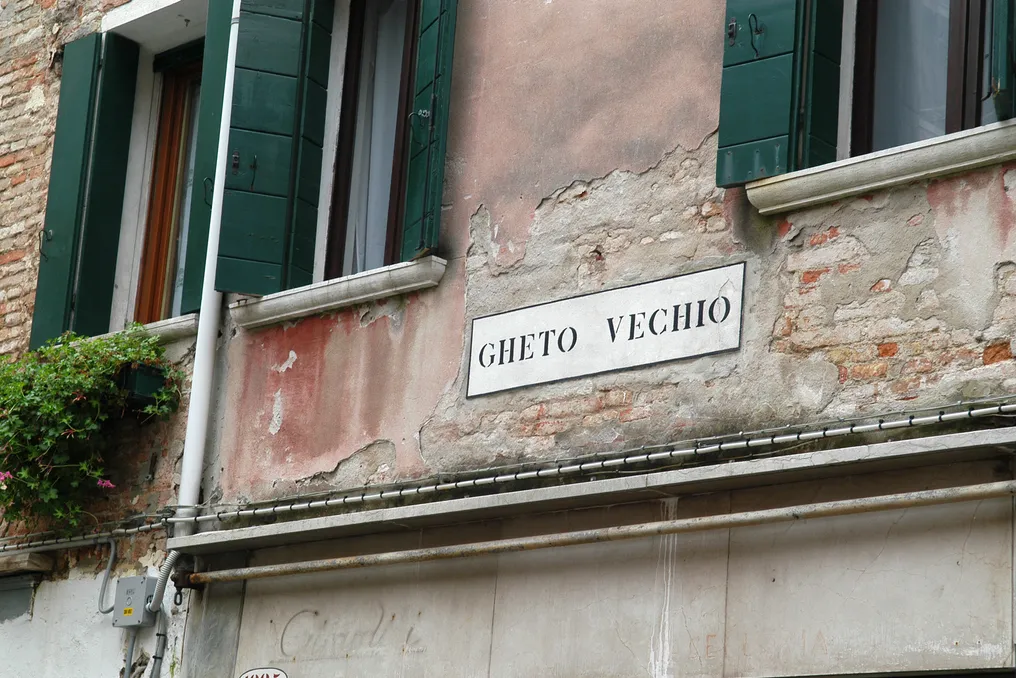
In Venice, on the small island of Cannaregio, are located some of the tallest buildings of the famous Italian city. However, the origin of these structures is linked to a dark episode in local history, marked by prejudice and the isolation of a community deemed undesirable. It was here that the word emerged, crossing centuries to denote segregated areas: the ghetto, first used in this sense in the 16th century.
Similar to the horrific Nazi ghettos, this place in Venice was designated for Jews residing in the city. Since they could not move to other parts of the city, the solution was to build upwards. But what led to this isolation? And what does the word 'ghetto' actually mean?
The Venetian ghetto was established by a decree in 1516, approved by the Senate of the Serene Republic of Venice and ratified by Leonardo Loredano, the Doge (the highest office in the then independent state). The purpose of this decree was clear segregation: to counteract the uncontrolled migration of Jews into the city so they would not 'share' housing with local Christians.
Although forced social alienation was a constant feature in the history of European Jews, at that time the rulers of Venice faced a new problem: after defeat by France and its allies in the early stages of the League of Cambrai War in 1509, Jews who had previously visited the city only temporarily began to settle permanently in its territory.
In response to the 'urgent needs of the time,' the decree granted Jews permission to reside permanently in Venice but imposed the condition of the ghetto: they had to remain in this part of the city, and the area accessible via two bridges had to be locked and guarded at night.
Without permission to own property in the city, they could sign contracts for lifelong leases, but there was also a cunning rule: the cost was higher than that charged to Christians for similar housing in other parts of Venice.
This legal obligation cemented a division that lasted for centuries—and which still leaves traces in the daily life of Venice, as the old ghetto remains an area with the highest Jewish presence in the city, even in recent decades when tourism growth makes the city more expensive and 'displaces' historical residents from the most visited areas of Venice.
If you take a tour of Venice, you are likely to hear the following version of the origin of the word ghetto: it supposedly comes from 'geto' or 'giotto,' a local term meaning blacksmith shop. It is said that the area occupied by Jews was indeed near an old cannon factory, and this explanation seems logical.
Nevertheless, there is no conclusive evidence that this is the true origin of the term. Linguists are still debating the authentic etymology of ghetto, and no one can assert which version is correct: all are considered hypotheses, some more plausible than others.
Alternative versions of the word's origin also suggest that it might be a distortion of 'borghetto' (which, in turn, is a diminutive form of 'borgo,' town), or even that it has roots in an ancient marriage document known in Hebrew as 'get' or 'ghet.' In this case, the idea is that the Jews of Venice saw themselves separated from the rest of the city, similar to those who received their get.