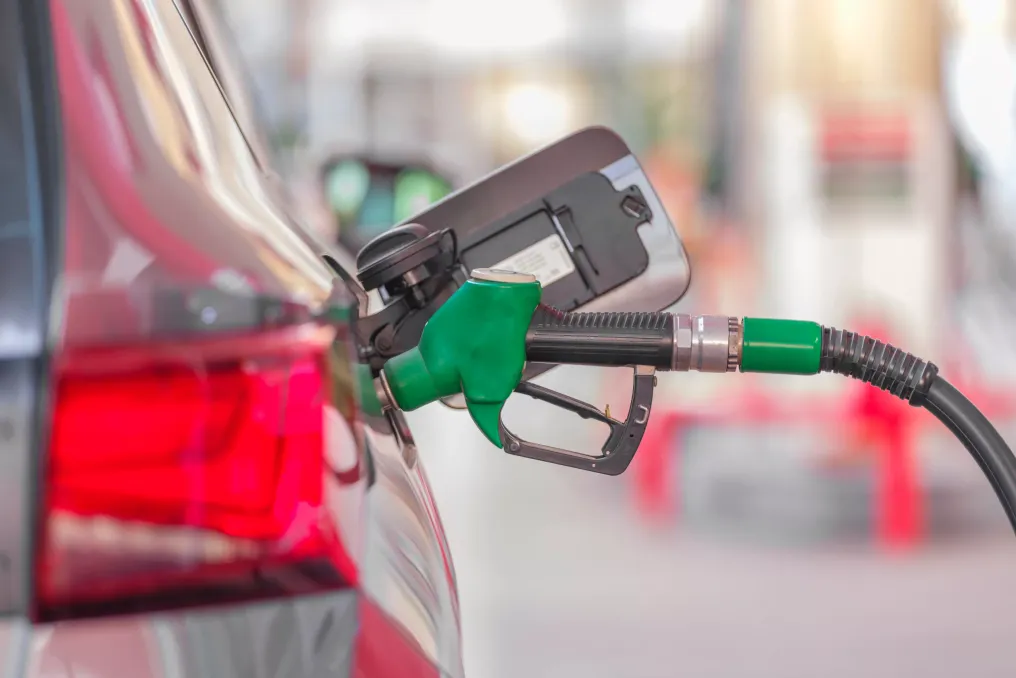
Gasoline and diesel prices in South Africa may decrease before the December holidays
Read more
Getaway
getaway.co.za

Gasoline and diesel prices in South Africa may decrease before the December holidays

A potential drop in fuel prices is expected in South Africa during December, which could ease the financial burden on drivers during holiday travel. According to the latest data from the Central Energy Fund, prices for gasoline and diesel may fall, although final adjustments have not yet been confirmed.

According to a BusinessTech report, gasoline and diesel prices have made a 'complete turnaround,' moving into an overspend zone, despite the partial cancellation of a temporary government tax relief in December.

Data from the Central Energy Fund (CEF) as of the end of the third week of November shows an overspend of R3.44 per liter for 93-grade gasoline and R3.68 per liter for 95-grade gasoline. Regarding diesel, an overspend of R1.58 for 0.05% diesel and R2.00 for 0.005% diesel has been observed.

Current forecasts suggest a possible decrease of R3.44/L for 93-grade gasoline and R3.68/L for 95-grade gasoline, while diesel could drop by between R1.58/L and R2/L before accounting for other monthly adjustments.

BusinessTech warns that CEF figures are not final, as they do not include factors such as the slate levy and other monthly adjustments.

These projected decreases come against the backdrop of the Ministry of Finance beginning to revoke its temporary intervention in fuel pricing. Starting in December, 50 cents per liter will be added to the gasoline tax, and R1.50/L to diesel, with remaining support scheduled to be withdrawn in January.

These changes mark a sharp reversal compared to previous forecasts. Previously, BusinessTech reported that in October, gasoline and diesel faced underspending, with gasoline showing a deficit of up to R1.38/L. It was anticipated that temporary fuel tax cuts announced by Finance Minister Enoch Godongwana would prevent a significant price hike.

Subsequently, the government reduced gasoline prices by only 1 cent/L in November, while diesel prices fell by more than R1/L. The Department of Mineral Resources and Energy stated that the November adjustment was due to rising international oil and petroleum prices, the weakening rand, and an increase in the slate levy.

Reuters at the time reported that diesel would fall, while gasoline would remain 'almost unchanged' after the fuel tax reductions.

The latest improvement is mainly driven by a sharp drop in global oil prices. BusinessTech reported that the price of oil fell to approximately $91 per barrel, after trading above $100 for most of the previous month and reaching around $118 in early November. The lower oil price has significantly improved South Africa's position regarding fuel price recovery.

TopAuto also reported that gasoline is on track for a decrease of approximately R3/L, describing December as a potential significant relief for drivers.

However, the rand exchange rate remains a potential risk. BusinessTech noted that currency fluctuations partially offset the benefit of cheaper oil, although this impact is currently not large enough to completely negate the fuel price overspend.

Thus, the December adjustment could provide one of the most substantial reliefs at petrol stations this year, although final prices will be confirmed by the Department of Mineral Resources and Energy in early December.


Similar stories

Dr. Mahesh Gupta spoke about the genesis of the idea to create Kent RO
Read more
www.aajtak.in

Dr. Mahesh Gupta spoke about the genesis of the idea to create Kent RO

The Managing Director of Kent RO Systems, Dr. Mahesh Gupta, participated in the 'How to Become a Successful Businessman' session on the Aajtak Masterclass platform. During this event, he shared his entrepreneurial history in detail and discussed how Kent RO achieved success.

Online sellers in the UAE are responsible for goods sold through third parties
Read more
www.khaleejtimes.com

Online sellers in the UAE are responsible for goods sold through third parties

According to amendments to the country's consumer protection regulations, online sellers in the United Arab Emirates (UAE) will now be responsible for goods and services sold through third parties on their electronic platforms. These changes have been approved by the Cabinet.

The Cabinet adopted Resolution No. 166 of 2026, which expanded the scope after amendments were made to Federal Decree-Law No. 14 of 2023. The revised Article 40 stipulates that the rules apply to goods and services traded through internet platforms, and their application is not limited to traditional sales channels.

It is stated that the supplier will be liable for any goods or services offered or sold through a third party via an electronic platform or any other modern technology. This does not negate the general liability norms provided for by current legislation.

The legal basis for this amendment is Federal Decree-Law No. 14 of 2023 on e-commerce, as well as laws on competition and combating commercial fraud.

The UAE has established a comprehensive consumer protection system to ensure fair business practices and protect consumers across the country. Federal Law No. 15 of 2020 on Consumer Protection, which was amended by Federal Decree-Law No. 5 of 2023, obligates businesses to provide quality goods and services, state accurate prices, provide correct product information, and protect consumers' personal data.

This legislation also protects consumers from misleading advertising, defective products, and unfair commercial practices, giving them the right to claim compensation for damages caused by faulty goods or inadequate services. The law applies throughout the UAE, including free zones and e-commerce enterprises registered in the country, with the Ministry of Economy and local economic departments responsible for receiving complaints and ensuring consumer rights compliance.

In accordance with the revised Article 41 of Cabinet Resolution No. 166 of 2026, the Cabinet shall issue a decree based on the proposal of the Minister of Economy and Tourism and in coordination with competent authorities, which will define violations and administrative penalties, including financial fines, for non-compliance with the law and its provisions. Until this decision is made, the existing list of violations and fines remains in effect if it does not contradict the new resolution. Fines do not affect other sanctions provided for by separate legislation.

The Resolution also rewrites Article 9, which allows the minister, jointly with a competent authority, to take temporary measures during a crisis or emergency circumstances causing unusual price increases or fluctuations. Such measures include setting prices for affected goods or services, banning the export of goods, allocating sales quotas, stimulating production or import from alternative sources, appointing specific structures for importing, and any other measures the minister deems necessary. Selling above set prices is prohibited, and any excess is considered an unjustified additional charge imposed on consumers.

The ministry or competent authority may assess the excess based on commercial records, invoices, accounting data, or other relevant means. Consumers retain the right to demand refunds or seek compensation.

Factors determining whether a price increase is anomalous include inflation rates, past prices, price levels in the UAE and neighboring countries, percentage increase, exchange rates, consumer complaints, delivery and insurance costs, energy prices, and the degree of competition or monopoly.

Popular