Palestine strives for green recovery of Gaza despite destruction
Read more
Noticias ao Minuto
noticiasaominuto.com

Palestine strives for green recovery of Gaza despite destruction

Palestine dreams of a green recovery for Gaza, where basic necessities like turning on a tap or having lighting remain daily challenges, and climate resilience is another serious issue.

A four-person delegation from Palestine visited the 31st United Nations Climate Change Conference (COP31) held in Antalya, Turkey. The purpose of the visit was to argue that climate financing should be directed towards restoring water supply, sanitation, and electricity systems in Gaza.

While discussions about phasing out fossil fuels, emission targets, and adaptation funding take place in the corridors of the 'blue zone' at COP31, which spans over half a million square meters at the Antalya Expo Center, there are other urgent needs in Gaza: securing drinking water, restoring electricity, and finding shelter during floods that inundate displaced persons' tents.

Samir Kalbuneh, the interim director of the Palestine Environmental Quality Authority, told Lusa representative that 'we will do everything possible to make the recovery as green and sustainable as possible.'

He acknowledged that people cannot choose whether to adapt or not; it is their life, and they will try to adapt to any circumstances, but he noted that the situation is extremely difficult.

According to Kalbuneh, the war has rendered nearly 85% of Gaza's agricultural land unsuitable for cultivation, and about 93% of trees have been uprooted during the conflict.

He emphasized that 'climate issues cannot be separated from issues of occupation and development needs.'

The war also destroyed a project supported by the Green Climate Fund that allowed for the reuse of treated wastewater in agriculture. Kalbuneh accused the 'Israeli army of completely destroying this project.'

He added that this project served as an excellent example of how to combat the effects of climate change within a community, strengthening resilience and people's ability to adapt to these changes, allowing them to live with dignity and remain on their lands.

Kalbuneh also calculated that the war and its consequences will lead to the emission of almost 30 million tons of carbon dioxide, and the reconstruction of Gaza will cost approximately $70 billion. He argued that the restoration of water supply, sanitation, and electricity distribution systems is purely a climate component for which climate financing can be sought, aiming to find more funding sources.

Furthermore, he noted that in the West Bank, the occupation prevents Palestinians from accessing natural resources such as water and pastures. He concluded that the occupation exacerbates environmental problems in both the West Bank and Gaza.

He stressed that floods in Gaza led to the collapse of refugee tents, calling it a catastrophe, but always spoke of the resilience of the people and the belief that they will overcome it.

In the opinion of the official, Palestinian climate resilience is part of national resilience—'the ability to stay in Palestine and live normally, like people in any other country.'

Kalbuneh conveyed to COP31 the message that 'climate justice is part of justice for all people in the world, and therefore for the Palestinian people,' insisting that the sustainable development of Palestine depends on the end of the occupation. He concluded by stating: 'We believe that ending the occupation is a fundamental condition for ensuring a promising and sustainable future for Palestine.'

Similar stories

Changes to Goods Transportation Rules and Customs Control Planned in EAEU
Read more
sputniknews.uz

Changes to Goods Transportation Rules and Customs Control Planned in EAEU

Changes are being prepared within the Eurasian Economic Union (EAEU) aimed at simplifying cargo transportation processes, strengthening customs control, and expanding electronic formalization for exporters. This was reported by the Eurasian Economic Commission.

According to information provided by Sergey Shklyayev, Deputy Minister of Customs Cooperation of the EEC, two packages of changes will be introduced into the Customs Code of the EAEU in 2026.

The first package covers all sections of the Customs Code. It is dedicated to schemes that involve bypassing customs requirements by documenting goods as if they are being transported to another country, which is defined as contraband transit.

According to the EEC, this first package is currently undergoing internal agreements between states and is planned to be signed at the meeting of the Supreme Eurasian Economic Council in December.

The second package of changes concerns the activities of companies engaged in foreign trade and customs authorities. This package considers possibilities such as introducing a special status for reliable exporters.

It is expected that this will reduce the administrative burden on companies conducting honest business. The goal of these measures by the EEC is to simplify cargo clearance procedures and reduce redundant operations.

It should be noted that Uzbekistan holds observer status in the EAEU and cooperates with the Republic of Ittifoq on issues of customs information exchange and simplification of transit procedures.

The Eurasian Economic Union (EAEU) has been functioning since January 1, 2015, as an international economic union. It includes Russia, Armenia, Belarus, Kazakhstan, and Kyrgyzstan. Uzbekistan obtained observer status in the EAEU in 2020. Cuba and Iran also hold observer status.

Safari launches in Tapti reserve in Baitul (Madhya Pradesh), where antelope and birds will be observed
Read more
www.aajtak.in

Safari launches in Tapti reserve in Baitul (Madhya Pradesh), where antelope and birds will be observed

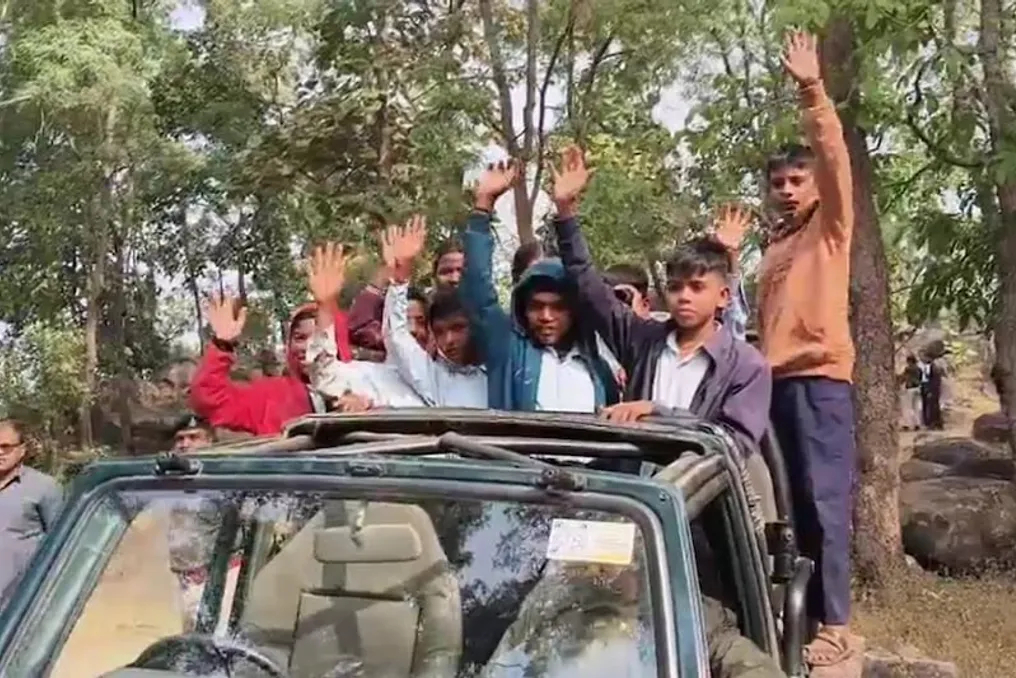
In Baitul, Madhya Pradesh, a new stage of tourism development has begun. As part of the preparations for launching safaris in the first Tapti Conservation Reserve, an initial familiarization tour was conducted on Saturday. Government representatives, officials, and children inspected the natural beauty and tourism potential via safari jeeps along forest trails.

This initiative will not be limited to simple tourist walks; it will also create new employment opportunities among local youth. The tour started in Mahupani and allowed viewing of numerous natural attractions, including the Ghodidev viewpoint, within the forest area spanning about 28 kilometers. As part of this project, the foundation stone was also laid for the safari entrance, ticket counters, and tourist facilities in Mahupani, the construction of which will cost over 42 million rupees.

Tapti Conservation Reserve boasts rich biodiversity, including antelopes, sambar, foxes, and various bird species. It is planned that tourists will be able to enjoy the natural beauty of these forests through jeep safaris in the future.

A key feature of this safari is a program aimed at involving local young people in employment. The Forest Department is training 27 young residents from surrounding villages in safari guide skills. Furthermore, rural families will be integrated into tourism activities through jeep management, driving, and providing guesthouses.

Minister Mohan Yadav announced the allocation of approximately 100 million rupees for the development of the reserve and the creation of a butterfly park. The first familiarization trip to Tapti Conservation Reserve has sparked new hopes for nature tourism in Baitul. Now it remains to see how quickly this safari initiative will turn into regular tourist activity. However, it is evident that if the plans are implemented, the safari can become not only a source of adventure for visitors but also a new means of income for the youth of Baitul.

New management plan aims to strengthen the population of Persian gazelle
Read more
www.tehrantimes.com

New management plan aims to strengthen the population of Persian gazelle

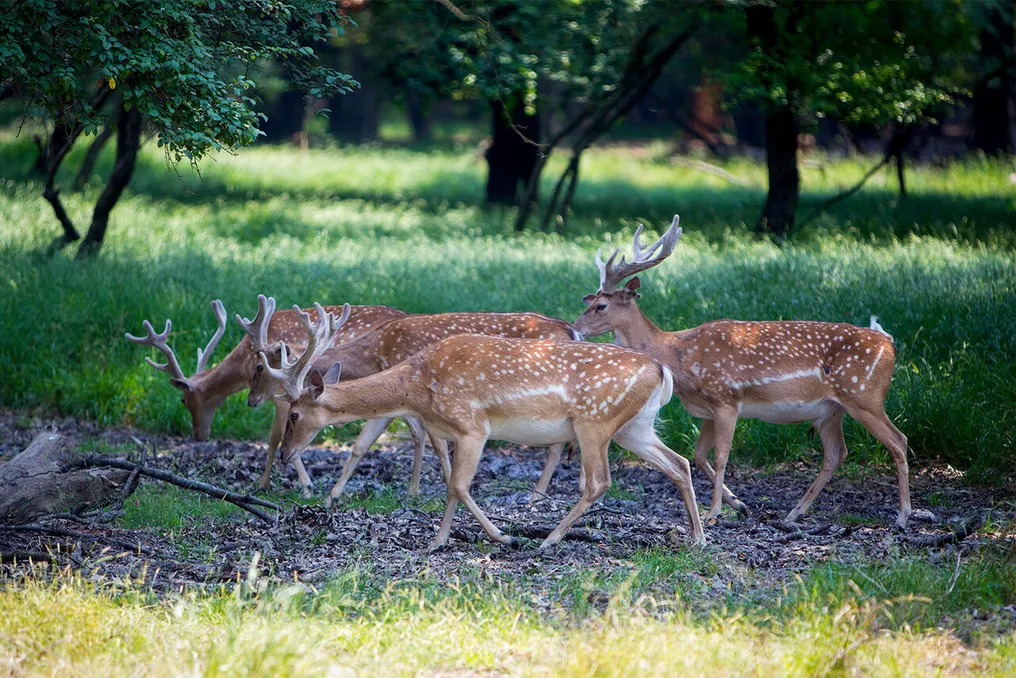
The Department of Environment (DOE) has begun implementing a set of corrective and management measures at Persian gazelle breeding sites to improve the population structure and increase the reproductive rates of this endangered species.

Masoumeh Safaei, Director General of the DOE's Wildlife Conservation and Management Authority, reported that in recent years, the Persian gazelle population at some breeding sites has either stagnated or grown slowly. According to her, after expert assessment and analysis of the problems identified by the Persian Technical Committee on Gazelles, practical steps have been determined to address these issues, as reported by IRNA.

One of the main priorities is the management and reorganization of male populations, as well as improving the sex ratio in these areas through targeted relocation and distribution of males. Work is also underway to modernize and repair enclosures to enhance protection and optimize population management.

Assessments revealed several factors contributing to population problems, including an unbalanced sex ratio, an excess of males, the presence of predators, limited space relative to population size, and certain dietary restrictions. Operational plans have been developed to eliminate these problems.

Safaei emphasized that these measures are intended to restore the species' populations in their natural habitat, promote scientific, targeted population management, improve living conditions, increase reproductive success in artificial breeding sites, and establish a solid foundational population.

According to the International Union for Conservation of Nature's (IUCN) Red List, the Persian gazelle (Dama mesopotamica) is classified as an endangered species. Nearly half a century ago, it was believed that this species had become extinct in the wild. However, four individuals were later discovered in the forests of Dez and Karkeh, which are its main natural habitats. These animals were relocated to various parts of the country as part of efforts to support breeding and ensure the survival of the species.

Thanks to conservation efforts, the Persian gazelle population has increased from five individuals in the Iranian calendar year 1398 (2019–2020) to 19 individuals this year.

The DOE is involved in developing genetic maps of endangered wildlife species to improve their chances of survival, support breeding programs, manage populations, and counteract threats to their existence in natural environments.

Effective conservation of endangered species requires a deep understanding of population genetics. Consequently, the DOE has included conducting genetic and molecular studies of key wildlife species across the country in its agenda to ensure that conservation and management decisions are based on reliable scientific data, according to Leila Ezzeddindulu, head of the National Museum of Natural History and Genetic Resources, quoted by IRNA.

She noted that these studies aim to preserve genetic diversity within and between populations, prevent a decline in effective population size, avoid inbreeding and genetic erosion, conserve genes adapted to different environmental conditions, and ensure genetic resources for species restoration, breeding, and reintroduction programs.

Ezzeddindulu also mentioned three research agreements signed between the DOE, the College of Agriculture and Natural Resources at Tehran University, and the University of Gorgan. Under these agreements, a project is being conducted to study the genomic diversity and phylogenetic relationships among populations of Levant viper and Latifi viper to develop conservation and treatment methods based on genomic markers.

Furthermore, work has begun on creating genetic profiles and maps for the Asiatic cheetah, Asiatic brown bear, and Persian gazelle, all of which are considered ecologically important and endangered species. Another aspect of scientific research cooperation includes assessing the genetic diversity, inbreeding, and kinship in the Persian zebra population. This study is being conducted jointly with the provincial office of the DOE in Yazd and is expected to contribute to small population management and help prevent the loss of genetic diversity.

Popular