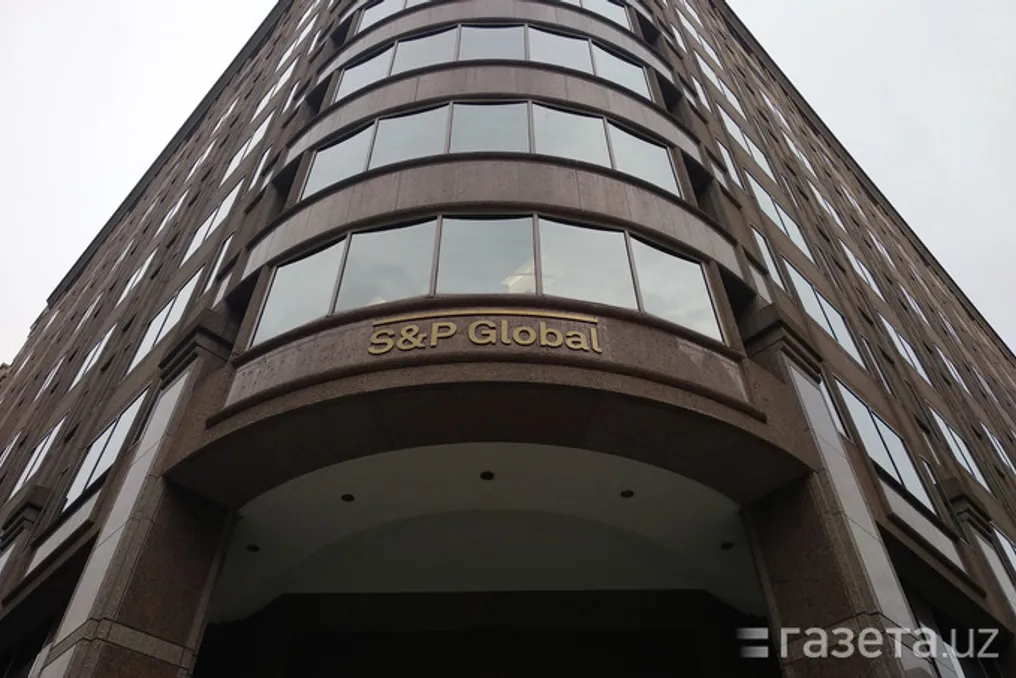
The international rating agency S&P Global Ratings has raised the long-term sovereign credit ratings of Uzbekistan in both national and foreign currencies, moving them from BB to BB+ with a stable outlook.
Saida Mirziyoyeva, head of the Presidential Administration, reported that this is the highest rating in the country's history, and only one step remains to reach the investment grade of BBB-. She emphasized that this increase is a result of ongoing economic reforms, balanced fiscal policy, and the President's strategic course.
Mirziyoyeva also stated the intention to continue strengthening investor confidence in Uzbekistan and creating favorable conditions for attracting new capital investments.
Reaching the BB+ level signifies a transition from the speculative category of credit ratings to the investment category. In its analytical report, S&P Global Ratings noted positive changes in budget indicators, growth in foreign exchange reserves, and the implementation of economic reforms.
Nevertheless, the agency's analysts point to persistent risks for Uzbekistan related to gold dependency, the operation of state-owned enterprises, and external borrowings.
Uzbekistan's short-term ratings remained unchanged at B, but the risk assessment regarding currency transfer and conversion was raised from BB+ to BBB-.
The agency explained the rating increase by the improvement in the balance of payments, a moderate level of public debt, and reforms conducted in the energy and state sectors. A key element was the revision of the official GDP estimate for Uzbekistan.
On November 13, the National Committee on Statistics presented updated GDP data for the period 2017–2025, based on refining enterprise statistics, as well as population and agricultural census data. As a result, the nominal GDP for 2025 was increased by 15%, amounting to 277 trillion soms ($22 billion), bringing it to 2127 trillion soms ($169 billion).
This revision significantly improved the calculated debt burden figures. According to the updated S&P forecast, the average ratio of net public debt to GDP for the period 2026–2029 will be 24%, compared to the previously expected 30%. It is important to note that this improvement is linked to the statistical revision of the economy's size, not an actual reduction in debt.
The agency states that Uzbekistan's debt structure remains relatively favorable: 83% of external public debt is due to loans from official creditors, which are provided mainly on preferential terms, with long repayment periods and low interest rates.
Despite this, S&P forecasts a further increase in the debt burden, suggesting that net public debt could reach 26% of GDP by 2029. For comparison, in 2017, the state held net financial assets. Furthermore, about 84% of Uzbekistan's public debt is denominated in foreign currency, which increases its vulnerability to fluctuations in the sum's exchange rate.
A second significant factor contributing to the rating increase was the improvement in foreign trade indicators, driven by high global gold prices. According to S&P estimates, gold accounts for 30–40% of Uzbekistan's commodity exports and provides 85–90% of international reserves.
Since 2023, the country's foreign exchange reserves have doubled, and by the end of October 2026, they are expected to reach approximately $64 billion, corresponding to 32% of GDP. Additional support for foreign trade stability comes from the growth of non-resource exports, tourism revenue, and remittances from migrant workers.
Specifically, in 2025, the volume of remittances to Uzbekistan increased by 28%, reaching $18.9 billion, or 11.2% of GDP, with about 78% of these inflows coming from Russia.
However, the agency warns about the high dependence of reserves and export revenues on global gold prices. S&P forecasts a decline in the average price of gold: from $4300 per troy ounce in 2026 to $4000 in 2027 and $3500 in 2028–2029. Consequently, according to the agency, the volume of available international reserves will peak at about $62 billion by the end of 2026, after which it will begin to decrease.
S&P has raised the forecast for Uzbekistan's economic growth to 8% for 2026, expecting an average annual growth rate of 6.7% for the period 2027–2029. The main drivers of growth are domestic consumption, state investments in energy, extractive industries, and infrastructure, as well as social spending.
The agency notes that Uzbekistan is among the world's most dynamically developing economies. On average, since the start of economic liberalization in 2017, the country's GDP has grown by approximately 6% annually. A significant part of this growth is supported by investments, which reach about 36% of GDP, one of the highest figures globally.
S&P forecasts that Uzbekistan's GDP per capita in 2026 will reach approximately $5200, significantly higher than the 2019 figure of $2365. Nevertheless, even with growth, this figure remains relatively low by international standards.
The agency also expects the average annual inflation to decrease to 6.7% in 2026, compared to the average of 11% for the period 2020–2025.
Government measures to minimize financial risks associated with state-owned enterprises, public-private partnerships (PPP), and budgetary obligations were positively assessed. Specifically, the introduction of regulation on state enterprises' external borrowings, restrictions on new commitments under PPP projects, and the reform of energy subsidies were noted.
State expenditures on electricity and gas subsidies decreased from $1.5 billion (1.2% of GDP) in 2023 to $600 million (0.4% of GDP) in 2025. Thanks to budget consolidation and favorable commodity prices, S&P expects the average annual budget deficit in 2026–2029 to be around 3% of GDP, compared to 3.5% of GDP in 2021–2024.
At the same time, the agency emphasizes the active development of PPP projects: the total value of signed agreements in 2025 was estimated at 21% of GDP, while the government estimates direct and contingent liabilities under them at approximately 15% of GDP. The implementation of these projects may create additional risks for public finances, especially if problems arise with individual projects.
S&P also points out that despite the improvement in macroeconomic policy, Uzbekistan's institutional system remains relatively weak. The report states that decision-making is likely to remain centralized, and checks and balances mechanisms between branches of power, although showing recent improvements in public administration, remain limited.
The agency also records a persistently high level of corruption compared to countries with comparable credit ratings, although it notes an improvement in the perception of corruption.
S&P allows for a further rating increase for Uzbekistan provided that the budget position is strengthened, particularly by reducing the budget deficit and the volume of state enterprise refinancing. The rating could be downgraded if the budget deficit and external account deficit exceed the agency's forecasts.
Possible reasons for a downgrade include deterioration in foreign trade conditions, an increase in government spending without a corresponding rise in revenue, rising borrowing costs, and the emergence of new state obligations due to state enterprise problems. There are also geopolitical risks associated with Uzbekistan's close economic ties with Russia, including dependence on remittances, foreign trade, and the threat of secondary sanctions.
S&P concludes that the current stable outlook reflects a balance between sustainable economic growth and a favorable debt structure on one hand, and risks associated with high sensitivity to commodity prices, especially gold, and uncertainty regarding global energy prices and geopolitical events on the other.
It should be noted that exactly one year ago, on November 21, 2025, S&P Global Ratings raised Uzbekistan's sovereign credit rating from BB- to BB with a stable outlook, attributing this to structural reforms, sustainable growth, and improved macroeconomic policy. Thus, over the past year, the country's rating has been raised by two notches—from BB- to BB+.