US States No Need for Additional Chip Restrictions on Nvidia After China Access Blockade
Read more
Noticias ao Minuto
noticiasaominuto.com

US States No Need for Additional Chip Restrictions on Nvidia After China Access Blockade

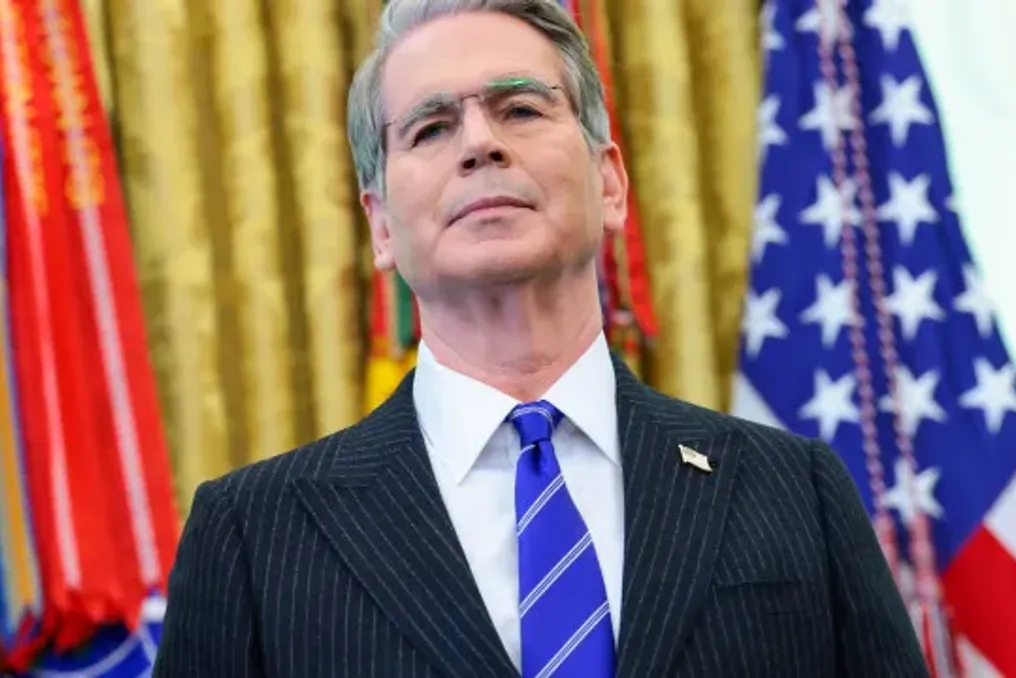
US Treasury Secretary Scott Bessent stated that no further restrictions are needed on the sale of older Nvidia chips to the Chinese market, as China has already faced a blockade of remote access to the latest semiconductors.

The ability of Chinese tech companies to access Nvidia technologies was jeopardized after CEO Jensen Huang resigned amid allegations of an affair with an employee of Megaspeed, a Singaporean company that uses advanced chips for computing power to which Chinese companies have remote access.

Bessent reported in an interview with CNBC, following his trip to Asia with President Donald Trump: 'The relevant chip restrictions are in place,' adding that 'remote access has been limited.'

Bessent's comments came a day after the House Foreign Affairs Committee released details of the Commerce Department's approval to sell over 850,000 Nvidia and AMD competitor chips to Chinese companies.

The US military department (Pentagon) identified some of these companies as having ties to the Chinese army. The report examined Nvidia's requests to sell its H200 chips—one of the most powerful, though not the most advanced products—as well as AMD's requests to sell its MI325X chip, which is roughly equivalent, to companies located or based in China, or entities with parent companies in the country.

According to the report, the Bureau of Industry and Security within the Commerce Department approved the export, re-export, or transfer of 879,868 such chips to companies linked to China under 21 license applications up to May 11, 2026.

Nvidia and AMD requested a total cumulative sale of over 3.4 million chips to companies linked to China, according to this report. These approvals, which do not necessarily mean completed sales, included 75,000 chips for Alibaba, 150,000 for Tencent and its subsidiaries, 43,000 for Baidu, and 4,000 for BYD.

Each of these companies was identified by the US Department of Defense as having ties to the Chinese army. The report notes that the Commerce Department has a 'long history of transparency with Congress regarding licensing activities for H200 and equivalent chips, including both approvals and denials.'

A representative from the Bureau of Industry and Security stated today that the Commerce Department's approach to issuing H200 licenses is based on a Federal Register rule published in January. This rule establishes 'significant additional national security requirements for license applicants so they can be considered individually rather than being rejected by default.'

In turn, an Nvidia representative stated in a statement today that 'the limited shipments we made under the H200 program were legal and sanctioned' by BIS. This same company representative added that 'the analysis and licensing process took over half a year, with approvals depending on strict conditions and limited volumes.'

Earlier this week, Nvidia announced it had stopped shipping H200 chips to China. However, the company representative stated today that shipments were suspended despite previous approvals.

AMD stated that it complies with US export control laws and regulations and supports 'strict compliance processes in all... global operations,' in a statement also issued today. The company added: 'We continue to focus on serving our customers and maintaining the highest standards of integrity.'

Chinese tech companies are preparing for the impact on their ambitious AI development plans amidst increased export controls from the US.

Similar stories

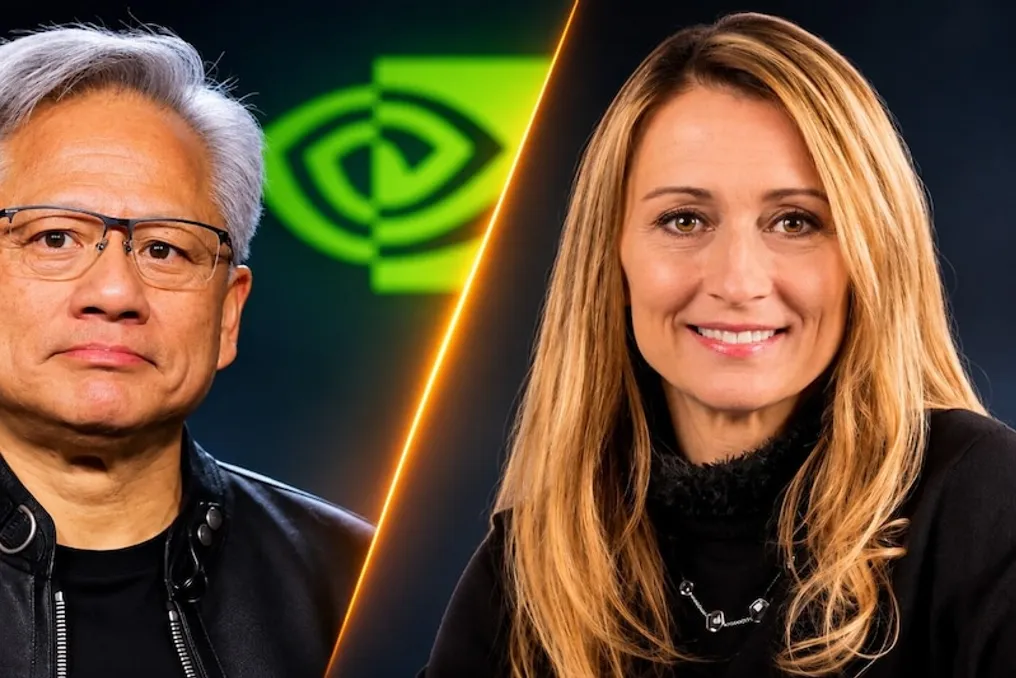
After Jeffrey Huang's departure, new NVIDIA CEO halts chip shipments to China
Read more
www.aajtak.in

After Jeffrey Huang's departure, new NVIDIA CEO halts chip shipments to China

NVIDIA has dealt a major blow to China. Following the departure of Jeffrey Huang, the company's new CEO has suspended chip shipments to China. Despite approval from the US government, NVIDIA has stopped selling its Hopper AI data center chips to China.

According to a Bloomberg report, the company sold $2.4 billion worth of Hopper products for data centers to Chinese clients in the third quarter. Although permission was granted by America in December 2025, NVIDIA will no longer ship these chips to China, despite ongoing sales.

During an earnings call, NVIDIA's interim CEO, Colette Kress, stated that the revenue from selling these chips to Chinese customers is not included in the company's future revenue forecasts and financial expectations. Kress emphasized that NVIDIA's future outlook does not include licensed Hopper products for data centers, and the company is ceasing shipments of licensed Hopper data center products to China.

Kress did not disclose the reasons for the company halting the shipment of licensed Hopper AI chips to China. Nevertheless, this is a significant change for a company that has spent years actively lobbying for and insisting on broader access to the profitable Chinese market. This news emerged a week after the announcement of Jeffrey Huang's departure as former CEO and founder of NVIDIA due to alleged romance and ties with Chinese spies.

On November 16, the Trump administration began a thorough review of processor exports to many countries. This heightened concerns that companies in other countries might acquire advanced AI chips and servers for their data centers and then provide remote access to Chinese companies. In recent years, there have been debates in the US regarding the export of advanced AI chips, such as NVIDIA's H200 and Blackwell, and Huang repeatedly advocated for maintaining NVIDIA's access to the Chinese market. Now, following his departure, the company has stopped supplying licensed Hopper AI chips to China, demonstrating a substantial shift in its approach to the Chinese market.

Treasury Secretary questions Nvidia about knowledge of chip smuggling to China
Read more
noticiasaominuto.com

Treasury Secretary questions Nvidia about knowledge of chip smuggling to China

The United States Treasury Secretary, Scott Bessent, requested clarification on whether the technology company Nvidia was aware of the diversion of semiconductors intended for China, which are used in artificial intelligence (AI).

During a conversation with Fox News on Sunday, Bessent downplayed the scandal that led to the departure of Jensen Huang, Nvidia's director, who later received support from Elon Musk and other Silicon Valley figures through an open letter.

American intelligence services suspect that Alice Huang, former director of Megaspeed, is acting as a Chinese spy and maintained contact with Jensen Huang to obtain secrets from the leading company in the development of advanced semiconductors for AI.

Megaspeed is allegedly helping Beijing circumvent U.S. export restrictions to China by citing national security reasons, under the pretext of purchasing computer equipment for data centers located in Southeast Asia.

The Treasury Secretary emphasized the need to investigate whether Nvidia possessed a culture of adherence to American export regulations. Scott Bessent openly questioned who was aware of the situation, mentioning that the shell companies were obvious and under investigation, asking if Nvidia used them to sell chips to Chinese nationals and bypass restrictions.

This questioning comes at a time when U.S. President Donald Trump has a trip scheduled to China this week, aiming for a summit and a meeting with his Chinese counterpart, Xi Jinping.

According to Bessent, only about 1% of chips sold to Singapore remained in the country, despite Nvidia having registered more than 20% of its global sales there in 2024. He recalled that at the end of 2025, Donald Trump had only permitted the commercialization of the H200 chips, an older generation, and nothing superior to that.

Bessent demanded that Nvidia's board of directors provide answers within ten days, in addition to requesting a 'radical restructuring' of the group and that it seek a new external leader.

On Friday, Scott Bessent had attributed the responsibility for the export of Nvidia's advanced semiconductors to China to the Secretary of Commerce, Howard Lutnick. In an interview given to CNBC, he stated that various government agencies, including his Department, had been complaining for months about the export block to Megaspeed, but that the competence for this failure belonged to the Department of Commerce, which did not act.

Scott Bessent reinforced that the restrictions, whose objective is to prevent China from catching up to the U.S. in the AI competition, are managed by the Department of Commerce. He challenged the journalist interviewing him, saying that this person should question the internal processes of that entity, marking a rare episode of disagreement within the government.

Popular