French scientists have developed artificial skin ready for transplantation
Read more
Noticias ao Minuto
noticiasaominuto.com

French scientists have developed artificial skin ready for transplantation

Several state and private organizations in France, including the wound dressing specialist Urgo, announced on Friday the creation of artificial skin intended for transplantation in their laboratory. However, this experience still requires confirmation through clinical trials.

Guirec Le Lus, president of the Urgo group, which specializes in wound healing, emphasized that 'for the first time in the world we have been able to create artificial skin ready for transplantation in a laboratory.'

This technological breakthrough was achieved in collaboration with partners gathered in a consortium that includes CNRS, Université Lyon 1, the Stem Cell Research Center, the French Blood Institution, and Dassault Systèmes. According to Le Lus, this could be the beginning of a 'medical revolution.'

The long-term goal is to provide surgeons with pre-made artificial skin without the need to take cells from the patient themselves. This skin will be stored at a temperature of -150 degrees Celsius (°C) and will be ready for immediate use in the operating room after thawing for patients with severe injuries, such as victims of extensive burns.

The consortium stated in its announcement that 'after thawing, the cells remain alive and functional.'

Currently, the most frequently used surgical method is autotransplantation, which involves removing healthy skin from the patient themselves and then applying it to burned areas. The technology they implemented is based on 'using universal cells trained to perform the expected role in the skin, as happens in reality,' and then 'organizing' these cells in three dimensions to 'reproduce the structure of real skin,' Le Lus clarified.

At this stage, the teams are capable of producing 'about a hundred units' of this skin, which is the result of five years of research. This '100% French breakthrough' paves the way for clinical trials planned 'starting in 2030' at EFS pharmaceutical facilities, as well as 'transitioning to industrial scale for commercialization around 2040,' according to the statement.

Urgo, which is now part of a group of about ten global companies with its own 'cell bank' for artificial skin, plans to establish the necessary industrial base for large-scale production 'after completing this first clinical trial, around 2032.' Furthermore, models of artificial skin are already used worldwide for research purposes, for example, as an alternative to certain animal testing, including cosmetic product testing.
Similar stories

Birch tar as one of the earliest artificial materials used by Neanderthals
Read more
nplus1.ru

Birch tar as one of the earliest artificial materials used by Neanderthals

Birch tar is recognized as the earliest artificial material known in human history. Neanderthals used it to glue stone tools. For example, flakes showing traces of birch resin were discovered in the Tuscany region, dating back approximately 200,000 years.

Later, during the Mesolithic period, humans began using this resin as chewing gum. Today, scientists are recovering the DNA of the owners of these artifacts by analyzing chewed fragments of the tar.

However, it remains an open question how ancient inhabitants obtained this tar.

Study shows effectiveness of Janus kinase and tyrosine kinase inhibitor in treating cutaneous sarcoidosis
Read more
nplus1.ru

Study shows effectiveness of Janus kinase and tyrosine kinase inhibitor in treating cutaneous sarcoidosis

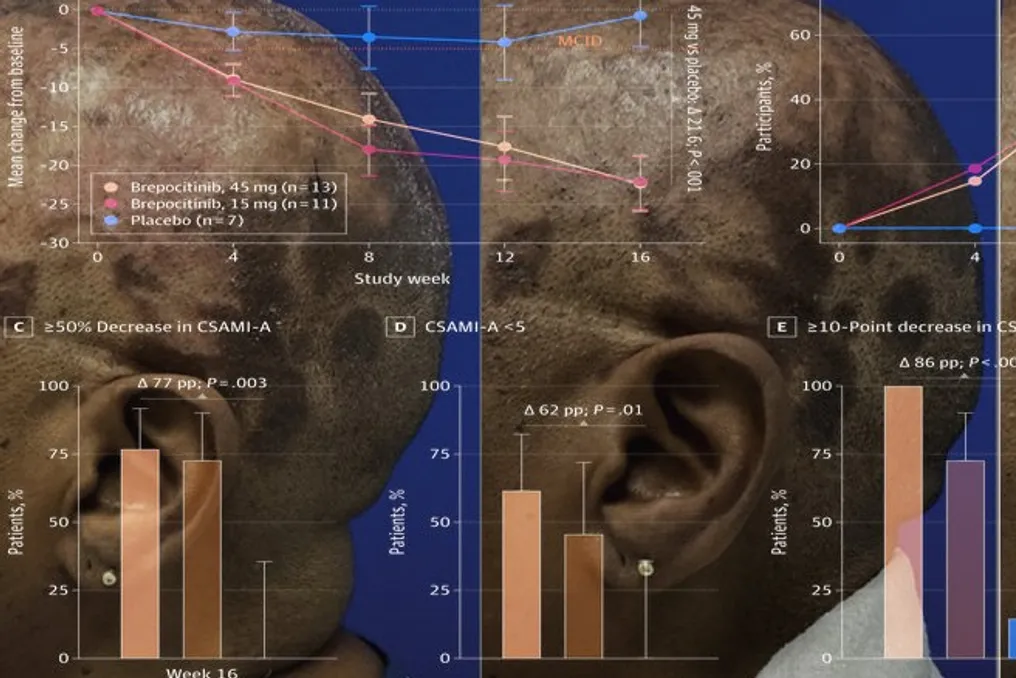
American scientists have published interim results from clinical trials concerning brepocitinib, which is a Janus kinase and tyrosine kinase inhibitor. The study focused on the treatment of cutaneous sarcoidosis.

It was found that this drug demonstrates significantly higher efficacy in reducing disease symptoms compared to the placebo group. The use of the drug resulted in the skin becoming almost completely clear in nearly seventy percent of patients.

Furthermore, no serious side effects were recorded during the analysis. The results of this study were officially presented in the scientific journal JAMA Dermatology.

Partnership between SUS and Einstein develops AI to assist in skin disease diagnosis
Read more
super.abril.com.br

Partnership between SUS and Einstein develops AI to assist in skin disease diagnosis

A collaboration between the Ministry of Health and Einstein Israelite Hospital resulted in the development of an artificial intelligence-based system intended to assist public health professionals in screening and identifying dermatological diseases.

This initiative, named CUTIS-AI, operates using images of the patient's skin lesions, along with clinical, epidemiological, and sociodemographic data that reflect Brazilian reality.

Among the pathologies the system is capable of recognizing are sporotrichosis, cutaneous leishmaniasis, leprosy, chromoblastomycosis, lobomycosis, cutaneous tuberculosis, as well as lesions caused by loxoscelic accidents, such as brown spider bites.

The application that enables the use of this AI, although still in the study phase, was conceived after interviews conducted with primary care health professionals. An important feature is that it can be operated even in areas without internet access, currently showing an accuracy rate close to 80%.

It is essential to emphasize that the intention of CUTIS-AI is to serve as an artificial intelligence support tool, not as a substitute for clinical evaluation conducted by health professionals.

Isabelle Carvalho, a data scientist at Einstein Israelite Hospital, emphasized that CUTIS-AI was created to increase the capacity to detect these diseases, which can be an obstacle for professionals, especially in locations with a shortage of specialists. She added that by compiling images of the lesions, a solid database is being established, which will benefit the development of practical technology on the front lines, especially for Primary Health Care.

The study conducted with the application has already evaluated approximately 1,400 patients and has over 4,000 lesion images. This variety of patients helps in training the artificial intelligence with diverse examples, making the model better able to recognize the characteristics of the lesions.

Fabiano Geraldo Pimenta Junior, Secretary of Health and Environmental Surveillance of the Ministry of Health, reinforced the importance of data quality and diversity when it comes to artificial intelligence applied to health. He warned that a technology created from a restricted population may not perform the same way when applied to other groups. For this reason, he considered essential the construction of a Brazilian database that includes different skin phototypes, regions, living conditions, and epidemiological profiles.

Popular