Session on the Connection Between Iranian Cinema and Philosophy to Take Place in Tehran
Read more
Tehran Times
www.tehrantimes.com

Session on the Connection Between Iranian Cinema and Philosophy to Take Place in Tehran

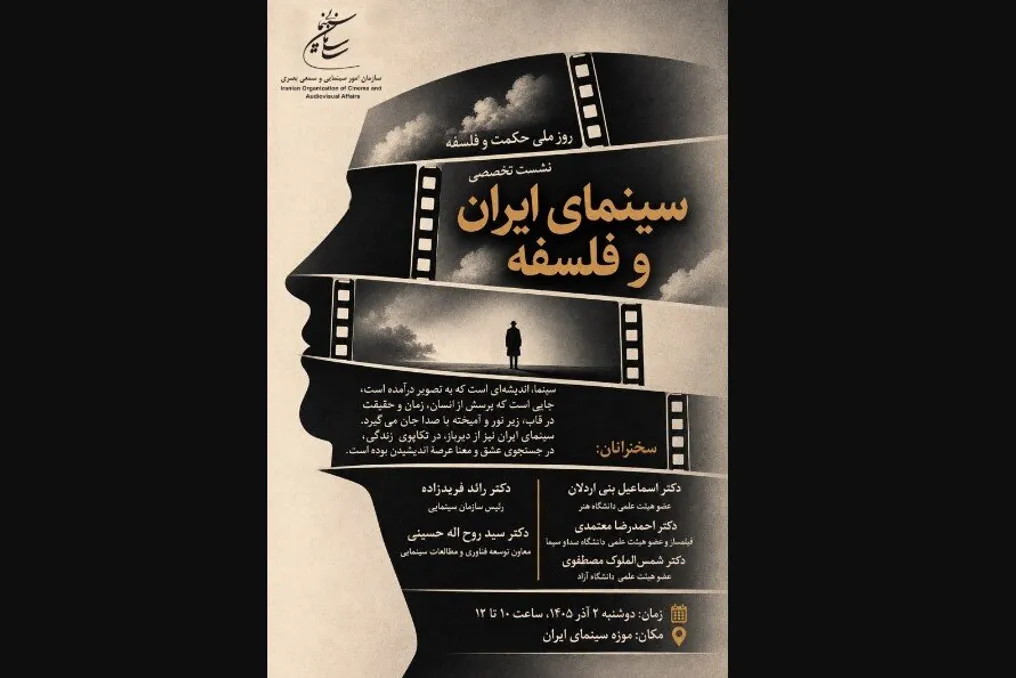
As part of the celebration of National Day of Wisdom and Philosophy, a special session will be held in Tehran where Iranian scientists and film figures will discuss the relationship between Iranian cinema and philosophy.

The program, organized by the Iranian Organization of Cinema and Audiovisual Affairs, is scheduled for Monday at the Iran Film Museum in Tehran. The session, titled 'Iranian Cinema and Philosophy,' will gather researchers and cultural figures to study how philosophical thought is reflected in Iranian film production, and how cinema can serve as a means of comprehending fundamental questions of human existence.

Speakers will include Esmail Bani Ardalan, a lecturer at the Fine Arts University; Ahmadreza Motamedi, a film director and lecturer at Soor University; and Shamsolmolouk Mostafavi, a lecturer at Islamic Azad University. Also participating in the event will be Raed Farizadeh, head of the Iranian Organization of Cinema and Audiovisual Affairs, and Seyyed Ruhollah Hosseini, deputy of the organization for technological development and cinematic research.

The opening statement of the event defines cinema as the embodiment of thought on screen, creating a space for exploration through images of questions about humanity, time, and truth. It also emphasizes the long involvement of Iranian cinema in themes of life, love, and meaning, characterizing it as an area of intellectual pursuit and reflection.

The program will also feature a presentation of the book 'The Other is Hell' by Saideh Ajorbandian. This book analyzes the dramatic works of American playwright Sam Shepard through the lens of the existentialist thought of French philosopher Jean-Paul Sartre. Published in Tehran by Yekshanbeh Press, the book offers a philosophical analysis of Shepard's plays, exploring the existential ideas reflected in his dramatic universe. It examines the connection between Shepard's characters and the human condition, relying on Sartre's philosophical perspective to study issues of identity, being, and interpersonal relationships.

The goal of this gathering is to provide an opportunity to study the philosophical aspects of Iranian cinema and discuss the ways in which cinematic expression interacts with ideas and questions central to the human experience.

Similar stories

Iran and Turkey are interested in expanding cooperation in the field of cinema
Read more
www.tehrantimes.com

Iran and Turkey are interested in expanding cooperation in the field of cinema

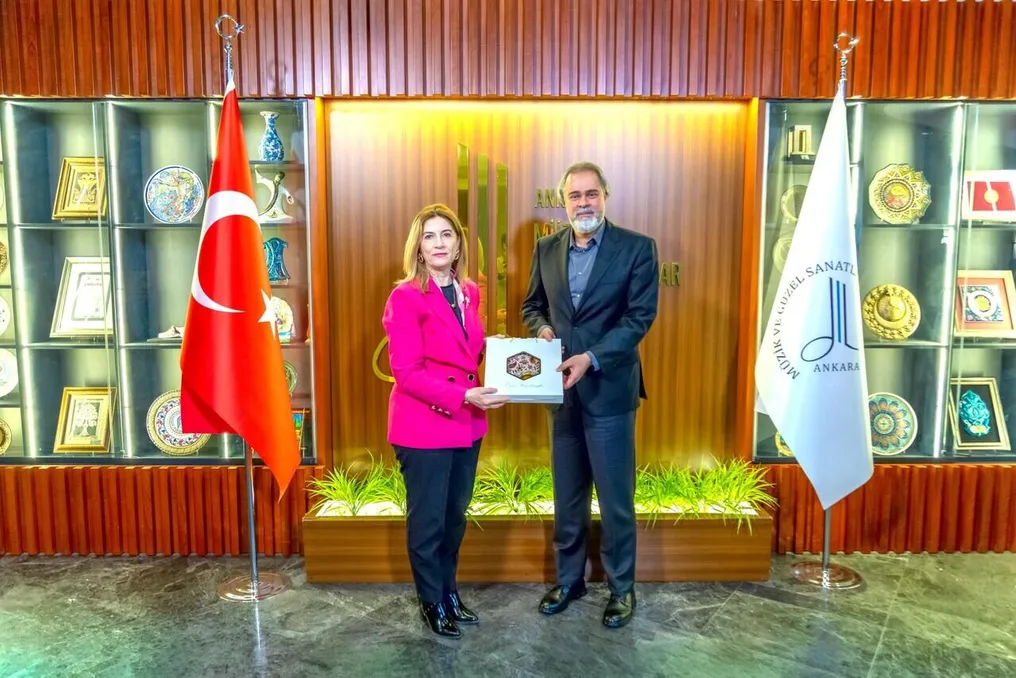
During a meeting held in Ankara, Turkey's Raed Faridzadeh, head of the Iranian Cinema Organization, and Gulchin Yahya Kachar, president of the Ankara University of Music and Fine Arts, emphasized the need to deepen cooperation between Iran and Turkey in the fields of cinema, science, and academic research.

Both sides discussed the common opportunities of the countries in cultural and artistic spheres, as well as strategies for strengthening bilateral ties, according to the IRNA agency. Faridzadeh noted the potential for joint work in the film industries of Iran and Turkey.

He highlighted the screening of Iranian films and the organization of specialized master classes, particularly in documentary and short film, as key areas for joint efforts, emphasizing the possibilities of utilizing the works of Iranian documentarians. Furthermore, Faridzadeh mentioned the desire to create an international film journal indexed in Scopus, defining the expansion of scientific and research cooperation in cinema as another area for interaction.

He also stressed the importance of developing joint scientific articles and defining common research programs for such cooperation.

Asgar Farsi, Iran's cultural attaché in Turkey, who spoke at this session, focused on the importance of maintaining contacts and strengthening cultural and human ties between the two nations. He stated that the cultural and emotional similarities between the peoples of Iran and Turkey are rooted in long-standing ties and shared cultural experience, which serve as a basis for expanding cooperation in various fields, including art and cinema.

Farsi also insisted on continuous cultural and artistic interaction and utilizing existing opportunities to develop bilateral relations. He viewed the organization of film events alongside other cultural and artistic programs as a way to strengthen ties and increase mutual understanding.

For her part, Gulchin Yahya Kachar described the university's educational opportunities in cinema and media, specifying that the university offers two related bachelor's courses in radio and television, as well as in cinema, developed with different approaches: one more focused on practical aspects, and the other on theoretical and academic research.

Expressing interest in developing joint cooperation with Iran, she added that they are ready to participate in joint projects with Iranian cultural institutions and academic centers, as well as create opportunities for joint programs. She expressed hope that by expanding academic and cultural interaction between the countries, existing opportunities can be utilized to achieve effective and practical cooperation.

The meeting also discussed the development of educational and cinematic partnership, the exchange of experience between filmmakers and students from both countries, the organization of short-term training courses, providing Turkish students with the opportunity to visit Iran for practical experience in filmmaking, as well as the exchange of Iranian students in Turkey.

Study reveals challenges and opportunities in Iranian scientific diplomacy
Read more
www.tehrantimes.com

Study reveals challenges and opportunities in Iranian scientific diplomacy

A study conducted by the Scientific Information Database (SID) of the Academic Center for Education, Culture, and Research, known as Jihad Daneshgahi, examined the state of scientific diplomacy in Iran and globally. The analysis established that restrictions on international cooperation are one of the main problems hindering the improvement of the quality and authority of the country's scientific results.

The study identified three key obstacles to the development of scientific diplomacy: concerns over research security, scientific sanctions, and geopolitical tension. Although quantitative indicators of Iranian scientific publications continue to grow, accompanied by an increase in joint research and group authorship, international scientific cooperation remains limited compared to the country's domestic achievements.

Among Iran's leading scientific centers are Tehran University and Tehran University of Medical Sciences. Tarbiat Modares University and the Research Department of Islamic Azad University also play a significant role in national networks of scientific interaction.

In 2020, Iran ranked 15th in the global ranking by the total number of scientific publications, accounting for 2.02% of the world's volume. In fundamental sciences, the country was ranked 15th, in social sciences—29th, and in humanities and arts—37th.

The study showed that international scientific cooperation correlates with higher citation rates and improved article quality. The main international partners of Iran in research were identified as the United States of America, the United Kingdom, Canada, Germany, and Australia.

Furthermore, significant potential is highlighted for expanding scientific interaction with neighboring and regional states, especially in fields such as medicine, nanotechnology, and stem cell research. Nevertheless, serious barriers to expanding research partnerships include economic difficulties and challenges in accessing global scientific networks.

Limitations in scientific cooperation are also caused by concerns about scientific espionage, the transfer of confidential technologies, and foreign interference. Sanctions have restricted scientific interaction with certain countries, including Iran and Russia. Additionally, the crisis in Ukraine, which began in 2022, has disrupted some forms of international cooperation in polar research.

The study warns that scientific isolation can lead to restricted access to major international infrastructure and research projects, an increased gap between scientific publications and the transformation of knowledge into economic and technological value, accelerated brain drain, and weakened ability of countries to solve transnational problems such as climate change, biosecurity, water resources, and public health, which require cross-border cooperation.

Four main strategies are proposed to strengthen Iranian scientific diplomacy: enhancing diplomacy and expanding cooperation with neighboring and Islamic countries; reforming academic evaluation and incentive systems to encourage both domestic and international co-authorship; shifting from an exclusive focus on publication quantity to a greater emphasis on citation, research quality, and solving social problems; and increasing the presence of researchers, especially in the humanities, in academic social networks and online platforms to increase the visibility and international reach of their work.

Theatrical program in Tehran dedicates six staged readings of plays to Bahram Beyzaie
Read more
www.tehrantimes.com

Theatrical program in Tehran dedicates six staged readings of plays to Bahram Beyzaie

The first day of the 'Beyzaie Week' event opened at the City Theatre Complex in Tehran on Sunday. The opening featured staged readings of two plays by the late Iranian playwright, director, and researcher Bahram Beyzaie.

The program, organized in collaboration with the City Theatre Complex, will run from November 8th to 12th in the Mashahir Hall. According to Mehr, the program will present six plays performed by students from the theatre university and members of an independent theatre group.

The opening session featured the play 'Ziafat' (Feast), directed by Roham Amin. This was followed by a performance of 'Chronicles of Bondar Bidaksh,' directed by Zohreh Sadeghian.

On Monday, November 9th, the program continues with a showing of 'Sahel-e Nejat' (Coast of Salvation), scheduled for 5:00 PM. On Tuesday, the play 'Chahar Sanduq' (Four Boxes) will be shown at the same time. On Wednesday, November 11th, audiences will see 'Azdahak,' directed by Sedighe Hamrahi. The final session, taking place on Thursday, November 12th, will feature 'Arash,' directed by Ardeshir Sheibani. All readings are scheduled to begin at 5:00 PM.

The play 'Ziafat' is symbolic and refers to ancient myths and rituals, exploring themes of violence, sacrifice, and the destructive mechanisms of social order. The plot centers on a shepherd tasked with protecting his flock from a wolf. However, instead of following the traditional hero's path, he becomes a victim of the forces he should be confronting. Through the figures of the shepherd and Dehbashi Beyzaie, it analyzes a society that demands heroes but ultimately sacrifices them to maintain the established order. The play also borrows from the biblical story of Cain and Abel, mixing mythological references with ritualistic theatrical elements to question the recurring cycle of violence and sacrifice.

'Chronicles of Bondar Bidaksh' tells the story of Bondar, a scholar and inventor who creates the legendary chalice that reveals the world to King Jamshid, and serves as his trusted advisor. Bondar shares his scientific discoveries and knowledge with the king, allowing him to rule the world. Nevertheless, as Jamshid becomes increasingly consumed by power, he begins to view Bondar merely as a means to strengthen his authority.

Fearing that the scholar might one day pass his knowledge to an enemy, the king imprisons him in the Ruine Dej, an impregnable fortress built using Bondar's own knowledge and experience. Reflecting on his fate in prison, Bondar regrets his blind trust in the king and his inability to secure a secret escape route. Through these tragic relationships, Beyzaie explores the conflict between knowledge and power, betrayal, and the vulnerability of intellectuals under authoritarian rule.

'Sahel-e Nejat' revolves around a young girl, her parents, younger brother, and two suitors—one bald, the other bearded. As the plot develops, the parents die, and the younger brother constantly goes to sea searching for bottles containing messages from drowned people. Meanwhile, the two suitors boast about their talents and claim to be experienced swimmers, even proposing a scientific method for teaching the girl how to swim. However, when the girl prepares to enter the water, their claims prove to be empty boasting: neither man actually knows how to swim. The play ends with cries for help from the siblings as they drown, exposing the tragic gap between the suitors' declarations and their actual abilities. Using absurdist situations and symbolic imagery, Beyzaie explores false heroism, empty promises, and the failure of those who present themselves as capable of saving others.

'Chahar Sanduq' uses a symbolic dramatic structure to examine social structures, power relations, and the limitations imposed on individuals. This work reflects Beyzaie's characteristic use of allegory and theatrical devices to illuminate broader social and political issues.

'Azdahak' draws upon ancient Iranian mythology and legendary narratives. By reinterpreting mythical material through a modern dramatic lens, Beyzaie explores the nature of tyranny, power, and the struggle between oppression and resistance.

'Arash' reinterprets the legendary Iranian archer whose sacrifice, according to national myth, defined the borders of the country. The play uses one of the most enduring figures in Iranian mythology to explore self-sacrifice, national identity, and the connection between individual destiny and collective survival.

Bahram Beyzaie, born in Tehran in 1939, was one of the most influential figures in modern Iranian theatre and cinema. As a playwright, theatre and film director, screenwriter, and researcher, he played a key role in utilizing Iran's literary, historical, and mythological heritage to forge a unique contemporary dramatic language.

His extensive body of work includes plays, films, and scholarly works on Iranian theatre, mythology, and traditional performing arts. Beyzaie directed acclaimed films such as 'Bashu, Stranger' and 'Travelers,' while his theatrical works, including 'Death of Yazdegerd' and 'Sinbad's Eighth Voyage,' remain important contributions to Iranian dramatic literature.

Through his innovative approach to narrative, symbolism, and historical narratives, Beyzaie has left an indelible mark on Iran's cultural life, influencing generations of theatre artists and filmmakers. The week-long program provides young theatre artists with an opportunity to engage with his dramatic legacy and introduce his works to a new audience.
Popular