Review of the Best Free AI Video Generators in 2026
Read more
Ventureburn
ventureburn.com

Review of the Best Free AI Video Generators in 2026

Artificial intelligence (AI) is transforming the video content creation process, allowing high-quality videos to be created in just a few minutes—something that previously required expensive equipment, complex editing software, and long production hours. Professional tools such as directing, cinematic storytelling, and camera angle control are now available on many free platforms.

In 2026, competition among AI video generation tools has reached its peak. These platforms help content creators, marketers, startups, and even crypto projects produce materials faster than ever before. Choosing the right tool can seem complicated, as each platform has its own characteristics.

When evaluating the best tools, several key factors are considered. The most important is output quality: an effective generator must provide realistic motion, detailed scenes, and smooth transitions without visual glitches. It is also critically important how well the platform interprets detailed text prompts.

Rendering speed is important, especially for daily publications, as are the terms of use for free versions. Many services advertise themselves as free but severely limit exports. Furthermore, for commercial content and advertising, copyright protection and licensing must be taken into account.

Leading Market Platforms in 2026

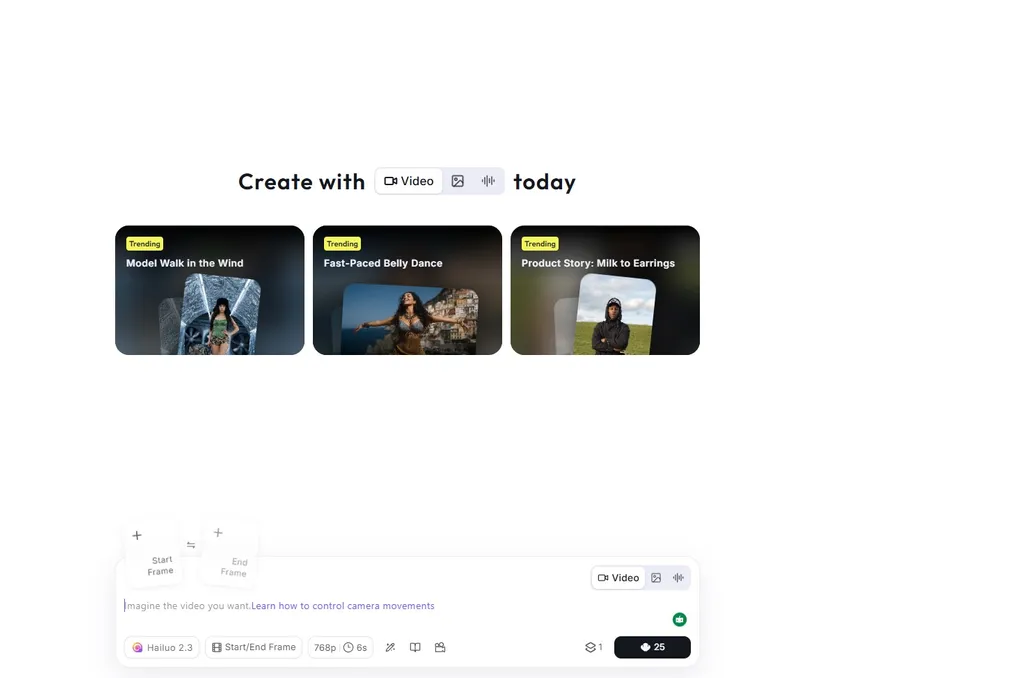
Hailuo AI from MiniMax has gained popularity thanks to the MiniMax-01 model, which is considered the best free generator for simulating real-world motion. It is equipped with specialized models capable of processing complex hydrodynamic processes and human interactions, which helps avoid AI hallucinations when creating videos about cryptocurrency exchanges. A reliable system of daily credits is provided to users for free.

Kling AI 3.0 is a major player in the video generation industry, often compared to Sora but more accessible. It supports native 4K output and generates 15-second clips, surpassing most other tools in handling panoramic and orbital shots. Some cryptocurrency marketing agencies use Kling AI to create high-definition content, receiving daily free credits.

Wan 2.2 is one of the fastest-growing tools, a powerful open-source project optimized for speed and commercial viability. It is distinguished by exceptional stability and lack of artifacts. Commercial use is permitted in some versions of Wan 2.2, making it suitable for creating commercials or long videos on exchanges. Access is possible through third-party hubs like Cover or HuggingFace, and it can operate offline.

Vidu focuses on storyboard creation, making it a favorite among novice filmmakers. It excels at maintaining consistency across multiple objects and specific narrative templates in different scenes. Vidu Q3 works very well for social interactions, such as hugs, and the free plan provides a monthly credit allocation.

OpenAI developed Sora to transform detailed prompts into cinematic videos. Sora is ideal for creative storytelling, as the system generates surprisingly coherent videos based on natural scene descriptions. Thanks to deep integration with DALL-E 3, Sora simplifies video production for writers and marketers, helping to build a unified world.

Google Veo focuses on reliability and consistency. While it may not always create the most fantastical scenes, it demonstrates high efficiency in commercial workflows, offering stable 1080p cinematic output. Its stability is valued by brands and agencies, leading to the use of Google Veo for crypto presale advertisements.

Pika AI has gained huge popularity among content creators for TikTok and Instagram due to its easy-to-use and visually appealing image-to-video transformation effects. It is ideal for stylized 3D and anime content and allows for sound effect generation and lip-syncing.

Runway remains one of the strongest professional AI platforms for video. RunwayML Gen-3 combines editing tools, scene management, and advanced AI generation into a single ecosystem. Even the free tier gives insight into capabilities, including hyperrealistic human motion and professional features like Director Mode.

LTX Studio aims to give users precise control at the scene level. Instead of random generation, users can meticulously structure frames, transitions, and character movements, making it similar to a production package. This is the best choice for those who want complete creative control over every frame.

PixVerse AI is popular due to its active community of creators who share templates and ideas. For beginners, PixVerse seems more accessible and engaging thanks to meme templates and fast generation.

Types of Workflows in AI Video Generation

There are two main types of workflows in AI video generation tools. The first is the basic chatbot principle: the user enters a prompt, and the tool creates a world from scratch, describing the environment, mood, lighting, and action. This method is excellent for storytelling, explainer videos, and conceptualization.

The second type is image-to-video conversion. In this case, the user uploads one or more images, and the tool creates a video based on them, which is convenient if one does not want to write a detailed prompt. Providing the tool with a specific face or scene from the start helps maintain consistency.

Important Points Before Getting Started

It is important to remember that almost all free video generators will contain watermarks, which is a measure of transparency. A paid subscription is usually required to create watermark-free content. Free plans are intended exclusively for personal use; for commercial campaigns, you should consider paid options after carefully reviewing the licensing terms.

Adherence to norms and content originality are also crucial, especially when promoting topics related to cryptocurrencies. Commercial safety and copyrights must be checked. There are cloud systems, such as Runway and Kling, that run on external servers, and local generation, such as in Wan 2.2, which ensures greater privacy and offline capability.

The AI video industry is developing rapidly. Although all the best free generators offer high cinematic quality, the choice depends on the user's needs. Hailuo AI is recommended for excellent physics, Kling AI for cinematic 4K, and Higgsfield is useful for comparing models. PixVerse or Pika AI are suitable for simple social media posts.

Similar stories

Goa Government Approves 2026 Artificial Intelligence Policy and Five Technology Development Programs
Read more
www.aajtak.in

Goa Government Approves 2026 Artificial Intelligence Policy and Five Technology Development Programs

The Goa Cabinet has approved the state's Artificial Intelligence (AI) policy for 2026, along with five key initiatives. Sixty percent of the total funds allocated under this policy will be directed towards upskilling and developing AI-related skills.

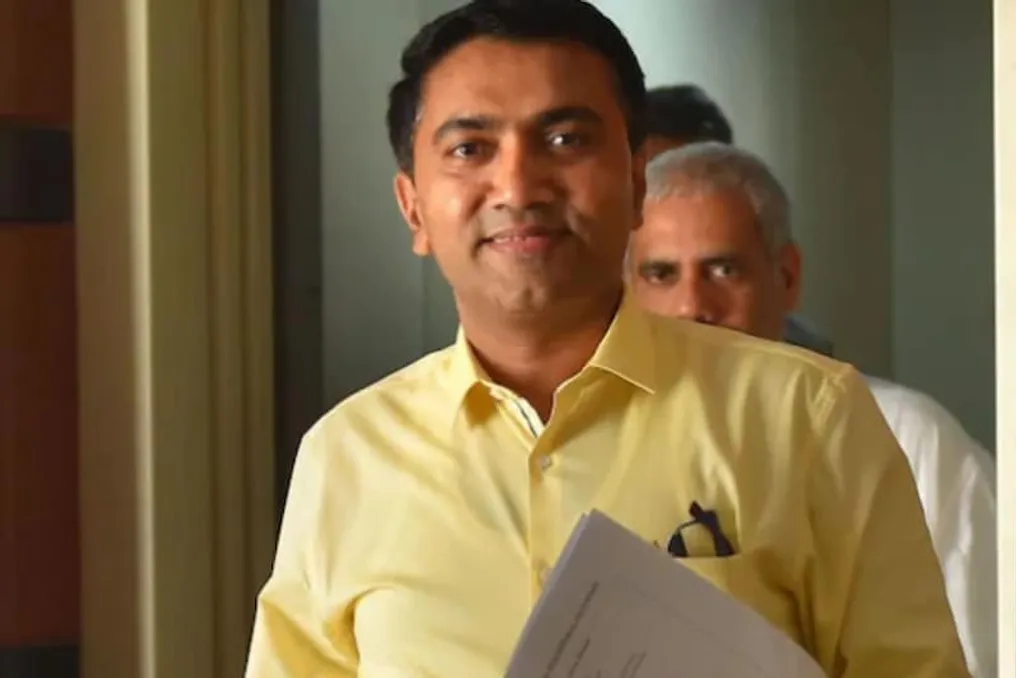
Chief Minister Pramod Sawant announced this following the cabinet meeting on Wednesday. He emphasized that AI training will cover all levels of education, including school and college students. Under the Goa AI Mission 2027, the government aims to prepare 50,000 graduates with AI skills by 2030.

Information Technology Minister Rohan Hanvate stated that the Innovation Fund has allocated 250 million rupees, with an additional 10 million rupees planned for the next quarter. Twenty percent of the policy funds will be used to support AI startups, and twenty percent will be dedicated to infrastructure development.

Under the AI Ready Goa program, basic knowledge of AI will be taught in schools. The plan includes establishing AI laboratories in no more than 50 government schools, training 500 teachers, and forming a network of 100 AI experts to assist in capacity building.

In accordance with the Konkani AI and Research Excellence program, a large language model for Konkani will be developed, with data collection related to the language being based on community verification and consent.

The Udyam AI program aims to increase the use of AI in micro, small, and medium enterprises. According to the plan, support is planned for at least 200 such units annually.

Through the Goa AI Startup and Innovation Promotion program, startups, SMEs, and research units will receive support in incubation, prototyping, and through government-organized hackathons and innovation contests. A plan is also in place to develop the Goa AI Lab as a co-working space and innovation hub.

The Goa AI Infrastructure and Compute Access program will provide computing power equivalent to approximately 100 Graphics Processing Units (GPUs). A maximum of 10 percent of this capacity will be reserved for sensitive and priority government needs.

Gartner forecasts AI will eliminate 890,000 jobs but create 1.06 million new opportunities
Read more
www.aajtak.in

Gartner forecasts AI will eliminate 890,000 jobs but create 1.06 million new opportunities

According to Gartner's estimates, artificial intelligence (AI) is capable of creating more new jobs than it will destroy by 2030; however, millions of workers face the need to adapt to changing roles, hiring delays, and growing uncertainty as companies revise their approaches to recruitment and employee skills.

As the use of artificial intelligence among personnel grows, concerns about job loss are intensifying. Technology companies are transforming their methods of operation and restructuring team compositions. This is also reflected in hiring processes. While some people lose their jobs due to AI, others are offered severance packages, but this period may present a different picture with a positive forecast.

According to the business and technology research firm Gartner, AI can generate more new jobs than it eliminates. Gartner predicts that between 2025 and 2030, 10.6 million jobs will be created globally, while 8.9 million jobs may disappear. Thus, an overall employment increase of 1.7 million is expected.

Nevertheless, the emergence of new vacancies does not guarantee easy job retention or transition to a new role for existing employees. In Gartner's view, the impact of AI on employment will not be limited to large-scale layoffs; on one hand, AI can generate new employment opportunities, while on the other, the implementation of automated work technologies and changes in operational structure can render many existing roles obsolete.

In its forecast published on November 10, Gartner also stated that by 2030, between 0.4% and 1.8% of the world's total workforce may lose their jobs directly due to AI. It is important to distinguish between job loss and a change in the nature of work.

Gartner predicts that over 20% of employees, which is about 435.5 million people worldwide, must adapt to changes in their duties, ways of working, and daily tasks. This means that instead of complete job loss for a large group of employees, there may be a challenge of changing their current role and methods of work.

There is also a risk of slowing down hiring rates. Business and IT leaders have postponed the creation and hiring of 1.3 million positions in 2026, while 2.2 million jobs were cut and 1.6 million new ones were created during that period. According to Gartner's forecast, around 5 million people may face hiring delays by 2030, as organizations may decide to postpone the creation of new positions for some time.

However, postponed and cut jobs are different things. This can affect young specialists and those starting their careers. Even if companies do not announce layoffs, the lack of team expansion can lead to fewer opportunities for entry-level positions, increasing competition for existing roles.

The impact of AI on employment will vary across different sectors. Gartner notes that by 2030, the technology sector may see the creation of 1.9 million jobs, with a projected reduction of 400,000 jobs. Furthermore, AI is expected to significantly affect the work of about 70% of employees in this sector. In raw material sectors, 6.4 million new jobs may appear, but 6 million jobs may be cut. In the public sector, 4 thousand new jobs are predicted to appear with a reduction of 900,000.

These data clearly show that the impact of AI will not be uniform across all sectors. In some areas, new opportunities will emerge, while in others, employment will decrease.

With the growing use of AI, an important question arises not only about the number of jobs created or destroyed, but also about whether employees possess the necessary skills, training, and opportunities to work in changing roles. The employment crisis that many foresee due to AI may not materialize. However, an increase in overall employment is not a guarantee of job security for every employee.

Although statistically new opportunities may exceed old ones, many familiar roles may disappear. This could widen the gap between employees who are able to adapt to changes and those who cannot. The true test of AI-related changes will not only be how many jobs appear by 2030, but whether people whose workflows are changing can find their place in the future.

Popular