The friendly match of the Uzbekistan national team in Qatar against the invincible Saudi Arabia national team was supposed to serve as a final serious test for the Uzbeks before the Asian Cup. However, due to the tournament postponement, the game took place in an almost empty stadium. Despite the victory of the Uzbek team with a score of 2:1, watched by just over a hundred spectators, most of whom came with the country's flags, this result is unlikely to be considered sufficient preparation.
The Saudis, playing in the minority for most of the second half, barely managed to catch up at the end. Nevertheless, this match marked the end of a difficult playing period for the Uzbekistan national team, which is still searching for its optimal style of play against strong opponents. To avoid premature optimism, one should recall the results of Uzbekistan's performance at the 2026 World Cup.
An analysis of the past year inevitably leads to a comparison of two different squads that wore the mantle of the Uzbekistan national team—the teams of Timur Kapadze and Fabio Cannavaro. This comparison concerns not so much an assessment of 'better or worse,' but rather differences in style and player composition. The historical qualification of the Uzbekistan national team for the World Cup was the main achievement of Timur Kapadze, who took over from Slovene Srečko Katancic.
However, the World Cup itself was a test that the team had to pass under the leadership of the new coach—Fabio Cannavaro. If the domestic specialist managed to bring Uzbekistan into the football elite, the Italian faced a much more difficult task—to demonstrate that the national team is capable not only of participating at the world level but also of playing effectively.
The World Cup serves as a platform to demonstrate global achievements in tactics, game construction, and athlete preparation. Three defeats at the 2026 World Cup clearly highlighted the difference between what was achieved and what the team needs to do. Furthermore, the global tournament clearly showed how far behind the Uzbek team lags both from leaders and mid-tier teams.
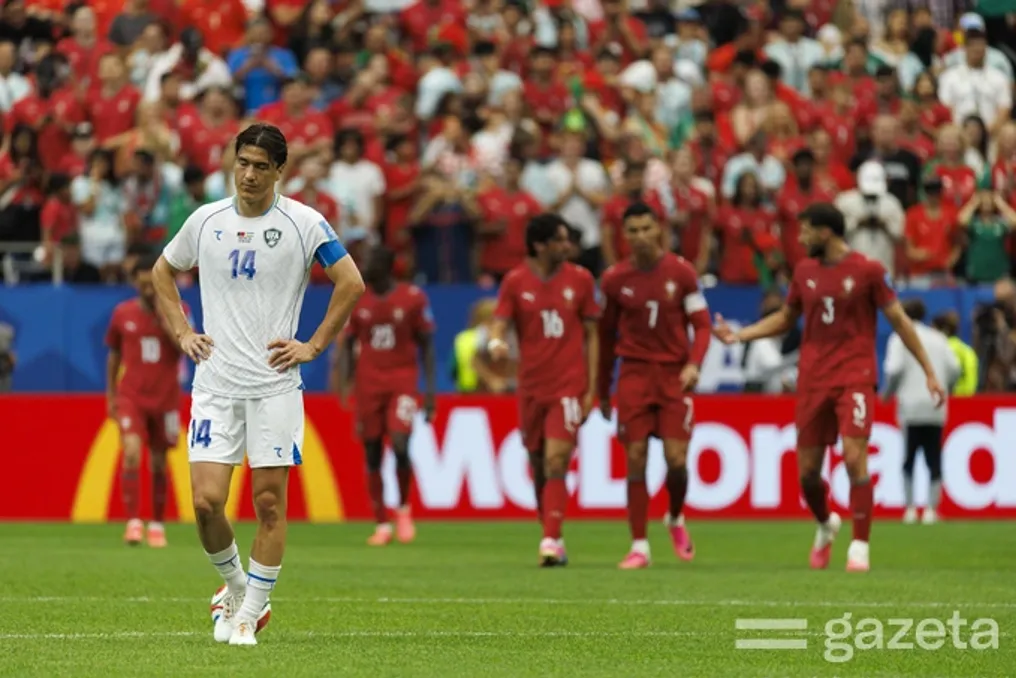
Uzbekistan's failures were particularly noticeable against the success of teams with similar rankings, such as the national teams of Cabo Verde and DR Congo. The opening defeat against Colombia (1:3) could be explained by psychological pressure, but the fiasco against Portugal (0:5) had no excuse: the Uzbekistan national team looked like a clear underdog. Even more telling was the match against the Congolese, where the Uzbeks were leading but failed to maintain the advantage (1:3). The team has not yet learned to control the game when the opponent significantly increases the pressure.
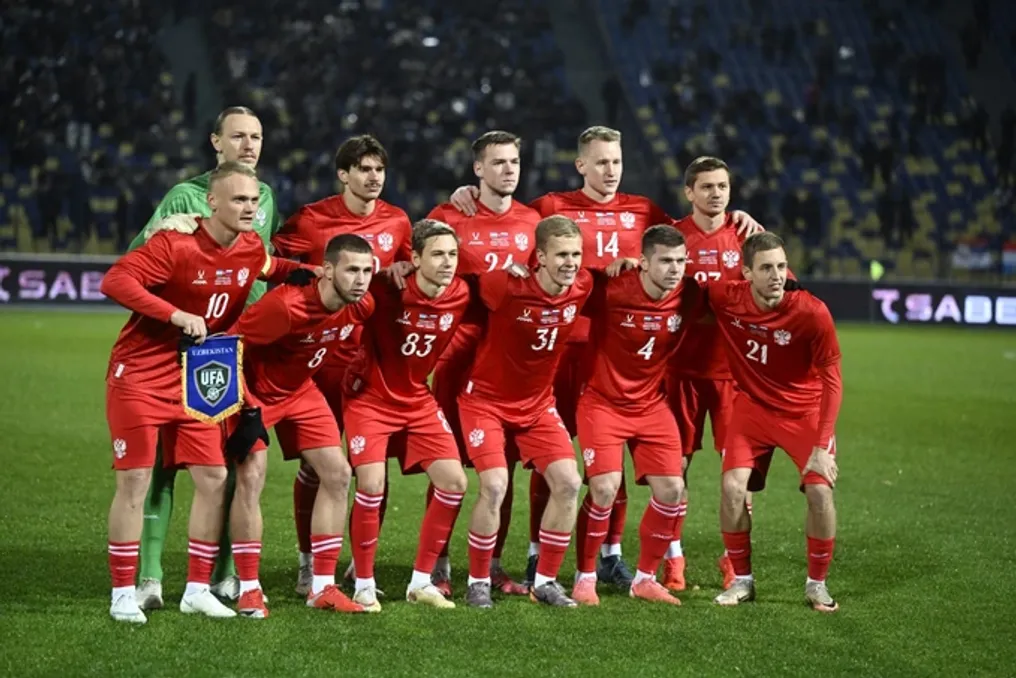
The autumn games provided enough diverse material for reflection. Victories over a dismantled Iran (3:1) and a crisis-ridden Syria (4:1) once again sparked a wave of excessive optimism, giving hope that the team would restore its rhythm after the setbacks at the World Cup. However, the defeat against South Korea (0:2) in a match that was decent for the Uzbekistan national team once again exposed long-standing problems in playing against high-class opponents. In the match against the Russian team, where Uzbekistan led 2:0 but lost 2:3, it became clear that the team does not always know how to manage a significant advantage.
To Cannavaro's credit, after the game against the Russians, he admitted for the first time, leading the Uzbekistan national team, the existence of tactical and substitution errors. This only confirms that the problem with personnel in the team remains unresolved. Uzbekistan possesses many talented players, including Husanov, Shomurodov, Faizullaev, and Karimov, but the current depth of the squad does not allow for easy replacement of key footballers, and problems exist in almost all positions.
Kapadze left his successor a very worthy legacy, but not a fully ready mechanism that could operate at full capacity. The Italian applies methodologies taught in coaching schools, but the cumulative effect of the rotations carried out so far has not yet transformed into the expected quality in matches against strong teams.
The Uzbekistan national team has not yet mastered, perhaps the most important aspect of modern football—the ability to quickly change the character of the game. Defending a strong team does not always allow for mistakes like those made by Russia in 'Pakhtakor', and Iranian defenders are not prone to giving away the ball so easily as happened in the September match in Fergana. The team's problem lies not so much in choosing a specific tactical scheme, whether it be 3-4-2-1 or 4-3-3.
A question arises that will haunt Cannavaro until the Asian Cup: who should take the main responsibility in this national team? Under Kapadze, this responsibility was distributed collectively—everyone knew their role and strove to meet the overall plan. Cannavaro has not yet been able to find harmony between players capable of creating and those who must ensure their creative realization. After all, a team where everyone wants to play the piano, but no one is willing to carry it, rarely achieves success.
The current coaching staff is fortunate with the postponement of the Asian Cup to December 2027, which gives the Italian almost a year of additional work. However, this extra time could turn into a trap: without a major official tournament, the team will have to maintain competitive level for a long time, and the coach will have to continuously prove progress.
Of all the promises made after the World Cup, Cannavaro has fulfilled only one so far: comparing the current squad with the squad from a year ago or with the list of players called up by the Italian for the first camp. The generational change that was widely discussed is happening gradually, but it is happening.
Regardless of success, during the next year, the concept of the 'Uzbekistan national team' will embody this transforming team, which still has much to learn and master how to play like a perfectly tuned musical instrument.