Goukamma: Nature Reserve on the Garden Route with Dunes, Trails, and Water Bodies
Read more
Getaway
getaway.co.za

Goukamma: Nature Reserve on the Garden Route with Dunes, Trails, and Water Bodies

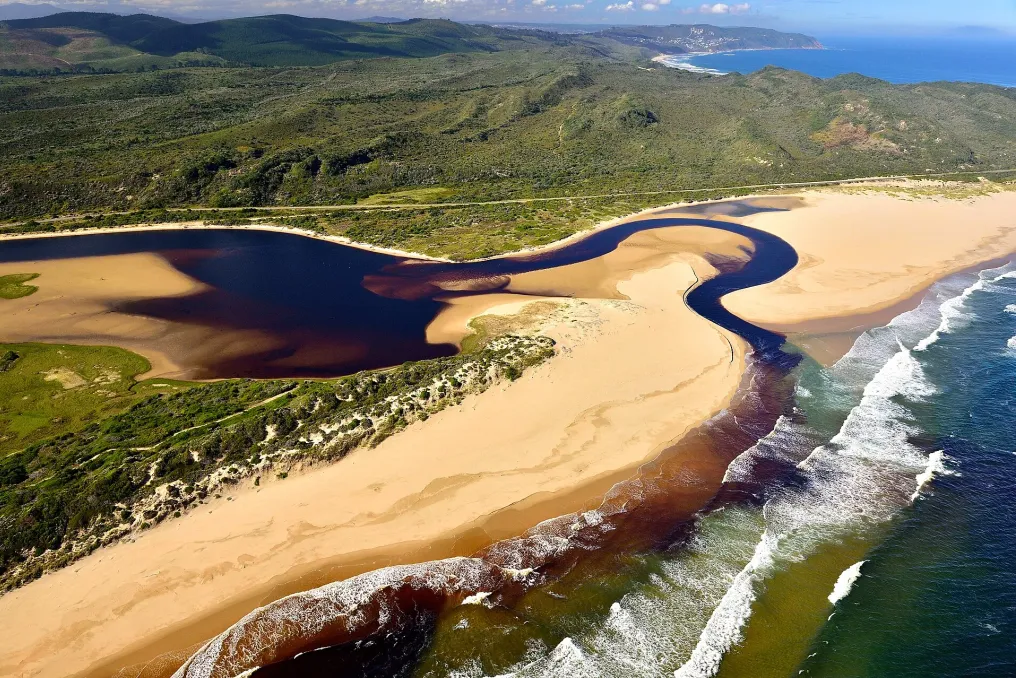
When traveling along the Garden Route, it is easy to overlook the section between Saddleighfield and Knysna by focusing only on dining spots. However, if you turn off towards Buffalo Bay, you can spend the morning climbing the fynbos ridge, and then have lunch by the Goukamma River with kingfishers.

This is an excellent way to explore the Goukamma Marine and Nature Reserves. Walks lead from overgrown dunes to Milkwood Forest, and the water visible from the ridge offers a place to rest after hiking. One day is enough for a hike and picnic; if you stay overnight, you can dedicate the morning to Groenveld.

If you choose one route, the Bush Pig Trail is worth stopping at. This 6.5 km circular route takes about two to three hours and passes over the fynbos ridge with views of the river, estuary, and sea. The return journey goes through Milkwood Forest, which provides pleasant shade after being on the ridge. Before starting the hike, check with the reception desk regarding the foot ferry, as the self-propelled crossing is used to access several trails from the riverbank.

For a longer day on the dunes, the Porcupine Trail, spanning 13.5 km, is available. It will take four to five hours and ends in Groenveld, so you must arrange transportation in advance. If you prefer the sea, you can walk along the coast on the Galjoen Trail, 12 km long, to Platbank; in this case, you need to arrange a meeting there and check the tide tables, as CapeNature reports that the route is inaccessible during high tide.

Upon returning to the riverbank, it is worth staying at the picnic area to watch the kingfisher hovering over the water or the grey heron on the edge. If you wish to go out onto the river, you can ask the reserve office about renting a double canoe. CapeNature provides paddles and life jackets, and visitors are allowed to bring their own canoes or kayaks.

Groenveld offers a different kind of morning. It is a freshwater lake into which no river flows, and it is separated from the Goukamma estuary. The Cape Clawless Otter Trail, 6.5 km long, follows the southern shore of the lake along a flat road back and forth through local forest and coastal vegetation. This is a hike best left for the second day when you just want a few hours of walking without another climb up the dunes. During the walk, you can listen to the birds in the Milkwood forests; BirdLife South Africa lists the European Robin among possible species.

CapeNature offers self-catering accommodation options in Goukamma, including the Buffalo Valley lodges by the river and Mvubu Bush Lodge on the Groenveld side. Mvubu accommodates four people and overlooks the lake from the Milkwood forest section. You should choose riverside accommodation if your goal is to maximize trails and paddling, or stay near Groenveld if you want to wake up with a view of the lake.

To enter the main reserve entrance, use the Buffalo Bay exit from the N2 highway between Saddleighfield and Knysna. After driving about 8 km on the road, turn right into the reserve. The CapeNature brochure states that the gates are open from 08:00 to 18:00. Hikers can obtain permits upon arrival. To check the availability of trails, ferries, and canoes before your trip, it is recommended to call the reserve office at 087 087 3946.

If Goukamma is part of a longer Garden Route trip, it is worth leaving the second half of the day free after hiking. From the Bush Pig ridge, you can see the river winding towards the sea. A little later, you can return to the water's edge to have lunch and watch the kingfisher. It is important to turn around in time to do both.

Similar stories

Rorke's Drift Battlefield Visit in KwaZulu-Natal: Looking Beyond the Famous Film
Read more
getaway.co.za

Rorke's Drift Battlefield Visit in KwaZulu-Natal: Looking Beyond the Famous Film

Few places in South Africa are as closely tied to a single military confrontation as Rorke's Drift. This historical site, located near the Buffalo River in northern KwaZulu-Natal, gained international recognition after the battle that took place here on January 22 and 23, 1879. During the Anglo-Zulu War, a small British garrison station defended a missionary post against Zulu forces.

Although Rorke's Drift is immortalized in the 1964 film 'Zulu,' it has long attracted visitors interested in military history. However, beyond the familiar cinematic scenes of barricades, rifles, and desperate nights of battle, this location offers an opportunity to study the landscape, preserved heritage, and the broader context of one of the most significant conflicts of the 19th century in South Africa.

Today, visitors can walk through the grounds, visit the museum, view memorials, and historic graves to place this battle within the overall history of the Anglo-Zulu War—a conflict shaped by Britain's imperial ambitions and the resistance of the Zulu Kingdom.

The place got its name from the Irish trader James Rorke, who established a trading post and crossing near the Buffalo River. After his death in 1875, the property became associated with the Swedish missionary station called Oscarsberg, named after King Oscar II of Sweden. The hill overlooking the settlement was known to the Zulu as Shiyane.

By January 1879, this area had become strategically important for the British military campaign. Missionary buildings were captured: one house was converted into a hospital, and the chapel was used as a supply depot. The crossing over the Buffalo River also facilitated the movement of British troops and supplies into Zululand.

The British invasion of Zululand began on January 11, 1879, after the expiration of the ultimatum delivered to King Cetshwayo. British imperial authorities sought to expand their influence in the region, and this invasion launched a campaign that had long-term consequences for the Zulu Kingdom. Thus, Rorke's Drift was not merely an isolated military outpost but part of a logistical network supporting the invasion.

On January 22, 1879, the British suffered a crushing defeat at Isandlwana, where the Zulu army overwhelmed British forces. News of this disaster reached Rorke's Drift in the afternoon, prompting the garrison to prepare for an attack.

Defenders under the command of Lieutenants John Chard and Granville Bromhead began fortifying the missionary station using any available materials. Corn sacks, biscuit boxes, carts, and other supplies were arranged to create defensive barriers between buildings and around the complex.

The position was particularly vulnerable because the missionary station was small and housed sick and wounded British soldiers. Retreat was not considered a viable option for the garrison.

Zulu forces, led by Prince Dabulamanzi Mpandle, attacked the missionary station late on January 22. Fighting continued throughout the night, with repeated assaults on the defensive perimeter and fierce battles around the hospital.

The defenders had to evacuate parts of the hospital as fighting intensified, and the building eventually caught fire. They retreated to increasingly compact defensive positions, continuing to resist until the Zulu forces withdrew early on January 23. Seventeen Britons died in the defense, while Zulu losses were significantly higher. Historical estimates vary, but the battle was fierce and resulted in significant casualties among the attacking forces. Eleven Victoria Crosses were awarded to the British defenders, contributing to the battle's lasting significance in British military history.

The battlefield is best explored on foot, allowing visitors to traverse the landscape where the defense took place and see how the layout of the missionary station influenced the course of the battle. The Rorke's Drift interpretation center and museum help visitors understand the battle through historical exhibits and the interpretation of the site's heritage. The museum and reconstructed missionary buildings provide context to the events of January 1879, from the British invasion to the defense of the station.

Instead of relying solely on the film's depiction, visitors can use the exhibits to understand the physical layout of the settlement, the defensive structures, and the circumstances under which the battle unfolded. A walk through the site gives insight into the compact nature of the missionary station. Defenders had to guard several buildings and vulnerable areas, including the hospital, the storehouse, and the surrounding complex.

The layout of the battlefield is an important part of its history. It was the buildings, the available supplies, the terrain, and the limited space that determined the defense and the decisions made during the night. Memorials and burial sites are part of the battlefield's heritage landscape. They commemorate the memory of the British soldiers who died in the battle and provide a tangible connection to the people involved in the conflict. There are also memorials on site related to Zulu losses, reminding visitors that the story of the battle extends beyond the celebrated British defense. The Zulu soldiers who fought at Rorke's Drift were defending their kingdom during the British invasion, and their experience deserves to be part of the interpretation and memory of this place.

The 1964 film 'Zulu,' starring Stanley Baker and Michael Caine, introduced Rorke's Drift to a global audience and helped many understand this battle. However, its dramatic portrayal of the British defense is not a complete account of the war or the people involved. The Anglo-Zulu War was a conflict initiated by British expansion into South Africa. The British invasion of the Zulu Kingdom followed political tensions, territorial ambitions, and an ultimatum delivered to King Cetshwayo. The war ultimately led to the defeat and dissolution of the Zulu Kingdom, with consequences extending far beyond the battlefield.

Rorke's Drift is often remembered through the lens of military heroism, but visiting the site allows one to examine the broader conflict: the invasion, Zulu military strategy, the lives of soldiers and civilians affected by the war, and the historical narratives that have shaped the memory of the battle. The fame of the battle is also partly linked to its role in the public perception of Britain following the catastrophic defeat at Isandlwana. The defense became a celebrated story of military resilience, while the wider invasion and its consequences often remained in the shadows of popular accounts.

Rorke's Drift is also connected to significant artistic and cultural heritage that extends far beyond the battlefield. The ELC Arts and Crafts Centre became an influential institution in South African art, especially during the apartheid era. The art school and its associated workshops played a vital role in developing Black artists, providing opportunities for creative self-expression through printmaking, weaving, and other artistic disciplines. The school closed in 1982, but the broader craft heritage of Rorke's Drift continues. The center is associated with characteristic tapestries, woven rugs, ceramics, screen printing, and local handicrafts. Visitors can find beadwork, baskets, wirework, woodwork, and other handmade items. This artistic tradition is particularly interesting as it offers another way of understanding the region's heritage. Rorke's Drift is not just a place of military history, but also a place connected to creativity, cultural expression, and the development of South African art during a difficult period in the country's history.

Visiting Rorke's Drift is especially valuable if combined with a trip to Isandlwana, the battlefield where the British suffered a crushing defeat earlier on January 22, 1879. These two sites are closely linked by the events of that day. Isandlwana became a major Zulu victory, while Rorke's Drift became a celebrated success of British defense. Their contrasting outcomes determined the course of the war and subsequent historical narratives. Visiting both battlefields helps place Rorke's Drift in context, allowing travelers to explore the Anglo-Zulu War beyond one famous clash and gain a deeper understanding of the events, decisions, and people involved. Rorke's Drift is located in northern KwaZulu-Natal, near the Buffalo River, and is part of the historical Anglo-Zulu War Battlefield Route. It can be included in a longer trip covering battlefields, historical sites, and towns around Dundee. While Rorke's Drift may be known for the dramatic events of one night in January 1879, its significance extends far beyond the battle immortalized on screen. From the landscape along the Buffalo River to the museum, memorials, and artistic heritage, this place offers a chance to engage with a complex chapter of South African history.

Introduction to Magwa Plantation: Tours, History, and Waterfall
Read more
getaway.co.za

Introduction to Magwa Plantation: Tours, History, and Waterfall

If your plans for the Wild Coast are mainly focused on beaches, it is worth setting aside time to travel inland. Near Lusikisiki, Magwa Plantation offers a pleasant reason to spend several hours away from the sea.

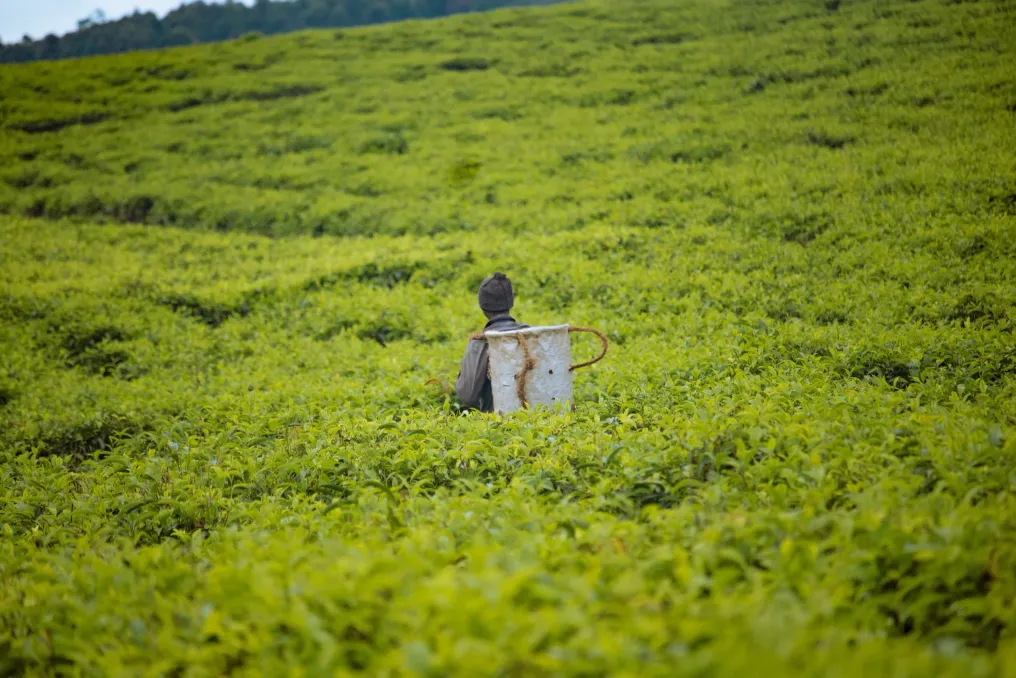
The plantation grounds feature hills covered in tea fields, interspersed with patches of forest. The Magwa waterfall is located within the plantation, cascading into a narrow canyon. You can plan a trip around one of these attractions, but it is worthwhile dedicating time to both.

If you enjoy a cup of tea, there is something special about learning about the place where it originates. Tea has been part of this landscape for decades. According to a presentation by the Eastern Cape Department of Agriculture, experimental plots were planted in Lusikisiki in 1960. Production at Magwa began with 50 hectares of seedlings in 1965, and the factory was built in 1969.

Today, Magwa and Madjola, a separate plantation near Port St Johns, are part of Magwa Enterprise Tea. Both have their own processing factories, and the company specializes in black tea.

Behind these fields lies human history. The plantation provided employment and supported the local way of life, although its operation has faced difficulties. In its political speech for 2025/26, the provincial department of agriculture reported high operating costs for Magwa and Madjola, as well as efforts to attract investment and improve infrastructure.

Knowing this history allows for a deeper appreciation of the sights encountered during a visit. For the people who work here, these hills are part of daily life.

Most of us brew tea without considering how it ends up on our tables. Visiting Magwa provides an opportunity to ask some questions. The plantation's public tour program includes walks through the fields, observing tea picking, and visiting the factory to learn about the processing process. Tasting brewed tea and visiting the factory shop are also offered, which can be a good opportunity to purchase a souvenir.

Before building your day around this event, you should contact the plantation. The tour description is dated 2019, so it is necessary to clarify what activities are currently running and whether the factory will be operational during your visit.

Local administration also points to a tea restaurant at Magwa. If you wish to stay for lunch, it is advisable to inquire about the restaurant's opening hours.

While you are there, allocate time for the Magwa waterfall. The Eastern Cape tourism portal reports that the waterfall is approximately 144 meters high, with water plunging into a narrow canyon within the plantation.

This is a good reason to spend a quiet day in the area. You need to check accessibility through the plantation or your accommodation and ask about hiring a local guide familiar with the route. Wear shoes with good tread and stay away from the edge of the canyon. The Department of Tourism account describes the approach from the parking area as rocky and slippery, so current conditions must be checked before leaving.

Confirm access, tours, bookings, and any fees, and request advice on the direction of travel and road conditions for your vehicle. If you plan to stay nearby, the municipality lists accommodation options in Lusikisiki and Mbotyi. This will allow you to dedicate enough time to the plantation without trying to cram everything into a rushed stop.

This is the appeal of Magwa. It gives a reason to spend more time in this corner of the Wild Coast, learning about the tea and the people whose work is invested in it. Allocate time for the waterfall, support a local guide or business where possible, and perhaps bring some tea home. Your next cup might have a story.

Hansbaai: Discovering Caves, Coastal Trails, and Conservation Initiatives Beyond Whale Watching
Read more
getaway.co.za

Hansbaai: Discovering Caves, Coastal Trails, and Conservation Initiatives Beyond Whale Watching

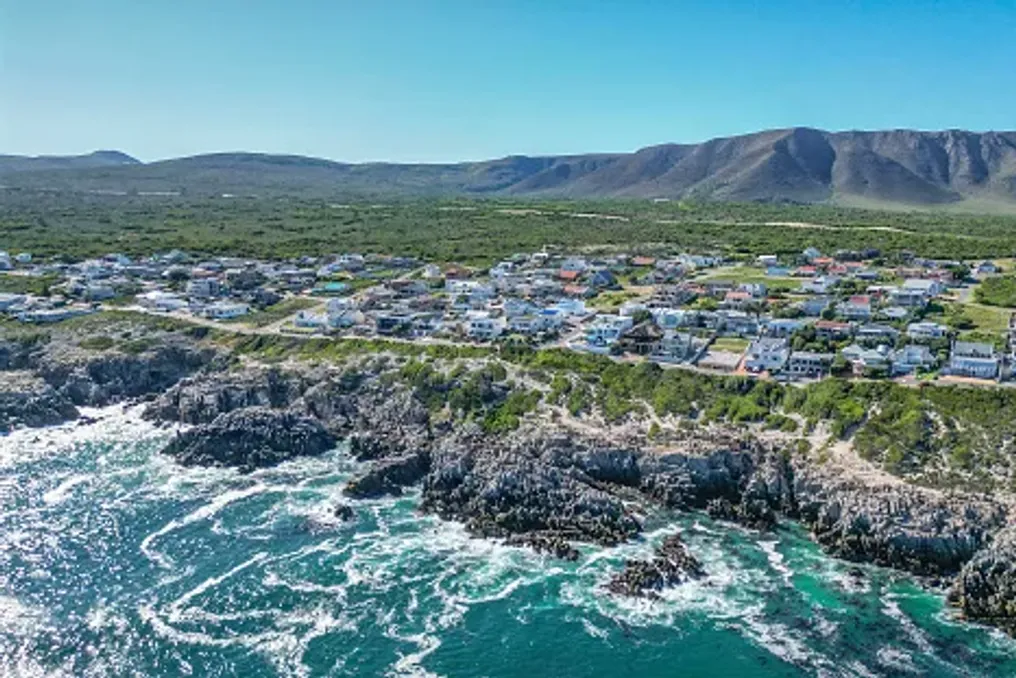
Located on the West Cape Whale Coast, approximately two hours from Cape Town, Hansbaai is surrounded by a landscape shaped by the ocean, centuries of human history, and outstanding biodiversity.

Whether you are exploring archaeological sites, following coastal trails, or learning about efforts to protect endangered marine life, there are many reasons to spend more time here. Beyond the well-known marine attractions, lesser-known spots such as ancient caves, rugged coastal walks, local forests, and fynbos landscapes reveal the area's potential for exploration.

The Archaeological Significance of Klipgat Cave

One of Hansbaai's most interesting locations is Klipgat Cave, a coastal archaeological site that offers insight into the earliest stages of human history. Situated on the De Kelders limestone cliffs, the cave contains evidence of human presence dating back approximately 65,000 – 85,000 years. The archaeological finds have provided important information about the lives of Middle Stone Age communities, including their use of marine resources and the environment.

Today, visitors can access the cave via a wooden boardwalk and steps leading to the entrance. The site comprises two chambers, and a circular boardwalk helps visitors explore its historical significance. The cave's location also provides impressive views of Walker Bay.

The adjacent cliffs offer opportunities for land-based whale watching during the migration of southern right whales, when the animals visit the protected waters of Walker Bay to give birth and nurse their young.

Coastal Routes and Nature Reserves

The coastline around Hansbaai is a destination in itself. Rugged limestone formations, sandy beaches, rocky pools, and expansive ocean views create a landscape best explored on foot. The Walker Bay Nature Reserve is an excellent starting point for experiencing the region's natural beauty. It stretches from the mouth of the Klein River to De Kelders and includes picturesque coastal scenery, diverse birdlife, and vital marine habitats.

Visitors can enjoy scenic walks along the coast, with opportunities to observe birds and whales. During the southern right whale migration, typically from June to November, the protected waters of Walker Bay become an important breeding and calving ground for these marine mammals.

Further along the coast, Pearly Beach offers a quieter seaside retreat, featuring long sandy stretches suitable for leisurely strolls and unobstructed ocean views.

Exploring Inland Areas and Conservation

The landscapes surrounding Hansbaai extend far beyond its beaches. Inland, hills covered in fynbos, mountain slopes, and patches of local forests offer another reason to explore Overberg. One of the most prominent conservation areas in the region is the Grootbos private reserve. Located overlooking Walker Bay, the reserve protects an exceptional section of Cape Floral Kingdom vegetation, including diverse fynbos species and ancient milkwood forests.

Guided botanical walks and conservation activities introduce visitors to the local flora, highlighting the importance of preserving one of the world's richest floral kingdoms. Grootbos also combines biodiversity conservation with community development through its foundation.

For those seeking a deeper experience, the Fynbos Trail offers a multi-day hiking adventure through the Walker Bay Fynbos Conservation area. The leisurely hiking route passes through the fynbos landscapes, forests, and rural scenery of Overberg, with baggage transfer and overnight stays arranged along the way.

Another worthwhile stop is the Plattbos local forest, an unusual pocket of local woodland where visitors can experience a different side of the region's natural environment.

Hansbaai's relationship with the ocean involves aspects that go beyond tourism. The surrounding waters support a vital marine ecosystem, while local conservation organizations work to protect the wildlife that depends on it.

At the Kleinbaai African Penguin and seabird sanctuary, visitors can learn about the rescue, rehabilitation, and release of injured, oiled, displaced, and abandoned seabirds. Established as an initiative of the Dyer Island Conservation Foundation, this sanctuary focuses particularly on the endangered African penguin, whose population faces increasing pressure from food scarcity, habitat change, and other environmental threats.

A visit provides insight into the care provided to these birds before they can return to the wild. It is also an opportunity to learn more about seabird conservation issues along the South African coast.

For a broader understanding of the region's marine biodiversity, consider a marine excursion with Marine Dynamics. Their wildlife tours explore the waters around Dyer Island, where visitors may encounter grey seals, penguins, dolphins, whales, and various seabirds. While wildlife sightings are not guaranteed, the experience allows for a different appreciation of the region's marine ecosystem.

History and Gastronomy of Hansbaai

The Hansbaai coast is beautiful, but its history is also marked by shipwrecks and dangerous stretches of ocean. A recognizable landmark in the area is the Danger Point lighthouse. The lighthouse stands on a rocky headland near where the HMS Birkenhead wrecked in 1852. This tragedy claimed hundreds of lives and was remembered for the discipline of the soldiers who remained in formation while women and children were given priority in the lifeboats.

Afterward, the lighthouse was established to aid ships navigating this hazardous stretch of coast. Today, the cape is worth visiting for its maritime history and spectacular ocean views. It serves as a reminder that the sea shaped Hansbaai's identity in ways that extend far beyond its marine fauna.

A visit to Hansbaai would be incomplete without exploring its culinary and wine offerings. As a fishing town, it has a close connection to the sea, and local restaurants offer the chance to enjoy fresh seafood and traditional coastal cuisine.

For a change of pace, one should visit the Lomond Wine Estate. Set against the backdrop of Overberg's characteristic fynbos landscape, this estate offers wine tastings, blending the region's natural environment with local winemaking. Its location also makes it an attractive stop for those wishing to explore the countryside away from the coast. Visitors can combine tasting with a leisurely day admiring the surrounding scenery.

For a more informal outing, local cafes and harbor spots in Hansbaai can be visited, where the heritage of fishing remains part of the town's daily character.

There is much more to discover outside of Hansbaai's more famous attractions. A coastal drive reveals quieter corners of Overberg, each with its own character. In Franskrat, visitors can explore sandy beach sections and milkwood forest pockets, while nearby Pearly Beach offers long beaches and a slower pace by the sea. For a further journey inland, consider the village of Bardskersdorp. Known for its artistic community and rural setting, it offers a glimpse into another side of Overberg, away from the busier coastal sights.

These small stops are ideal for travelers with an extra day who wish to explore beyond the usual tourist routes.

Hansbaai may have gained international recognition through encounters with marine wildlife, but its appeal extends far beyond the ocean. Its ancient caves, dramatic coastline, local forests, fynbos landscapes, and conservation initiatives represent a place rich in substance.

Whether following a coastal trail, exploring early human history in Klipgat Cave, visiting the penguin rehabilitation center, or enjoying a wine tasting amidst the fynbos, there are numerous ways to experience this corner of Overberg.

For travelers planning a coastal getaway from Cape Town, Hansbaai offers more than just a checklist item. It is a place worth slowing down for.
Popular