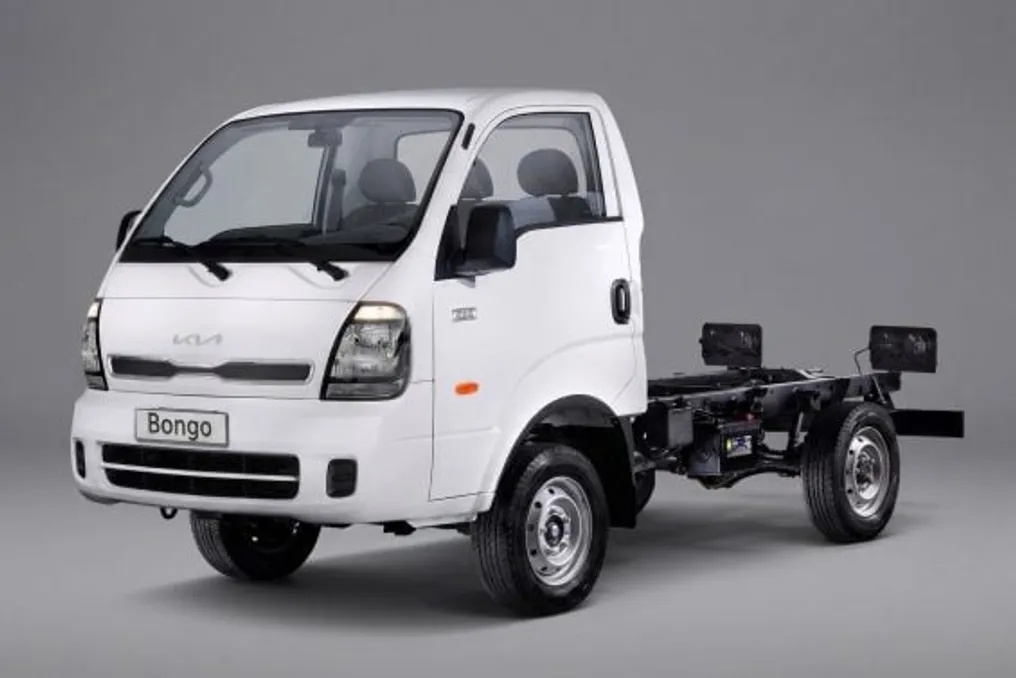
Kia Bongo sales increase by 44% despite 14% drop in the cab chassis segment
Read more
AutoPapo
autopapo.com.br

Kia Bongo sales increase by 44% despite 14% drop in the cab chassis segment

The Kia Bongo is showing sales growth in a sector that is generally declining. According to Kia, the utility vehicle registered an increase of 44.1%, accounting for 3,489 units registered between January and October, compared to the same period in 2025.

Conversely, the cab chassis utility vehicle category, in which the Bongo competes with ten manufacturers and importers, accumulated a 14% reduction over the same period.

José Luiz Gandini, President of Kia Brazil, explained that this advance amidst market contraction is a direct reflection of the demand for the Bongo K2500 4x4 model. The executive attributed this positive performance to two changes implemented in the previous year: the warranty was extended from three to four years or 100,000 kilometers, and the maintenance interval was increased from 10,000 to 15,000 kilometers.

The Bongo is categorized as an Urban Cargo Vehicle (UCV), being a light truck capable of operating in areas where larger trucks are restricted. Furthermore, it can be driven by drivers with a Category B National Driver's License (CNH), the same used for passenger cars.

The 4x4 traction, introduced in May 2023, was developed with a focus on rural use, targeting dirt roads used in agricultural logistics, especially family farming. In terms of chassis, the vehicle has a load capacity of 1,811 kg and supports various types of bodywork, including boxes, metal or wooden structures, in addition to being adaptable for food trucks.

The version with a three-passenger cabin is equipped with a 2.5 turbodiesel four-cylinder engine, generating 130.5 hp and 26 kgfm, coupled with 4x4 traction with a reduced system. Safety and comfort features include stability control, emergency braking signal (which alerts other drivers with flashing lights during hard braking), three-point seatbelts for all occupants, and a dashboard computer with steering wheel controls and an AdBlue level indicator, an urea-based additive that reduces diesel emissions.

Other items included in the package are vinyl seats, fog lights, daytime running lights, and a gradient windshield. The three-seater version with air conditioning has a suggested price of R$ 189,990, and Kia also offers the Bongo with a two-occupant cabin configuration.

Similar stories

Popularity of alternative fuel vehicles grows in India: CNG, hybrids, and EVs surpass gasoline and diesel models
Read more
www.aajtak.in

Popularity of alternative fuel vehicles grows in India: CNG, hybrids, and EVs surpass gasoline and diesel models

A noticeable shift is occurring in the Indian automotive market: the dominance of gasoline is weakening as vehicles running on compressed natural gas (CNG), hybrid, and electric models gain popularity. In October, the share of these three types of vehicles exceeded that of gasoline cars.

Meanwhile, the total volume of car sales decreased by 14.23% year-on-year. However, compared to September, the market showed an increase of 18.86%, indicating that the market is not stagnant but rather that consumer preferences are changing. Data provided by FADA confirms this trend.

According to the latest FADA data, 507,768 passenger vehicles were sold in October. Nevertheless, the timing of Diwali in November influenced October's sales. This month sees a significant change in buyer preferences, with consumers increasingly choosing alternative fuel vehicles over gasoline and diesel ones.

Comparing with last year, 592,032 passenger vehicles were sold nationwide in October of the previous year. Compared to this year, the figure dropped to 507,768 units, reflecting a 14.23% decline in year-on-year sales. However, when compared to September 2026, the picture looks much better: 427,213 passenger vehicles were sold in September, while in October, the number increased to 507,768 units, representing a monthly sales growth of 18.86%.

FADA believes that the drop in annual sales should not be seen as a lack of market demand. The main reason is the high demand last year, when the Navratri and Diwali festivals occurred simultaneously in October. Furthermore, purchases grew despite the reduction in tax rates under GST 2.0. In 2026, customers postponed their purchases for a while because Diwali was moved to November, which affected October figures.

In October, sales of passenger vehicles grew in both urban and rural areas, with the urban market showing better results. Compared to September, retail sales of cars in urban areas rose by 20.10%, accounting for 61.7% of total sales. In rural areas, the monthly growth was 16.90%, with the rural sector accounting for 38.3% of the total passenger vehicle sales.

The most significant change in the automotive market in October relates to fuel choice. For the first time, the combined share of vehicles with supplementary fuels, such as CNG, hybrids, and electric vehicles, surpassed the share of gasoline and ethanol blends. According to statistics, the overall share of gasoline and ethanol vehicles decreased to 41.60% in October, compared to 48.96% in October 2025. On the other hand, the share of vehicles with supplementary fuels grew to 41.83%. CNG vehicles contributed the most to this growth, reaching a share of 24.59%. The share of hybrid vehicles was 9.94%, and the share of electric vehicles was 7.30%. The share of diesel vehicles remained at 16.57%, indicating a shift by consumers from gasoline and diesel to other types of fuels.

One factor contributing to this is the rise in gasoline prices and recent debates surrounding E20. Consumers remain uncertain about E20 fuel. The government acknowledged that using E20 fuel could lead to a 3% to 6% decrease in fuel consumption. Additionally, the possibility of component damage in older vehicles may have forced buyers to change their choices.

Demand for electric passenger vehicles also significantly increased. During Navratri 2026, retail sales of electric vehicles jumped by 36.66%, reaching 13,349 units. This is attributed to the price of electric vehicles approaching the prices of gasoline and diesel models, as well as improved range, making EV purchase more accessible to customers.

According to FADA, the inventory level of passenger vehicles in October was maintained at 43–45 days, unchanged from September. However, it is expected that purchases will increase in November during Dhanteras and Diwali, which could lead to a decrease in dealer stock. Actual sales data during Diwali is yet to be received.

Sharp rise in alcohol sales observed in Delhi during Diwali festivals
Read more
www.aajtak.in

Sharp rise in alcohol sales observed in Delhi during Diwali festivals

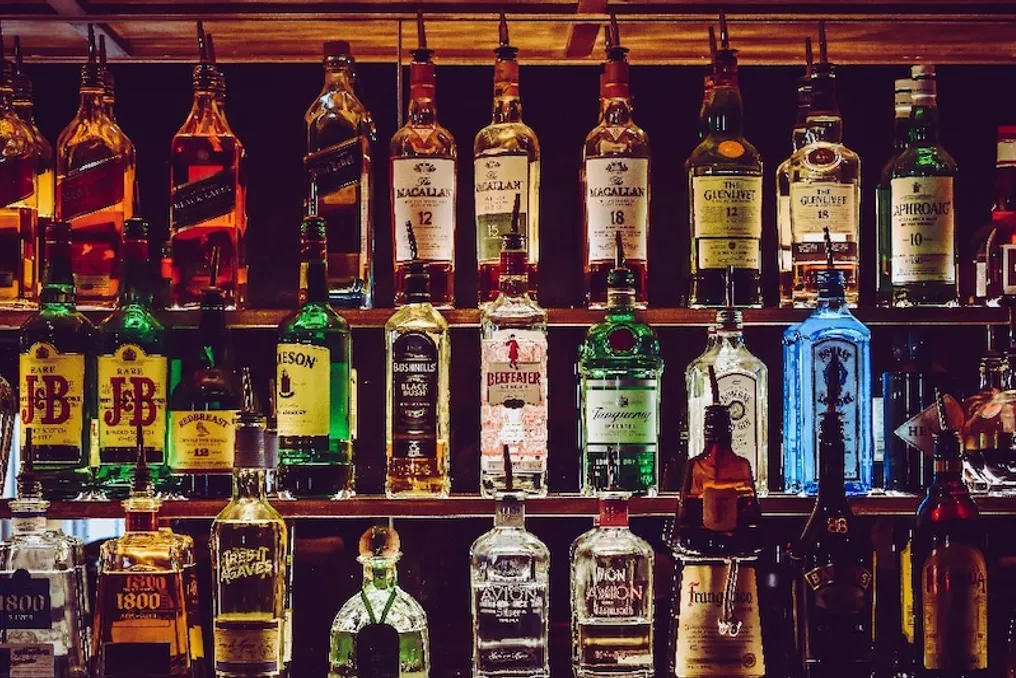
A significant surge in alcohol sales has been noted in the capital city of Delhi during the Diwali festival period. Over the past two weeks, alcohol sales in Delhi have increased by 13% compared to last year, bringing in revenue of approximately 600 million rupees for the tax department.

According to the tax department's data, 33.1 million bottles of various brands of alcohol were sold during the two festive weeks this year. Meanwhile, 29.6 million bottles were sold during the same period leading up to Diwali in 2025.

Regarding revenue, the tax department registered total earnings of 589.17 million rupees during the current year's two festive weeks, compared to 518.97 million rupees last year.

In accordance with a previous directive from the department, a 'dry day' was declared in Delhi on Diwali, and all liquor stores were closed. Because of this, the day preceding the festival, November 7th, saw a large crowd at liquor stores, leading to sales amounting to over 79 million rupees.

On the night before Diwali this year, 4.045 million bottles were sold worth 79.25 million rupees. This significantly exceeds the figures from last year, when 3.470 million bottles were sold worth 63.40 million rupees on the same day.

Officials stated that these sales figures are preliminary and may be adjusted after reconciliation with final data from four state corporations responsible for retail sale of alcohol in more than 700 stores across the city.

According to available data, revenue from alcohol sales reached 792.52 million rupees by 2026, compared to 634.08 million rupees in 2025, demonstrating a substantial growth of 24.9 percent.

It should be noted that the retail trade of Indian Made Foreign Liquor (IMFL), foreign alcohol, and beer in Delhi is restricted to four Delhi government corporations: DTTDC, DSIIDC, DSCSC, and DCCWS.

Popular