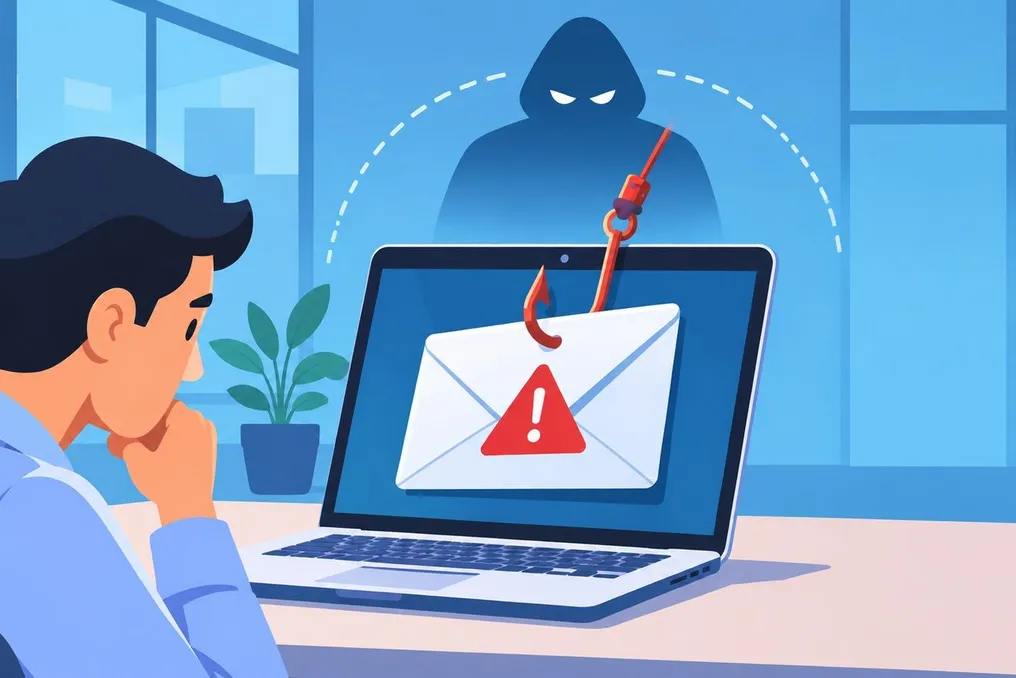
Phishing is the most frequently registered cyber incident among companies surveyed in the Asia-Pacific region; however, for India, a more serious warning is that attacks exploit weaknesses in personnel awareness, not just technological vulnerabilities.
According to a Kaspersky study, 28% of Indian enterprises reported phishing incidents between March 2025 and March 2026. India shares the highest recorded percentage with Indonesia, exceeding the APAC average of 24%.
The survey covered 1800 interviews across 18 countries, including 100 respondents from India. In India, 21% reported attacks related to weak or stolen credentials, compared to 15% in APAC. Mass malware attacks were recorded by 21% of companies, versus 18% in the region. Software vulnerability exploitation accounted for 20%, slightly below the regional figure of 21%.
Among APAC respondents whose organizations faced cyber incidents, 33% indicated that attackers sought confidential business information, while 32% cited personal customer data as the target of their most malicious incident.
One of the most notable findings concerned employee awareness. Approximately 70% of Indian respondents stated that their organizations experienced at least one cyberattack that utilized low employee awareness regarding IT security. This figure matched Malaysia and exceeded the APAC average of 63%, although it was lower than Vietnam's rate of 75%.
This conclusion contrasts with another survey result: about 53% of Indian respondents rated their organization's cybersecurity culture as high, meaning employees are well-informed about IT security and comply with rules. The remaining 47% rated it as medium, indicating that staff knew basic practices but did not always apply them. No one selected the lowest category.
Adrian Hia, Managing Director of Kaspersky for the Asia-Pacific region, noted: 'A phishing email can look like any other message on a busy workday, whether it's an invoice from a supplier or a request from a colleague. Employees may know what phishing is, but recognizing it in daily communication can be difficult.'
Hia asserts that companies should go beyond basic instructions and provide employees with regular opportunities to practice identifying suspicious requests through attack simulations.
The threat is also becoming increasingly sophisticated. In a advisory bulletin released on August 7, 2026, the Indian Computer Emergency Response Team (CERT-In) warned about targeted attacks on Microsoft 365 environments using password spraying, credential stuffing, device-code phishing, and stolen session tokens.
Device-code phishing uses a legitimate login process to trick a user into granting permission to an attacker. The same bulletin describes business email compromise, where criminals hijack or impersonate corporate mailboxes to redirect payments or obtain confidential information.
India's regulatory framework is evolving in parallel with these risks. CERT-In requires reporting certain cyber incidents within six hours of detection and calls for securely storing ICT system logs for 180 days within India. Furthermore, the Digital Personal Data Protection Rules, notified in November 2025, mandate phased compliance and require organizations responsible for personal data to immediately inform affected individuals after a personal data breach. The Reserve Bank of India's 2026 directives for commercial banks and non-banking payment operators also formalize oversight regarding cyber resilience and digital payment security.