Absence of Chinese Cars in GTA 6 Linked to Protection of American Automotive Industry
Read more
AutoPapo
autopapo.com.br

Absence of Chinese Cars in GTA 6 Linked to Protection of American Automotive Industry

The Grand Theft Auto franchise uses satire regarding the USA, which is reflected in the depiction of cars. Although GTA 6 features more car models compared to previous installments, Chinese models are absent.

The automotive industry in North America has a protectionist nature, similar to the situation in Brazil. In 2024, President Donald Trump quadrupled taxes on Chinese electric vehicles, raising the rate from 25% to 100%.

Additional Information

This measure was adopted to protect the domestic market from Chinese invasion, which is happening worldwide. However, it also affected brands of other nationalities importing vehicles from the Asian country, such as Volvo, Polestar, Buick, and Lincoln.

Currently, there are no Chinese-origin brands selling cars in the US. This is why models of this nationality are not featured in GTA 6.

BYD is present in the US with an operation similar to the one in Brazil before 2023, producing exclusively electric buses, trucks, and loaders. Furthermore, it is implementing a monorail project for the Los Angeles metropolitan area.

Brazilian players who will be playing GTA 6 will be able to hear some national songs on fictional radio stations. The list includes the composition 'Territory' by Sepultura, 'Brasil da Capoeira' by Fejão & Samtheman, 'Águia Não Come Mosca' by Azymuth, and 'Moral Tem Hora' by Cristiana Camargo. Additionally, GTA 6 allows listening to podcasts; one of them is hosted by Brazilian singer Anitta.

One of the weapons models in the game, Nipper .38, is inspired by the Taurus revolver. As for the private jet Shamal, it is based on the Embraer ERJ 145.

More references to Brazil are expected in the game; players will learn more details in the coming days.

Similar stories

Evolution of the Chinese automotive industry: from copies to electrification leaders before the release of GTA 6
Read more
autopapo.com.br

Evolution of the Chinese automotive industry: from copies to electrification leaders before the release of GTA 6

In 2026, vehicles manufactured in China consolidated themselves as an essential part of the global automotive market. In Brazil, these cars represented 22.65% of accumulated sales in 2026, with BYD being the fourth best-selling brand. This scenario contrasts significantly with the landscape of 2013, the year GTA 5 was released.

The Chinese industry has shown a remarkable transformation over the last thirteen years. Between the release of GTA 5 and GTA 6, the Asian country surpassed the phase of producing low-quality vehicles or mere copies of established models, assuming a leading position in electrification.

Brazil began receiving Chinese automobiles in 2007 with the introduction of the Effa M100. At that time, the selling appeal lay in the affordable cost combined with a more complete set of equipment, but the inferior quality generated apprehension in many consumers.

Although China maintains the strategy of offering more economical and well-equipped vehicles compared to Western competition, its current quality standards are equivalent or even superior. Furthermore, there is strong investment in hybrid and electric technologies. To illustrate this progression, changes in five distinct brands were analyzed.

BYD

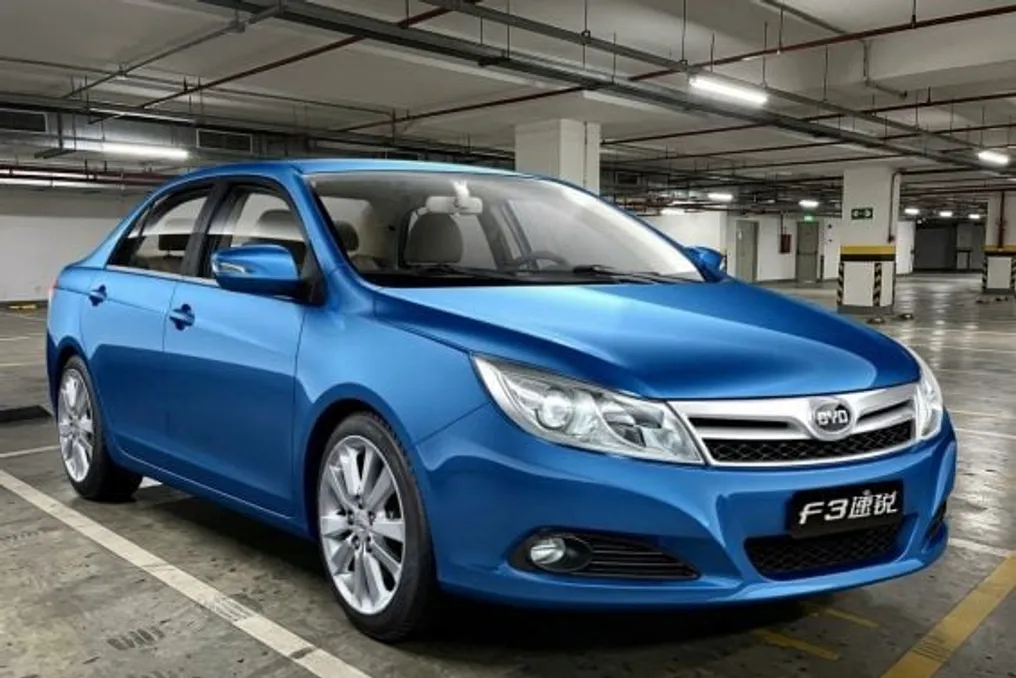
BYD started its operations as a battery manufacturer before expanding into automobile production. One of its first models was the medium sedan F3, which was a replica of the ninth-generation Toyota Corolla and was known in Brazil as "Brad Pitt".

In 2013, the second generation of the BYD F3, now with the Plus suffix, was still a copy of the Corolla, this time the tenth generation, featuring larger modifications to the front and rear. Its engine was a 1.5 naturally aspirated unit. Later, the F3 was replaced by the Qin, whose second generation shares a platform with the King sold in Brazil. The current model has no direct link to the Toyota Corolla, only sharing market segmentation, and operates exclusively with plug-in hybrid mechanics.

GWM

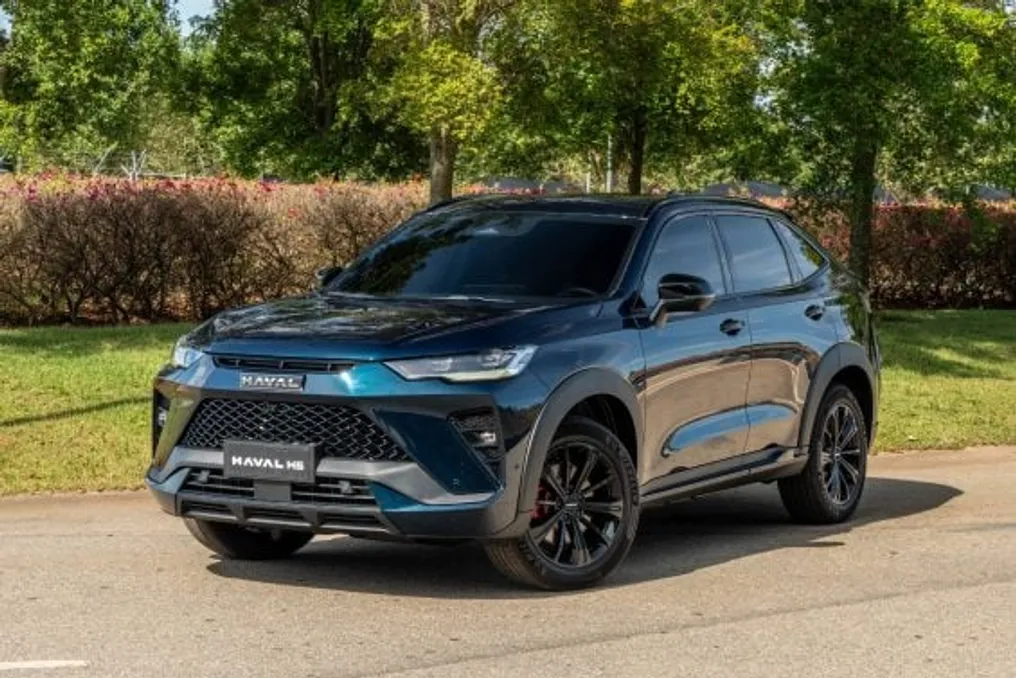
When GTA 5 was released, GWM still used its full name, "Great Wall Motors". Initially, the company produced a pickup truck that imitated the Toyota Hilux before diversifying its product line. The first Haval H6 was launched in 2011 and gained great acceptance, directing the brand's focus to pickups and SUVs. In 2013, the year GTA 5 was released, Haval established itself as an independent brand.

At that time, GWM was already signaling its current trajectory, and the Haval H6 was praised for its high level of comfort, good equipment, and high quality standard. It became the best-selling SUV in China for 103 consecutive months. Currently, Brazil receives the third generation of the Haval H6, which is always electrified and features flex engines. This model is already a sales success in the country and ranks among the top ten best-sellers.

Chery

Chery entered the Brazilian market during the first wave of Chinese cars, presenting the subcompact QQ. In 2013, the brand offered a more varied line in Brazil, including the Tiggo SUV, the Cielo mid-hatch, and the Face compact.

To illustrate this evolution, the focus was on the Tiggo, which had larger dimensions and was comparable in price to the Ford EcoSport. The first version of the SUV was an obvious copy of the Toyota RAV4, with a front design reminiscent of the Honda CR-V. Its direct successor, the Tiggo 5X, is manufactured in Brazil by Grupo Caoa. The contemporary SUV features high build quality, refined interior finishing, ADAS package, and competitive prices. A hybrid variant is expected to arrive in 2027.

Changan

Changan previously had a presence in Brazil under the name Chana, which eventually became a joke. Its initial operation focused on small utilities, aiming to attract customers from the old Volkswagen Kombi and Fiat Fiorino. In China, the brand also had a passenger car line. A model launched in 2013 was the CS35, a compact SUV with a length of 4.20 meters. This vehicle was designed at Changan's design center in Turin, Italy, without inspiration from other automobiles.

The CS35 was also the first car to adopt the current nomenclature used by the brand in its popular SUVs. Equipped with a 1.5 turbo engine from Mitsubishi or a 1.6 naturally aspirated engine, it served as a base. Currently, Changan is represented in Brazil by Grupo Caoa, marketing the Uni-T, CS55, and CS75 SUVs, all equipped with flex engines and a wide technological package.

Geely

When GTA 5 was released, Geely already owned Volvo but only marketed its own projects. Its entry-level model was the LC, an urban hatchback that competed with the Chery QQ. Its design was inspired by the Panda bear, featuring headlights resembling paw prints. The LC was briefly sold in Brazil during Geely's operation, represented by Grupo Gandini.

Currently, in the era of GTA 6, the successor to the LC is the Geely EX2. This compact electric hatchback was launched in China in 2024, generating a long waiting list, and has become the best-selling car in the country. In Brazil, its launch occurred in 2025, also with long queues. It offers low prices, good autonomy, and interior space superior to many SUVs. By the end of 2026, the EX2 will begin production in Brazil.
Mark Carney threatens to use Chinese manufacturers if US negotiations fail
Read more
noticiasaominuto.com

Mark Carney threatens to use Chinese manufacturers if US negotiations fail

Canada's Prime Minister Mark Carney stated that Canada could turn to Chinese automakers if trade talks with the United States fail to preserve the integrated North American automotive industry.

Carney made these statements today in the Cambodian capital, Phnom Penh, ahead of a planned meeting with Chinese President Xi Jinping this week in Shenzhen, southern China, where Chinese auto production is set to be discussed.

In January, the two leaders reached an agreement allowing tens of thousands of Chinese electric vehicles to be imported into Canada at reduced tariffs.

Carney told journalists: 'We have the best automotive workers in the world, and we want them to be fully employed in all capacities in the integrated North American market.' He added that 'this market has become less integrated due to US trade measures.'

On Saturday in Manila, Carney said that any trade agreement with Washington must guarantee a viable automotive industry for Canada. Today he clarified that talks with the US remain a priority, but the outcome may determine whether Canada seeks alternatives involving European, Chinese, or Japanese automakers.

When asked whether potential Chinese investment is a bargaining chip in US negotiations, Carney replied: 'It is not a bargaining chip. It is a reaction and an action.' He stressed: 'If they are not fully utilized in the North American context, it opens up other opportunities,' referring to Canadian automotive workers and production assets. He concluded: 'Canada will move forward either way.'

'The Detroit Big Three'—Ford, General Motors, and Stellantis—have factories in Canada, the US, and Mexico, with parts sometimes crossing borders multiple times before the vehicle is completed.

US President Donald Trump has repeatedly pressured automakers to move production from Canada to the US. Carney noted that any Chinese investment must involve substantial production in Canada, not just the assembly of imported parts.

The head of government stated that this would require proper labor standards, production capacity, and national supply chains that would expand over time, including Canadian critical minerals used in electric vehicles. Carney emphasized: 'This is not just about car kits. There must be a manufacturing component involved.'

Under the January agreement, Canada lowered the tariff on Chinese electric vehicles from 100% to 6.1%, which initially allowed the import of up to 49,000 vehicles per year, with the maximum limit increasing over time. In return, China agreed to lower duties on Canadian agricultural products, including rapeseed.

Carney had expressed hope at the time that this agreement would attract Chinese investment into the Canadian automotive industry and create jobs. However, the agreement drew criticism from Ontario Premier Doug Ford, whose province is a hub of the Canadian automotive industry. Ford warned that allowing Chinese EVs into Canada could jeopardize Canadian jobs and undermine access to the US market.

Tariffs imposed by Trump disrupted the Canadian automotive industry, which relies heavily on cross-border production. Recently, Canada threatened to sue Stellantis after the manufacturer moved planned Jeep Compass production from Brampton, Ontario, to Illinois and agreed to sell its inactive Canadian assembly plant.

Carney reported on Saturday that he had spoken extensively with Trump and high-ranking American officials, and that both countries are making progress toward a possible trade agreement, although some disagreements remain.

Haval H6 approaches leadership among best-selling cars in Brazilian retail
Read more
autopapo.com.br

Haval H6 approaches leadership among best-selling cars in Brazilian retail

Over the last three years, the retail sector has shown distinct growth in the Brazilian market, presenting a sales profile different from that observed in direct sales. In October, the most commercialized vehicle in this modality was the BYD Dolphin Mini, which achieved a minimal advantage of only 100 units over the GWM Haval H6.

For comparison, in direct sales, the Hyundai HB20 registered the highest number of registrations. However, in the retail segment, this model occupied the 36th position, totaling only 993 units sold.

The progress of Chinese vehicles is notable in this type of sale, although established brands maintain a strong presence. In October, the Toyota Yaris Cross ranked third, followed by its competitor, the Volkswagen T-Cross.

The combustion engine hatchback with the best performance in retail was the Chevrolet Onix. Regarding entry-level SUVs, the Volkswagen Tera leads the ranking, positioning itself in sixth place.

The hybrid SUVs Omoda 5 and Jaecoo 7 have been standing out in retail. These brands belonging to Chery are achieving the best results among new Chinese models launched in 2025 and 2026.

There was a drop in new car sales in retail during October; the participation of this channel decreased from 53.7% to 51.9% when compared to September. This reduction can be partly attributed to the electoral period.

Considering the year-to-date accumulation, retail accounts for 55% of all automobile registrations in Brazil. In this annual overview, Volkswagen leads sales in this modality, followed by BYD. Chevrolet holds the third position, Fiat is in fourth place, and Toyota is in fifth place.

Popular