
PIDG invests $11.7 million in NEPRA company for dry waste recycling
Read more
YourStory [india, en]
yourstory.com

PIDG invests $11.7 million in NEPRA company for dry waste recycling

Private Infrastructure Development Group (PIDG), through its project solution InfraCo, has invested 110 crore rupees into the share capital of NEPRA. This move marks PIDG's first equity contribution to the waste management and recycling sector in Asia.

Existing investors in NEPRA include Aavishkaar Capital, Circulate Capital, Blue Earth Capital, and Asha Impact. NEPRA was founded in Ahmedabad in 2012 and has developed a comprehensive waste management and recycling platform covering the entire cycle—from waste collection and sorting to material recovery, recycling, and sale of recovered resources.

The acquired capital will be used to establish new material recovery facilities, expand plastic recycling capacities, and strengthen current operations. The planned expansion will allow NEPRA to more than double its recycling capacity from approximately 900 tons per day to 1880 tons per day.

The investment is also projected to create about 1620 temporary jobs and 420 permanent operational positions. Furthermore, the company stated that about 40% of long-term jobs are planned to be filled by women.

NEPRA CEO, Dip Dholakia, noted: 'With PIDG's support, we will strengthen our operational capabilities and expand our presence across India. Based on the progress made, we are well-positioned to accelerate the growth of recycling and resource recovery services in India.'

The company also emphasized that since over 60 million tons of municipal solid waste are generated annually in India, the investments, which will increase waste management and recycling capacities, are equivalent to the waste generated by approximately 2.7 million urban residents each year.
Similar stories

Uzbekistan presented hazardous waste recycling projects at COP31 conference
Read more
uzdaily.uz

Uzbekistan presented hazardous waste recycling projects at COP31 conference

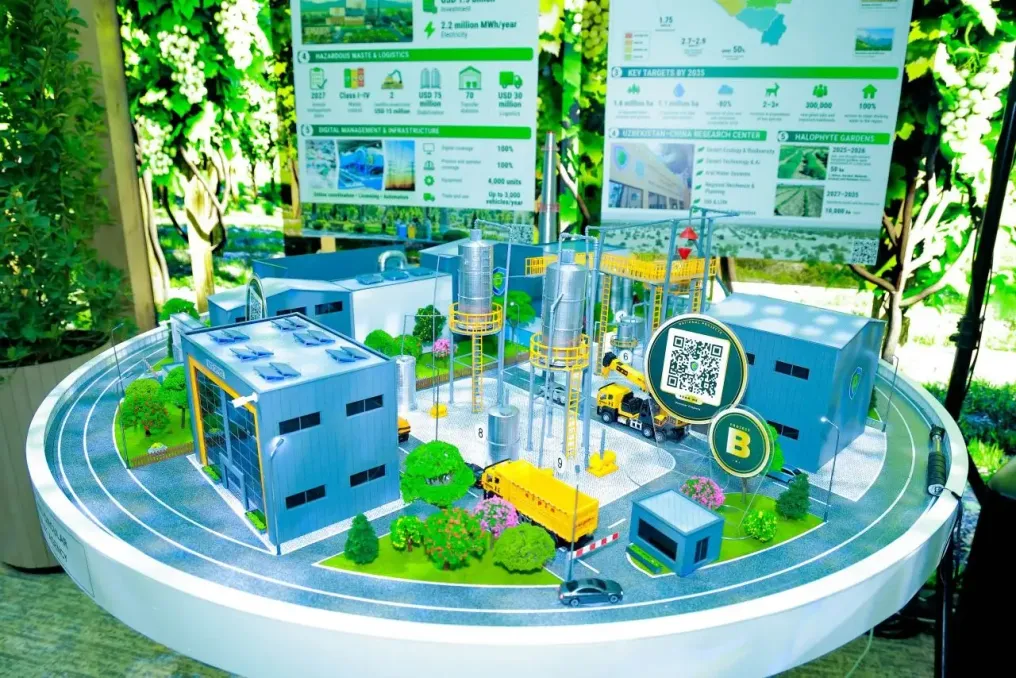
Uzbekistan presented projects concerning the treatment of toxic chemical waste and used industrial catalysts at the COP31 conference. The presentation took place at the country's national pavilion in Antalya.

According to the Waste Management and Circular Economy Development Agency, the national pavilion is open to visitors from November 8 to November 20.

One of the proposed options includes the creation of a specialized facility for the disposal and recycling of toxic chemical waste. This technology involves decomposing hazardous organic compounds at elevated temperatures, followed by multi-stage purification of the resulting gases.

Another solution for handling mixed industrial chemical waste is high-temperature incineration using a rotary drum furnace equipped with an integrated gas cleaning system.

The second project aims to establish an enterprise for recycling spent industrial catalysts. According to the project description, gases exiting the reactor and exhaust gases pass through two scrubbers. After treatment, the air is released into the atmosphere.

The Agency noted that Uzbekistan's national pavilion at COP31 functions as a platform for exchanging views, establishing new partnerships, and discussing practical steps to fulfill climate commitments.

Dubai launches first fully electric garbage truck capable of transporting up to 11 tons of waste
Read more
www.khaleejtimes.com

Dubai launches first fully electric garbage truck capable of transporting up to 11 tons of waste

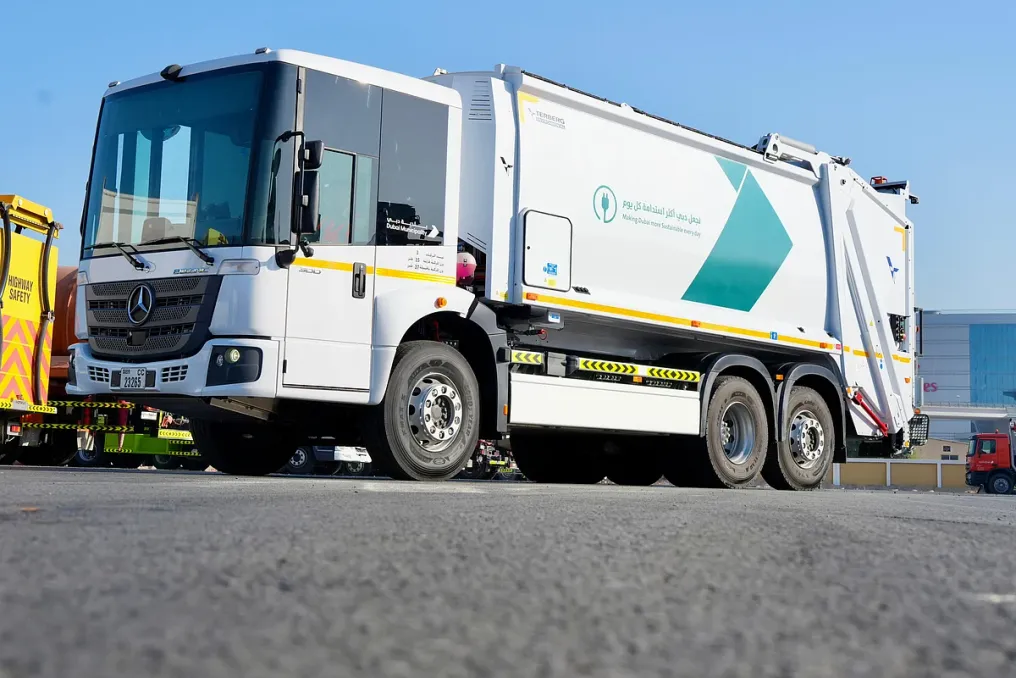
The Dubai Municipality has introduced its first fully electric vehicle for the collection and transportation of household waste. This move aims to enhance the environmental sustainability of cleaning processes in the emirate and reduce emissions from municipal services.

The vehicle is designed for daily waste collection across various areas of Dubai. It is equipped with three lithium-ion batteries totaling 2.2 tons and can cover distances from 100 to 150 kilometers without needing recharging. Thanks to a fast-charging system, the battery can charge from 20% to 80% in one hour and 45 minutes using a 160 kW charger.

The vehicle's capacity allows it to store up to 19 cubic meters of waste, with a maximum payload of 11 tons of compacted trash. It is compatible with various container sizes, including receptacles measuring 1.1 cubic meters, 360 liters, 240 liters, and 120 liters.

This initiative aligns with the Dubai Integrated Waste Management Strategy until 2041. This strategy aims to reduce waste generation by 18% and divert 100% of waste from landfills by 2041. These efforts support operational resilience and strengthen Dubai's position as a global model for a smart and eco-friendly city.

The vehicle is also fitted with an advanced electric compactor that supports various collection methods, including emptying public bins and collecting waste door-to-door. Furthermore, it is equipped with source-based weighing systems that record the weight of waste during container emptying.

Intelligent cameras are installed in the vehicle to enhance operational safety. They provide continuous monitoring of various work stages, as well as the movement of the vehicle and the surrounding environment. These systems improve driver visibility and contribute to safer maneuvering, thereby reducing risks for workers and other road users.

Safar stated that implementing electric vehicles in waste collection and transportation operations is a practical step towards utilizing clean and innovative technologies in daily activities. This further reinforces Dubai's status as a leading global city in sustainable development, innovation, and quality of life. Saeed Safar, Director of the Dubai Municipality Waste Operations Department, noted this.

He added that operating this vehicle is part of testing the actual performance of heavy electric vehicles under local climatic conditions and assessing their suitability for Dubai's operational needs. The results obtained will help create a scientific basis for potential future expansion of their use within municipal operations.

The Dubai Municipality has also trained a specialized operational team, which includes smart vehicle technicians and sanitation engineers, to ensure the efficient operation and maintenance of this vehicle. The electric compactor is planned to operate for two shifts, totaling 16 hours per day.

Popular