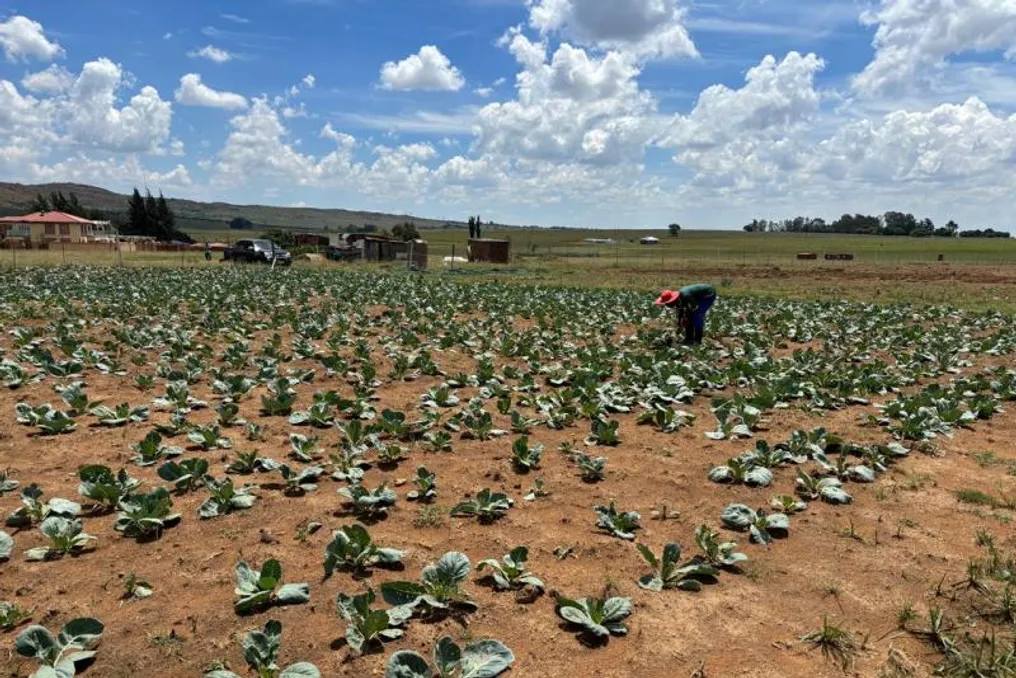
After twenty-one years working in the corporate sector, Phumla Qwabe decided to apply her business experience to agriculture. The founder of PSQ Developments grows crops on three hectares of land in Кейдейл, Heidelberg, Gauteng, aiming to contribute to food security and create jobs for the local community.
Her transition from a corporate career to farming is linked to a desire to build a legacy that can provide employment and support future generations. Qwabe grew up in Mdantsane, Eastern Cape, where agriculture was familiar to her since childhood, but her decision came later when she considered what kind of legacy she wanted to leave.
Agriculture attracted her attention because, according to Qwabe, it has a direct impact on people's lives. She emphasizes: 'Every seed sown has the potential to feed a family, create jobs, and restore dignity.'
Qwabe's path into agribusiness was accompanied by difficulties. Initially, she and her team planted crops on a plot in Orange Farm, Gauteng, but discovered that the soil was unsuitable for growing crops due to rocky ground and a marshy area, which negatively affected the trial plantings.
Currently, PSQ Developments cultivates various types of plants on its three-hectare plot in Кейдейл, including cucumber, cabbage, onion, sweet potato, spinach, garlic, watermelon, and pumpkin. Qwabe also reported that as part of expansion plans, they are preparing to plant potatoes.
The business operations began in January 2025 after its registration. Although the farm produces diverse crops, cucumber and garlic have become its signature products due to demand. Spinach and onion are also showing good results and remain among the best-selling crops.
Qwabe noted that her family played an important role in the development of the enterprise by providing financial support and showing interest in developing the farm. One of the key achievements of PSQ Developments has been supplying fresh produce to the Johannesburg market. However, access to formal markets requires adherence to specific procedures. As Qwabe explains: 'Once a farmer enters the market, they must follow a process that includes registering your vehicle before delivering the produce. This is an important requirement for market access and trade.'
A graduate of the University of the Western Cape (UWC), where she studied mathematics and psychology, Qwabe asserts that the knowledge gained continues to influence the management and development of her enterprises. Furthermore, she worked at Old Mutual for two decades. Mathematics, she says, strengthened her skills in problem-solving, budgeting, planning, and financial management, which are necessary for running a guesthouse, student accommodation, and farming operations.
Psychology helped her better understand people, build strong relationships with clients and employees, and make informed decisions. The combination of these skills allowed her to approach business strategically, manage risks, and find opportunities for growth.
The development of PSQ Developments has faced serious challenges, one of which is water scarcity. Currently, a JoJo storage tank and a borehole are used for water supply. However, the borehole can only supply water periodically due to the limited capacity of the battery on the farm, making operations heavily dependent on solar power for system operation.
The team has adjusted planting schedules according to forecasted rainfall patterns and is studying additional rainwater harvesting methods, although the current capacity is still insufficient for the farm's growing needs. In the long term, she plans to invest in a fully solar-powered borehole system with battery backup, as well as reliable irrigation infrastructure to ensure sustainable and stable crop production.
In the future, Qwabe envisions PSQ Developments expanding beyond crop cultivation. The business intends to diversify its farming activities by adding livestock, including goats, poultry, pigs, and cattle. She believes that such expansion will help the farm become a more profitable and sustainable operation. There are also plans to build permanent accommodation on the farm, which will allow for more efficient management of daily operations and help workers overcome the difficulties of remote agricultural monitoring. Ultimately, Qwabe's goal is to create a self-sufficient farm that creates jobs, produces quality products, and becomes a legacy for coming generations.