OUI Inc. developed Smart Eye camera for accessible eye diagnostics
Read more
Design Indaba
designindaba.com

OUI Inc. developed Smart Eye camera for accessible eye diagnostics

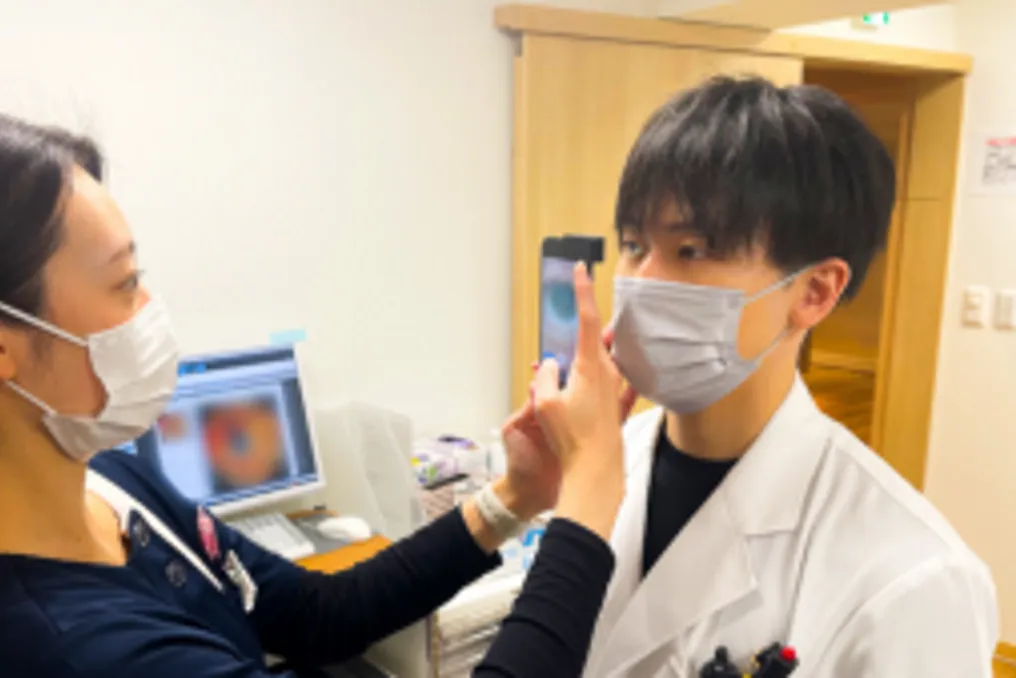
The Japanese healthcare innovation company OUI Inc. has introduced the Smart Eye Camera. This compact device, designed to attach to a smartphone, aims to make eye diagnostics accessible in locations where specialized medical care and equipment are difficult to reach.

The camera attaches directly to the smartphone, allowing medical professionals to examine the anterior segment of the eye, including the cornea, iris, and lens, in a manner similar to using a traditional slit lamp microscope. The camera's design utilizes its own light source and the smartphone's power, eliminating the need for extra batteries or external lighting. The device is manufactured using high-precision 3D printing and is compact enough to fit in a doctor's pocket.

A specialized digital platform ensures the secure storage, exchange, and remote viewing of examination images and videos, connecting medical professionals across different geographical regions. The product line, invented by practicing ophthalmologist Dr. Eisuke Shimizu, includes not only attachment to a slit lamp but also an ophthalmoscope for examining the optic nerve head and posterior pole, as well as a fundus camera for detailed retinal imaging.

The potential impact of this invention is significant, as cataracts are responsible for over half of all cases of blindness worldwide, many of which can be prevented or treated with timely diagnosis. Recognizing the device's contribution to accessible healthcare, the Smart Eye camera has been included in the World Health Organization's Compendium of Innovative Medical Technologies for Resource-Limited Settings.

Similar stories

Apple is developing smart glasses with Siri support to manage tasks without using a smartphone
Read more
www.aajtak.in

Apple is developing smart glasses with Siri support to manage tasks without using a smartphone

Apple is preparing to take its place in the wearable device market after smartphones by releasing its first smart glasses. The artificial intelligence Siri will play a key role in these glasses. Thanks to this technology, users will be able to perform various tasks, such as booking a taxi, ordering a table at a restaurant, getting navigation directions, or finding information about surrounding objects, without taking out their phone.

According to available reports, Apple plans to introduce the device at the WWDC event in June 2027, with a market launch expected by the end of the same year. The main competitor for these glasses is the Meta Ray-Ban smart glasses, which Meta has been releasing for several years and are already popular in India.

Imagine a scenario where you are walking down the street and see a famous building. Instead of taking out your phone to look up its name on Google, you can ask about it through the glasses, and the camera built into them will transmit the information to Siri, which will give you an answer. Similarly, you can request a route or find out information about nearby restaurants, as well as order a taxi, without touching your phone.

The company aims to provide users with this kind of experience in its first smart device. Apple's plans are not limited to creating glasses with a camera and speaker; the company wants Siri AI to understand the surrounding world and be able to perform tasks through applications installed on the iPhone.

Information about this project was disclosed in a report by Mark Gurman from Bloomberg. According to this report, the codename for Apple's smart glasses is N50. Although the hardware design of the device is largely defined, work on the software and AI is ongoing.

In these smart glasses, Siri will not just be a voice assistant for answering questions. The company intends to transform it into an AI assistant capable of performing many functions within applications based on understanding the user's speech. For example, a user can ask the glasses to order a taxi, and Siri can connect to the taxi ordering app on the iPhone to complete this task. The same is possible for booking tables in restaurants, ordering coffee, or buying movie tickets.

This means that the user will not have to open a separate application for every operation. The user simply gives a command to Siri by voice, and she tries to complete the task through the corresponding iPhone application.

The company sees its smart glasses as a new application platform where the user interacts by speaking instead of looking at a phone screen.

An interesting feature of Apple's smart glasses is that applications will not run directly on the glasses themselves. According to the report, the company prefers that developers integrate their existing iPhone applications with Siri AI. After that, the user can use certain functions of these applications just by talking through the glasses. For example, if you have a taxi ordering app, and the developer provides the necessary functions for Siri, you can command a taxi order through the glasses without needing to create a separate taxi app in the glasses.

Apple has already started working in this direction. According to the report, the ability to allow Siri AI to use various application functions was prepared in the beta version of iOS 27.3. Initially, this feature will be available for Apple's own applications, and then it will be expanded to third-party applications. This is why Apple heavily relies on its developer ecosystem, as the company already has a network of millions of apps running on the iPhone. If these applications start functioning through Siri on smart glasses, it could offer users a completely new experience.

An important point regarding Apple's first smart glasses is that they are not expected to have augmented reality (AR) display yet. This means that when wearing the glasses, the user will not see digital maps, notifications, or other information floating over the real world. Instead, Apple is focusing on the camera, microphone, speaker, and Siri. The camera installed in the glasses will help recognize surrounding objects and will be linked to visual intelligence.

For example, you can open a refrigerator and ask through the glasses what can be cooked from the ingredients inside. If you see a sign in a foreign language, you can ask for a translation. If you need information about a building or area, the camera will help Siri try to identify it. Additionally, through the glasses, you can make phone calls, send and reply to messages, view your calendar, set reminders, listen to music, and control smart home devices.

Some information has emerged about the design of Apple's smart glasses. According to the Bloomberg report, the company's current prototypes are slightly thinner than the second-generation Meta Ray-Ban glasses. The camera is integrated into the frame so that it does not look protruding. Some prototypes have featured oval elements for the camera, allowing the glasses to look like regular spectacles. Apple is working on various frame designs and colors, aiming for people to use them not only as a technological gadget but also as everyday glasses.

Ministry of Internal Affairs expands Smart ID replacement service to 753 bank branches
Read more
techcentral.co.za

Ministry of Internal Affairs expands Smart ID replacement service to 753 bank branches

The Ministry of Internal Affairs has expanded its Smart ID replacement service by implementing it in 753 bank branches, exceeding the initial target of 750 locations after the launch of the first phase of the digital asylum system for test cases.

The department reported on Wednesday that it has surpassed its set target 'more than four months ahead of schedule' when compared to the end of March 2027.

Internal Affairs Minister Leon Schreiber had previously publicly set earlier deadlines. In May, he told parliament that the service would cover at least 750 bank branches by the end of 2026, and in June, he repeated this statement, indicating 'by the end of this year.' Nevertheless, the department is ahead of these deadlines by approximately seven weeks.

When the partnership with banks was launched on March 9, the department reported that nine branches were operational, with plans to bring 17 online by the end of the same week and 1000 by 2029. According to TechCentral data, 167 branches were functioning in May, and 515 in October.

According to the department, initially only 214 offices of the Ministry of Internal Affairs could process Smart ID applications; therefore, the inclusion of bank branches increased the total number to 967, representing a growth of more than 350%. In June, the number of such points was increased to 248 offices and 32 bank branches. The department also noted that over one million South Africans have used the channel through banks.

Citizens can simply visit an participating branch of Absa, Capitec, FNB, or Standard Bank without prior appointment, and application processing takes only about five minutes, the department clarified.

The refugee affairs portal, launched on Tuesday, is the first stage of what the Ministry of Internal Affairs calls the 'digital asylum system.' Currently, it only records the intention to apply for asylum and is intended only for the first group of test cases. Public reception will begin after the software release this weekend.

This is less than the government promised. In October, the interdepartmental migration committee stated that the registration system would be ready by November 10, including registration at refugee reception offices. Now, the Ministry of Internal Affairs claims that meeting planning will be implemented at later stages.

These commitments followed the constitutional court's ruling of July 7, which annulled parts of the Refugee Act that excluded asylum seekers on procedural grounds, as well as the influx at refugee reception offices following the September 28 directive, which was later withdrawn by CEO Livhuwani Mahode.

The department emphasized that registration itself does not grant status and does not 'provide universal protection from immigration law enforcement.' Later stages will include machine learning and artificial intelligence tools to eliminate the years-long appeal queue. The department notes that 95% of asylum applicants are regularly rejected.

Schreiber stated: 'Over the next few months, we will implement subsequent stages of this project until the time required to process an asylum application and appeal is significantly reduced, providing protection for a small group of genuinely needy applicants and swift deportations for all those who do not qualify for asylum.'

Popular