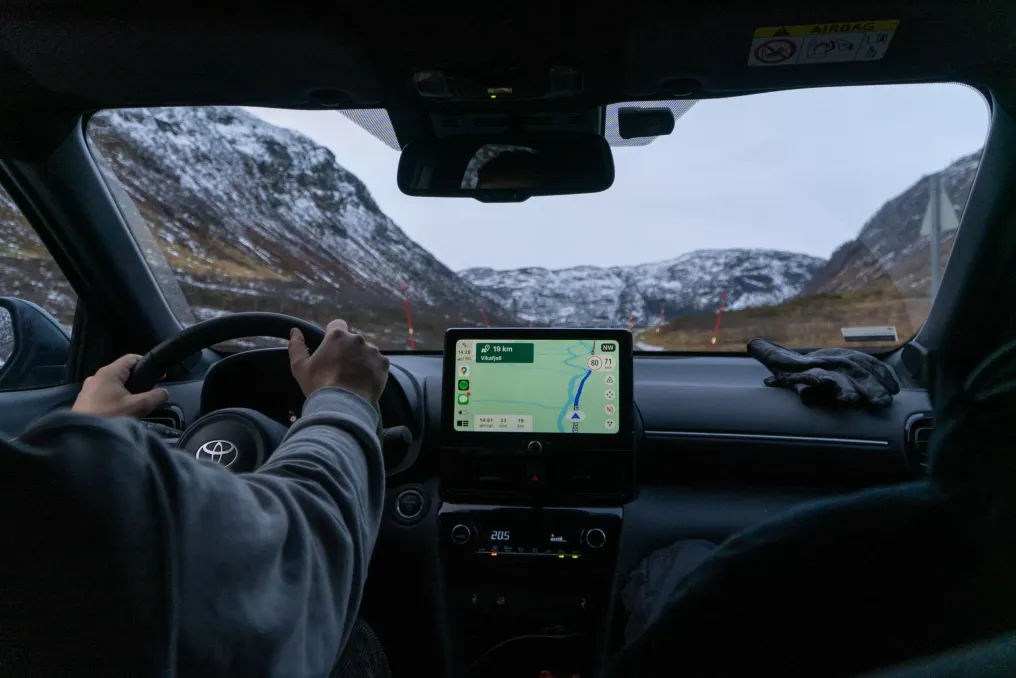
Imagine a resident of Cape Town arriving in Bucharest after a long journey through Istanbul. After switching off airplane mode in the passport control queue, by the time her luggage appears on the conveyor belt, the banking application requests identity confirmation, the streaming service's homepage reconfigures, and the mapping application continues to work as if nothing happened.
None of this is coincidental. Within half an hour of landing, dozens of applications requested location information from the phone, and each one evaluated this response differently.
Most travel preparations are limited to data questions. Previously, digital tools that should be downloaded before traveling were discussed, including eSIM and offline maps. However, they cannot change how applications behave once they know which country the user is in.
There are four main indicators, and most applications check more than one of them. The last of these indicators proves to be more resilient than expected. Google Play only allows changing the country when physically present there and having a local payment method, after which a waiting period of at least 90 days is required before changing again. A two-week vacation will not change the app store.
The most obvious recent example relates to Apple. According to EU regulations, iPhone users in this zone can install apps outside the App Store, and Apple's page on alternative app distribution describes the verification condition: the account must be set to an EU country, and the user must physically be in the EU. The check happens on the device, and Apple claims it only receives a compliance indicator.
Upon leaving the EU, a timer starts. For 90 days, you can continue to install and update these applications. After that, the applications already installed on the phone continue to open, but without new versions.
This works in reverse as well. In June 2026, Apple announced that new Siri artificial intelligence features in iOS 27 would not be available in the EU upon launch, meaning the same device would behave differently on either side of the border. The author considers this a more significant change: previously, geolocation determined what you could watch, and now it determines what your phone can do.
Streaming is the area where travelers most often notice these changes. Film and series rights are sold by country, so the catalog changes upon arrival. Since 2018, EU residents traveling within the bloc retain their home subscriptions. An account from South Africa does not have such an agreement, so the catalog visible in Bucharest belongs to Romania.
Gaming applications follow the same logic even more strictly, as the license itself is national. Romania issues licenses to online casino operators for its market, and their applications are designed with this in mind. The MrBit casino application page from an operator licensed there for adults over 18 describes versions for iOS and Android, over 4500 slots, and an experience that works seamlessly wherever you are in Romania. This phrase indicates the license. Location checking is a way for the operator to demonstrate that it serves the market for which it is approved, and the author considers this the most sensible application of geolocation, as the rule and border are easily understood.
Geography also shapes application content. Games are approved by market, so the lobby a player sees in Romania is the one approved for Romania. The same applies to jackpot games. A progressive jackpot grows with every spin by players feeding it, a fixed one pays a set amount, and a local one belongs to one operator. The MrBit online casino section lists all three types of jackpots. Their current campaign 'Descoperă Puterea X' is run for the same Romanian audience.
A quick check before departure covers most of these issues. Inform your bank of the trip, download what you want to watch offline, and expect that everything related to national licensing will follow the rules of your arrival location.
Returning to the passport control queue in Bucharest, the Cape Town resident's phone completed its requests. The bank was satisfied, the mapping application was ready, and the streaming service's homepage showed several Romanian names she had never heard of. Her phone knew where she was, even before she got the stamp in her passport.