Seven Accessible Habits for Extending Life Following Brian Johnson's Example
Read more
YourStory [india, en]
yourstory.com

Seven Accessible Habits for Extending Life Following Brian Johnson's Example

Brian Johnson has become one of the most discussed figures in the longevity field. This tech entrepreneur is known for his Blueprint program, an intensive health plan based on medical testing, strict regimens, specialized treatments, and carefully planned nutrition to study the aging process.

Although Johnson's approach may involve expensive equipment, supplements, and professional support, not all elements of his routine require significant financial outlay. In fact, some of his most frequently repeated recommendations relate to daily choices, such as adequate sleep, regular physical exercise, and consuming nutritious food.

For anyone interested in healthy aging, the key takeaway is not to try and copy his entire regimen, but rather to identify simple habits that can fit into a normal lifestyle.

Johnson considers sleep one of the cornerstones of his health routine. He adheres to a consistent bedtime and aims to sleep around eight hours. His method emphasizes an important habit that does not require expensive products or technology.

It is recommended to go to bed and wake up at approximately the same time every day. It is important to make the bedroom comfortable, reduce bright light before sleep, and avoid using your phone during relaxation. Reading a book or listening to calming music can also help establish a relaxing evening ritual.

Johnson's diet places great emphasis on vegetables, berries, nuts, seeds, and legumes. While his individual meal plan is not suitable for everyone, the general principle of choosing nutrient-rich foods is practical. It is necessary to include seasonal fruits, vegetables, lentils, beans, and whole grains in the diet.

Cook at home more often and reduce reliance on heavily processed snacks and sugary drinks. These changes can be adapted to various budgets and food preferences without resorting to purchasing specialized longevity products.

As part of his fitness program, Johnson combines strength training, cardio, flexibility, and balance exercises. However, maintaining an active lifestyle does not require a personal trainer or an expensive gym membership.

Walking, cycling, dancing, and bodyweight exercises can promote activity. Activities that strengthen muscles and improve cardiovascular fitness should be included. One should start with managed sessions and gradually increase activity according to fitness level.

Morning light is another part of Johnson's approach to supporting the body's internal biological clocks, known as the circadian rhythm. Natural daylight helps regulate the sleep-wake cycle and offers a simple way to form a healthier daily routine.

After waking up, spend some time outdoors, whether it is a short walk, sitting on a balcony, or enjoying morning tea near an open space. Specialized light therapy equipment is unnecessary if natural daylight is available. At the same time, direct exposure to the sun should be avoided, and skin should be protected when UV radiation levels are high.

A healthy sleep routine depends not only on bedtime; it also involves preparing the mind and environment for rest. Johnson advises turning off screens before bed and creating a calmer evening atmosphere.

Try to put away your phone about an hour before sleep. Turn off unnecessary notifications, dim the lighting, and avoid work messages late at night. Replace aimless scrolling in the evening with reading, journaling, or another relaxing activity that helps disconnect from digital distractions.

Longevity is not just about diet, exercise, and sleep. Johnson also includes family, friendship, and community among the habits that support a healthier life. Effort should be made to stay connected with people who are important to you.

Spend time with family, meet friends regularly, or participate in activities that help build meaningful relationships. Even a simple conversation can make social connection a more conscious part of your routine.

Johnson uses extensive health testing and data to track his progress. Most people do not need advanced biological age tests or expensive wearable devices to better understand their health status. Start with simple observations. Pay attention to your sleep schedule, daily activity, energy levels, and eating habits.

You can use a notebook or a basic habit tracker to record your routine. Regarding medical issues, regular check-ups and consultations with qualified specialists are more beneficial than relying on online trends or unverified tests.

While Brian Johnson's longevity regimen may seem unattainable due to expensive procedures, specialized equipment, and extensive testing, many of the underlying principles of his habits are accessible to people on a regular budget. Prioritizing sleep, balanced nutrition, activity, getting natural daylight, and maintaining meaningful relationships are practical starting points. These habits do not guarantee reversing aging or living longer, but they can contribute to overall health improvement. The main lesson is to focus on sustainable changes rather than chasing every new trend in longevity. You do not need to spend millions to start taking care of your health.


Similar stories

Is it necessary to try to slow down the natural process of aging, despite its inevitability?
Read more
super.abril.com.br

Is it necessary to try to slow down the natural process of aging, despite its inevitability?

The question arises: if aging is a natural process, shouldn't we try to slow it down instead of letting it proceed as it may?

A philosophical approach to this topic is illustrated by an analogy with a society that is forced to give thousands of people to a ravenous dragon every day. For centuries, residents tried unsuccessfully to defeat this dragon, eventually stopped questioning methods of combat, and began justifying its existence, considering it part of the natural order, an inevitable evil, or even a necessity.

Philosopher Nick Bostrom used this parable to question our resignation in the face of aging and, to a lesser extent, death. The essence of this story is quite uncomfortable: when we cannot change something, we tend to find reasons to accept it, even if it entails certain losses.

We view aging as an inevitable biological state that we must treat as human beings. However, there is a positive aspect to this: it brings valuable experience and knowledge that is lacking in youth. Although it seems reasonable (and desirable) to clinically treat age-related diseases such as cancer, paradoxically, we look negatively on the use of technologies aimed at treating the aging process itself.

But if aging is a major risk factor for age-related pathologies and it can be modified, one can assume that slowing down this process will delay these diseases. This is the basis of the hypothesis of gerontology, which studies the biological mechanisms of aging and its connection to chronic diseases. Its immediate goal is to increase life expectancy in good condition. If this is what we desire, then it is obvious.

However, doubts arise here. Do we want to preserve aging or eliminate it? Does intervening in aging mean neglecting the elderly?

To examine this topic thoroughly, we must first dispel three established social myths. Biologist Leonard Hayflick argued that we describe aging through five characteristics: natural, normal, universal, inevitable, and irreversible. This leads to the conclusion that aging should not be considered a disease and is actually part of our lives.

Nevertheless, it is not so obvious that aging cannot be understood as a disease. Nature also gives us infections, tumors, and other conditions that we try to prevent. The fact that a phenomenon is common does not mean it is healthy. For example, caries is very common, and no one thinks that because of this we should stop treating it. The question is whether biological aging, like diseases, implies a progressive deterioration of numerous functions, which ultimately leads to death.

In this debate about whether aging is a disease, we must also consider that 'disease' is not a label with eternal boundaries that is independent of scientific achievements. Its meaning also depends on our knowledge, medical practices, and therapeutic goals.

If aging can be viewed as a disease (or at least raises doubts in us), and diseases are bad, then it seems we have grounds to want to eliminate or at least mitigate it.

Another obstacle to this analysis is that scientist Aubrey de Grey named the status quo: aging has always existed and seems inevitable, so we consider it part of the natural order of things. As the parable of the tyrannical dragon shows, becoming accustomed to damage does not turn it into something good. We rejoice when treatment prevents premature death, but we are suspicious of the possibility of significantly extending life through interventions in aging. Why should we positively evaluate some extra years of health and suspect others?

Part of this aversion stems from a misconception illustrated by the Greek myth of Tithonus: this Trojan prince achieved immortality but not youth, and was doomed to deteriorate infinitely until he turned into a miserable cricket. Philosopher Francis Fukuyama called this 'global senescence': people live very long lives but in poor health.

Gerontology researches in order to guide us in the opposite direction, that is, to weaken the biological processes that contribute to the occurrence of diseases and loss of abilities.

It is often said that aging gives us knowledge, experience, and wisdom, among other positive aspects. Aging also brings valuable benefits, such as enjoying grandchildren or maintaining long-term loving and friendly relationships. But this statement hides a paradox: how can a process that we also attribute pain, illness, and decline to be desirable?

In the article co-authored with Gonzalo Díaz-Cobacho, we discuss how this contradiction becomes clear when distinguishing between two types of aging. On the one hand, there is chronological aging, which reflects the time lived (hours, minutes, and seconds since birth). On the other hand, biological aging refers to functional deterioration of the body. Both are mixed in specialized literature and public consciousness, but their distinction is of great importance.

Accumulated experience and life wisdom depend on our life experience and the time lived, not on the damage to our cells and molecules. Therefore, intervention in biological aging does not affect chronological aspects: it is possible to gain life experience without suffering from this deterioration. Adding another year of life does not guarantee greater wisdom either: one can learn much from experience, but also little.

Furthermore, biological aging has two types of negative effects: direct and indirect. Direct ones include pain or cognitive and physical limitations caused by aging, which worsen a person's well-being. Indirect ones occur when these limitations hinder the development of projects that the elderly person considers valuable. Arthritis can cause suffering, but it can also prevent a person from walking, traveling, or continuing to pursue a favorite hobby. Does the elderly person play dominoes because they love it, or because they can no longer immerse themselves in deep waters? Why not give them the opportunity to choose what they consider the best life plan, and make sure their health is not so limiting?

Philosopher Christopher Wrather pointed out two problems in the traditional approach to aging from an ethical point of view. The first is studying it as if it only happens at the end of life, when in reality it is a gradual process. The second is that we often talk about the elderly as objects requiring attention, expenses, or care, rather than as subjects with desires, preferences, and the ability to make decisions.

The ethics of aging should not be limited to the question of 'what we do' with the elderly. It should also ask 'what they want' to do, what opportunities they have, and what lifestyles they want to maintain or adopt. And this is precisely the central idea that guides research in gerontology: it does not seek to assert that the elderly are worthless, but rather that biological aging is a disabling process that entails pain and suffering and hinders the life projects of the elderly.

Thus, the assertion that biological deterioration is undesirable is not equivalent to the assertion that the elderly are less valuable. Mixing these concepts is as problematic as romanticizing pain or fragility under the idea of dignified aging. Similarly, policy to prevent disabling pathologies does not mean that people who already suffer from them are less valuable. On the contrary, it is believed that the biological condition they face hinders the realization of their life plans.

However, individualized medical response is also insufficient. In a recent paper, we argued that well-being has individual and social dimensions. Maintaining cognitive and physical abilities can facilitate the realization of our projects, but no cellular or molecular intervention alone eliminates loneliness, age discrimination, or economic inequality. We understand that aging is conceptualized in a social context.

It is also possible that some achievements, if available only to a few or if they enhance the fetishism of youth, could generate new forms of discrimination. Therefore, biomedical research must be accompanied by policies and institutions that protect the rights, autonomy, and social recognition of the elderly.

The conclusion is quite simple: we must separate what we often confuse. Biological aging is a process that should be studied to attempt to change it under certain conditions; old age is a stage of life that can contain valuable experience; and the elderly are primarily people, not a sum of deteriorations.

Five Expensive Habits Gen Z Should Quit to Keep Their Budget
Read more
www.aajtak.in

Five Expensive Habits Gen Z Should Quit to Keep Their Budget

Generation Z tends to believe in the possibility of earning money at a young age and living on their own dime. However, some small habits can derail the budget by the end of the month. Among these habits are online shopping and eating out; it is important to pay attention to them to understand five costly habits that Generation Z can give up to save money.

The first of these habits is making unnecessary online purchases. When seeing sales, discounts, and new collections, people often buy things they do not need. Constant purchasing of clothing, shoes, and accessories can prove very burdensome for the wallet.

The second problem is ordering food from outside every day. Thanks to online food delivery services, it has become easy to order food. Nevertheless, daily orders of coffee, snacks, and full meals lead to significant expenses over the course of a month. This expense can be reduced by eating at home.

The third habit is keeping subscriptions that are not used. Many people sign up for various subscriptions to watch movies, listen to music, and receive other services, but often they do not use them. In such cases, it is better to cancel these subscriptions.

The fourth habit is going to parties every weekend. Going out with friends, dining in expensive restaurants, and regular parties may seem pleasant, but this behavior can disrupt the monthly budget. To prevent this, it is necessary to set specific limits in advance.

The fifth habit is buying expensive things for show. Sometimes, observing the lifestyles of others on social media, people start buying expensive phones, branded clothing, and accessories. However, spending one's earned money solely to show off to others is not a wise decision.

In conclusion, it should be noted that managing money correctly is just as important as earning it. If Generation Z pays attention to these small habits, it will be able to save a lot without sacrificing its lifestyle.

Five Lessons from Brianna West's Book 'The Life That Awaits'
Read more
yourstory.com

Five Lessons from Brianna West's Book 'The Life That Awaits'

The true life we desire often begins when we stop clinging to the life we think we should have. We spend too much time worrying about the future, comparing ourselves to others, and trying to control every outcome, forgetting to enjoy the present.

In 'The Life That Awaits,' Brianna West explores the concept of creating a life that feels authentic, meaningful, and aligned with who we are becoming. Through reflections on heartbreak, fear, uncertainty, happiness, and personal transformation, she encourages readers to let go of limiting behavioral patterns and make room for new possibilities.

The book reminds us that moving forward does not require having everything planned out. Sometimes the smallest decisions can bring us closer to the life we have always wanted.

We often assume that happiness will come after achieving a certain goal, finding the right relationships, or reaching a specific life stage. However, constantly waiting for the next big achievement prevents us from appreciating the present.

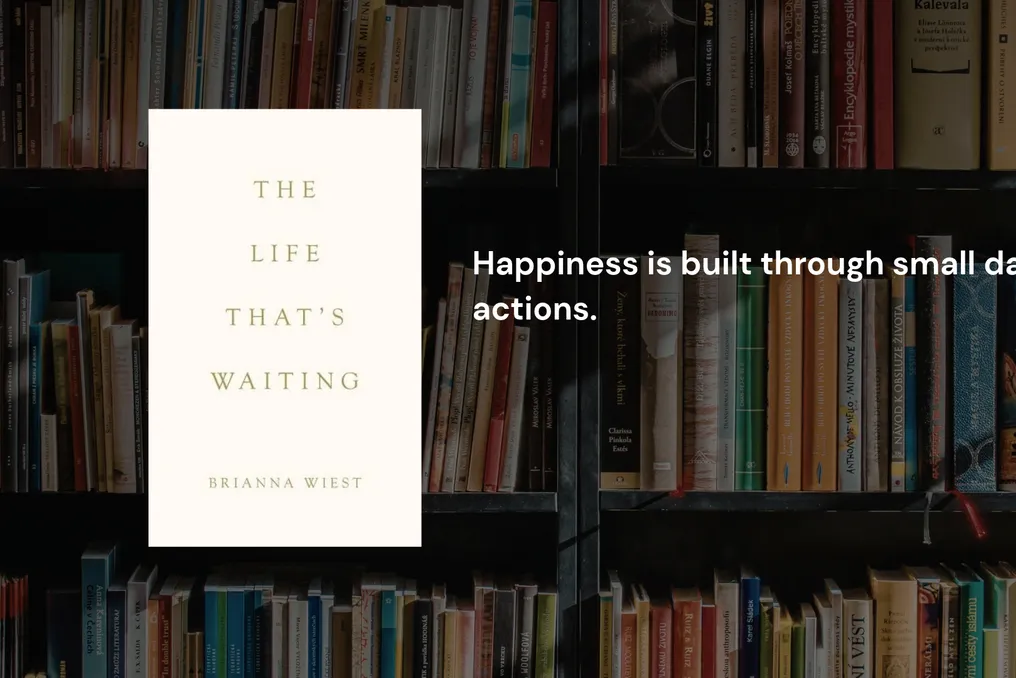
West urges readers to find happiness in small, repeated actions. Self-care, maintaining meaningful routines, expressing feelings, and setting aside time for what matters gradually contribute to building a more fulfilling life. The lesson is to stop viewing happiness as a distant destination and start building it through daily choices.

Sometimes things that once brought us comfort cease to support the people we are becoming. This could be old relationships, a familiar environment, limiting beliefs, or expectations we have carried for years. The book reminds us that leaving something behind does not mean it was never significant; it simply means that different stages of life require different decisions. We must allow ourselves to move forward without guilt for leaving what no longer aligns with our growth.

In a world where everyone shares their successes, milestones, and happiest moments, it is easy to feel like you are falling behind. Nevertheless, comparison often distracts us from understanding what we truly want. Instead of measuring our success by someone else's timeline, we should focus on building a life that reflects our own values and priorities. West encourages readers to reconnect with themselves rather than constantly seeking external validation. It is important to remember that creating a meaningful life does not require following someone else's schedule.

Many believe that finding one's purpose requires discovering one outstanding passion or making a fateful decision. But purpose doesn't always arrive as a clear answer. Sometimes it begins with small interests, meaningful conversations, creative ideas, or opportunities that spark curiosity. The book advises paying attention to these small signs and taking action instead of waiting for complete clarity.

You don't necessarily need to know where you are going. Sometimes just taking one significant step is enough to discover the next. Fear often arises before making an important decision or stepping into the unknown. It can make us doubt our abilities and convince us to stay in situations that no longer bring us joy. West urges us not to let fear prevent us from moving forward. Instead of waiting for complete certainty, start with one small action. Whether it's applying for a new opportunity, starting a project, having a difficult conversation, or making a personal decision—progress begins when you decide to act despite uncertainty.

Popular