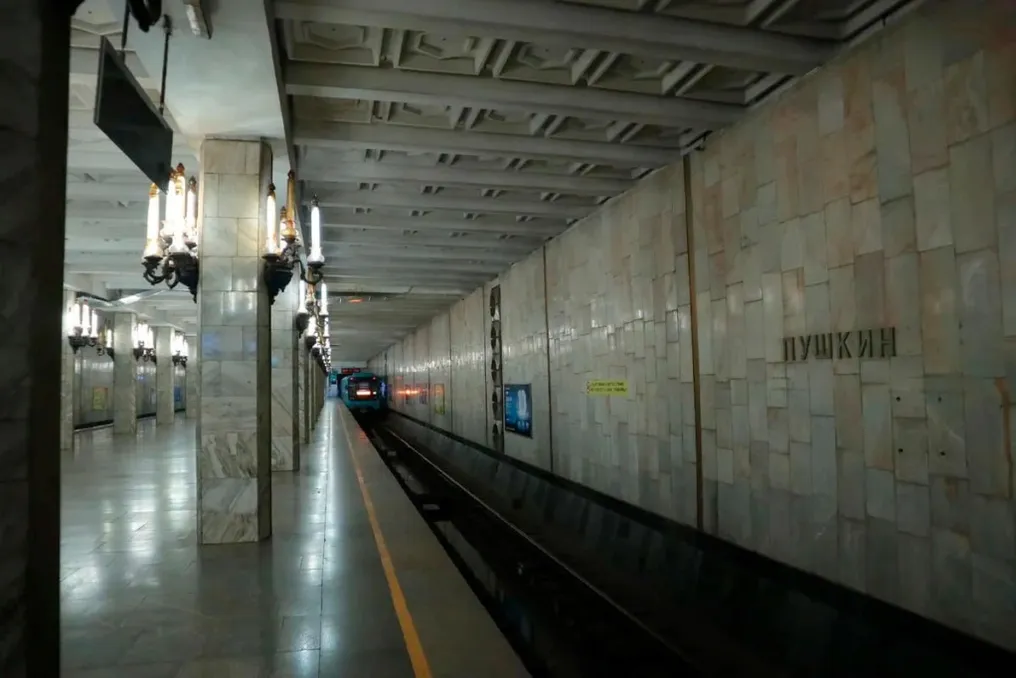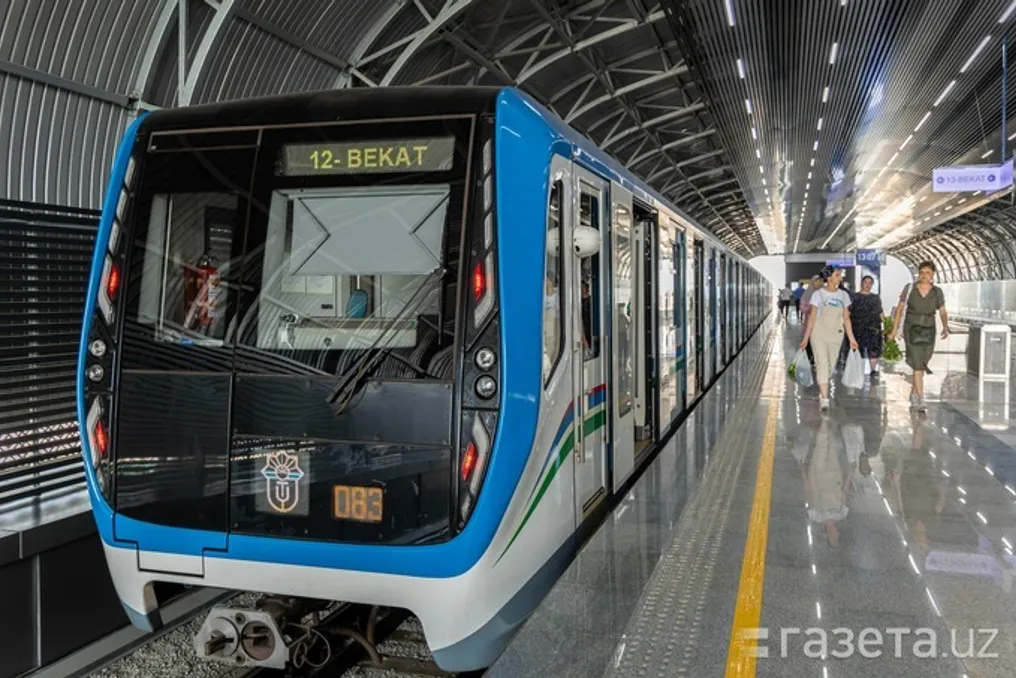
The administration of the Tashkent Metro has announced plans to increase the capacity of 40 existing 'Moscow' type trains by adding a fifth carriage. This measure is aimed at addressing the problem of growing passenger traffic in the metro.
Furthermore, the purchase of another 28 five-carriage sets is planned for the period 2027–2028. Previously, there was information that 14 such trains were planned for purchase in 2027, which would total 70 carriages. Manufacturers from various countries are being considered when making selections.
Currently, only four-carriage sets operate in the capital's metro. The total fleet includes 55 modern trains capable of accommodating up to 1300 passengers and 30 older sets designed for an average of 1000 passengers. In early 2023, an experimental installation of one additional carriage was carried out on four trains of the Uzbek line, but further expansion of this plan did not materialize.
Passengers regularly express dissatisfaction with the high level of occupancy in both the carriages and the stations. The metro serves over 1.2 million passengers daily. From September to October, 61.7 million people used the metro, exceeding the figure for the same period last year (51.4 million) by 20%.
The metro administration has appealed to passengers to help reduce congestion. It is recommended to distribute evenly across all carriages and move towards the center of the stations. They also advise allowing those inside the carriage to exit first before boarding. Additionally, passengers are advised to choose newer trains, which accommodate approximately 300 more people, and to use less crowded stations.
The following stations have been named as examples of less crowded metro locations: 'Milliy Bog' station serves only 6,000–8,000 passengers, while 'Mirzo Ulugbek' station takes 20–25 thousand, and 'Druzba Narodov' station—35–40 thousand. Compared to this, 'Chilanzar' station accepts an average of 60–65 thousand passengers daily.