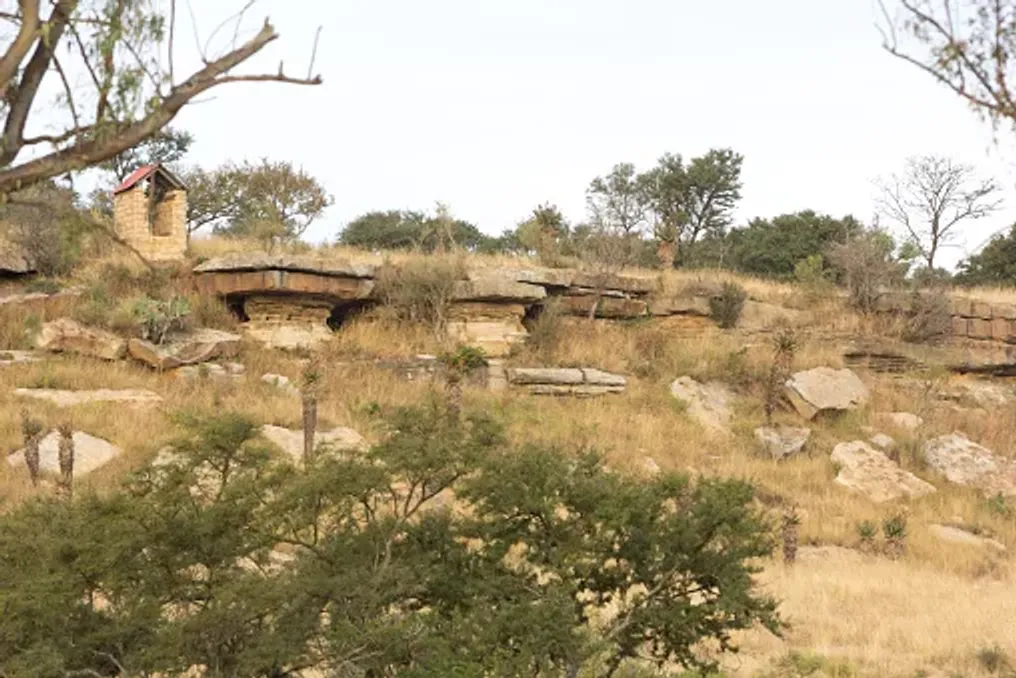
Few places in South Africa are as closely tied to a single military confrontation as Rorke's Drift. This historical site, located near the Buffalo River in northern KwaZulu-Natal, gained international recognition after the battle that took place here on January 22 and 23, 1879. During the Anglo-Zulu War, a small British garrison station defended a missionary post against Zulu forces.
Although Rorke's Drift is immortalized in the 1964 film 'Zulu,' it has long attracted visitors interested in military history. However, beyond the familiar cinematic scenes of barricades, rifles, and desperate nights of battle, this location offers an opportunity to study the landscape, preserved heritage, and the broader context of one of the most significant conflicts of the 19th century in South Africa.
Today, visitors can walk through the grounds, visit the museum, view memorials, and historic graves to place this battle within the overall history of the Anglo-Zulu War—a conflict shaped by Britain's imperial ambitions and the resistance of the Zulu Kingdom.
The place got its name from the Irish trader James Rorke, who established a trading post and crossing near the Buffalo River. After his death in 1875, the property became associated with the Swedish missionary station called Oscarsberg, named after King Oscar II of Sweden. The hill overlooking the settlement was known to the Zulu as Shiyane.
By January 1879, this area had become strategically important for the British military campaign. Missionary buildings were captured: one house was converted into a hospital, and the chapel was used as a supply depot. The crossing over the Buffalo River also facilitated the movement of British troops and supplies into Zululand.
The British invasion of Zululand began on January 11, 1879, after the expiration of the ultimatum delivered to King Cetshwayo. British imperial authorities sought to expand their influence in the region, and this invasion launched a campaign that had long-term consequences for the Zulu Kingdom. Thus, Rorke's Drift was not merely an isolated military outpost but part of a logistical network supporting the invasion.
On January 22, 1879, the British suffered a crushing defeat at Isandlwana, where the Zulu army overwhelmed British forces. News of this disaster reached Rorke's Drift in the afternoon, prompting the garrison to prepare for an attack.
Defenders under the command of Lieutenants John Chard and Granville Bromhead began fortifying the missionary station using any available materials. Corn sacks, biscuit boxes, carts, and other supplies were arranged to create defensive barriers between buildings and around the complex.
The position was particularly vulnerable because the missionary station was small and housed sick and wounded British soldiers. Retreat was not considered a viable option for the garrison.
Zulu forces, led by Prince Dabulamanzi Mpandle, attacked the missionary station late on January 22. Fighting continued throughout the night, with repeated assaults on the defensive perimeter and fierce battles around the hospital.
The defenders had to evacuate parts of the hospital as fighting intensified, and the building eventually caught fire. They retreated to increasingly compact defensive positions, continuing to resist until the Zulu forces withdrew early on January 23. Seventeen Britons died in the defense, while Zulu losses were significantly higher. Historical estimates vary, but the battle was fierce and resulted in significant casualties among the attacking forces. Eleven Victoria Crosses were awarded to the British defenders, contributing to the battle's lasting significance in British military history.
The battlefield is best explored on foot, allowing visitors to traverse the landscape where the defense took place and see how the layout of the missionary station influenced the course of the battle. The Rorke's Drift interpretation center and museum help visitors understand the battle through historical exhibits and the interpretation of the site's heritage. The museum and reconstructed missionary buildings provide context to the events of January 1879, from the British invasion to the defense of the station.
Instead of relying solely on the film's depiction, visitors can use the exhibits to understand the physical layout of the settlement, the defensive structures, and the circumstances under which the battle unfolded. A walk through the site gives insight into the compact nature of the missionary station. Defenders had to guard several buildings and vulnerable areas, including the hospital, the storehouse, and the surrounding complex.
The layout of the battlefield is an important part of its history. It was the buildings, the available supplies, the terrain, and the limited space that determined the defense and the decisions made during the night. Memorials and burial sites are part of the battlefield's heritage landscape. They commemorate the memory of the British soldiers who died in the battle and provide a tangible connection to the people involved in the conflict. There are also memorials on site related to Zulu losses, reminding visitors that the story of the battle extends beyond the celebrated British defense. The Zulu soldiers who fought at Rorke's Drift were defending their kingdom during the British invasion, and their experience deserves to be part of the interpretation and memory of this place.
The 1964 film 'Zulu,' starring Stanley Baker and Michael Caine, introduced Rorke's Drift to a global audience and helped many understand this battle. However, its dramatic portrayal of the British defense is not a complete account of the war or the people involved. The Anglo-Zulu War was a conflict initiated by British expansion into South Africa. The British invasion of the Zulu Kingdom followed political tensions, territorial ambitions, and an ultimatum delivered to King Cetshwayo. The war ultimately led to the defeat and dissolution of the Zulu Kingdom, with consequences extending far beyond the battlefield.
Rorke's Drift is often remembered through the lens of military heroism, but visiting the site allows one to examine the broader conflict: the invasion, Zulu military strategy, the lives of soldiers and civilians affected by the war, and the historical narratives that have shaped the memory of the battle. The fame of the battle is also partly linked to its role in the public perception of Britain following the catastrophic defeat at Isandlwana. The defense became a celebrated story of military resilience, while the wider invasion and its consequences often remained in the shadows of popular accounts.
Rorke's Drift is also connected to significant artistic and cultural heritage that extends far beyond the battlefield. The ELC Arts and Crafts Centre became an influential institution in South African art, especially during the apartheid era. The art school and its associated workshops played a vital role in developing Black artists, providing opportunities for creative self-expression through printmaking, weaving, and other artistic disciplines. The school closed in 1982, but the broader craft heritage of Rorke's Drift continues. The center is associated with characteristic tapestries, woven rugs, ceramics, screen printing, and local handicrafts. Visitors can find beadwork, baskets, wirework, woodwork, and other handmade items. This artistic tradition is particularly interesting as it offers another way of understanding the region's heritage. Rorke's Drift is not just a place of military history, but also a place connected to creativity, cultural expression, and the development of South African art during a difficult period in the country's history.
Visiting Rorke's Drift is especially valuable if combined with a trip to Isandlwana, the battlefield where the British suffered a crushing defeat earlier on January 22, 1879. These two sites are closely linked by the events of that day. Isandlwana became a major Zulu victory, while Rorke's Drift became a celebrated success of British defense. Their contrasting outcomes determined the course of the war and subsequent historical narratives. Visiting both battlefields helps place Rorke's Drift in context, allowing travelers to explore the Anglo-Zulu War beyond one famous clash and gain a deeper understanding of the events, decisions, and people involved. Rorke's Drift is located in northern KwaZulu-Natal, near the Buffalo River, and is part of the historical Anglo-Zulu War Battlefield Route. It can be included in a longer trip covering battlefields, historical sites, and towns around Dundee. While Rorke's Drift may be known for the dramatic events of one night in January 1879, its significance extends far beyond the battle immortalized on screen. From the landscape along the Buffalo River to the museum, memorials, and artistic heritage, this place offers a chance to engage with a complex chapter of South African history.