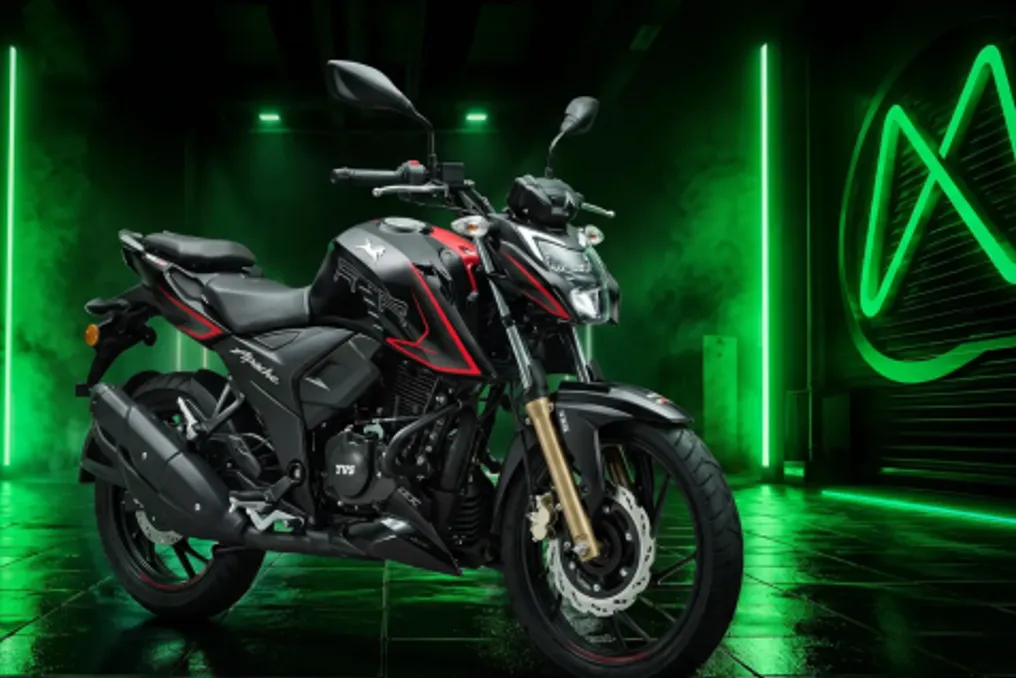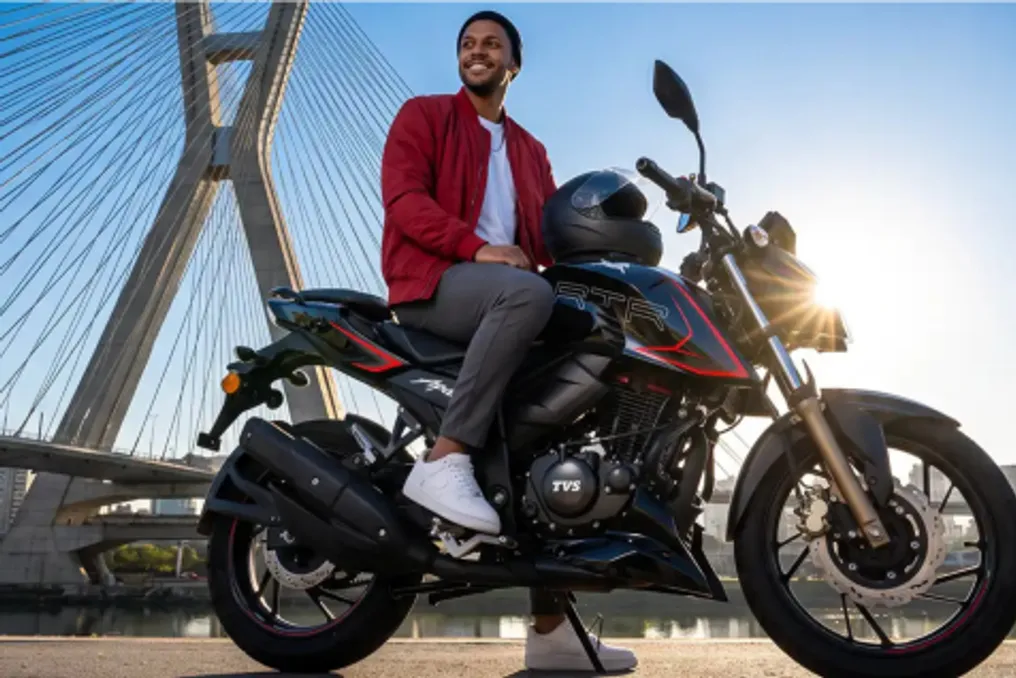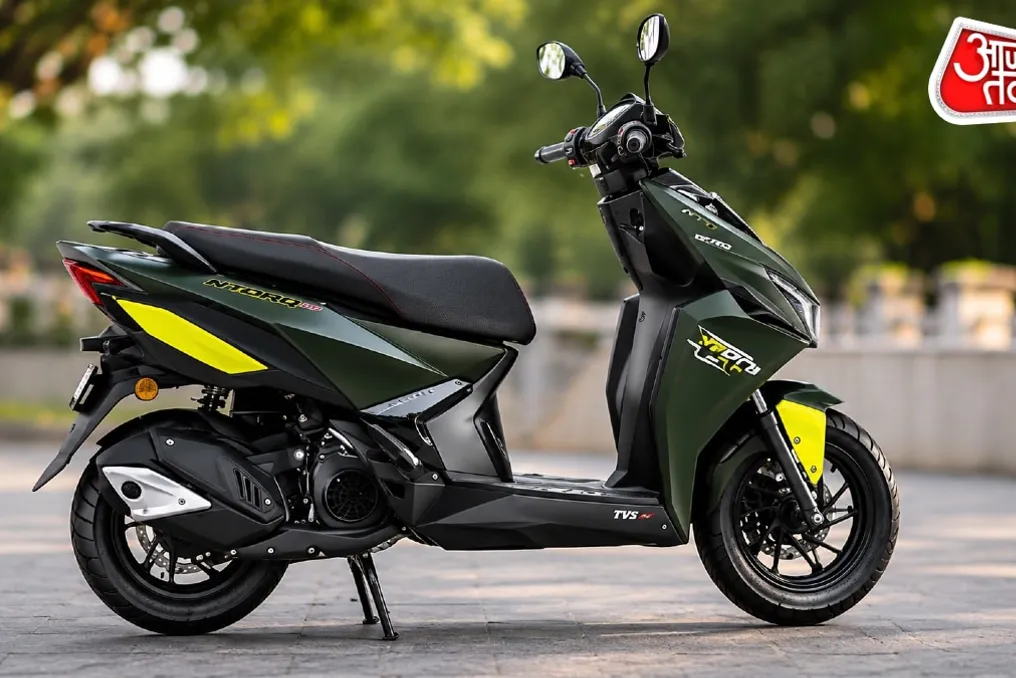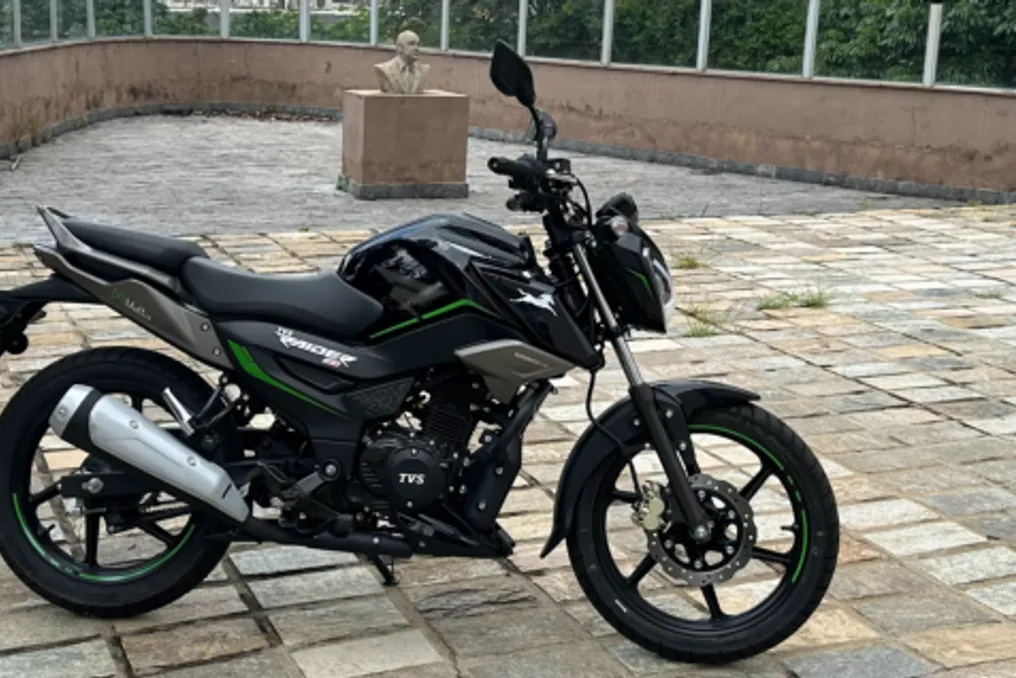
TVS began its presence in the Brazilian market with a portfolio of four motorcycles: two sporty versions, the Apache RTR 200 4V and the RTR 160 4V; a 125 scooter; and the Raider 125, which presents itself as the most promising model. Despite being one of the smaller options, the Raider 125 stands out due to its technology, comfort, balanced performance, and economy.
After testing, it was concluded that the model even surpasses its higher displacement siblings. In terms of engine, the Raider 125 uses a 124.8 cm³ single-cylinder engine, which is air-cooled and equipped with electronic fuel injection, coupled with a five-speed transmission. This engine generates 11.4 hp at 7,500 rpm and 1.2 kgfm at 6,000 rpm, values superior to those of direct competitors such as the Shineray Jet 125 (8.15 hp) and even the Honda Biz (9.53 hp).
In practice, this mechanical configuration ensures efficient riding, without the smaller size of the vehicle causing any feeling of loss of power. Regarding structure and riding dynamics, the model differs from the 200 and 160 siblings, which have sporty characteristics and a riding style similar to other Indian models. However, for the Brazilian driver, accustomed to Japanese brands, the Raider 125 offers a dynamic very similar to that of the CG and Fazer sold in the country.
The motorcycle dimensions are 2,070 mm in length, 785 mm in width, and 1,028 mm in height, with a wheelbase of 1,326 mm. The seat is positioned 781 mm from the ground, has a ground clearance of 190 mm, and weighs 123 kg dry. The wheels are 17-inch alloy on both ends, using 80/100 tubeless tires in the front and 100/90 in the rear.
The front suspension system consists of a traditional telescopic fork. In the rear, there is a gas shock absorber with five levels of preload adjustment, allowing the bike to be adjusted for both load weight and passenger presence. The braking systems are basic: a 240 mm disc in the front and a 130 mm drum in the rear, both with CBS (combined braking) to distribute force between the wheels, but without ABS. This setup is considered simple, consistent with what is expected for a 125cc bike, without major surprises.
Another positive point is the seat, which is split and wide, making it the most comfortable among the Raider and the Apache RTR 160 4V and RTR 200 4V. Furthermore, the footrests for the passenger are lower, providing more legroom for the person behind. Combined with its urban profile, this makes the Raider 125 the best choice among the three for passenger transport, highly recommended for those working as motorcycle taxis.
In terms of technology, the differential lies in the start-stop system. Although it is efficient in fuel consumption and works in Eco mode, where TVS announces 51 km/l in the WMTC cycle, some users may find it inconvenient because the engine shuts off whenever the bike stops. In Power mode, which is sportier, this system is deactivated. The dashboard is digital and includes a trip computer, gear indicator, and high beam warning light. The headlight is Full LED, but the turn signals remain analog. A USB port located near the handlebars complements the features.
Although the Raider 125 is not the most powerful or the best equipped among the four bikes introduced by TVS in Brazil, it fulfills the purpose for which it was designed more cohesively: city riding with low consumption and satisfactory handling. Its limitations follow the category standard, such as the absence of ABS and a functional but basic braking system.
The cash price of the Raider 125 is R$ 16,500, excluding shipping costs. Direct sales by TVS, whether cash or installment up to 24 times on the card, will begin in January 2027, at TVS-Mottu dealerships. Until that date, consumers can opt for the Conquiste Plan, which is a rental with purchase option offered by Mottu: the monthly value is R$ 640, requiring a deposit of R$ 2,500 and a 48-month contract, without the need for credit analysis or guarantor, with documentation and IPVA included. At the end of the contractual period, the customer has the possibility to acquire the motorcycle under the stipulated conditions.
The brand's operation will begin in nine capitals in 2026—Belo Horizonte, Brasília, Campo Grande, Cuiabá, Curitiba, Fortaleza, Goiânia, Manaus, and São Paulo—expanding to eight more cities in the first quarter of 2027.