Investigation of Irish Roots: Blarney Castle, Midleton Distillery, and the Cultural Heritage of Cork
Read more
Getaway
getaway.co.za

Investigation of Irish Roots: Blarney Castle, Midleton Distillery, and the Cultural Heritage of Cork

On Christmas night in the early seventeenth century, near the Bandon River stream in County Cork, the battles that had lasted four and a half centuries ended, bringing an end to the independent political structure of Gaelic Ireland. Authors belonging to the Keohan clan claim that their ancestors did not participate in the great Battle of Kinsale due to bad weather.

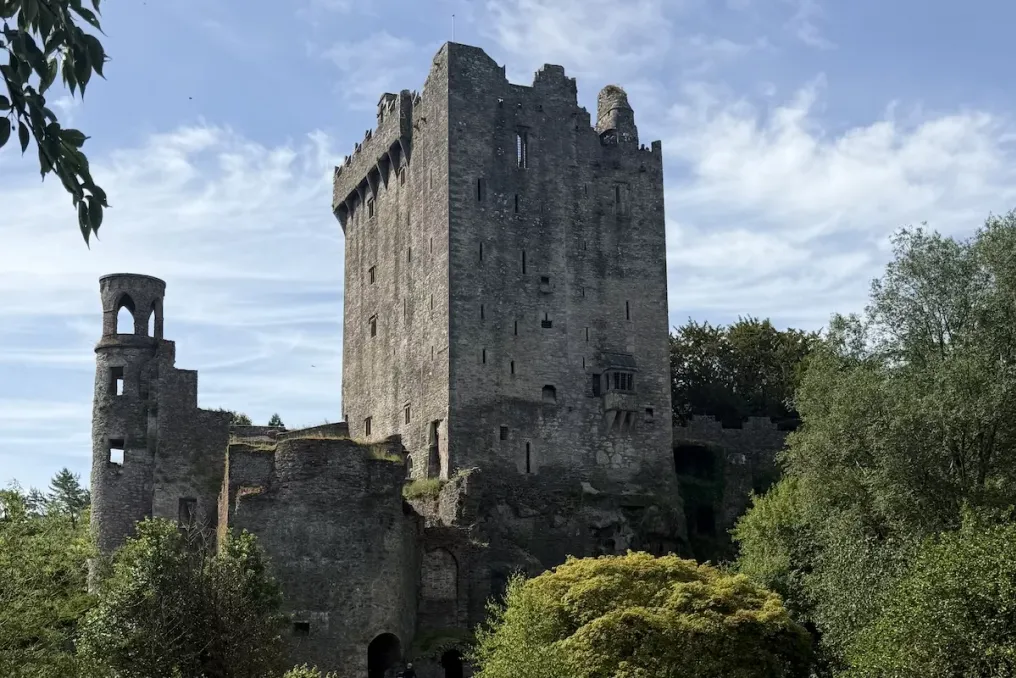
According to Irish lore, the Keohan family descends from Ó Ceocháin, which is approximately translated as 'descendant of the mist.' It is suggested that they were a branch of the famous Crowley clan that got lost in the fog on its way to the battle and never reached the site of the fighting. The author shares this discovery while visiting Blarney Castle, where he stood in line with tourists ascending the spiral staircase to kiss the Blarney Stone and gain eloquence.

Blarney Castle existed in some form since the twelfth century. The tower that visitors climb today was built in 1446 by McCarthy, the Lords of Muskerry, who controlled this part of Cork for nearly three centuries. The stone is located at the top, and the queue exists because it is believed that the kiss grants the gift of eloquence. This gift has its origins: one of the McCarthy lords demonstrated his unwavering loyalty to Queen Elizabeth for years, refusing to allow her troops into his home. He avoided trouble so often that his name became synonymous with a person who talks a lot without committing to anything.

The author notes that the castle is not connected to the Keohan family, and if they gained more speaking ability, they would become unbearable. The ability to speak is woven into the surname itself. Many years ago, their grandfather climbed this same staircase to kiss the Blarney Stone. However, the author recalls that in his time, someone could simply throw a person out of the 26-meter opening while they reached for the famous limestone stone fixed on the parapet.

Arriving from Dublin late on Friday, they had about 24 hours in Cork before needing to return the next day. They came to Cork to feel a spiritual connection to the family nest, even if only briefly, to feel a connection to the past and those who remain here, living on the fuel of stories and conversations.

The author also expresses affection for Jameson Irish whiskey, and every bottle is produced at the Midleton Distillery, which is twenty minutes from Blarney Castle. The distillery is the sole producer of Jameson worldwide, as well as the workplace for Redbreast and Midleton whiskeys. It offers tours of the old distillery building next to the new complex. The lobby features internally lit walls displaying fine Irish whiskey, and various designs of Jameson-named labels have turned the shopping trip into a spectacle. Despite the beautiful design of the Distillery Batch bottle, a tasting of three glasses convinced the author that he did not need to spend extra holiday money on Distillery Batch, and perhaps his taste buds still needed development. Nevertheless, he bought a T-shirt and several bottles for his father.

Blarney Castle and the Midleton Distillery made up the entire specific plan for those 24 hours. In addition, they enjoyed steaks and Espresso Martinis on the roof of the Dean Cork hotel, located by the Lee River, watching young couples join the nightlife, knowing that they themselves would follow when the cool summer light in Ireland finally gave way to darkness around 10 p.m.

Strolling through the bars, they chatted and felt Irish hospitality in every friendly shout and noisy group. They met an Italian waitress, fueled by strong wine produced by Devonshire Monks, and struck up a rapport over caffeine shots of Buckfast Tonic Wine while she expressed boredom with her shift. It remained a mystery how she ended up in Cork.

The author concludes that not everyone will kiss the Blarney Stone, so random moments of interaction and fun side streets are a better indicator of the Irish spirit than any mystical totem. Everyone can and wants to interact, and so they felt at home, connected to their fathers and grandfathers, and proud of their 'clover character' that they carry within them.

Similar stories

Newvudtville: Geological and Botanical Treasures of the Bokkeveld Plateau
Read more
getaway.co.za

Newvudtville: Geological and Botanical Treasures of the Bokkeveld Plateau

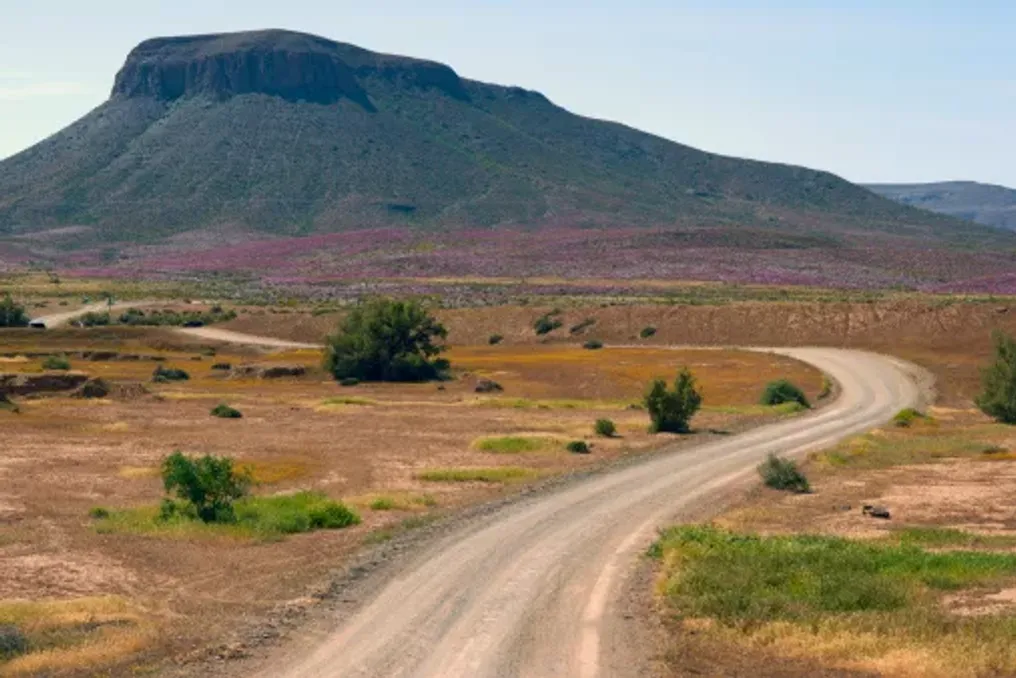
Newvudtville, located in the Northern Cape, is best known for its impressive floral displays in spring, when the surrounding landscape transforms into a colorful carpet of flowers. However, this small town on the Bokkeveld Plateau possesses much more diversity than just seasonal blooms.

The region offers a unique glimpse into South Africa's natural heritage, including ancient dolerite formations, traces of prehistoric glaciers, towering quiver trees, picturesque waterfalls, and reserves that preserve remarkable plant diversity.

The landscapes of this area tell a story shaped over millions of years by geological forces, climate change, and the astonishing ability of plants to adapt to harsh conditions. Whether exploring rocky outcrops, following trails through local vegetation, or visiting one of the conservation sites, Newvudtville offers many discoveries outside of the flowering season.

A vital part of Newvudtville's charm is the geology underlying its scenery. The Bokkeveld Plateau contains various types of rock, each contributing to the distinctive appearance and ecological diversity of the area.

One of the most noticeable features is the presence of dolerite formations. These dark, resilient rocks formed when molten magma intruded into existing layers of sedimentary rock, then cooled and solidified underground. Over millions of years, erosion has exposed these formations, leaving behind rocky kopjes, unusual boulders, and distinct outcrops.

This results in a landscape that changes noticeably as visitors move around the surroundings. Plains give way to rocky hills, ridges, and scattered rock formations, creating habitats that support diverse plant communities.

Newvudtville also provides insight into a completely different chapter of Earth's history. Long before the Northern Cape became an arid region, parts of Southern Africa experienced extensive glaciation.

Evidence of this ancient period can be found in the glacial pavements around the Bokkeveld Plateau. These exposed surfaces bear traces left by moving glaciers approximately 300 million years ago, when Southern Africa was part of the ancient supercontinent Gondwana. As massive sheets of ice moved across the landscape, stones and sediments buried beneath them ground and polished the underlying bedrock. Some of these surfaces retain grooves and striations that indicate the direction of ice movement.

For visitors interested in geology, these formations represent a remarkable link to a time when the climate and appearance of the region were drastically different.

The region's geology is closely linked to its botanical diversity. Different rock types weather into different soils, creating a mosaic of habitats that support an impressive variety of native plants.

Newvudtville lies at the intersection of several vegetation types, including fynbos, succulent Karoo, and renosterveld. This combination helps explain why the surrounding landscape supports such an exceptional array of plant species.

Although the spring bloom attracts the most attention, the region's botanical interest lasts year-round. Succulents, bulbs, shrubs, and other specialized plants have adapted to the seasonal rainfall and often harsh conditions of this area.

Foshan: A City in Guangdong Province Where Lingnan Traditions Live On
Read more
cgtn.com

Foshan: A City in Guangdong Province Where Lingnan Traditions Live On

The city of Foshan, located in southern China, in Guangdong province, possesses a rich history. It is known as the birthplace of legendary kung fu masters such as Wong Fei-hung and Ip Man, and is deeply rooted in Lingnan culture.

In Foshan, one can explore numerous attractions: from the energy of lion dance to Wing Chun art, to the ancient Ancestor Temple and a century-old railway station.

However, Foshan is more than just history; it is a city where traditions continue to exist in daily life, constantly finding new ways to interact with modernity. Given that China will be at the center of world attention due to APEC 2026, Foshan is ready to present its unique cultural stories to the world.

Nvanedi Nature Reserve in Northern Limpopo: Waterfall and Two Dams
Read more
getaway.co.za

Nvanedi Nature Reserve in Northern Limpopo: Waterfall and Two Dams

There are many reasons to spend time at Nvanedi Nature Reserve, such as bringing a packed lunch. The Nvanedi and Luphefe dams are located near each other in the forested foothills of Soutpansberg, and a picnic allows you to sit by the water for a long time, observing the activity on the bank. There is also a waterfall here called Tshihovhohovho Falls.

Tshihovhohovho Falls

Nvanedi is located east of Tshipise and north of Tohoyando, in the Limpopo area, where rocky peaks rise above forested slopes. Both dams were created in 1964. Each has its own mountain stream, and the reservoirs are connected by a canal. The Nvanedi and Luphefe rivers meet inside the reserve. Some of this water is used for local farm needs and is also vital for wildlife.

The dams are a good place for birdwatching with binoculars. It is worth periodically looking up from the water. The Limpopo Wildlife Resorts agency points to the rocky peaks as a habitat for raptors. Closer to the ground, you can spot fibrous trees, yellow trees, and ferns—details that can be observed if you free up the second half of the day.

Limpopo Wildlife Resorts offers visitors opportunities for picnics, camping, and fishing in Nvanedi. Since the tender for reconstruction work was announced in July 2026, it is recommended to call 015 293 7339 or 015 293 8766 before your trip to clarify information about daily entry, gate operating hours, and available amenities. If you are heading to Tshihovhohovho Falls, you should ask about the visitor route and whether the waterfall is flowing.

The waterfall provides another reason to stay in the foothills. An old guide mentions a hiking trail to the waterfall, so if access is confirmed, the author advises starting with a walk to the waterfall and leaving the dams for later. A walk followed by lunch in a spot where you can observe the water for a while seems like a good way to spend the day in this part of Limpopo.

The afternoon should be dedicated to watching the shoreline through binoculars. If you are staying near Tshipise or Tohoyando, this is enough to dedicate Nvanedi to the afternoon.

Popular