Extortion group claims data leak of Visa, Mastercard, and JPMorgan customers
Read more
Tecnoblog
tecnoblog.net

Extortion group claims data leak of Visa, Mastercard, and JPMorgan customers

A digital extortion collective named n0n claimed to have released data belonging to customers of the credit card brands Visa and Mastercard, as well as the financial conglomerate JPMorgan Chase. The three institutions confirmed security failures related to third-party suppliers but assured that their own infrastructures and payment processing systems remained intact.

The news of this incident was reported by the Wall Street Journal on Thursday, the 19th. According to the newspaper, files provided by the criminal group contained thousands of customer records.

The n0n group stated that it acquired the information related to the three companies on November 16. It has not yet been determined whether the incidents occurred through the same supplier. JPMorgan communicated that third-party companies providing services to the bank were victims of a cyberattack. A spokesperson indicated that the attackers may have accessed marketing data, including customers' names and email addresses.

An investigation by Reuters identified over 16,000 customer email addresses in the files attributed to the group. Part of these records also included phone numbers and postal codes. However, JPMorgan did not validate the content presented.

Visa confirmed awareness of the allegations and linked the event to a service provider in the Asia-Pacific region. The company emphasized that its internal systems were not breached and that financial data, such as card numbers, was not affected.

Mastercard, for its part, admitted that an external supplier suffered an incident that exposed a limited number of email addresses of participants in a specific benefits program. The company guaranteed that the exposure was controlled and did not compromise its payment network or consumer cards.

Despite the exposure of personal data, the three corporations stated that the events did not cause disruptions to operational activities. JPMorgan informed that it will contact impacted customers, if necessary, and may offer support. Mastercard also declared that it is collaborating with the supplier to assist affected cardholders. Visa, meanwhile, reiterated that it detected no compromise of payment information.

Although there is no evidence that card numbers or passwords were exposed, names, phone numbers, and emails can be used in phishing schemes and other frauds. Criminals can use this data to create fake messages simulating communications from banks and card operators. The episode also raises concerns about the risks inherent in third-party companies that store customer data. In Brazil, a previous leak exposed data of 7.6 million customers of Caixa Vida e Previdência, and another incident affected the National Treasury service portal, revealing registration data of 30,000 people and 4,000 Pix keys.
Similar stories

Motorola stands out with a selection of cost-effective 5G smartphones
Read more
olhardigital.com.br

Motorola stands out with a selection of cost-effective 5G smartphones

Motorola maintains its position as one of the most popular brands in the Brazilian mobile phone market. This is due to its models, which combine contemporary features, 5G connectivity support, and cameras equipped with artificial intelligence. The devices in the Moto g line are considered robust choices for consumers looking for good performance without spending much.

Three suggestions currently highlighted on the Amazon platform have been gathered. Due to the constant variation in Amazon stock, it is recommended to access the links immediately to secure the model that best suits the user's profile.

Regardless of the purpose—whether for heavy use, everyday photo recording, or simply owning a reliable device with 5G—Motorola offers an alternative for each listed requirement.

Vivo negotiates purchase of Vero for estimated value of R$ 6.3 billion
Read more
tecnoblog.net

Vivo negotiates purchase of Vero for estimated value of R$ 6.3 billion

Telefônica Brasil, the owner of Vivo, is in negotiations to acquire the internet provider Vero. The operation is being valued at approximately one billion euros, which is equivalent to about R$ 6.3 billion, according to reports from the Spanish newspaper Expansión. Discussions with Vero's shareholders are centered on this amount.

The talks primarily involve Vinci Partners and Warburg Pincus, the managers responsible for controlling about 60% of Vero. Specifically, Vinci Partners holds approximately 37.5% of the shares, while the American fund Warburg Pincus owns the other 22.5%.

Information about this potential acquisition began circulating last month. Vero is established as the sixth largest fixed broadband provider in Brazil, with about 1.2 million customers. Its coverage spans 425 municipalities located in seven Brazilian states: Rio Grande do Sul, Santa Catarina, Paraná, São Paulo, Minas Gerais, Mato Grosso do Sul, and Goiás. The company's infrastructure reaches approximately 7.2 million residences.

The completion of this purchase would significantly strengthen Vivo's presence in the South and Southeast regions. According to data from the ranking of the largest broadband operators, Telefônica Brasil had about 8.5 million fixed internet accesses in August 2026. With the inclusion of Vero's customer base, this number would rise to approximately 9.8 million, still remaining below Claro, which registered 10.8 million accesses.

In addition to fiber offerings, Vero operates as a mobile virtual network operator (MVNO), utilizing TIM's infrastructure to provide cell phone plans. By the end of September, the company registered about 420,000 mobile customers, representing a 56.4% increase compared to the previous year.

This possible transaction occurs amid mixed financial results for the Brazilian provider. In the third quarter of 2026, Vero reported a net loss of R$ 3.7 million, reversing the profit of R$ 12.2 million achieved in the same period the previous year, according to Teletime. Net revenue fell by 3.3% year-on-year, reaching R$ 419.8 million. Although the broadband base showed a setback of 5.6%, the mobile telephony segment demonstrated notable growth.

For Telefônica, the acquisition would allow Vivo to accelerate its expansion in areas where the operator has lower penetration, in addition to increasing its infrastructure and customer portfolio. However, as of now, neither company has disclosed a finalized agreement or a timeline for concluding the negotiations, and the proposed value has not been officially confirmed by Telefônica Brasil.

TIM Brasil CEO assures company is not for sale after change of control in Italy
Read more
tecnoblog.net

TIM Brasil CEO assures company is not for sale after change of control in Italy

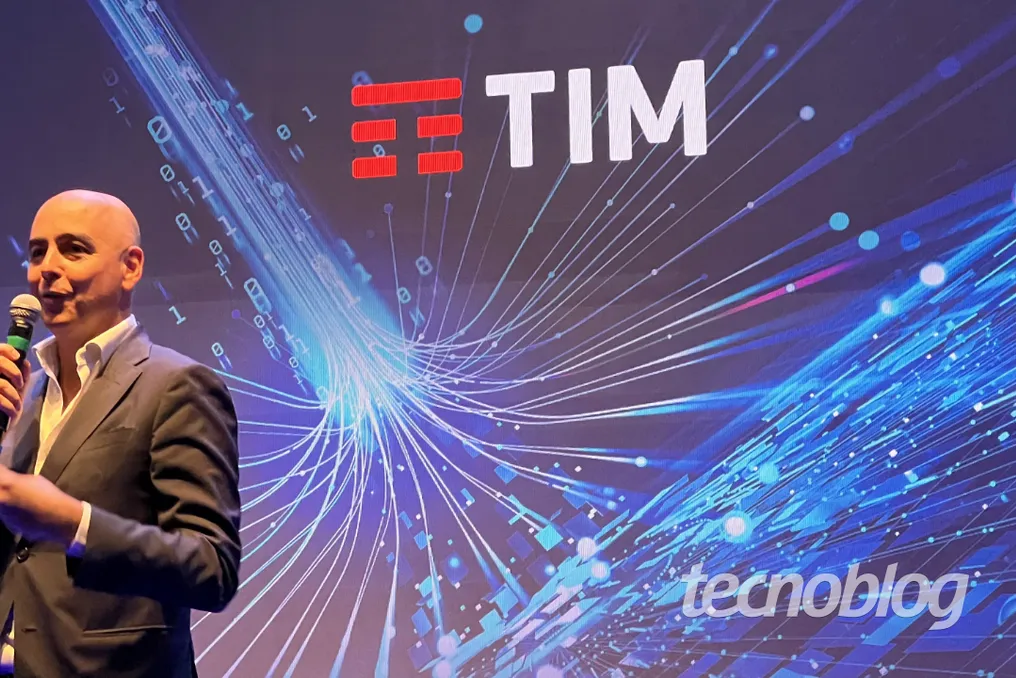
The CEO of TIM Brasil, Alberto Griselli, guaranteed on Tuesday (10/11), during the financial results presentation attended by Tecnoblog, that TIM Brasil is not available for sale and that the company plans to continue its growth strategy in the national territory.

This statement comes amid changes in the control of Telecom Italia, after Matteo Del Fante, CEO of Poste Italiane, took over the company's management. Del Fante had mentioned that Brazil was not a priority in the group's strategic plans, despite recognizing the financial importance of the Brazilian operation.

Griselli was emphatic in declaring that there is no ongoing sale process and that the company will continue investing in the Brazilian market, emphasizing that although it is an operation with lower strategic value, it has greater financial value.

Speculation about a potential sale intensified after the change in control of Telecom Italia, which assumed indirect control of the Italian operator in September. Previously, TIM Brasil itself had informed B3 that it was unaware of any sale procedure.

During the event, Griselli also addressed the performance of the postpaid customer base, admitting that growth was occurring, but at a slower pace than desired. However, he assessed the company's overall results positively, stating that the performance was 'solid, with concrete progress on all fronts.'

Financially, in the third quarter, TIM achieved a net service revenue of R$ 6.9 billion, representing a 5.3% increase compared to the previous year. Furthermore, operating cash flow accumulated R$ 5 billion in the first nine months of 2026, which constitutes a 11.6% growth compared to the same period in 2025.

Additionally, the operator announced a collaboration with BYD on Tuesday, aiming to connect approximately 200 thousand vehicles in Brazil. Fábio Costa, TIM's B2B Vice President in the country, reported that the first vehicles equipped with this novelty should leave the production lines in 2027, integrating a 'fully adapted public network' for the Chinese manufacturer.

Popular