Along the rugged coastline of South Africa, where rocky shoals meet the restless ocean, a stealthy mammal moves quietly. The Cape Clawless Otter, often underestimated resident of the country's coastal ecosystems, feels equally comfortable hunting crabs among the rocks and sheltering in freshwater streams and protected riverbanks.
Thanks to sensitive whiskers, surprisingly agile paws, and dense fur adapted for aquatic life, these peculiar animals have developed unique survival methods along the coast. However, as coastal development expands and pressure on natural habitats intensifies, the spaces they depend on are becoming increasingly vulnerable.
The Cape Clawless Otter (Aonyx capensis) is one of the most widespread otter species in Africa. Despite its name, it is not confined to the Cape, being found in many parts of sub-Saharan Africa and throughout South Africa, especially along the eastern and southern coasts.
In South Africa, this species is also found in some parts of the west coast, with recorded sightings extending to Langebaan, the Berg River estuary, and Sedderberg. Its range extends beyond the coastline into rivers, wetlands, reservoirs, and other freshwater habitats.
Unlike marine mammals that spend their entire lives in the ocean, the Cape Clawless Otter depends on a combination of aquatic and terrestrial environments. It requires access to fresh water, suitable shelter, and a sufficient amount of food, making healthy connections between rivers, wetlands, and coastal ecosystems particularly important.
Consequently, their presence along the coastline is closely linked to the condition of the surrounding landscape.
Physical Adaptations of the Cape Clawless Otter
The Cape Clawless Otter possesses several physical adaptations that make it an effective predator in the aquatic environment. Its brown fur, pale chin and chest, small ears, and sensitive whiskers give it a distinctive appearance.
One of the most interesting features is its forepaws, which lack the large claws characteristic of many other otter species. These agile paws are particularly useful when searching for food under rocks, in crevices, and along muddy riverbanks.
Its whiskers, known as vibrissae, are highly sensitive to movement in water. They help the otter detect prey in low-visibility conditions, allowing it to find food through touch rather than relying solely on sight.
Although Cape Clawless Otters can move comfortably in water, they also spend significant time on land. They use sheltered spots along riverbanks and coastal vegetation for resting, grooming, and creating dens known as holts. These locations provide protection from disturbance and convenient access to nearby feeding grounds.
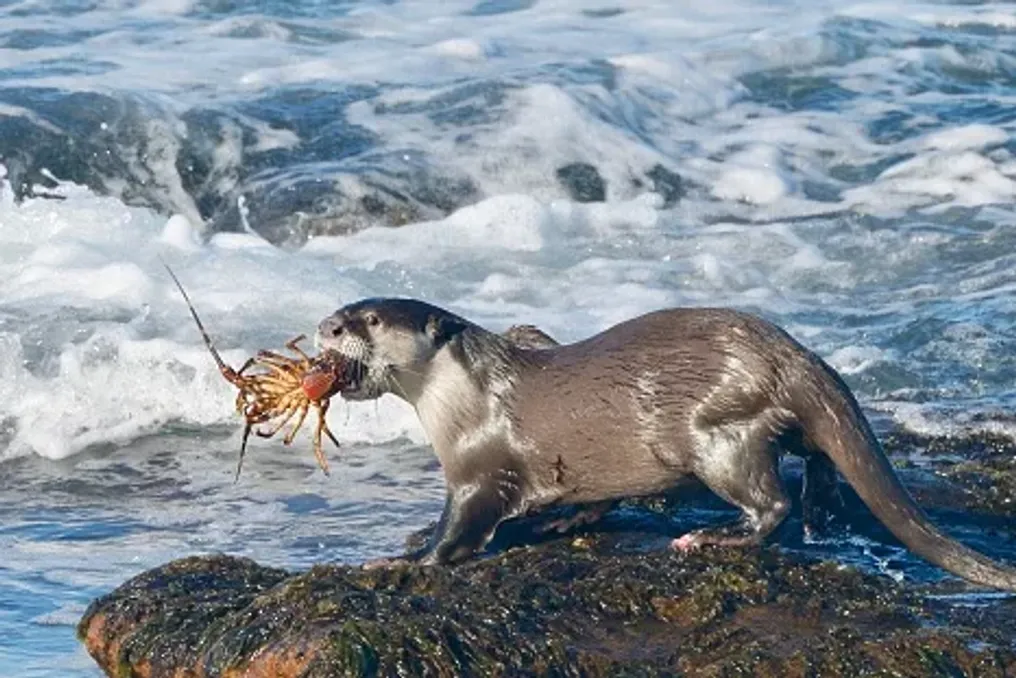
Cape Clawless Otters are carnivorous and opportunistic feeders, their diet changing depending on their habitat and available food. Along the coast, crabs are an important food source, especially in rocky intertidal zones. They also feed on fish, including small coastal species, as well as other aquatic animals. Their diet may include frogs, insects, worms, and sometimes waterfowl. This flexibility allows them to adapt when certain prey becomes less available.
A 2025 study examining the feeding behavior of African clawed otters in three locations in South Africa revealed evidence of seasonal changes in their diet. Researchers recorded a shift from a crab-based diet to fish and insects, depending on prey availability and environmental conditions. This dietary flexibility is one reason why the species can occupy such diverse aquatic environments.
For coastal otters, the shoreline is not just a hunting ground; it is part of a broader ecosystem that connects marine food sources with the freshwater habitats necessary for survival.
Habitat and Urban Adaptation
Cape Clawless Otters are associated with various aquatic habitats: from freshwater rivers and wetlands to estuaries, reservoirs, and coastal shores. In the Western Cape, they are found in suitable habitats around the Cape Peninsula and further north towards the Berg River estuary and Langebaan. Their presence is not limited to remote wilderness areas; they have demonstrated the ability to inhabit landscapes significantly altered by human activity, including urban areas.
However, not every stretch of coast provides suitable conditions. Access to fresh water, sufficient prey, and protected areas for resting and breeding remain crucial factors influencing where these animals settle. Studies of their habitat preferences have also highlighted the importance of natural riverbanks, especially sections with reeds, rocks, and overhanging vegetation. These elements provide both shelter and access to food.
One of the more unexpected places where Cape Clawless Otters can be found is the V&A Waterfront in Cape Town. The canals and waterways in this area have attracted otters, demonstrating how adaptable these mammals are when suitable food and fresh water sources are available in an urban setting.
The Two Oceans Aquarium Foundation, in partnership with the V&A Waterfront, established its Urban Otter Project in 2022. This initiative monitors otter activity, collects data on their behavior, and works to reduce potentially dangerous interactions between animals and humans. The project also highlights an important aspect of urban wildlife conservation: sharing space with wild animals requires understanding their behavior and needs.
Otters have been observed using freshwater pools and fountains within the Waterfront area, while vegetation around hotels and residential complexes provides additional cover. Wildlife monitors also collect observations that contribute to the research on this species.
For visitors, encountering an otter can be a memorable experience, but these animals should always be treated as wildlife. Approaching them, attempting to feed them, or allowing dogs to chase them can cause unnecessary stress and potentially dangerous situations.
Despite their adaptability, Cape Clawless Otters are not immune to pressures affecting South Africa's natural environment. Coastal construction, habitat degradation, and pollution can impact the associated ecosystems upon which they depend. The destruction of bankside vegetation, in particular, reduces the sheltered areas that otters use when moving between water and land. Water pollution is also a concern, as it can affect the biodiversity of aquatic organisms and alter food availability. Changes in rivers, wetlands, and estuaries can have consequences beyond the immediate development zone.
Other threats include accidental entanglement in fishing gear, road traffic accidents, and contact with domestic dogs. The guide to local fauna of Cape Town also lists dogs, poaching, water pollution, and habitat degradation as threats facing the species. In urban settings, feeding wild animals and encouraging close contact with humans can create additional problems by altering natural behavior.
The Cape Clawless Otter is classified as endangered in the Cape Town conservation reference information, underscoring the importance of protecting the habitats that sustain it. Conserving Cape Clawless Otters requires more than just protecting isolated stretches of coastline. Their survival depends on healthy rivers, wetlands, estuaries, and coastal habitats functioning as connected ecosystems. Protecting freshwater sources, preserving natural vegetation along riverbanks, and reducing pollution are all vital steps toward maintaining suitable habitats. Responsible tourism also plays a role, especially in areas where people, pets, and wildlife regularly coexist.
For travelers exploring the South African coast, an encounter with an otter serves as a reminder that some of the country's most fascinating wildlife encounters happen outside traditional reserves and tourist destinations. Whether it is searching for crabs on a rocky shore or quietly moving through a freshwater stream, the Cape Clawless Otter is an example of wonderful wildlife living at the junction of land and sea.