Naspers expects profit growth driven by Tencent, despite iFood and Just Eat expenses
Read more
TechCentral
techcentral.co.za

Naspers expects profit growth driven by Tencent, despite iFood and Just Eat expenses

Naspers forecasts an increase in adjusted profit of up to 13.5% for the first six months leading up to September, supported by Tencent, although high spending on food delivery businesses in Brazil and Europe is reducing profitability.

According to nearly identical trading statements released after the JSE close on Thursday, Naspers reported that its earnings per share from continuing operations will rise by 9.8–13.5%, reaching between $0.236 and $0.244 compared to $0.215 the previous year. Its Amsterdam-listed subsidiary, Prosus, forecasts growth within 10.1–14.6%.

This growth is attributed to investments accounted for at fair value, with Tencent being the 'most notable.' However, this positive effect is partially offset by expenditures in the group's own business segments. The group noted that accelerated investment in Brazilian iFood and Just Eat Takeaway.com (JET) is negatively impacting cash flow and profitability.

In May, CEO Fabricio Bloisi warned that iFood would increase spending to counter competitors who invested over $1.5 billion in capturing market share, which led to both stocks falling by approximately 7% that day.

Earnings per share on a basic basis will increase by 31.5–38.6%, partly due to unrealized foreign exchange gains on the group's debt, but basic earnings per share will decrease by 20.3–27.3%. This occurred mainly because the group sold fewer Tencent shares to finance a share buyback, resulting in $2.5 billion less income than the previous year.

The buyback could not halt the decline: Naspers closed at R658 on Thursday, which is 45% lower than R1,194.50 the previous year. Prosus fell 47% on the JSE during the same period and 45% in Amsterdam, where it closed at €32.10 on Thursday. Both stocks reached their lowest levels in the last year.

The drop reflects the situation with Tencent, in which much of the group's value is held. Shares of the Chinese internet giant closed at HK$348.40 in Hong Kong on Thursday, down 44% from the year-ago level.

This decline also pushed back Bloisi's $100 million bonus, which he would have received for a 'space project.' Other conditions require the combined market capitalization of Naspers and Prosus to double from $84 billion to $168 billion by June 2028. This figure was $94 billion in March, and since then, both stocks have lost more than one-fifth of their value.

Full interim results are expected on Wednesday, November 25. They will also show how Takealot is performing, which reported its first annual adjusted operating profit in June following the launch of Amazon Prime in South Africa.
Similar stories

One Piece: Grand Gourmet Game Review: Is It Worth Buying?
Read more
olhardigital.com.br

One Piece: Grand Gourmet Game Review: Is It Worth Buying?

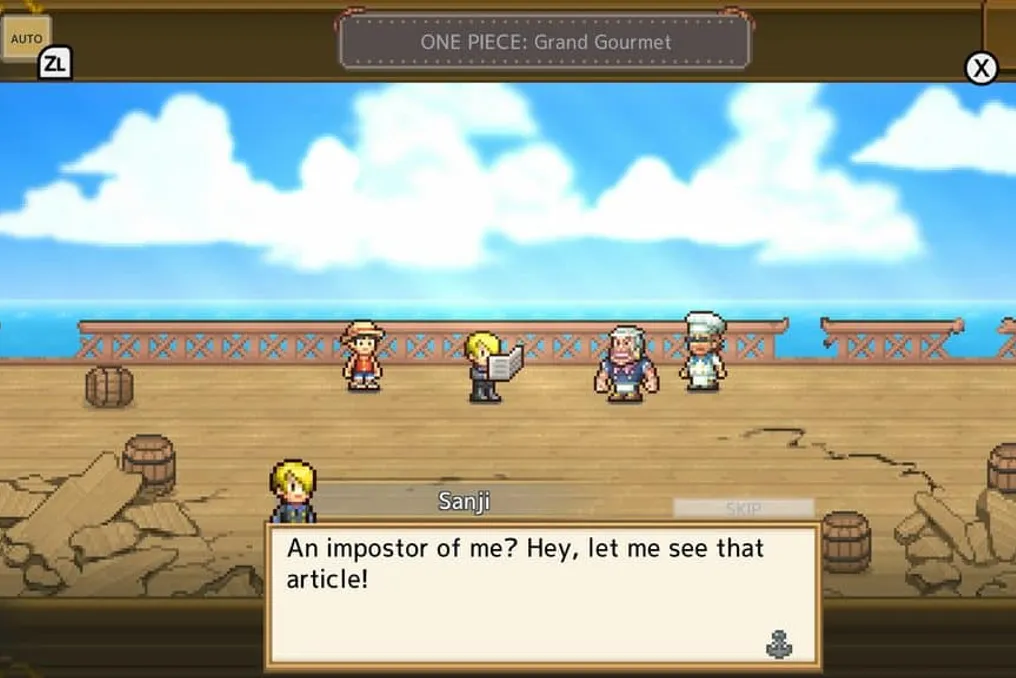
From October 22 to 23, 2026, Kairosoft and Bandai Namco released the game One Piece: Grand Gourmet. For the price of 82.90 real, players received over 400 One Piece characters, more than 200 decorative items, and a floating restaurant.

Approximately one month after its release, the game garnered 912 reviews on Steam, with about 79% of them being positive. Critics on OpenCritic gave the game an average score of 73 points. The review author, who tested the game on PC, explains the discrepancy between these two metrics.

The plot revolves around the Straw Hat crew splitting up, leaving only Luffy and Sanji. They discover a fake restaurant run by scammers that sells low-quality food at high prices and damages Baratie's reputation. In response, players are invited to create their own Baratie 2, where they can appoint a chef and use the Tori bird as an assistant.

The game is not a deep narrative; the introduction lasts less than a minute, and the main focus quickly shifts to the process of building the restaurant. This is typical of a Kairosoft project: isometric view, pixel graphics, and many simultaneous events. Sanji cooks independently, without mini-games, while staff handles service. The player's task is to develop a menu, decorate the hall, satisfy customer requests, and drive away unwanted visitors.

The menu is formed from sets of four items: a main course, a side dish, a dessert, and a drink. Players can name the chef, the restaurant, and each dish. Recipes appear based on customer and crew ideas if the player has the necessary ingredients. Luffy embarks on almost automatic expeditions, returning with products, gifts, character rumors, and new customers.

Other crew members perform their functions: Nami handles procurement and discounts, Zoro trains the crew, Usopp is responsible for decoration, Franky expands the ship, and Robin improves dishes. The game progresses across the seas of the One Piece universe, and in each region, five goals must be completed, such as surpassing the sales of the fake Baratie and turning customers into fans. The final stage concludes with a culinary competition before a jury.

Pick n Pay will maintain the price of the Smart Shopper Pro loyalty tier amid the battle for online retail
Read more
techcentral.co.za

Pick n Pay will maintain the price of the Smart Shopper Pro loyalty tier amid the battle for online retail

Vince Viviers, Head of Innovation and Digital Transformation at the Pick n Pay retail chain, stated that the new paid loyalty tier, Smart Shopper Pro, will be available at a starting price of 99 rand per month for a 'very long period.' He added that customers will be notified in advance if the price changes to avoid 'tricky surprises.'

During the TechCentral Show, Viviers explained to Duncan McLeod how the Pro program, launched last month at the same price as Shoprite's Xtra Savings Plus, is planned to become profitable. He noted that delivery fees alone for a customer ordering weekly via asap! can amount to about 148 rand per month.

For Pick n Pay, the main goal is retaining loyalty. According to Viviers, when a customer decides to pay monthly for participation in a specific program, the company's focus shifts to maximizing value for that customer. Program members spend more and visit stores more frequently, often at the expense of competitors.

Competitive Advantages and Market Challenges

Viviers asserts that since competitor apps have become very similar, buyers will choose products. Pick n Pay believes it can succeed in the fresh produce segment—the largest part of the basket and the reason for weekly purchases. This segment also presents challenges for Amazon, whose Prime service costs 59 rand per month, although Viviers already considers Amazon a competitor.

He also discussed Pick n Pay's plans to open dark stores in busy metropolises and how Takealot's Mr D app attracted new customers for them. According to him, the AI shopping assistant Penny increased the average basket size and purchase frequency, although he did not provide specific figures. Furthermore, Pick n Pay does not disclose the scale of its online business, sales of which grew by 35.4% in the six months leading up to August 30th.

The company will next focus on personalization. Viviers announced that Pick n Pay is moving towards a 'much more individualized model,' and new features will appear in asap! and Smart Shopper within the next six to twelve months.

Popular