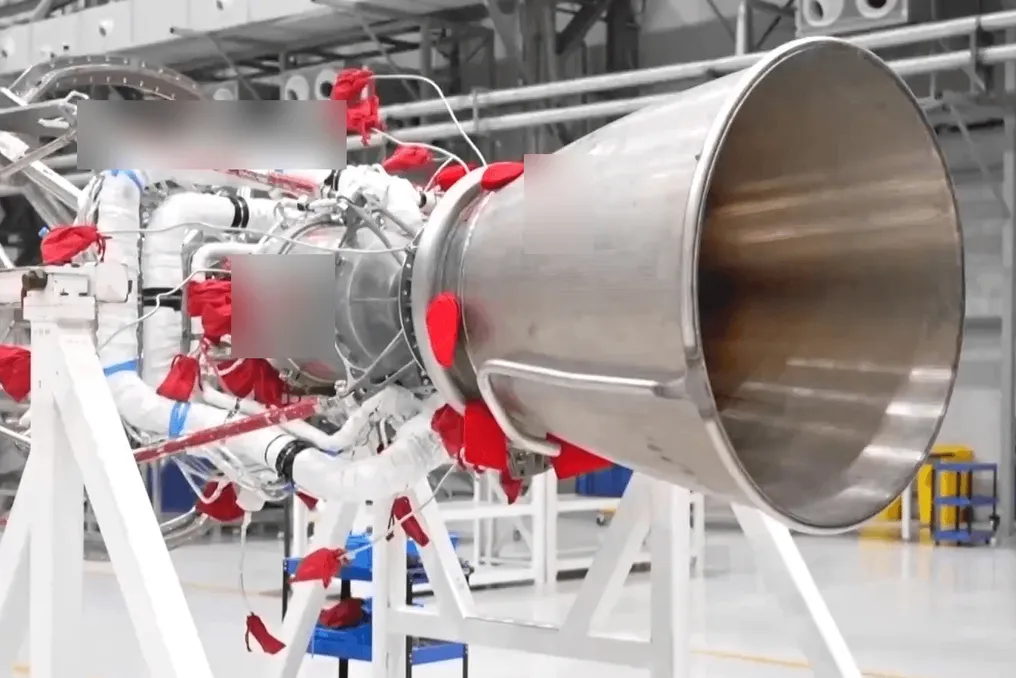
LandSpace demonstrated an 185-second firing test of the refurbished Zhuque-3 engine
Read more
Pandaily
pandaily.com

LandSpace demonstrated an 185-second firing test of the refurbished Zhuque-3 engine

New video material published on November 20 demonstrates an approximately 185-second firing test cycle of the refurbished Zhuque-3 engine, providing additional technical details about the refurbishment work previously announced by LandSpace.

The company stated that all nine engines recovered from the first stage of the Zhuque-3 Y-2 mission have undergone inspection, repair, and test firings, and meet the criteria for reuse.

This report follows an engine test conducted at the company's facility in Huzhou, Zhejiang. The video shows the engine operating at various thrust settings and fuel component ratios for approximately three minutes. It is important to note that this is a ground-level engine test, not a new launch, a test of the integrated stage with nine engines, or a demonstration of equipment reflight.

According to the LandSpace engine testing team, the work had two main objectives: verifying the build quality after refurbishment and obtaining actual performance data from the engine after flight. The team reported that all nine engines functioned normally, provided stable data, and met delivery requirements compared to pre-flight data.

Reports from November 20 indicate that the tested and repaired engines will be transferred for subsequent Zhuque-3 launches. However, the announcement does not specify the exact purpose of the launch or a fixed date for reflight. The future goal—the need only for simple checks at the refurbishment site—is described as an aspiration after accumulating more maintenance and reuse experience, rather than an already realized process.

The initial completion milestone was announced on November 18, when a LandSpace representative stated at the APEC event that all nine engines successfully passed ground acceptance and test firing after disassembly, inspection, repair, and reassembly. The new information supplements this announcement with video material of the test lasting about 185 seconds, as well as details of the planned transfer for reuse; this should not be considered the first disclosure regarding the engine launch.

These engines were obtained during the Y-2 mission, which launched on August 19, with its first stage landing in Minci, Gansu, as previously reported by Pandaily. Acceptance of a refurbished engine is a component-level reuse step and does not in itself signify the completion of the entire vehicle's reuse verification or a successful booster reflight.
Similar stories

LZ-Space completes ground tests of robotic system ahead of field validation
Read more
pandaily.com

LZ-Space completes ground tests of robotic system ahead of field validation

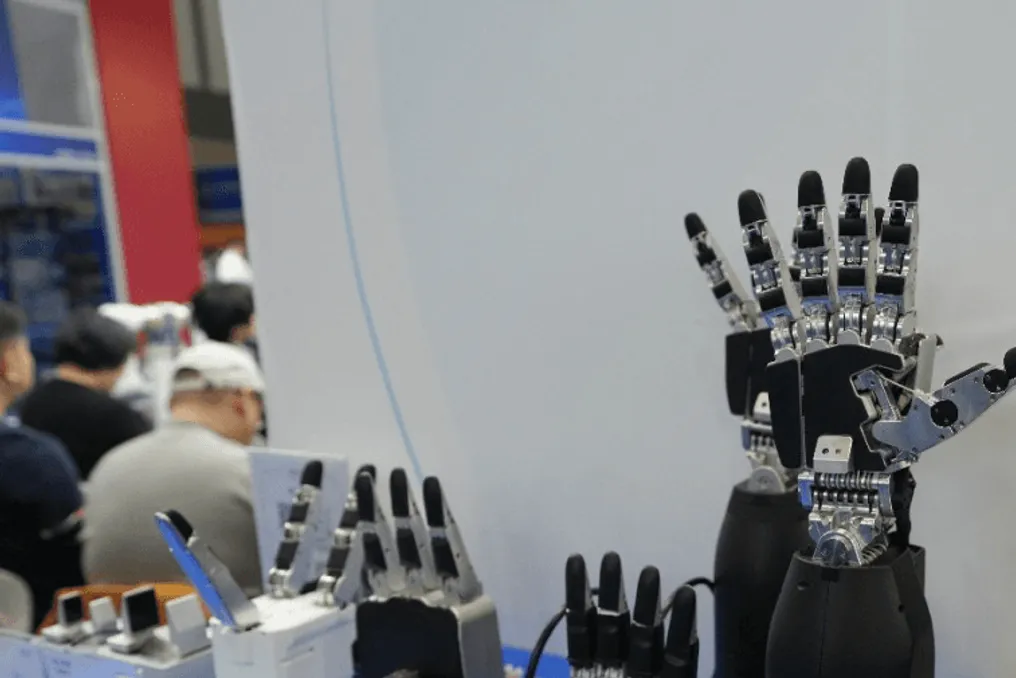
LZ-Space, the developer of the robotic manipulation system from Ussi using the English name DEXTEROUS HAND, announced the completion of spacecraft installation checks and ground environmental tests. This information was presented at an exhibition in Nanjing.

It is important to note that confirmation of functionality in space is still pending, and current achievements relate to ground tests, not orbital operation.

The developer presented nine models of robotic arms at the World Exhibition of Intelligent Manufacturing, which took place from November 19 to 21. The presented line includes designs ranging from two-fingered to five-fingered and is intended for industrial processing, remote control, research, and future space missions.

The space system is a combination of a robotic arm, a five-fingered gripper, and a remote control unit, rather than just an autonomous gripper.

Details of Ground Work Performed

According to information provided by the company via Leiphone, the ground work performed included vibration testing, cyclic vacuum testing with a temperature range from minus 25 to 60 degrees Celsius, as well as testing for total dose and single radiation particles. The spacecraft installation checks should be considered integration work on the ground, not proof of system operation in orbit.

The company identifies potential application areas such as tool usage, inspection and servicing of spacecraft, refueling operations, and conducting space experiments. These tasks remain target directions.

Further flight testing will depend on mission organizational decisions, and the presented report does not establish a fixed launch date or commencement of operational service.

Future Development and Industrial Capabilities

A more autonomous version, named LZ-SpacePro, is under development and is planned for release in early 2027. This company plan is separate from the current status of the system's ground tests and any possible space flight schedule.

Industrial claims require separate consideration. The stated maximum payload capacity of 30 kilograms applies to the heavy industrial LZ-Pro series, demonstrated for material handling, and cannot be automatically applied to LZ-Space or considered a characteristic of all arms presented at the exhibition.

During demonstrations for industry, the movement of containers using two arms and the manipulation of electrical connectors through gripping, insertion, and tightening were shown. The company emphasizes that implementation still requires verification based on client working parts, layout schemes, cycle times, retooling, and failure conditions.

The English name is visible on the exhibitor's own signage in photos taken during the event coverage; fictional English personal names are not used in the materials. The disclosed stages represent engineering progress claimed by the company, not independent qualification results or evidence of completed deployment in space.

CAS Space completes key firing tests for Liqing-1 and Liqing-2 engines for reusable rockets
Read more
pandaily.com

CAS Space completes key firing tests for Liqing-1 and Liqing-2 engines for reusable rockets

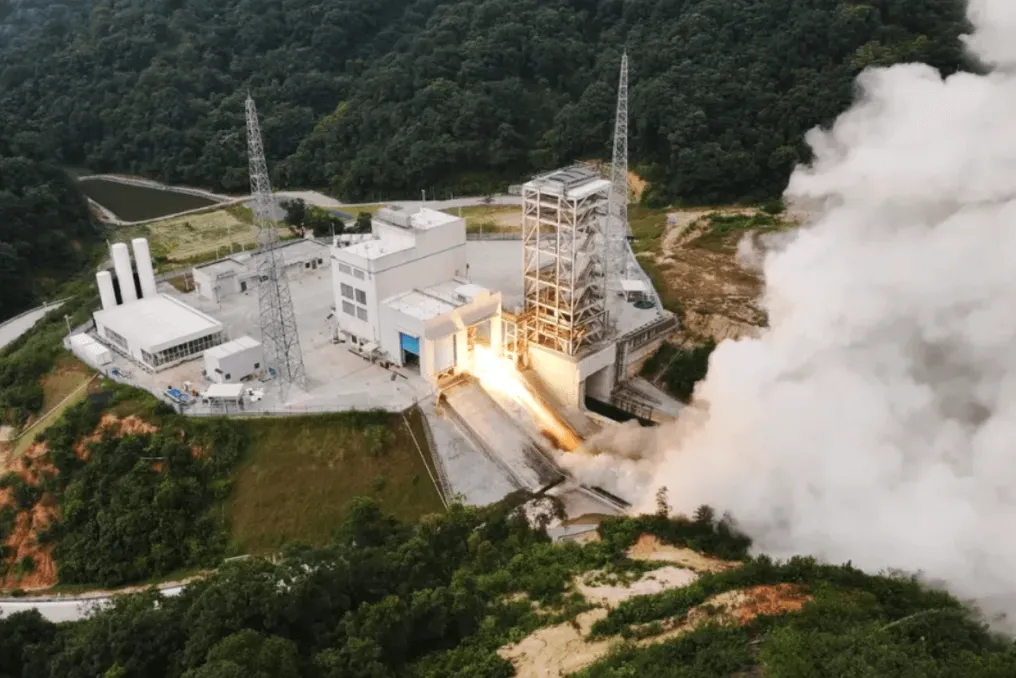
CAS Space announced on November 12th the completion of a new cycle of crucial firing tests for its Liqing-1 and Liqing-2 engines. These engines, developed in-house and featuring pintle-type injectors that use liquid oxygen and kerosene, are intended to power the company's reusable spacecraft.

According to Xinhua agency coverage, the Liqing-2 engine is referred to as Kinecore-2.

Liqing-1 Engine Tests

The Liqing-1 engine, classified as 30 tons, successfully passed a series of tests for multiple launches and continuous thrust regulation. According to CAS Space data, the engine ignited four times and maintained continuous thrust variation between 100% and 40%. It demonstrated normal start and shutdown, as well as stable operation for over 700 seconds during this campaign, with the longest single operational cycle lasting 300 seconds. The total reliability test time for this engine now exceeds 2000 seconds.

Liqing-1 is the primary engine for the reusable Lihong-2 vehicle. The company notes that it is designed to cover the entire flight profile: ascent, orientation descent, return, and landing recovery. This is why multiple launches and thrust adjustment capability are critical for the successful landing of the rocket stage.

Liqing-2 Engine Tests

The Liqing-2 engine, classified as 110 tons, underwent a series of long-duration tests where each engine operated for over 1000 seconds. This duration significantly exceeds the burn time of the first stage and covers the entire sequence from ignition to stage separation. The cumulative reliability test time for Liqing-2 has increased to over 5000 seconds, compared to just over 2000 seconds recorded in June. This engine is intended for the reusable versions of the Kinetica-2 rocket, also known as Lijian-2, and is designed to support frequent use at lower costs.

CAS Space stated that the extended test regimes allowed verification of the engine's operating limits under various conditions: high and low thrust, high and low mixture ratios, high and low inlet pressures, and operation with subcooled liquid oxygen. Through design optimization and testing, they managed to improve combustion efficiency in the thrust chamber and the performance of the liquid oxygen pump. Among the mastered technologies, CAS Space highlights achieving a combustion efficiency of 0.97 in the large thrust chamber.

The company believes that the results obtained lay the foundation for reliability qualification and subsequent mass production. However, new flight dates for the Lihong-2 or reusable Kinetica-2 vehicles have not been announced.

Popular