Emergency automatic braking system failed in three out of four tested new SUVs
Read more
AutoPapo
autopapo.com.br

Emergency automatic braking system failed in three out of four tested new SUVs

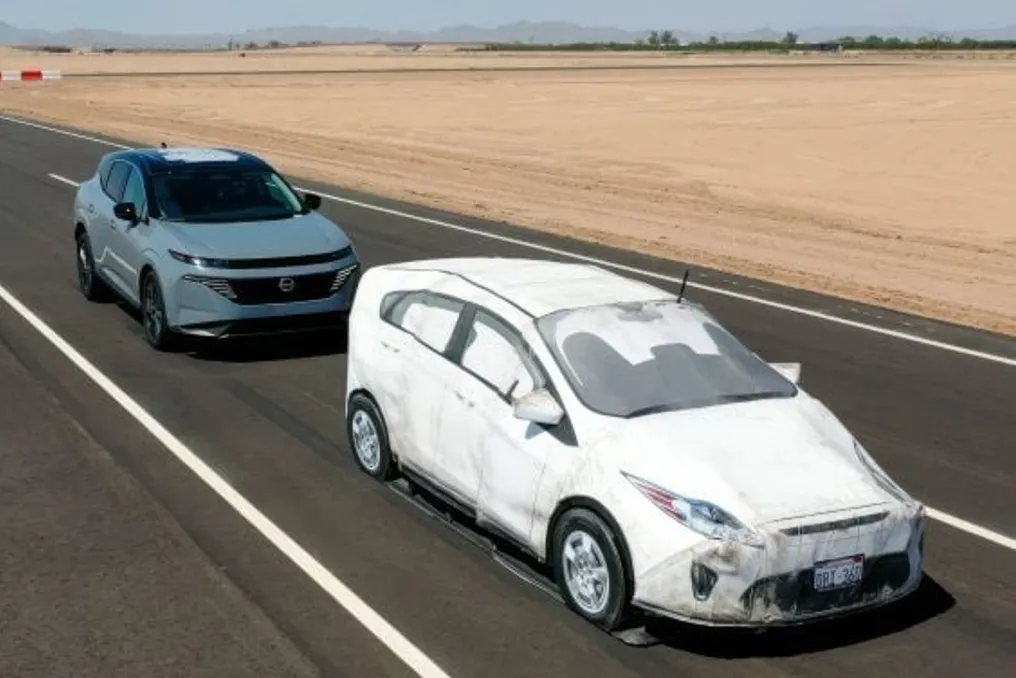
Automatic emergency braking in the newest SUVs continues to fail in a common road situation—when a vehicle pulls out from a side street. This is evidenced by a test conducted by the American Automobile Association (AAA) involving four 2026 models equipped with automatic braking at intersections: Chevrolet Equinox, Ford Explorer, Hyundai Tucson, and Tesla Model Y. A total of 74 simulations were performed on a closed track.

In the most critical scenario, the SUV was traveling straight at approximately 48 km/h when a target vehicle, controlled by a robot and simulating real traffic, pulled out from a perpendicular street at 8 km/h and entered the lane of travel. Only the Tesla Model Y managed to avoid a collision in all attempts, stopping an average of 1.60 m from the target.

The Chevrolet Equinox warned the driver in four out of five instances and braked in one, but collided in all tests, reaching speeds of about 40 km/h. The Ford Explorer and Hyundai Tucson models neither issued an alarm nor braked at all.

During a left turn maneuver in front of oncoming traffic, which has been rated by Euro NCAP (the European equivalent of Latin NCAP) since 2020, all four SUVs signaled, braked, and prevented an accident in every attempt. However, when this maneuver was repeated without the turn signal activated, the Tucson did not react and collided in all cases. According to AAA, the turn signal may be one of the signals required to activate the system.

Greg Brennan, Director of Automotive Engineering and Research at AAA, noted that the technology is only progressing in limited intersection crossing scenarios that are being tested, but its performance remains unstable outside these conditions. Nevertheless, positive momentum is observed: in 2022, vehicles without this feature did not react in any similar test.

AAA recommends treating this function as supplementary protection and keeping a foot on the brake pedal when approaching intersections. In Brazil, where the Equinox is also sold, automatic emergency braking will become mandatory for all new vehicles starting in 2029 by decision of the National Traffic Council (Contran).

Similar stories

Nakheel's villas and townhouses in Palm Springs sold for 5.5 billion dirhams
Read more
www.khaleejtimes.com

Nakheel's villas and townhouses in Palm Springs sold for 5.5 billion dirhams

Nakheel announced on Sunday that all 977 villas and townhouses from the first phase of the Palm Springs project have been sold, generating total revenue of 5.5 billion dirhams.

The main developer noted that such high demand indicates a constant need for well-planned residential complexes that combine quality housing with developed infrastructure, amenities, and connectivity for family life. Furthermore, it reflects a growing interest among Dubai residents in purchasing a home for living, rather than solely as an investment.

Khalid Al Malik, CEO of Dubai Holding Real Estate, stated: 'The response to Palm Springs demonstrates a clear shift in what people are looking for in a home. Families are thinking beyond just the real estate itself, placing greater value on the communities and lifestyle around it. Our goal is to create neighborhoods that meet these aspirations and remain relevant for generations to come.'

The 3.8 million square meter master plan, located near Palm Jebel Ali, includes 15 districts, two schools, a hospital, and various retail outlets. Over 35 kilometers of planned routes for walking, running, and cycling will connect the districts with parks and recreational areas, including Canyon Park with its waterways and sensory gardens, as well as the Silver Spur Racquet Club.

The development is planned to accommodate nearly 50,000 residents. The project will have transport links to Sheikh Zayed Road and Al Maktoum International Airport.

Nakheel presented the Palm Springs master plan on November 10, and the first villas and townhouses went on sale on November 18. This project is part of the South Dubai growth corridor, supported by investments in Al Maktoum International Airport and Expo City Dubai. Further phases of Palm Springs development are planned, and the start of booking for the next phase is expected soon.

Major automakers reveal plans for 2027 hybrid vehicles
Read more
autopapo.com.br

Major automakers reveal plans for 2027 hybrid vehicles

During 2024, established manufacturers in Brazil announced considerable investments in their operations. A common point in these announcements was the promise to introduce national flexible hybrid cars and launch new models, many of which are scheduled to arrive in 2027.

In 2026, each brand's planning to maintain relevance against growing Chinese competition became clearer. Below, we detail what is known about the hybrid models that traditional brands will offer starting in 2027.

Chevrolet

Chevrolet in Brazil is the last manufacturing unit to produce large compact vehicles after the brand's closure in China. For this reason, the solutions developed for the national line are being created locally.

The Chevrolet Sonic will receive a 48-volt mild hybrid system in 2027, and this technology will be extended to the Tracker and Montana models. This system aims to reduce both consumption and emissions of the three-cylinder 1.0 turbo engine, which is already known for its economy.

Furthermore, Chevrolet plans to launch the plug-in hybrid Captiva, although it will not be flexible. The vehicle is already available on the brand's website and will be assembled under an SKD regime at the multi-brand PACE factory located in Ceará.

Honda

Honda has committed to manufacturing flexible hybrid cars using the e:HEV technology in Brazil. This system will be implemented in the next generation of the HR-V, integrating the naturally aspirated 1.5 engine with an electric component.

According to information gathered by Quatro Rodas, the City and WR-V versions will start featuring a 48-volt mild hybrid system, aiming to reduce emissions. This functionality represents an unprecedented and more accessible option in the global market.

Renault

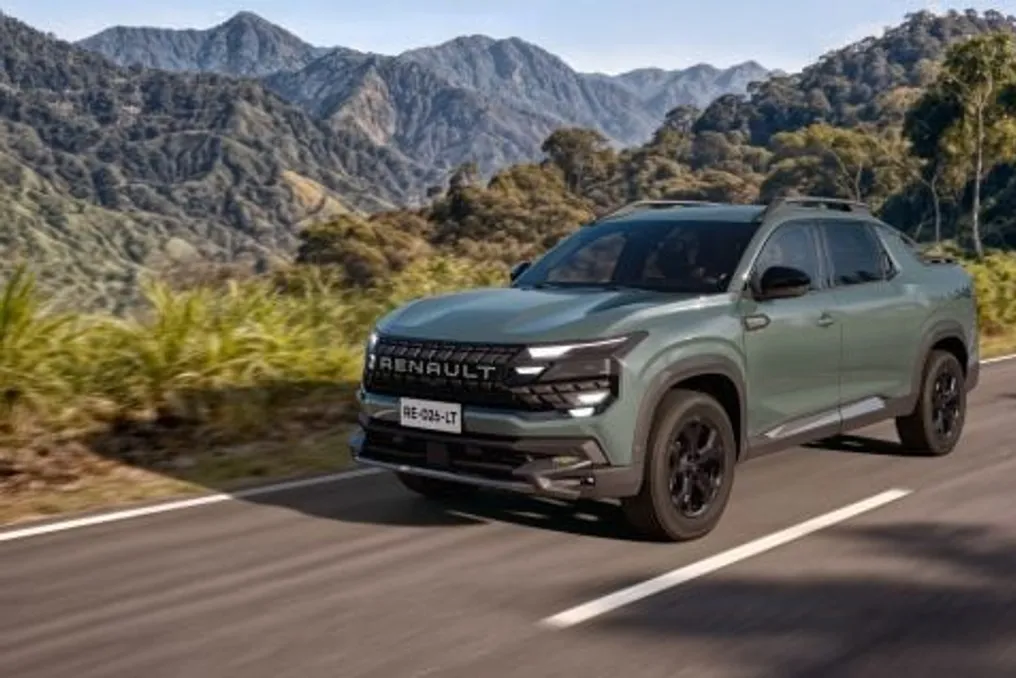
The Renault Boreal model and the Niagara pickup have been confirmed to receive the E-Tech 4x4 system in Brazil in 2027. Although this system already exists in Europe, where it is classified as mild hybrid, it exceeds the limits of known 48-volt systems.

In this system, the front axle is driven by the 1.3 turbo engine with the conventional mild hybrid. The major difference lies in the rear axle, which incorporates a 31 hp and 8.8 kgfm electric motor coupled to a two-speed gearbox with a reduced ratio for off-road use. This transforms the Boreal and Niagara into four-wheel-drive vehicles and allows them to operate exclusively on electricity under certain conditions. This rear motor operates at speeds of up to 140 km/h and uses a 48-volt battery with a capacity of 0.84 kWh.

Additionally, Renault is developing a plug-in hybrid SUV based on the Geely EX5 EM-i platform. According to the portal Autos Segredos, this will be the new Arkana generation model.

Toyota

Toyota was a pioneer in producing hybrid vehicles in Brazil, but currently faces the challenge of recovering lost ground, as Chinese competition has overshadowed its low-power electrified models.

The brand has already announced the development of a flexible plug-in hybrid system, which will be applied to the recently presented Corolla Deck pickup, expected in 2027. However, before that, the company should implement a new version of its HEV system, already used in other markets and which will arrive in the Lexus UX300h. The latter uses the 2.0 Dynamic Force engine combined with more powerful electric motors capable of generating almost 200 hp.

Volkswagen

Volkswagen will offer electrified flexible options in two distinct configurations in Brazil. The simplest option involves 48-volt mild hybrid systems, starting with the launch of the Tukan pickup in 2027. This MHEV system will be integrated into the new generation 1.5 TSI engine, which is already more efficient regardless of electrification, and will also be adopted with the 1.0 TSI engine.

The second hybrid configuration will be full hybrid and will be introduced in a novel vehicle, named project Saga, which is likely to be a coupe SUV, possibly succeeding the Nivus. Volkswagen's full hybrid was presented in Europe in 2026, equipping the Golf and T-Roc models. Its operating mechanism is similar to Toyota's HEV, where the combustion engine alternates between generator and propulsion functions.

Popular