The relationship between body language and human communication was historically illustrated by a horse named "Hans Clever", which gained fame in Germany in the early 20th century for correctly answering mathematical and spelling questions and distinguishing musical notes. Its owner, Wilhelm von Osten, a mathematics professor and amateur trainer, did not charge admission to the shows.
Due to media interest, a commission composed of veterinarians, teachers, and circus professionals was formed to investigate the animal. The conclusion indicated that it was not fraud, as Hans responded even when his owner was not present, ruling out tricks or pre-arranged signals. Psychologist and biologist Oskar Pfungst was invited to try and explain the phenomenon.
Pfungst conducted experiments with Hans, including tests where the animal could hear the questions but not see who was asking them. In these cases, the success rate was only 6%. When Hans could observe the questioner, the accuracy rose to 89%. It was concluded that the horse did not know how to count, but rather that the people asking the questions were transmitting unconscious cues through gestures and movements.
When Hans began tapping his hoof, he perceived subtle signs of tension in the interlocutor, such as fixed gaze, leaning torso, or slightly turned head. When the horse reached the correct number, the questioner unconsciously relaxed this tension with a slight nod or change in gaze. Thus, the horse learned to recognize almost imperceptible variations in human expression to know when to stop tapping its hoof.
This story served as an example of how researchers can influence the results of analyses, reinforcing the need for rigorous studies, such as "double-blind" trials. It also highlights the central role of body language in communication between humans and other animals, where gestures, postures, and expressions convey messages and reflect our feelings.
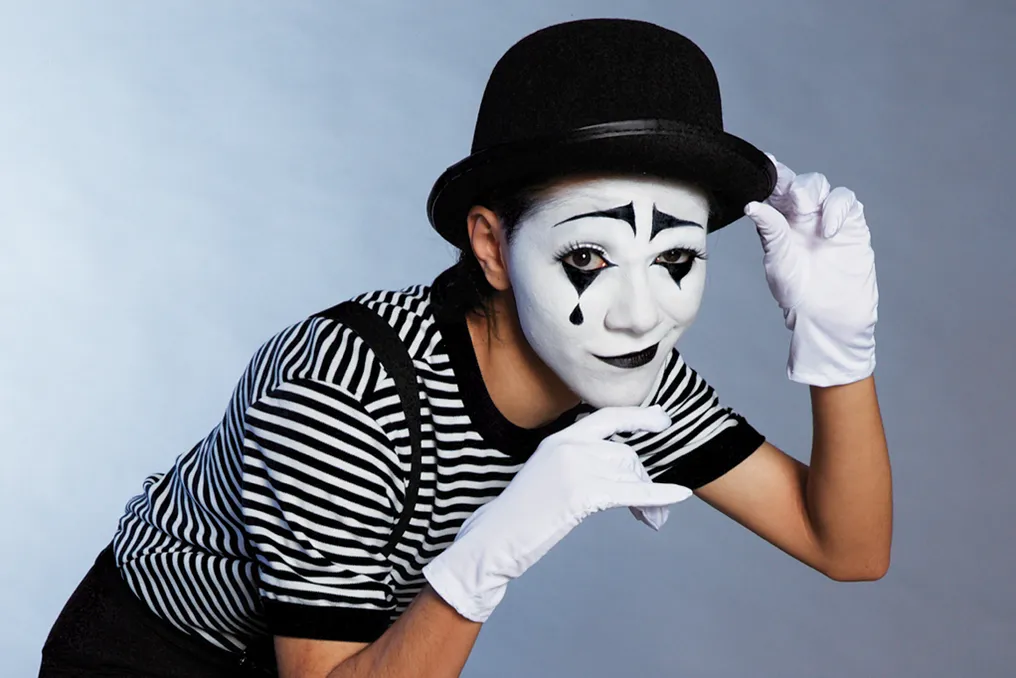
Some manifestations are evident, such as crying indicating sadness or smiling suggesting happiness. However, outside the scientific scope, the topic is explored by self-help books and coaches, who promise improvements in non-verbal communication to increase confidence and professional success. On social media, supposed experts emerge claiming to detect lies or feelings just by analyzing facial microexpressions.
The term "body language" is considered imprecise because it lacks a fixed grammatical structure like a true language (unlike sign language). However, it is useful for describing the signs and movements that convey messages, often unconsciously, being part of "non-verbal communication," which also includes tone and speech rhythm.
Scientific investigation into this field dates back to Charles Darwin, the father of evolution, who published the book The Expression of Emotions in Man and Animals in 1872. For Darwin, emotional expressions did not arise primarily to communicate feelings, but rather for practical functions. For example, showing teeth in predatory animals serves to trigger a bite, and wrinkling the nose in humans is an attempt to reduce the inhalation of unpleasant odors.
Over time, humans developed the ability to interpret these expressions, which is vital for social species. Laughter, shared with chimpanzees and orangutans, functions as an indicator of positive climate within the group, promoting cooperation. The expression and reading of emotions are controlled mainly by the amygdala, part of the limbic system, distinct from the fusiform gyrus, which is responsible for facial recognition.
Later researchers expanded the study of body expression, partially validating the idea that body language can be improved. Serious studies prove that gesturing to illustrate or emphasize speech can increase persuasion in speeches. Speech therapy and public speaking training are considered evidence-based approaches.
A notable example involved Amy Cuddy, a Harvard psychologist, in a 2010 study on "power poses." The theory argued that adopting victorious postures, such as placing hands on the hips, for about two minutes, would trick the brain into generating more power. The study with 42 people showed increased self-confidence, as well as elevated testosterone and decreased cortisol. This finding led Cuddy to give her TED Talk in 2012, which became extremely popular.
However, subsequent research attempted to replicate the study but did not confirm the same effects. Although participants might have felt more confident, no hormonal changes or greater willingness to take risks were observed. A later consensus established that "power poses" do not cause significant physiological changes, being limited to a possible placebo effect on confidence.
Paul Ekman, from the University of California, is one of the biggest names in this field, beginning his investigations in the 1960s. Following Darwin, he postulated the existence of seven universal facial expressions. To prove this, Ekman researched diverse groups, including indigenous peoples of New Guinea island, and found that most volunteers associated the same expressions with the same feelings.
Ekman developed the FACS (Facial Action Coding System), a system that describes muscle movement instead of just classifying the expression. Each signal, such as raising an eyebrow, is a numbered "action unit." Although the system is widely accepted, the interpretation of body language remains limited, except for culturally fixed gestures. Therefore, one must be wary of simplistic interpretations, as many gestures are random or contextual.