Ramaphosa proposes using old power plants in South Africa for AI data centers to investors
Read more
TechCentral
techcentral.co.za

Ramaphosa proposes using old power plants in South Africa for AI data centers to investors

President Cyril Ramaphosa presented Silicon Valley investors with the opportunity to utilize sites of old power plants for the construction of artificial intelligence data centers. The government has not yet determined the exact location of these facilities, nor has it calculated the amount of water and electricity required for their operation.

Speaking at the 'South Africa Opportunities and AI' conference in San Jose, California, on Wednesday, Ramaphosa noted that some of these sites 'already possess valuable grid connections, transport infrastructure, and other industrial facilities.'

According to the transcript of his speech published by the presidential office, he stated that with proper planning, technical assessment, and investment, these locations could become centers of new economic activity, including digital industries, advanced manufacturing, and data centers.

The President did not name specific facilities. When a journalist from Inside Politics asked whether the government had identified potential sites or assessed the water and electricity needs for the data centers, Presidential Press Secretary Vincent Magwenya replied that 'the technical details have not yet been worked out.'

The most obvious candidates are the coal-fired power stations of Eskom. Repurposing these stations as they close is part of the mandate of Eskom Green, the utility's renewable energy division. However, progress at the Komati station in the Mpumalanga province, which is the first scheduled for closure, has drawn criticism for its slow pace.

Water and energy consumption by data centers is already a subject of debate. Community groups have objected to planned facilities in Cape Town due to undisclosed water usage and energy demand. At the same time, the Internet Service Providers' Association (Ispa) stated this week that concerns about data center resource consumption are exaggerated and imported from markets such as the US.

Ramaphosa informed the conference that Africa, home to nearly a fifth of the world's population, holds only a small share of global data center capacity. Meanwhile, major American technology companies are expected to spend around $670 billion on AI infrastructure this year.

He called for the creation of a single, coordinated investment proposal for companies wishing to build AI infrastructure in South Africa. Ramaphosa emphasized that 'investors should not have to navigate a fragmented system of permits, grid connections, land availability, and infrastructure planning.'

This speech was the central event of Ramaphosa's week-long working trip to Silicon Valley. During the visit, Ramaphosa told his delegation of about 300 people that the success of the trip would depend on subsequent actions. He addressed the conference participants, stating: 'We are not asking for charity. We are presenting an investment and partnership opportunity.'
Similar stories

South African President Ramaphosa visits Silicon Valley to discuss artificial intelligence
Read more
cgtn.com

South African President Ramaphosa visits Silicon Valley to discuss artificial intelligence

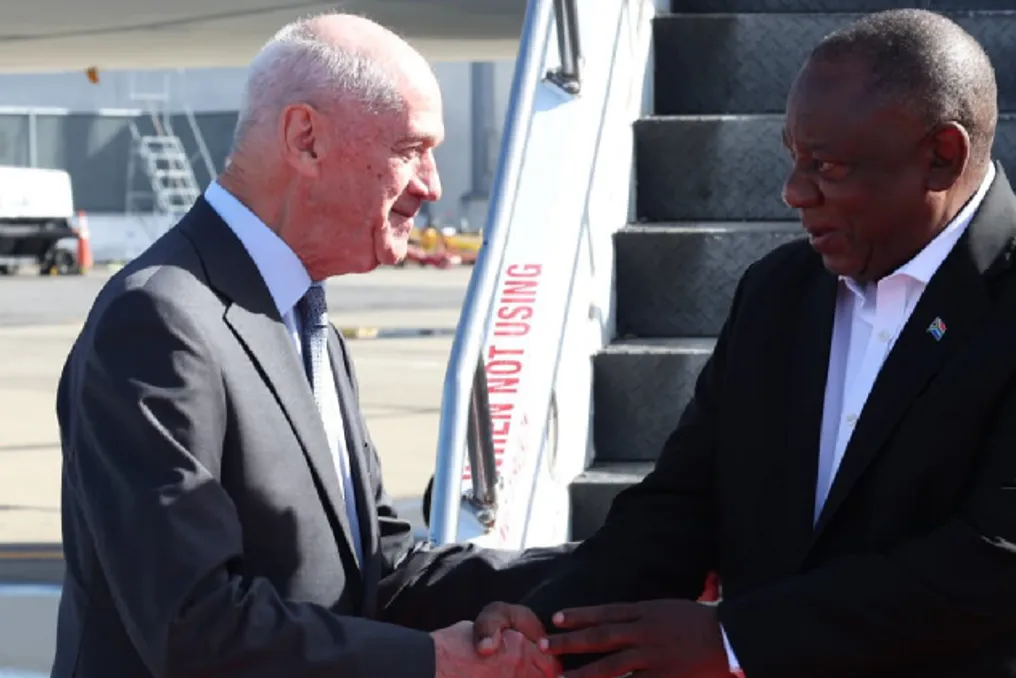
South African President Cyril Ramaphosa arrived in California on Saturday, November 14, as part of a week-long working visit to Silicon Valley. His goal is to study advancements in artificial intelligence (AI) and find opportunities to strengthen the country's digital economy.

During the visit, the president meets with leading technology companies, investors, and academic institutions. Discussions focus on progress in advanced AI, robotics, data infrastructure, cloud computing, digital innovations, and the practical application of AI across various sectors.

Ramaphosa is accompanied by a delegation that includes several government ministers, representatives from science and business, research institutes, technical experts, and university students. The delegation will also participate in the South Africa AI Opportunity event, which is running under the slogan 'Building an African AI Economy: Infrastructure, Investment, and Innovation.'

This forum will bring together local and international participants to explore ways to position South Africa as a competitive AI hub on the continent. Key discussion topics will cover investments in data centers, computing power, energy infrastructure, and startups, as well as the application of AI in public administration, industry, law enforcement, and public safety.

In a statement from the Presidency of South Africa, it was noted that AI opens up significant prospects for increasing productivity, improving the delivery of public services, stimulating economic growth, and supporting the creation of new industries and jobs. Potential areas of application in South Africa include healthcare, education, criminal justice, public administration, and public procurement.

Furthermore, the Presidency emphasized that the meetings will help shape the country's approach to AI policy and regulation, skills development, and responsible technology implementation, while addressing issues of data protection, digital sovereignty, and AI security. The visit is also aimed at attracting investment into South Africa's digital economy and demonstrating progress in economic reforms, including the implementation of the Operation Vulindlela program.

Geely President warns that worn batteries could make maintenance of used electric vehicles unviable
Read more
autopapo.com.br

Geely President warns that worn batteries could make maintenance of used electric vehicles unviable

The president of Geely warned that although an electric car can have a lifespan of up to 15 years, the battery rarely lasts that long. This warning was given by Li Shufu, founder and president of Geely Holding Group, the Chinese conglomerate that owns brands such as Volvo, Lotus, and Zeekr.

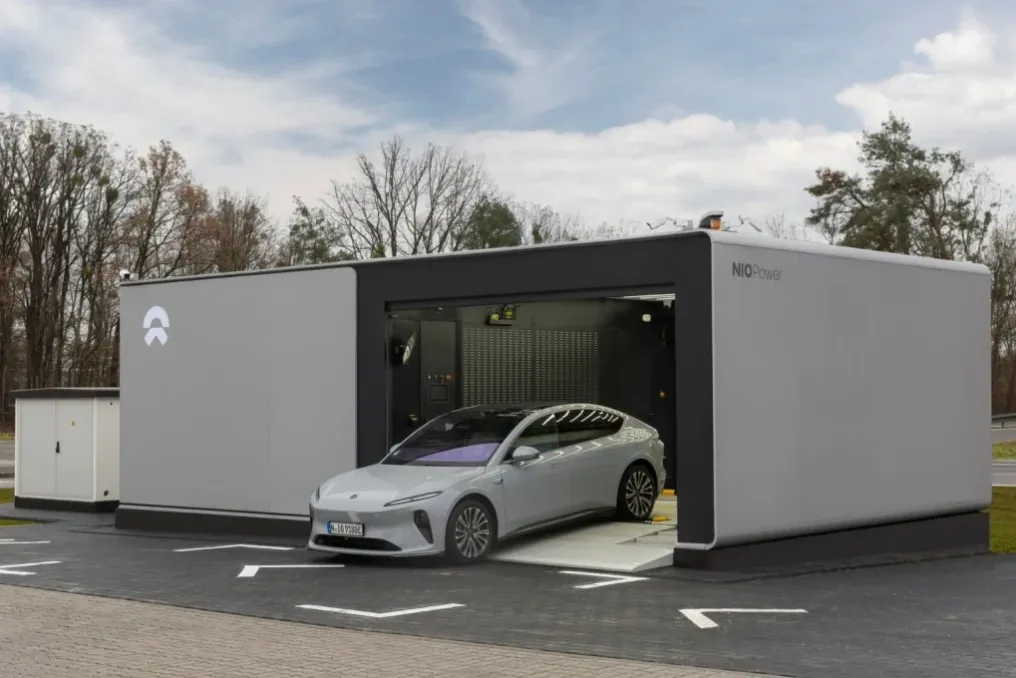
According to the executive, if the battery deteriorates before the rest of the vehicle, repair or replacement costs can become so high that it is no longer worthwhile to keep the car. The businessman made these statements on November 5th during the World Internet Conference in China, alongside William Li, founder of Nio, the Chinese electric vehicle manufacturer known for its battery swap stations.

William Li illustrated the issue with a scenario: what to do with a car that reaches 10 years or 200,000 kilometers but still has five or six years of projected use? At this stage, the battery has already suffered capacity loss, which can hinder use and significantly decrease resale value.

There is a Chinese regulation, effective since July, stipulating that the battery must retain at least 70% of its capacity after 10 years or 200,000 km. In practice, this means a vehicle that traveled 400 km on a full charge would only reach approximately 280 km.

For Li Shufu, the problem has not yet manifested on a large scale due to the youth of the Chinese electric fleet. However, when it does occur, current solutions are insufficient: replacing the entire battery is excessively expensive, as is repairing the old one.

According to the International Energy Agency (IEA), about four in five traders interviewed in China refuse 100% electric cars older than five years, mainly motivated by concerns about the battery's condition.

Reports indicate that a three-year-old Chinese EV is currently worth about 45% of its original price, a drop compared to the nearly 55% recorded in 2023, according to the country's dealer association.

In Brazil, depreciation is also sharp: 2022 models of electric cars registered a depreciation of 50.46% by October, surpassing the 15.64% depreciation of equivalent combustion engine cars, according to the BV Auto Index from BV bank.

An alternative option to complete replacement is repair, which involves replacing only the damaged cells—the smaller units that make up the battery. An engineer from CATL, the world's largest battery manufacturer, estimated that completely replacing a battery costs about 100,000 yuan (approximately R$ 84.5 thousand), while repair ranges between 10,000 and 20,000 yuan (equivalent to R$ 8.5 thousand to R$ 17 thousand), according to the Chinese newspaper Yicai.

However, not all batteries are repairable. In Cell-to-Pack (CTP) designs, the cells are integrated directly into the casing, which complicates the disassembly process.

Li Shufu advocates for battery swapping as the ideal solution: the driver stops at a station and receives a charged battery in place of the discharged one. He argues that since batteries circulate through the network and can be swapped for units in good condition, the vehicle could operate for up to 20 years.

This approach has strategic backing, as Geely signed an agreement in September to acquire 30% of Nio Power, Nio's battery swapping division, in exchange for its own operation in the sector and a payment of 640 million yuan (about R$ 540 million).

At the end of September, Nio's network had 4,126 swap stations in China and plans to expand to 10,000 by 2030. However, for the system to work across different brands, the batteries need standardization in terms of size, connections, and cooling.

Popular