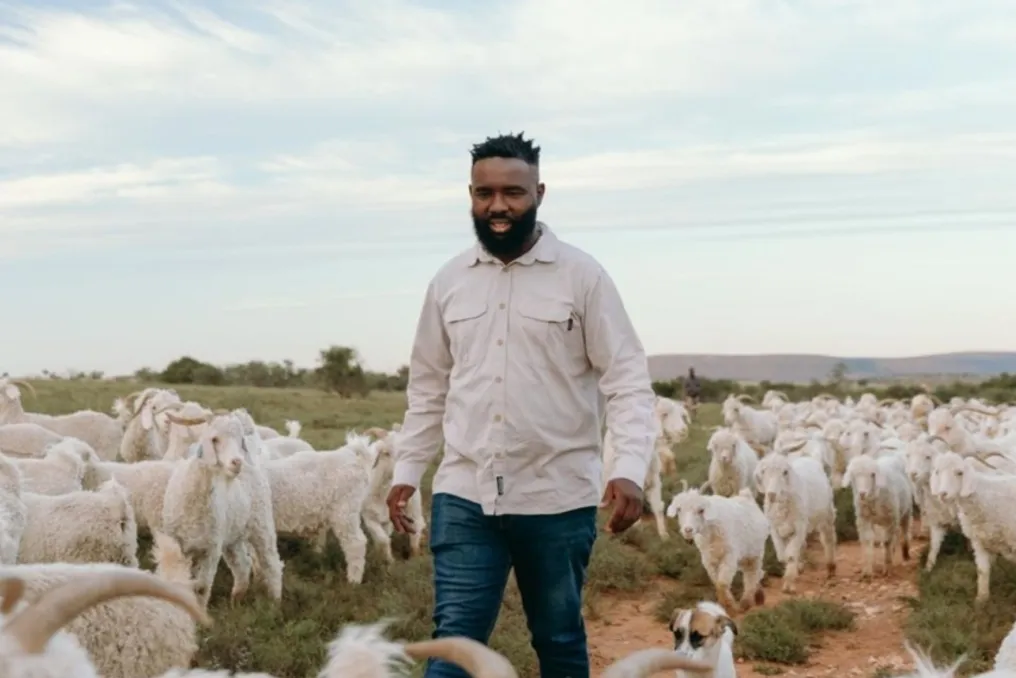
Angora goat farming in the Eastern Cape involves not only grazing on Karoo pastures but also producing mohair—one of the world's most sought-after natural fibers. This material is used in the international fashion, textile, and interior design industries. South Africa, as one of the leading mohair producers globally, has significant interest in this market, with the Eastern Cape playing a central role in this process. Behind every piece of wool is an opportunity for farmers to engage with the global industry.
Focusing on Mohair Quality
For Dintle Maphala, founder of Sehoaisekgabane Goedehoop Farm in Aliwal-North, Eastern Cape, raising Angora goats is a challenging endeavor. She began her work in 2018 and asserts that the quality of the mohair directly depends on how the goats are bred, fed, and cared for from birth. Farmers cannot wait until shearing day to consider the fiber's quality.
Maphala emphasizes the importance of caring for the young stock, as the first wool of young goats, called kid mohair, is typically finer, softer, and more valuable in the market. She paid off a loan over five years using deductions from income generated by mohair sales during shearing. Furthermore, Maphala explains that special attention is required during kidding season, when farmers care for the ewes and their offspring, ensuring herd management through shearing.
Viewing Farming as a Business
Avive Ghotive, a member of the Mohair Empowerment Trust (MET) board, believes that the program's success should also be measured by the benefit it brings to the lives of the farmers. He notes that 'success looks like the restoration of the farmer's dignity, first in their own eyes, then in the eyes of their family and the entire community.'
Ghotive explains that some financially struggling farmers join MET, yet their agricultural enterprises enable them to send their children to school. For some, this has resulted in a child becoming the first graduate in their immediate or extended family. When asked what distinguishes farmers who are developing their businesses, he pointed to their approach to agriculture: 'They have a business-oriented approach. They view their farming as a business.'
He adds that such farmers are inherently curious, willing to learn, and open to change. Nevertheless, Ghotive observes that after completing the program, farmers may lose access to regular industry information. He says: 'When they participate in the official MET program, they are often inundated with information because they are the focus of industry empowerment efforts. When they graduate, the focus shifts to new participants.'
Access to capital remains another challenge, especially for farmers aiming to improve their herd genetics. Ghotive believes that the cost of genetic improvement can prevent farmers from achieving higher prices available in the industry. He suggests that stronger partnerships with financial institutions could help farmers accelerate growth based on the foundation laid by MET.
Ghotive also calls for the representation of future commercial farmers in all structures of the mohair value chain. He insists: 'Adequate representation of the emerging farmer in every existing structure within the industry's value chain is necessary to maximize the protection of the emerging farmer's interests.'
Developing Farms Through Partnerships
Lavazi Fede has been raising Angora goats in Jansenville, Eastern Cape, through MET since 2021. He sees owning goats as a way for farmers to scale up their business, engage in other ventures, and create jobs. He states: 'Once you finally own the goats, you can take on another venture and expand your business in a more meaningful way, having the ability to hire more people.'
Fede also values the relationships formed among farmers, particularly the advice and support they can offer each other. He emphasizes: 'Building respectful relationships with fellow farmers and being able to rely on them when advice is needed is very important. And not being afraid to ask for help when necessary. The ecosystem is so healthy that we truly support each other in many aspects of our journey.'
He stresses that emerging farmers need better access to financial opportunities, including services from private investment firms. Fede argues that farmers must participate in industry decision-making, have access to infrastructure, and secure land ownership. 'Providing farmers with title deeds to their land will give them more chances to turn these farms into prestigious holdings and create wealth for future generations.'
Another need, according to him, is continuous learning about industry standards and certification requirements. He also urges farmers to utilize external services available to them.