Smuggling of Australian lizards in boots reveals Hong Kong's role in reptile trade
Read more
Getaway
getaway.co.za

Smuggling of Australian lizards in boots reveals Hong Kong's role in reptile trade

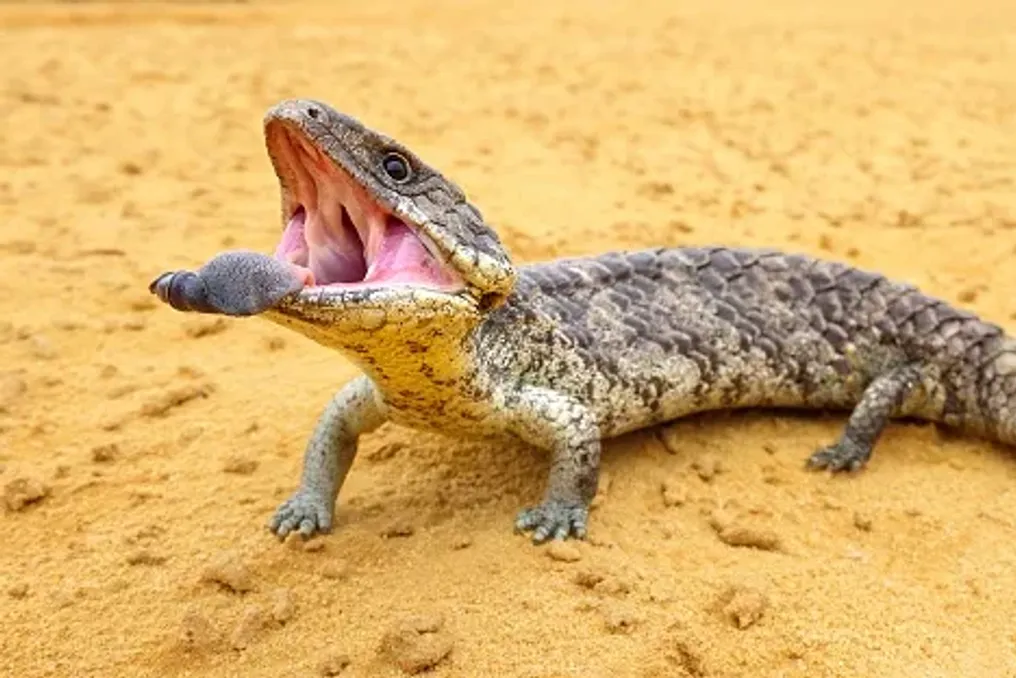
An incident of smuggling was intercepted at the customs services of Hong Kong International Airport, during which thirteen live lizards were discovered hidden inside winter sheepskin boots. This case highlights the growing illegal trade in Australia's native reptiles.

The package, seized on December 27, 2025, was declared to contain snacks. However, officials discovered a collection of live reptiles, including shingleback skinks (Tiliqua rugosa), concealed in the footwear.

This confiscation is part of a series of recent seizures of Australian reptiles arriving in Hong Kong. Wildlife researchers are increasingly identifying the city as a major destination and transit hub for illegally traded local species.

Scale of Illegal Trade

According to data published by Mongabay, Hong Kong Customs reported at least four confiscations of live reptiles from Australia between March 2025 and July 2026. As a result of these incidents, authorities seized 98 animals, including 74 lizards and 24 snakes, with an estimated total value exceeding HK$1.1 million (approximately US$141,100).

Most of the seized animals are presumed to belong to species listed under the Convention on International Trade in Endangered Species of Wild Fauna and Flora (CITES). Investigations into most cases are ongoing, and no arrests were made in the recorded incidents.

Australia is home to over a thousand endemic reptile species found nowhere else in the world. Despite a ban on the commercial export of live native wildlife introduced in 1982, many of the country's reptiles remain sought after by collectors and exotic pet enthusiasts worldwide.

Hong Kong as a Trafficking Hub

Wildlife researchers consider Hong Kong a significant destination for illegally traded Australian reptiles. Sam Inglis, wildlife program manager at the environmental organization ADM Capital Foundation (ADMCF) in Hong Kong, told Mongabay that the city serves as a major center or destination for Australian reptiles involved in illegal trade.

Researchers from the University of Adelaide's Centre for Wildlife Crime similarly characterize Hong Kong as a destination and potential transit point within broader trade networks. An analysis of Australian government records conducted by ADMCF showed that 99% of over 270 confiscations of native Australian reptiles between 2018 and 2025 were destined for Hong Kong. During this period, about 1,800 live animals were seized, including 250 blue-tongued skinks.

Hong Kong's own seizure data also indicates an escalation of the problem. The Hong Kong Department of Agriculture, Fisheries and Conservation registered the seizure of 382 native Australian reptiles intended for illegal import between 2021 and October 2026. Over 78% of these confiscations occurred starting in 2025.

These figures suggest an intensification of illegal trade, although seizures only reflect the portion of activity that authorities can detect.

Australian reptiles are valued in the exotic pet market due to their distinctive appearance, rarity, and perceived suitability as pets. Among the species most frequently targeted are members of the genus Tiliqua, including shingleback skinks and blue-tongued skinks.

The shingleback, known for its thick, rough scales and short tail, has become particularly sought after. Blue-tongued skinks are also popular due to their relatively calm temperament and manageable size.

Some reptile enthusiasts in China refer to these animals as 'puppies' of the reptile world, reflecting their reputation as calm companions for the home. The popularity of exotic reptiles reportedly surged during the Covid-19 pandemic, when some buyers sought out animals they considered low-maintenance pets.

Dylan Chadwick, a researcher at the Centre for Wildlife Crime, told Mongabay that buyers are increasingly drawn to unusual color variations and exotic features, with some treating the reptiles almost like collectibles. His research estimates that over 15% of Australia's endemic reptile species have entered illegal international trade.

Challenges in Combating Smuggling

Illegal trade can also blur the lines between legal and illicit activities. Investigators have uncovered instances where animals obtained illegally could be channeled into legitimate trade routes, making it difficult to determine the original provenance of individual reptiles.

Without systematic individual identification or reliable animal origin records, it is challenging to distinguish between captive-bred specimens and those illegally captured in the wild.

While the United States, Germany, and Japan have been cited as some known destinations for Australian reptiles, researchers suspect that many animals also end up in mainland China. Border seizures have provided some insight into this movement: Chinese customs confiscated 23 live Tiliqua skinks at the Huanggang and Shenzhen Bay checkpoints in March and September 2026, both bordering Hong Kong.

In Australia, keeping native reptiles as pets is regulated and usually requires permits or licenses, depending on the species and jurisdiction. Restrictions on keeping such animals are reportedly less stringent in Hong Kong and mainland China, potentially creating an easier market for illegally sourced individuals.

Hong Kong's position as a major international trading hub, combined with its proximity to mainland China, makes it a crucial point in wildlife trade networks. ADMCF recorded 4,960 seizures of endangered species in Hong Kong between 2015 and 2025, with an estimated total value of nearly HK$1.2 billion.

The organization previously warned that the scale of wildlife trade through the city could indicate the involvement of organized crime syndicates, rather than just isolated smugglers.

Hong Kong strengthened its legislation in 2021, including wildlife trade in its Ordinance on Organized and Serious Crime. Sentences can include imprisonment of up to 10 years or a fine of HK$10 million. Nevertheless, wildlife crime researchers argue that law enforcement remains inconsistent, and penalties imposed in some cases are significantly lower than the maximum.

In response to Mongabay's questions, the Hong Kong Department of Agriculture, Fisheries and Conservation stated that it would cooperate with customs and police in joint investigations and seek harsher sentences if cases are prosecuted as organized crime.

The growing popularity of reptiles is also reflected on social media, where lizard pets increasingly appear in videos and photos adorned with miniature accessories. Videos on Chinese social platforms show blue-tongued skinks wearing festive hats, knitted crowns, and headwear. While such content may present reptiles as quirky pets, wildlife researchers warn that the demand for exotic species can fuel the illegal trade.

Reptile trade in China has evolved over the past two decades, with enthusiasts increasingly favoring smaller species. Traders have also described a growing market for breeding Australian reptiles in captivity, although some species, including shinglebacks, are considered more difficult to breed and can be expensive.

Australian authorities continue to intercept shipments of native reptiles before they leave the country, and several trade cases have led to criminal charges. In September 2026, a 21-year-old Chinese citizen was charged with attempting to smuggle 163 native reptiles from Sydney to Hong Kong between December 2025 and March 2026. Investigators reportedly intercepted 38 packages containing species such as shinglebacks, blue-tongued skinks, dragons, eastern hooded fringed toes, and Canningham skinks. The animals were allegedly hidden in packages with leather bags and slippers.

The Australian National Environment Protection Agency stated that violators illegally exporting regulated wildlife can face up to 10 years in prison, a fine of up to AUD $364,000, or both penalties.

Despite convictions and stricter measures, wildlife trade remains an ongoing issue. Researchers argue that arresting individual smugglers is insufficient to dismantle the broader networks facilitating this trade. They note that detained transporters may simply be replacements in a much larger operation, while the driving demand persists.
Similar stories

Thousands of crabs begin annual migration on Christmas Island in Australia
Read more
noticiasaominuto.com

Thousands of crabs begin annual migration on Christmas Island in Australia

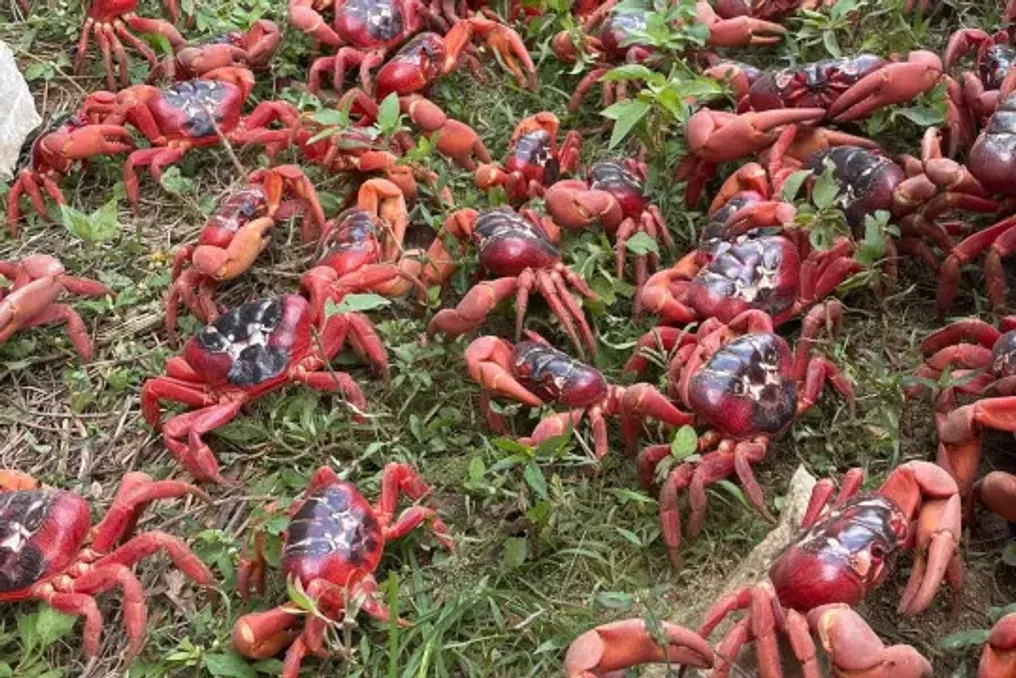
On the roads and trails of Christmas Island, an Australian territory in the Indian Ocean, something resembling a red carpet unfolded this week. The cause was thousands of crabs that began their well-known annual migration towards the sea.

This natural spectacle attracts tourists, researchers, and curious people from all over the world. The movement of these crustaceans occurs during the mating season, when females lay eggs that will form the basis for a new generation of crabs in the region.

The organization Parks Australia monitors this phenomenon annually to ensure that the reproductive cycle proceeds without interference from visitors in the animals' habitat. This organization shared impressive images of this moment, allowing observation of the phenomenon even from many kilometers away.

South African Coastal Otters: A Description of These Stealthy Mammals Living Between Land and Sea
Read more
getaway.co.za

South African Coastal Otters: A Description of These Stealthy Mammals Living Between Land and Sea

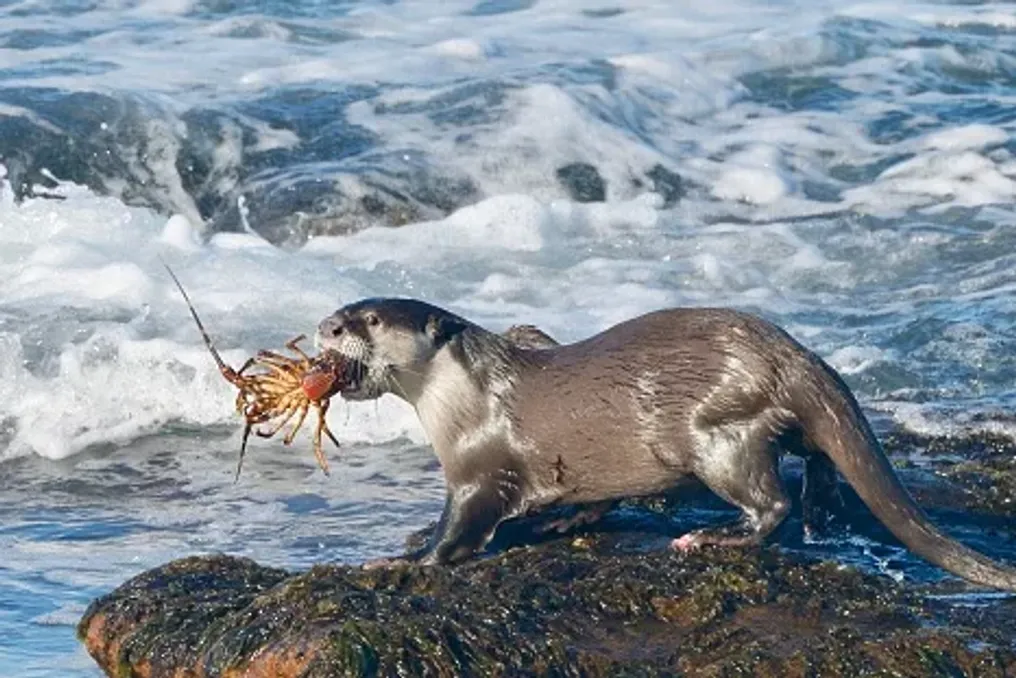
Along the rugged coastline of South Africa, where rocky shoals meet the restless ocean, a stealthy mammal moves quietly. The Cape Clawless Otter, often underestimated resident of the country's coastal ecosystems, feels equally comfortable hunting crabs among the rocks and sheltering in freshwater streams and protected riverbanks.

Thanks to sensitive whiskers, surprisingly agile paws, and dense fur adapted for aquatic life, these peculiar animals have developed unique survival methods along the coast. However, as coastal development expands and pressure on natural habitats intensifies, the spaces they depend on are becoming increasingly vulnerable.

The Cape Clawless Otter (Aonyx capensis) is one of the most widespread otter species in Africa. Despite its name, it is not confined to the Cape, being found in many parts of sub-Saharan Africa and throughout South Africa, especially along the eastern and southern coasts.

In South Africa, this species is also found in some parts of the west coast, with recorded sightings extending to Langebaan, the Berg River estuary, and Sedderberg. Its range extends beyond the coastline into rivers, wetlands, reservoirs, and other freshwater habitats.

Unlike marine mammals that spend their entire lives in the ocean, the Cape Clawless Otter depends on a combination of aquatic and terrestrial environments. It requires access to fresh water, suitable shelter, and a sufficient amount of food, making healthy connections between rivers, wetlands, and coastal ecosystems particularly important.

Consequently, their presence along the coastline is closely linked to the condition of the surrounding landscape.

Physical Adaptations of the Cape Clawless Otter

The Cape Clawless Otter possesses several physical adaptations that make it an effective predator in the aquatic environment. Its brown fur, pale chin and chest, small ears, and sensitive whiskers give it a distinctive appearance.

One of the most interesting features is its forepaws, which lack the large claws characteristic of many other otter species. These agile paws are particularly useful when searching for food under rocks, in crevices, and along muddy riverbanks.

Its whiskers, known as vibrissae, are highly sensitive to movement in water. They help the otter detect prey in low-visibility conditions, allowing it to find food through touch rather than relying solely on sight.

Although Cape Clawless Otters can move comfortably in water, they also spend significant time on land. They use sheltered spots along riverbanks and coastal vegetation for resting, grooming, and creating dens known as holts. These locations provide protection from disturbance and convenient access to nearby feeding grounds.

Cape Clawless Otters are carnivorous and opportunistic feeders, their diet changing depending on their habitat and available food. Along the coast, crabs are an important food source, especially in rocky intertidal zones. They also feed on fish, including small coastal species, as well as other aquatic animals. Their diet may include frogs, insects, worms, and sometimes waterfowl. This flexibility allows them to adapt when certain prey becomes less available.

A 2025 study examining the feeding behavior of African clawed otters in three locations in South Africa revealed evidence of seasonal changes in their diet. Researchers recorded a shift from a crab-based diet to fish and insects, depending on prey availability and environmental conditions. This dietary flexibility is one reason why the species can occupy such diverse aquatic environments.

For coastal otters, the shoreline is not just a hunting ground; it is part of a broader ecosystem that connects marine food sources with the freshwater habitats necessary for survival.

Habitat and Urban Adaptation

Cape Clawless Otters are associated with various aquatic habitats: from freshwater rivers and wetlands to estuaries, reservoirs, and coastal shores. In the Western Cape, they are found in suitable habitats around the Cape Peninsula and further north towards the Berg River estuary and Langebaan. Their presence is not limited to remote wilderness areas; they have demonstrated the ability to inhabit landscapes significantly altered by human activity, including urban areas.

However, not every stretch of coast provides suitable conditions. Access to fresh water, sufficient prey, and protected areas for resting and breeding remain crucial factors influencing where these animals settle. Studies of their habitat preferences have also highlighted the importance of natural riverbanks, especially sections with reeds, rocks, and overhanging vegetation. These elements provide both shelter and access to food.

One of the more unexpected places where Cape Clawless Otters can be found is the V&A Waterfront in Cape Town. The canals and waterways in this area have attracted otters, demonstrating how adaptable these mammals are when suitable food and fresh water sources are available in an urban setting.

The Two Oceans Aquarium Foundation, in partnership with the V&A Waterfront, established its Urban Otter Project in 2022. This initiative monitors otter activity, collects data on their behavior, and works to reduce potentially dangerous interactions between animals and humans. The project also highlights an important aspect of urban wildlife conservation: sharing space with wild animals requires understanding their behavior and needs.

Otters have been observed using freshwater pools and fountains within the Waterfront area, while vegetation around hotels and residential complexes provides additional cover. Wildlife monitors also collect observations that contribute to the research on this species.

For visitors, encountering an otter can be a memorable experience, but these animals should always be treated as wildlife. Approaching them, attempting to feed them, or allowing dogs to chase them can cause unnecessary stress and potentially dangerous situations.

Despite their adaptability, Cape Clawless Otters are not immune to pressures affecting South Africa's natural environment. Coastal construction, habitat degradation, and pollution can impact the associated ecosystems upon which they depend. The destruction of bankside vegetation, in particular, reduces the sheltered areas that otters use when moving between water and land. Water pollution is also a concern, as it can affect the biodiversity of aquatic organisms and alter food availability. Changes in rivers, wetlands, and estuaries can have consequences beyond the immediate development zone.

Other threats include accidental entanglement in fishing gear, road traffic accidents, and contact with domestic dogs. The guide to local fauna of Cape Town also lists dogs, poaching, water pollution, and habitat degradation as threats facing the species. In urban settings, feeding wild animals and encouraging close contact with humans can create additional problems by altering natural behavior.

The Cape Clawless Otter is classified as endangered in the Cape Town conservation reference information, underscoring the importance of protecting the habitats that sustain it. Conserving Cape Clawless Otters requires more than just protecting isolated stretches of coastline. Their survival depends on healthy rivers, wetlands, estuaries, and coastal habitats functioning as connected ecosystems. Protecting freshwater sources, preserving natural vegetation along riverbanks, and reducing pollution are all vital steps toward maintaining suitable habitats. Responsible tourism also plays a role, especially in areas where people, pets, and wildlife regularly coexist.

For travelers exploring the South African coast, an encounter with an otter serves as a reminder that some of the country's most fascinating wildlife encounters happen outside traditional reserves and tourist destinations. Whether it is searching for crabs on a rocky shore or quietly moving through a freshwater stream, the Cape Clawless Otter is an example of wonderful wildlife living at the junction of land and sea.

Popular