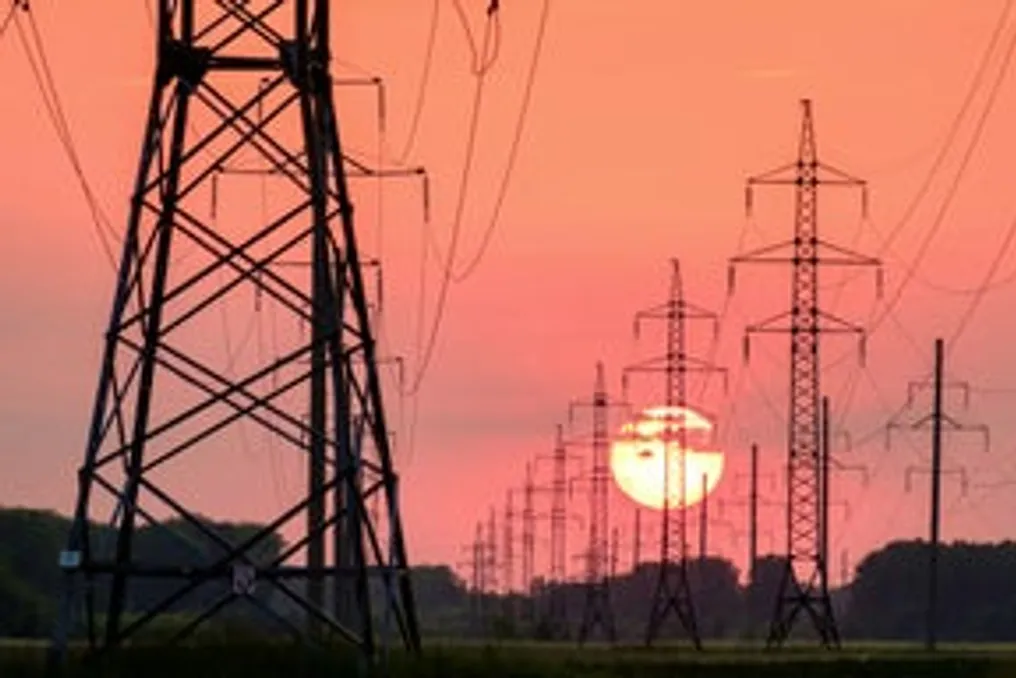
Portugal will contribute an amount of one million euros to the program managed by the International Energy Agency. This program focuses on the transition of developing countries to renewable or low-emission energy sources.
Similar stories
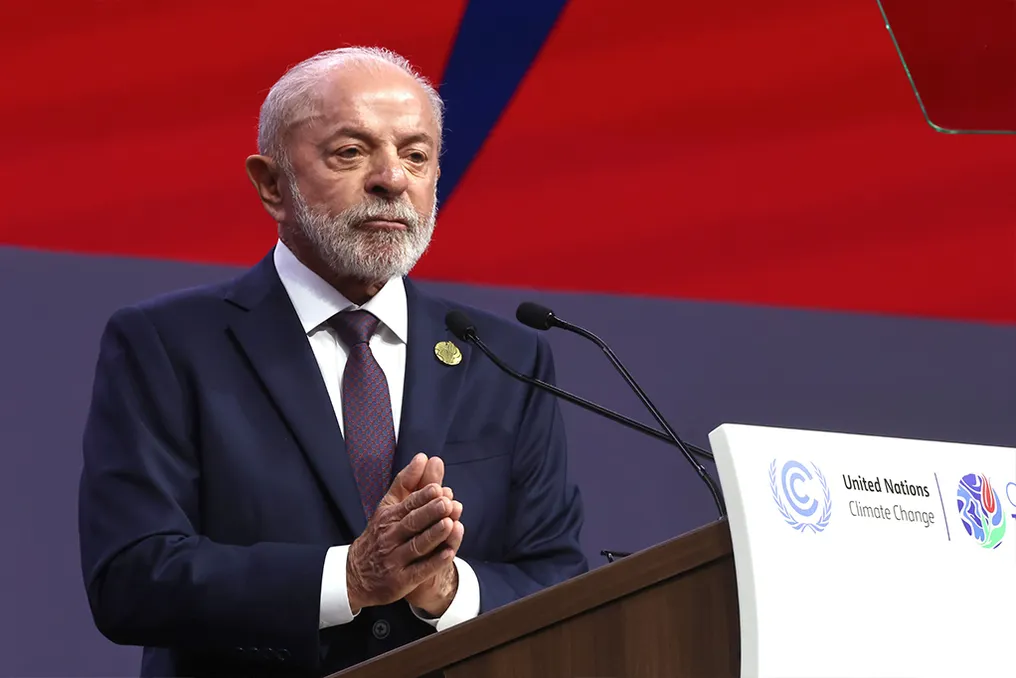
Brazilian initiative on climate financing presented at COP 31
The United Nations Climate Conference (COP 31) began on November 9 in Antalya, Turkey, and will run until the 20th of this month. Over these two weeks, representatives from nearly 200 countries are gathering to discuss measures for environmental protection and combating the climate crisis. Topics of focus include global warming, fossil fuels, energy transition, and preparing populations for climate change.
Scientists, environmentalists, civil society organizations, and businesspeople participate in the conference, but official negotiations are conducted by representatives of countries who may be heads of state, ministers, diplomats, and others. The goal of these discussions is to achieve international agreements and environmental commitments by the end of COP, including setting greenhouse gas emission reduction targets. These decisions are made by consensus among governments.
Each country presents its proposals and topics it deems important for discussion, and some even organize pavilions within the event. This is the case with Brazil, which hosted COP last year and is now presenting the results and continuing the initiatives of COP 30.
President Lula is in Turkey along with ministers, deputies, and representatives of the Brazilian financial market. The main topics that Brazilians will present over the days include fossil fuels, deforestation, and climate financing. These issues will be highlighted in the Brazilian program, which includes presentations and debates in its pavilion, and will also be officially proposed in negotiations with other countries.
Special attention is paid to climate financing—a topic long discussed at COP. Essentially, this term refers to mobilizing financial resources so that countries (primarily developing ones) can meet their climate goals and implement environmental projects.
Brazil's proposal is to achieve a target of attracting no less than $1.3 trillion USD annually in climate financing for developing countries by 2035. This target was defined at COP 29 in Baku, Azerbaijan, and has two levels. The main level stipulates at least $300 billion annually until 2035, with developed countries leading this mobilization from both public and private sources. The second, broader level calls on everyone—governments, development banks, and the private sector—to work together to increase the total amount to at least $1.3 trillion per year. At COP 30 in Belém, countries decided to accelerate actions towards this amount. Thus, Brazil proposes confirming this commitment and fully expanding the financing, which has been insufficient in recent years and does not meet the needs of developing countries.
The $1.3 trillion figure refers to the total volume that should be directed annually to developing countries to finance climate measures. This volume can be used, for example, for building clean energy facilities, protecting forests, and creating structures resilient to climate phenomena.
However, when it comes to climate financing, one of the main discussions is who will provide the money and how. It is not as simple as opening a bank account and waiting for countries to deposit over a trillion dollars to transfer to developing nations. Resources can come from various sources and instruments: private investments, where companies and banks invest money in sustainable projects; government donations that do not require repayment; loans (which must be repaid later by developing countries); carbon markets, and other opportunities. Countries disagree on the weight of each source: developing countries demand more public money from wealthy nations, while the latter rely on the private sector. The Brazilian plan proposes a middle ground, combining public and private resources, without relying on a single method of fundraising.
The proposal will be discussed with other countries on November 13 during COP 31's Day of Finance and Trade. Meanwhile, the report of the Presidency of Brazil at COP 30 is already available, detailing the proposal and explaining possible resource sources. The document was published on November 8.
Titled 'Implementing the Baku to Belém Roadmap to $1.3 Trillion,' this 78-page document presents six areas that could become sources of climate financing. According to the report, these areas do not have equal weight: they were chosen as primary funding channels identified during the Baku to Belém Roadmap process, not based on their size. The document explains: 'The six assessment areas correspond to the main channels and instruments identified within the Baku to Belém Roadmap process, not their current or potential magnitude. Therefore, they do not possess comparable scale or maturity and should not be interpreted as six equivalent pillars.'
The idea is that by expanding the resources in these areas, the trillion-dollar sum can be reached. According to the report, without changes, international climate financing will reach only between $458 and $461 billion annually by 2035; with the proposed measures, it could amount to between $1.27 trillion and $1.41 trillion. Another proposal is to track this financial volume using a 'climate finance action compass,' a tool jointly created with the Climate Policy Initiative organization to monitor the scale, speed, coverage, and impact of resources.
Brazil receives donation of 78.85 million euros for the Tropical Forests Fund at COP31
During the COP31 Leaders Summit, held in Antalya, Turkey, a group of philanthropic organizations announced a contribution of 78.85 million euros to the Forever Tropical Forests Fund (TFFF).
The TFFF was established by Brazil the previous year and functions as a financing mechanism aimed at ensuring a continuous flow of revenue for nations possessing tropical forests, as well as for communities involved in their preservation.
This initiative has the support of 67 countries, which collectively hold over 90% of the world's tropical forests.
The nine philanthropic organizations that formalized the donation include Bacon Foundation, Children's Investment Fund Foundation, Conservation International, David and Lucile Packard Foundation, Gordon and Betty Moore Foundation, Minderoo Foundation, Quadrature Charitable Foundation, The Nature Conservancy, and a private family office.
Organizers informed that the donation, equivalent to 88 million dollars at the current exchange rate of 78.85 million euros, takes place just weeks before the deadline to reach the capitalization goal of 10 billion dollars (or 8.9 billion euros) by the end of this year.
However, they stressed that for this vision to materialize, the TFFF needs to cover a funding gap of 2.1 billion dollars (equivalent to 1.88 billion euros) to meet its annual objective.
Mauro Vieira, Brazil's Minister of Foreign Affairs, commented that the $88 million contribution represents a firm endorsement of the TFFF's credibility and materializes one of the fund's central goals: expanding financial support for forests beyond contributions from official governments.
Portugal rises to 11th place in climate efficiency index due to emission reduction
Portugal has improved its standing, rising to 11th place in the climate efficiency index. This improvement is attributed to the reduction of greenhouse gas emissions per capita, which decreased by 15.1% over the last five years, reaching a level of 4.81 tonnes of carbon dioxide equivalent (CO2) per capita by 2025.
However, the document prepared by two German entities—the non-governmental organization Germanwatch and the research institute NewClimate Institute—highlights that emissions in Portugal's transport sector remain high.
The report notes that the National Energy and Climate Plan (PNEC), revised in 2024, requires a 40% reduction in transport sector emissions by 2030 compared to 2005 levels. Nevertheless, in 2024, this sector accounted for 35.2% of total national emissions, equivalent to approximately 18.1 million tonnes of CO2 equivalent.
Experts who compiled the ranking note the growth in electric vehicle adoption but point to limited electrification of heavy transport due to a lack of incentives.
The ranking indicates that Portugal maintains its status as one of the countries with good performance, demonstrating high scores across various individual indicators, including energy use. Renewable energy sources already constitute a significant share of energy consumption—32.46% in 2024.
Nevertheless, specialists point to a lack of efforts to gradually phase out gas and oil. The retention of gas-oriented infrastructure may prolong dependence on fossil fuels, warns the report.
Furthermore, experts criticize the continuation of subsidies and tax benefits for fossil fuels introduced in response to the energy crisis, as well as the free allocation of emission permits for carbon-intensive industrial sectors.
Denmark once again leads the ranking, which was published during the United Nations Climate Change Conference (COP31) held in Antalya, Turkey. The European Union (EU) ranked 19th with average performance.
At the same time, the report notes that China, as the world's largest emitter, 'has good opportunities to rapidly reduce its emissions if it continues the accelerated expansion of renewable energy sources.'
The main author of the ranking, Jan Burg from Germanwatch, observed that although no country is doing enough to meet the Paris Agreement, some are showing progress. According to Burg, the new index shows that these countries' efforts are bringing them closer to the required level of action while increasing the distance from laggards.
Despite this, he warned that current collective efforts remain insufficient to prevent catastrophic climate change, although he acknowledged obvious potential for improvement.