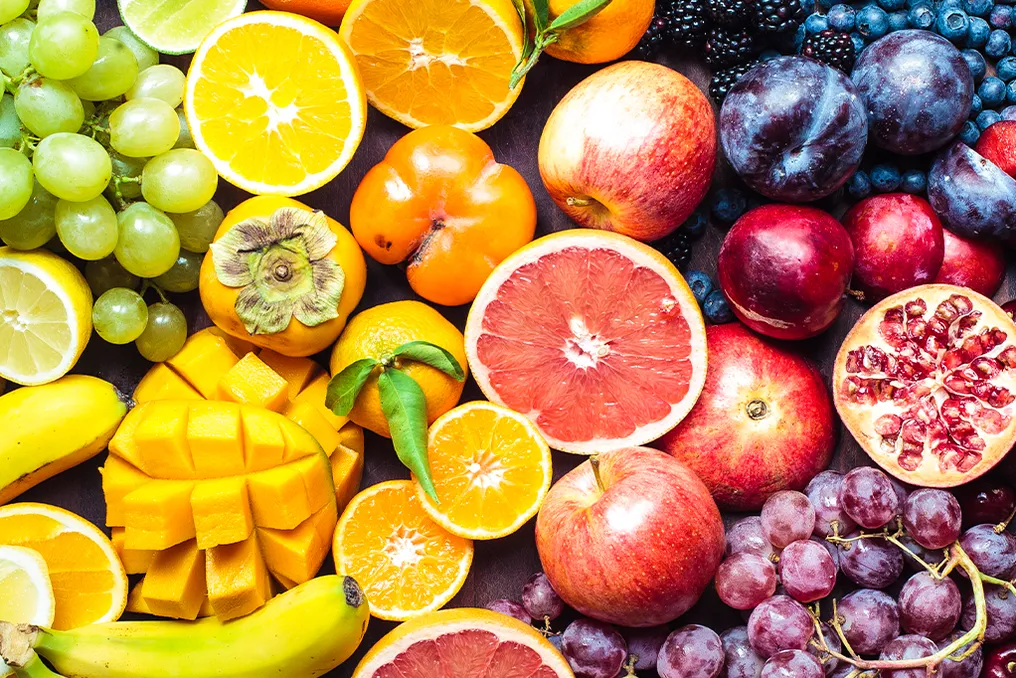
Parts of fruits, such as peels and pulp, which are often discarded, can be very beneficial for health, especially in preventing cardiovascular problems. A study conducted in September, published in the journal Current Developments in Nutrition, compared the consumption of whole fruits with that of juices to assess the impact of these dietary choices.
The researchers used data from the Behavioral Risk Factor Surveillance System (BRFSS), a survey that collects information on health habits through telephone interviews. The analysis involved data from 371,038 adults, of whom 151,983 had hypertension and 130,399 presented altered cholesterol levels. It was noted that in both groups, the frequency of whole fruit consumption was lower.
Since this is a cross-sectional study, it serves to identify possible associations and raise hypotheses, but it cannot establish direct cause-and-effect relationships. Nevertheless, the research reinforces the importance of maintaining a varied diet rich in natural foods.
Antioxidant substances and benefits
Nutrologist Celso Cukier, from Einstein Israelite Hospital, highlights the presence of antioxidant substances, such as polyphenols. These are a group of phytochemicals with over eight thousand members, including those called 'non-extractable.' Such compounds are linked to the cellular structure of the fruit and are generally lost during beverage preparation.
Flavonoids and phenolic acids are examples of these compounds and can be found in fruits such as grapes, nectarines, blackberries, raspberries, and peaches. Polyphenols show potential to improve cardiometabolic aspects, one of their most studied effects being the optimization of endothelial function. They act on the endothelium, the layer lining blood vessels, promoting its elasticity and aiding in blood pressure control. Furthermore, they have anti-inflammatory properties, which helps protect arteries.
Fruits consumed in their natural state also tend to contain higher amounts of other antioxidants, such as carotenoids and vitamin C. Although much of these substances remains in juices, the handling and storage process can accelerate oxidative reactions and cause losses.
Maintaining antioxidant compounds in the diet is a tactic to neutralize free radicals, unstable molecules that require stabilization when reacting with cellular components. There is scientific evidence that an excess of radicals is associated with arterial damage. Among fruits rich in antioxidants, citrus, mango, pitanga, and acerola stand out.
The importance of fiber
Another advantage of whole fruits, including their pulp and peels, is the higher fiber content. Nutritionist Milena Gomes Vancini, from the Nutrition Outpatient Clinic at the Federal University of São Paulo (Unifesp), explains that soluble fibers help control cholesterol levels.
These fibers dissolve in water, forming a kind of gel. This gel binds with bile acids, essential molecules in fat digestion, transporting them to the feces. With excretion, the body needs to replenish these acids, leading it to remove cholesterol from the bloodstream and decrease its levels. Apple, pear, plum, passion fruit, and guava contain pectins, which are an example of soluble fibers.
In addition to helping control cholesterol, these fibers are beneficial for gut microbiota, stimulating the multiplication of beneficial bacteria and combating dysbiosis. Dysbiosis refers to an imbalance in the microorganism population, characterized by a greater presence of pathogenic microbes relative to beneficial ones. This imbalance can compromise intestinal permeability, allowing harmful agents to enter circulation and cause inflammation and other damage.
All these elements—vitamins, polyphenols, carotenoids, and fibers—work together to promote cardiovascular health, distributed throughout various parts of the fruit. The nutritionist's recommendation is to focus on variety, because 'the more colorful the menu, the greater the number of bioactive compounds,' suggesting the use of native Brazilian species.
Additionally, it is advisable to prioritize seasonal fruits, which ensures fresher, tastier food with better cost-benefit. The World Health Organization (WHO) recommends daily consumption of at least 400 grams of fruits and vegetables, which equals five portions of these foods.
Finally, it must be remembered that despite strong indications, the protective benefits for the heart depend on a general healthy lifestyle, which includes balanced nutrition, physical exercise, adequate sleep, and stress management.