A walk through a city park often reveals rows of trees, expansive lawns, and plenty of shade, creating the impression of a green and thriving place. However, such landscapes can conceal the absence of wild grasses necessary to feed grazing animals, flowering shrubs that attract butterflies, as well as ponds and stream banks where birds and other creatures find food and shelter. Thus, a place may look green while losing what is essential for wildlife survival.
This conclusion is drawn from the results of an ecological survey of wildlife conducted in Chandigarh in 2026. Researchers recorded a great diversity of species, including leopards and Sambar deer, as well as birds and butterflies. Nevertheless, they found that some local tree species are having difficulty with natural regeneration and recommended strengthening the protection of meadows, wetlands, and other natural habitats. These findings indicate that for Indian cities, where plantings are often perceived as a sign of ecological progress, a more appropriate approach is to focus on habitat and the life it supports.
What was discovered in the forests of Chandigarh
The assessment took place from November 20 to 27, 2025, jointly by the Chandigarh Forest and Wildlife Department and the Wildlife Institute of India (WII). The survey covered the Sukna Sanctuary and surrounding forest areas. Researchers documented 16 species of mammals, 132 species of birds, 73 species of butterflies, as well as 13 species of reptiles and amphibians. Additionally, 43 species of trees, 14 species of shrubs, and 22 species of grasses were registered.
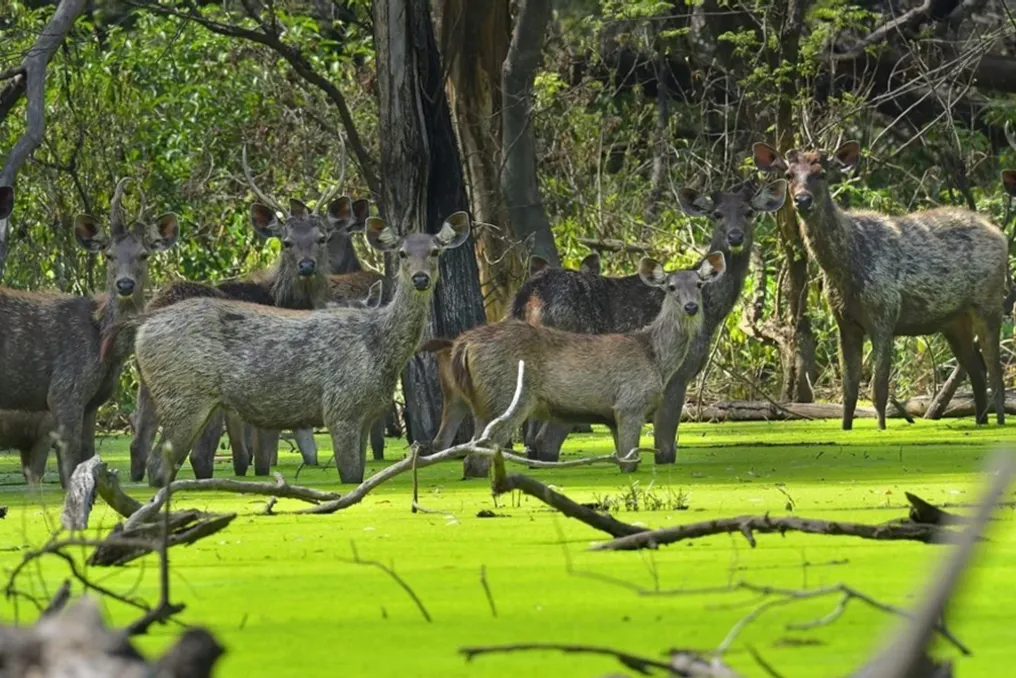
A leopard was sighted during the survey, and the population of Sambar deer inhabiting the region's forests was estimated at approximately 603 individuals. These figures demonstrate the richness of life that these natural areas continue to provide. However, counting species was only part of the work; the report also analyzed the condition of their habitat and recommended restoring native vegetation, protecting meadows, reviving wetlands and riparian areas, and controlling invasive species. Knowing which animals live in the forest is important, but knowing whether its habitat can continue to support them tells us where to focus our attention.
The forest may have trees but still needs help
Imagine a dense stand of mature trees. From a distance, it might appear healthy. However, looking closely beneath the canopy, one might notice that there are very few young trees replacing the old ones. This is a problem of insufficient natural regeneration, which the Chandigarh survey identified regarding local species such as Khair (Senegalia catechu), Siris (Albizia lebbeck), Lannea coromandelica, and Terminalia anogeissiana.
Natural regeneration is the process by which seeds turn into new plants without human intervention, allowing the forest to renew itself from generation to generation. If young trees are absent, some local species may become less common as the trees age. This is why increasing tree cover alone cannot indicate how well a forest is functioning. The survey also cautioned against creating large monoculture plantations. A row of identical trees can provide shade, but a healthy habitat requires diverse vegetation: from tall trees to shrubs, grasses, and ground cover. Each layer serves a function: birds need nesting sites, butterflies seek nectar, insects live among leaves and grasses, and herbivores depend on suitable plants for food.
The report contains a recommendation to replace invasive vegetation with native species. It is important to understand why this matters? Native plants grow naturally in the region and over time form connections with surrounding insects, birds, and animals. Some insects feed on specific plants, birds visit their flowers, and other animals transport their seeds to new places. In contrast, alien or exotic plants are brought from other places. Many thrive in cities and offer flowers, fruits, or shelter, but they do not always support the same relationships. Some species can also spread aggressively, displacing native vegetation.
A study conducted in Bengaluru in 2023 and published in Science of the Total Environment helps explain the importance of this difference. Researchers compared the interaction of birds and mammals with native versus alien trees. They found that taller native trees with larger flower clusters supported more bird species than alien trees with comparable characteristics. Another difference was noted: nectar-feeding birds more frequently visited native flowers, thus promoting pollination. On alien trees, their visits more often resulted in 'nectar robbing,' where the bird takes nectar without transferring pollen as required for the plant's reproduction. This does not mean every alien tree is harmful; the study acknowledged that alien trees can provide resources for wildlife in cities where native vegetation has already been lost. The main lesson is understanding what different plants offer local wildlife, rather than choosing them simply because they grow fast or look attractive. For Chandigarh, this confirms the survey's recommendation to prioritize native vegetation belonging to this landscape.
Why should open meadows be protected
A patch of tall, wild grass might look like an empty space next to a landscaped park. It is easy to imagine someone deciding to plant trees there to 'improve' the view. However, the meadow itself is a habitat. Its native grasses feed grazing animals, provide shelter for insects, and support species dependent on open spaces. The roots of these grasses also help hold the soil and influence groundwater movement. Planting trees on an existing meadow can alter the conditions that make it useful for these species. As a result, it might look greener to us, but for the wildlife that lived there, it means fewer resources.
This is why the Chandigarh survey specifically recommended protecting meadows and restoring native grasses, including Eulaliopsis binata, Arundinella nepalensis, and Heteropogon contortus. Across India, open spaces are often viewed as land awaiting development, beautification, or tree cover. Planners must first determine what habitat already exists. Sometimes caring for a green area means leaving room for its grasses to grow.
Wetlands and riverbanks support a completely different set of life. In Chandigarh, the survey recorded 49 species of butterflies in riparian areas—zones along streams, rivers, and other water bodies. Meanwhile, the highest avian species diversity was recorded in forest habitats. These differences matter. A forest, an open meadow, and a stream bank can be part of the same landscape, but each provides food and shelter for different species. Therefore, the report called for the restoration of wetlands and improved care of riparian zones, alongside other measures such as controlling invasive species.
Studies of the Eastern Wetlands of Kolkata show why protecting such areas requires attention to more than just their size or appearance. A 2024 study in Environmental Research examined changes between 1991 and 2023. It showed that the number of wetland areas increased from 2689 to 4532, indicating landscape fragmentation. During the same period, the ecosystem health index decreased from 0.67 to 0.55. Simply put, a wetland might exist on a city map, while its associated habitats are broken into smaller pieces, and its ecological condition is deteriorating. The Kolkata findings do not apply to the wetlands of Chandigarh, but they demonstrate what cities might miss if they focus only on the quantity of green or blue space.
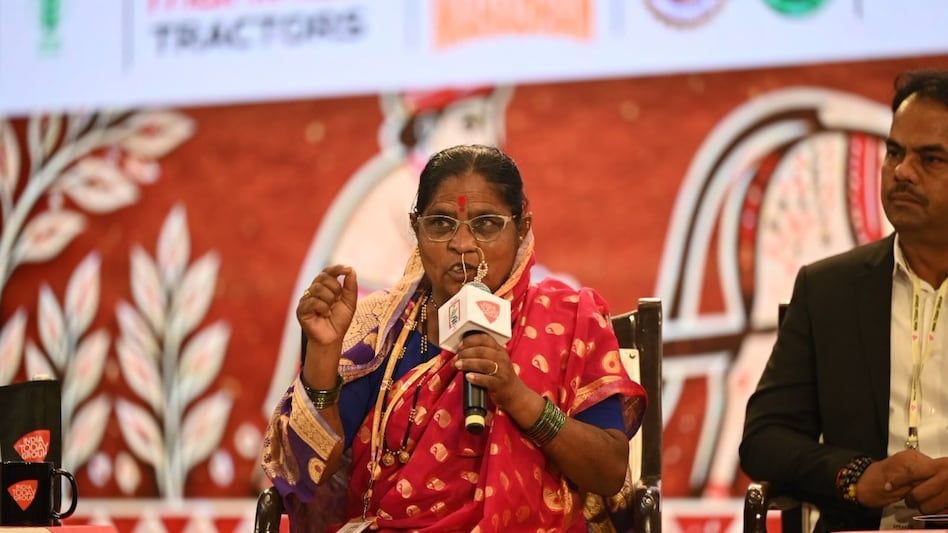
A two-day capacity-building workshop on wildlife surveying and methodologies concluded in Chandigarh. Diverse participants—representatives from civil society organizations, college students, nature enthusiasts, media personnel, and journalists—received training and were informed about various methods of wildlife monitoring and surveying. Thanks were extended to all stakeholders for their contribution to the event.
The Chandigarh survey also recorded a Red-eared slider turtle, an exotic aquatic species, and recommended its removal and management under controlled conditions. Such species are sometimes released into water bodies after being kept as pets, which can create additional pressure on local wildlife. Wetlands require care as living habitats, not just as water-filled spaces.
What should other Indian cities measure?
There is also evidence from Delhi showing that the value of a park for wildlife depends on more than just the number of trees. A 2024 study in Ecological Frontiers analyzed birds in 64 urban parks, recording 90 species and 19,131 individuals. It established that vegetation characteristics and disturbance levels influence which birds use the parks. Native trees and lower levels of urbanization also correlated with greater avian species diversity.
For cities designing parks, the type of vegetation and the surrounding environment can be as important as the number of trees. The planting data from Chandigarh offers another lesson. Between 2025 and 2026, the administration planted 664,133 saplings against a target of 576,221. However, external monitoring in November 2025 and March 2026 revealed an overall survival rate of about 79%. For 2026–27, the administration lowered the target to 419,854 saplings, including distributed and sold ones, and stated its intention to pay more attention to site selection, quality, and post-planting care. Survival matters. It is equally important to ask whether the right species were planted in the right places, and whether existing habitats are being protected rather than replaced.
The Chandigarh survey was conducted over a short period, so its results represent a snapshot, not proof of growth or decline in the city's wildlife populations. A longer seasonal monitoring would help show how these habitats and their inhabitants change. But its message is already useful. Before starting the next planting campaign, urban planners can ask several practical questions: Is this land a forest, a meadow, or a wetland? What species depend on it? Are young native plants regenerating? And what does this place need most? For some areas, the answer will be trees. For others—restoring a stream bank, protecting a meadow, or allowing native shrubs to return. The richness of the city's nature lives not only in its canopy; it is in the butterflies visiting the riverbanks, the birds sheltering in the forests, the deer grazing on native grasses, and many other small creatures that depend on them. Creating space for all these habitats is how a city creates space for wildlife.
} 3.