
Hyperliquid (HYPE) Price Forecast for the Period 2026 to 2030
Read more
Ventureburn
ventureburn.com

Hyperliquid (HYPE) Price Forecast for the Period 2026 to 2030

Hyperliquid (HYPE) is a next-generation decentralized exchange designed for high-speed financial trading and perpetual futures. It operates on its own custom Layer 1 blockchain, utilizes an ultra-fast order book on-chain, and incorporates the HyperEVM ecosystem.

Currently, the token is trading around $72, close to its yearly low. Meanwhile, the $83 zone, where the 50-day and 200-day moving averages converge, remains a key technical resistance level. This article examines forecasts and analyzes the long-term prospects of the Hyperliquid token.

The Hyperliquid cryptocurrency platform is a next-generation decentralized exchange intended for high-speed trading and perpetual contracts. Thanks to its proprietary Layer 1 blockchain, it combines ultra-fast transactions, low fees, and a fully on-chain order book with DeFi transparency and performance comparable to centralized exchanges, all while ensuring asset security.

The platform's main products are HyperCore, which provides high-performance liquidity and financial primitives in the form of permissioned building blocks, and HyperEVM—an Ethereum-compatible smart contract platform that allows developers and users to build decentralized applications directly on the Hyperliquid blockchain.

The ecosystem extends beyond the exchange itself through HyperEVM and HyperCore, offering Ethereum compatibility and expanded access via listings on Upbit and Bithumb. The HYPE token is central to this ecosystem and is tied to a buyback model funded by revenue, which annually absorbs about 14% of the circulating supply, supported by a $644 million buyback program—a specific indicator of platform activity and token demand.

VentureBurn analysts use a combination of fundamental and technical factors to forecast the price of HYPE. Their predictions are based on historical price trends, statistical data, and various technical indicators such as RSI, MACD, support and resistance zones, trend lines, Fibonacci, and momentum metrics. To increase accuracy, the team integrates AI-based models with expert manual assessment.

The report also notes that expectations of further tightening by the Federal Reserve policy and cautious risk sentiment in global markets are putting pressure on capital inflow into cryptocurrencies, including HYPE. The macroeconomic situation in the US remains uncertain: labor market and growth signals are still ambiguous, while inflation has accelerated again. The higher-than-expected CPI release reignited concerns about price pressures, reducing appetite for risk in digital assets.

For HYPE, this macro pressure has exacerbated a difficult period: new listings on Korean exchanges have been insufficient to sustain the rally, and a sharp drop in the major perpetual futures market on the platform has added caution. Currently, the token is testing support near its recent annual low, and a weekly double-digit percentage decline threatens this level.

Similar stories

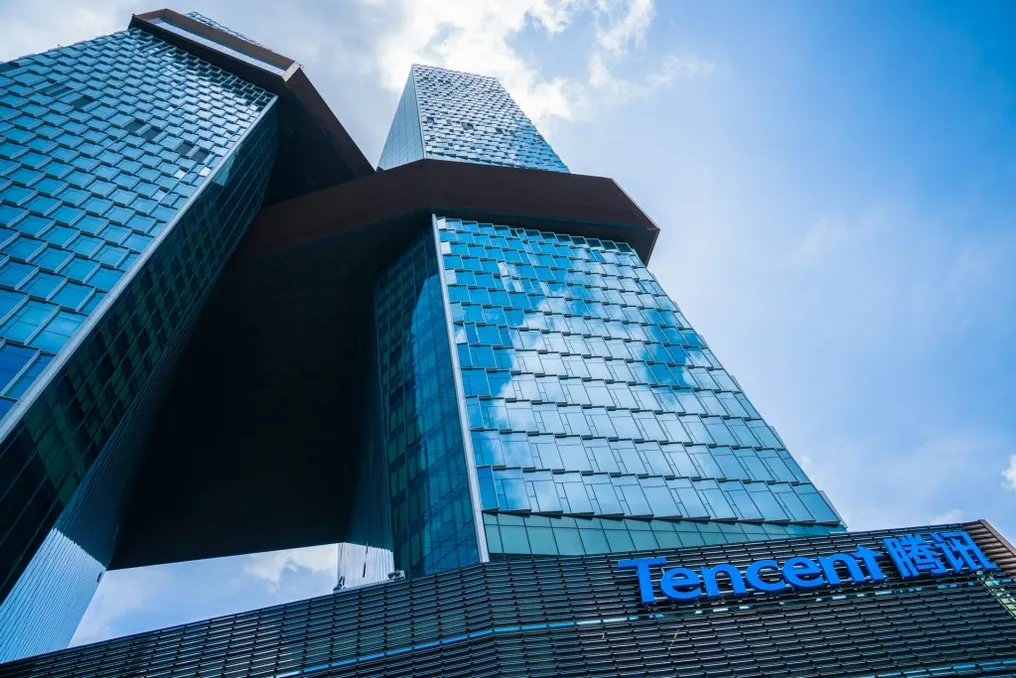
Tencent releases Hy4 model weights with a million-token context window
Read more
technode.com

Tencent releases Hy4 model weights with a million-token context window

Tencent announced on Friday the weights of its flagship artificial intelligence model, Hy4, allowing developers to download and implement the model independently. This release follows the initial launch of Hy4 on November 4th and makes the flagship model available under the Apache 2.0 license, which permits both commercial use and modification.

The Hy4 model is capable of understanding text, images, and video, featuring a context window of approximately one million tokens. Its 'Mixture of Experts' language framework contains 770 billion parameters, with 49 billion parameters activated for processing each token.

According to Tencent's statement, this version of the model surpasses the Hy4 preview in areas such as instruction following, long-context understanding, advanced task execution, and scientific research.

The model supports workflows covering graphical user interfaces and command-line tools, as well as frontend development, game design, and office tasks. Tencent provides deployment instructions for vLLM and SGLang, along with resources for fine-tuning and a safety evaluation map. The release of the flagship model followed the separate unveiling of the smaller Hy4 flash model.

Tencent releases Hy4 flash model with 224 billion parameters for 2 yuan per million output tokens
Read more
pandaily.com

Tencent releases Hy4 flash model with 224 billion parameters for 2 yuan per million output tokens

The Hunyuan team at Tencent introduced the Hy4 flash model on November 16th, calling it the most economical model in the Hy series to date. This model has a total of 224 billion parameters, including 64 billion Engram parameters, activates 12 billion per token, supports multimodal input, and features a context window of one million tokens.

API tariffs are set at 0.5 yuan per million input tokens, 2 yuan per output token, and 0.02 yuan for cache hits, contrasting with the prices for Hy4, which are 6, 18, and 0.3 yuan respectively. Until November 30th, Hy4 flash will be available for free in WorkBuddy and at half price on Tencent Cloud's API TokenHub.

Tencent explains the achieved efficiency by detailing its operation at each stage. Key results are achieved through WorkIndex—an internal benchmark created based on typical WorkBuddy tasks such as creating and editing slides, processing documents, correcting spreadsheets, handling audio and video, and visual understanding, supplemented by human evaluations. WorkIndex is not publicly available, and Tencent emphasizes that it focuses on daily work rather than public ranking results.

According to Tencent data, in a blind test conducted by 85 internal WorkBuddy users across 259 tasks in 27 categories, the satisfaction level with the Hy4 flash model approached that of Claude Haiku 5.5, demonstrating the lowest cost per task and the shortest task completion time. However, the Tencent WorkBuddy team noted a slight decrease in the model's performance compared to Hy4 when executing long coding tasks.

The Hy4 flash model is already available in Tencent Cloud TokenHub, WorkBuddy, Yuanbao, WeCom, QQ, ima, and Marvis, with plans for integration into OpenRouter. Tencent recommends using Hy4 flash for deep search, document processing, slide creation, simple frontend pages, and computer tasks, while the Hy4 model is intended for more extensive software development tasks. The company intends to make Hy4 flash open source.

Enterprises achieved 106% of the plan ahead of schedule
Read more
uza.uz

Enterprises achieved 106% of the plan ahead of schedule

Various divisions of the plant are successfully completing tasks set for 2026 earlier than planned.

Popular