DeepSeek cancels separate charges for model-initiated web search
Read more
TechNode
technode.com

DeepSeek cancels separate charges for model-initiated web search

DeepSeek has stopped charging separately for internet search operations, image searches, and fetching web page content performed using its models' built-in server tools.

Developers now pay for the model tokens used during such interactions, including both the retrieved and processed material. This change took effect on November 18th.

These tools allow developers to create applications capable of finding up-to-date information and reading web pages within a dialogue with the model. The pricing policy change applies when the model invokes these tools. Applications that directly access independent Search and Fetch APIs continue to pay the corresponding fees for requests.

Similar stories

DeepSeek Users Report Daily Limits and Input Reductions in App and Website
Read more
pandaily.com

DeepSeek Users Report Daily Limits and Input Reductions in App and Website

According to user reports and screenshots that have appeared since November 15, it appears that DeepSeek has introduced usage restrictions for its free application and website chat. However, the DeepSeek company itself has made no statements nor confirmed these limitations; the figures presented are based solely on user reports, not official company data.

According to information gathered by IT Home, STAR Market Daily, and Qianjiang Evening News, users have noted three changes. DeepSeek has not clarified whether these limits are permanent, how the daily quota is set, or when they might be eased. On the company's status page on November 16, all systems showed normal operation, which Qianjiang Evening News interpreted as capacity management rather than a response to an outage.

These reports surfaced after a period of high load. In October, the DeepSeek status page recorded eight service incidents affecting the chat service, as well as API V4 Pro and V4.1 Flash. In the weekly OpenRouter ranking, the DeepSeek V4.1 Flash model processed 33.6 trillion tokens between October 19 and 25, an 801% increase from the previous week, making it the highest figure among all models. At the end of July and beginning of August, its weekly volume was 7.22 trillion tokens.

Previously, DeepSeek used other methods to regulate demand. In February 2025, the company suspended API replenishment, citing limited server resources, and since August 2026, its API has used differentiated pricing—peak and off-peak—with off-peak rates being half the price of peak rates. The company has never published a daily message limit for its consumer application and does not offer a paid consumer plan.

Reports of new restrictions came one day after developers discovered code related to quota management in the DeepSeek web interface frontend, including references to a 'Coding Plan.' DeepSeek has not announced a paid plan, and there is currently no confirmation linking this code to the restrictions reported by users.

Quota management logic found in DeepSeek web version code points to 'Coding Plan,' but no official announcement exists
Read more
pandaily.com

Quota management logic found in DeepSeek web version code points to 'Coding Plan,' but no official announcement exists

Developers have discovered the complete set of quota usage logic within the client code of DeepSeek's web chat service, chat.deepseek.com. According to IT Home on November 14, this code references a package named 'Coding Plan.' However, DeepSeek has not officially announced any subscriptions, and information regarding pricing, access levels, or launch dates has not been disclosed.

According to developers cited by IT Home, the code contains a message for users informing them that they have reached their quota limit and prompting them to try again after restoration. There is also an error handling branch for exhausted quotas, and when continuing a general conversation, the system checks the is_exhausted flag inside the quota array.

Developers note that the latest frontend update added a quota status polling function. While the page is active, it synchronizes the quota for each model, the user disconnection status, and the text provided by the server every five minutes. When the quota runs out, a banner appears above the input field, and the welcome area on the homepage displays quota information received from the server.

The messages describe the absence of a payment screen, prices, or access levels, and do not specify whether the quotas will apply to free, paid, or both categories of users. It should be noted that the code present in the web client might relate to features that are still in testing and may never be released.

Some users expect DeepSeek to release its first paid plan for individuals concurrently with DeepSeek V4.1 Pro. IT Home emphasizes that this is merely community speculation, as DeepSeek has not published details of any plan at the time of this report.

Currently, the only way DeepSeek charges individuals directly is through the open API platform, which is priced based on token usage. The presence of the name 'coding plan' could place DeepSeek in the category of other Chinese model providers who already offer similar services, including 'GLM Coding Plan' from Zhipu AI, as well as coding subscriptions from Alibaba Cloud and Baidu AI Cloud.

IT Home also notes that in October, DeepSeek merged its Harness team with the Web, App, and Platform teams into a single product department, where former Harness head Cui Tianyi oversees product, design, and development. DeepSeek has not provided comments regarding the quota code.
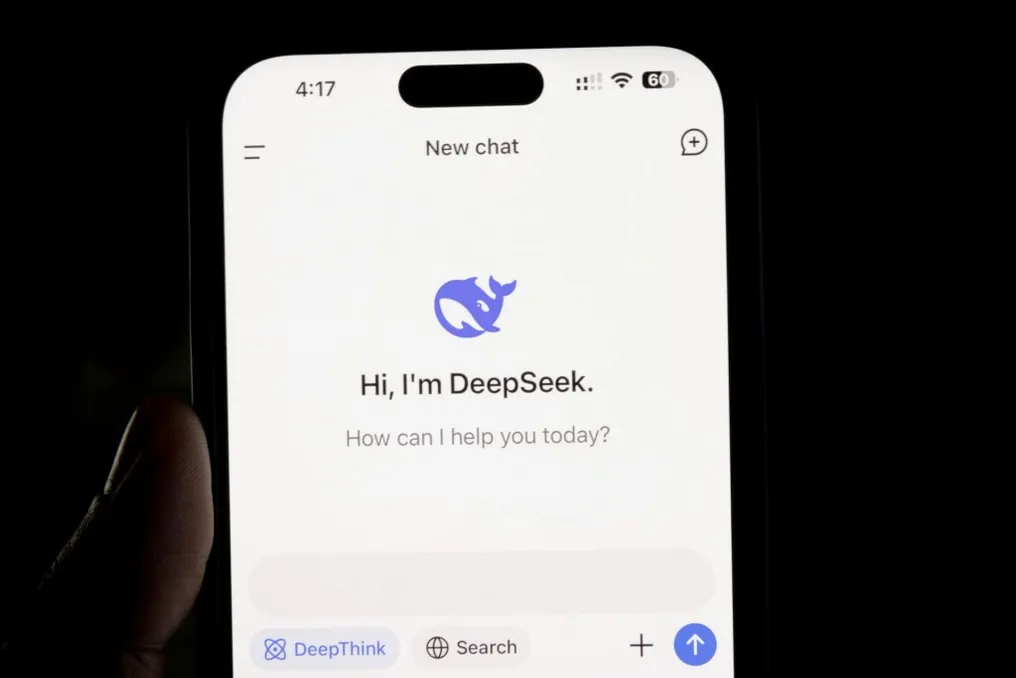
DeepSeek provides access to search, file handling, OCR, and voice input tools via API for developers
Read more
pandaily.com

DeepSeek provides access to search, file handling, OCR, and voice input tools via API for developers

DeepSeek has announced the provision of a complete set of APIs for its application, allowing developers to integrate core DeepSeek App functionalities into their own products. The update was presented in the company's API changelog on November 13th.

Developers can activate functionality by using parameters in existing APIs, while DeepSeek servers handle the processing of tool calls and context gathering.

Model and API Capabilities

According to the changelog, the deepseek-flash model, currently used in DeepSeek-V4.1-Flash-1017, supports five functions in API Messages, Responses, and Chat Completions. Additionally, basic capabilities are available as separate APIs: Search and Fetch, OCR, ASR for speech recognition, and TTS for speech synthesis.

To demonstrate these capabilities, DeepSeek has opened the source code for a chat demo, a static web client that connects directly to the API from the browser. This client supports deep thinking, search, link reading, attachment uploads, and voice input, and can also import the user's DeepSeek chat history.

Tariffs and Pricing

Tool usage is charged on top of token costs. DeepSeek's pricing page lists the following rates: search (for text or images) and web data fetching cost $0.75 per 1000 requests, or 5 yuan on the Chinese site. File parsing and OCR cost $0.225 per 1000 pages. Speech synthesis (Text-to-speech) is priced at $0.45 per 10,000 characters, and speech recognition at $0.116 per hour of audio; both services are currently offered with a double discount.

Fees for search and data fetching apply regardless of whether developers call these APIs directly or if the model uses them through its tools. These new APIs expand upon the Search and Fetch APIs opened on October 17th, which operate on DeepSeek's internal search engine. Token prices for deepseek-flash remain unchanged: $0.30 per million input tokens when cache misses and $1.20 per million output tokens during peak hours, with rates halved outside of peak hours.

Popular