
Minister states that Arab countries and Russia oppose phasing out fossil fuels
Read more
Noticias ao Minuto
noticiasaominuto.com

Minister states that Arab countries and Russia oppose phasing out fossil fuels

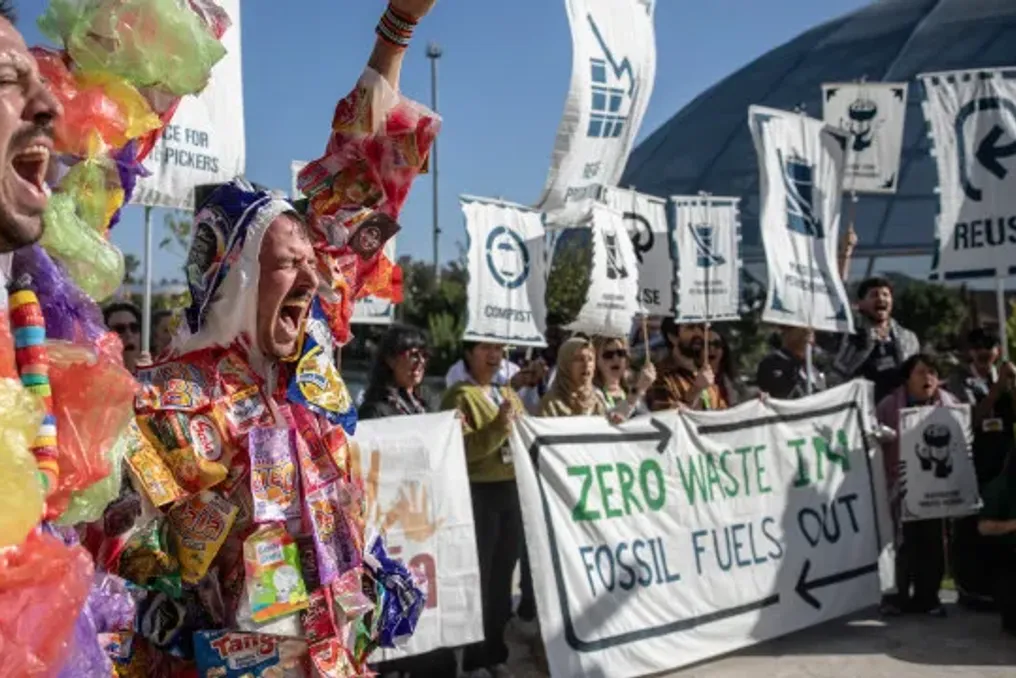
The Minister of Environment and Energy, Maria da Graça Carvalho, reported that Arab states, led by Saudi Arabia, as well as Russia, object to the inclusion of a gradual phase-out of fossil fuels in the final COP31 decision.

Carvalho told journalists in Antalya, Turkey, where the 31st Conference of the Parties to the UNFCCC (COP31) is taking place until Friday, that there is significant reaction, especially from oil-producing countries, including the Arab bloc, which is categorically against any gradual phase-out, even if phased.

She added that there is organized and loud opposition from oil-producing countries, such as Arab states, as well as Russia. The Minister recalled that at COP30 in Belém, Brazil, Saudi Arabia gathered other oil producers, including Russia, to discuss this opposition.

According to the minister, the final document ultimately contained only an 'indirect reference' to the decision made in Dubai in 2023. Nevertheless, the government considered this a 'good result of COP' in Antalya, as many countries are presenting national plans for phasing out fossil fuels.

Maria da Graça Carvalho expressed hope for the resumption of United States participation in climate conferences, emphasizing that 'presence is very important.'

In response to the question about allocating adaptation funding during negotiations, the minister explained that this is a 'recognition of reality,' citing the example of Portugal, which recently faced large-scale 'meteorological events.' She stressed the importance of reducing emissions and increasing independence from fossil fuels but also noted the need for 'preparation for bad weather, droughts, storms, floods, heavy rains, and hurricanes.'

The Minister specified that emission reduction remains the main priority of the European Union, and support for adaptation must be accompanied by mitigation commitments. She emphasized that 'reality shows that this must happen simultaneously.'

The first draft of the COP31 agreement, presented on Monday, proposes tripling annual adaptation funding by 2035, providing at least $120 billion.
Similar stories

Consultants argue that Africa must reject climate proposals requiring the immediate abandonment of fossil fuels
Read more
noticiasaominuto.com

Consultants argue that Africa must reject climate proposals requiring the immediate abandonment of fossil fuels

The African Energy Chamber (CAE) stated that African countries should refuse any climate proposals that do not consider the need for poorer nations to use fossil fuels to ensure development and energy stability.

The central discussion involves the inclusion of references to the roadmap for transitioning beyond fossil fuels (TAFF) in the official final document of COP31. The Chamber warned that there was no agreement on this roadmap at COP30, held in Belém in November 2025, nor at COP31.

The approval of a text establishing a uniform and determined departure from sources such as oil or gas would be interpreted as a deviation from the procedural norms of the United Nations Framework Convention on Climate Change (UNFCCC), since fundamental decisions require consensus among all participants.

This situation could lead to the creation of a parallel system for monitoring and evaluating commitments, which has never been approved by Member States, according to the entity focused on promoting energy investments in the African continent.

The use of oil and gas to drive the economic growth of the most vulnerable, yet resource-rich countries, as is the case with many Africans, has been a subject of intense debate. The CAE maintains that in a continent where approximately 565 million people still lack access to electricity and where the demand for primary energy must grow by 92% by 2060, climate negotiations cannot jeopardize energy security and economic progress.

Additionally, the African Energy Chamber emphasizes that the Paris Agreement grants each nation the freedom to define its own path for emissions reduction, thereby establishing its own knowledge route.

The CAE recalls that Africa accounts for almost 20% of the world's population but generates only 5% of global energy-related emissions, arguing that fossil fuels still provide over 52% of the continent's primary energy supply. For this reason, the organization insists that the energy transition for African economies must simultaneously increase energy supply, support industrialization, and lift hundreds of millions of people out of energy insecurity.

Another argument presented to persuade African negotiators to reject any non-consensual plan is the fear that multilateral development banks and bilateral donors will use such criteria to limit concessional financing and impose new conditions on African energy projects.

Proposals such as the accelerated phase-out of fossil fuels and the tripling of adaptation financing were included in a first draft of the final political text of COP31, presented on Monday.

The summit presidency, shared between Turkey and Australia, which began on the 9th, consulted nearly 200 attending countries before releasing this initial draft. The document, consisting of 18 pages and 144 paragraphs, covers the main issues that concern and frequently divide nations, including energy, finance, climate science, and the goal of limiting global warming to 1.5°C.

Although it includes a call for 'accelerated action' to remove fossil fuels from energy systems, it is uncertain whether this will be part of the final decision text, whose content will continue to be debated until Friday, according to the French news agency France-Presse (AFP).

Popular