European Parliament and EU Council agree on directive to accelerate renewable energy licensing
Read more
Noticias ao Minuto
noticiasaominuto.com

European Parliament and EU Council agree on directive to accelerate renewable energy licensing

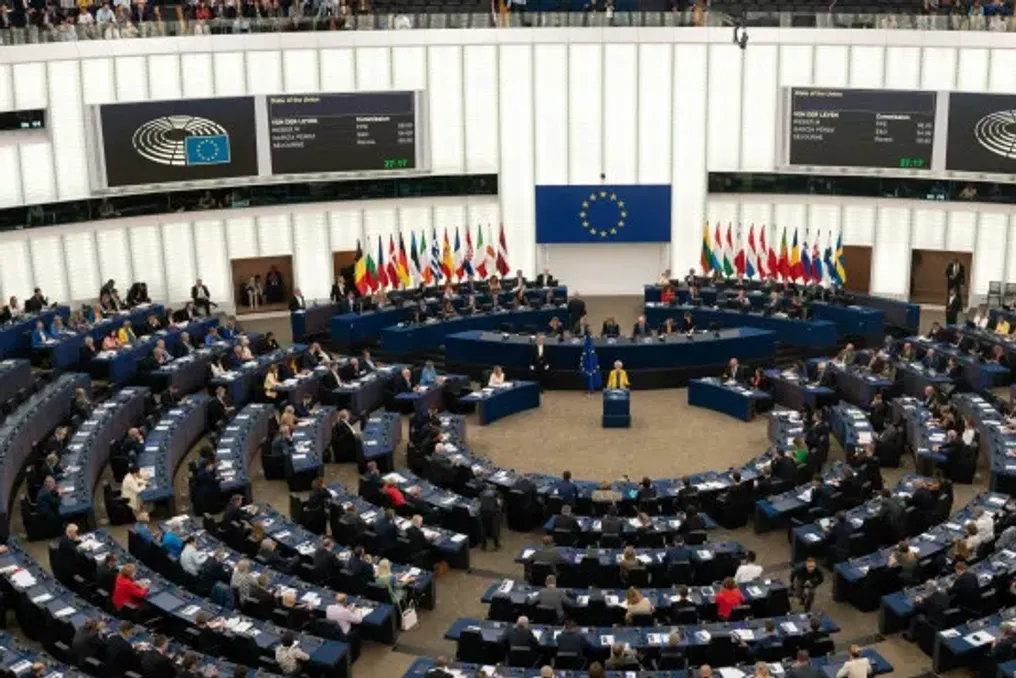
The European Parliament and the Council of the European Union (EU) have reached an agreement on a new directive aimed at accelerating and simplifying the permitting process for projects related to renewable energy sources, electricity grids, and energy storage systems.

The EU Council stated in its communiqué that this directive will help speed up Europe's electrification process and reduce the continent's dependence on fossil fuels. Dragg O'Brien, the Irish Minister for Climate, Energy and Environment, who is currently chairing the EU Council, emphasized the need to create grid infrastructure capable of providing affordable clean energy produced in Europe, thereby reducing fossil fuel imports.

For its part, the European Parliament (EP) noted that simplifying the development of renewable energy infrastructure in Europe through this directive will contribute to lowering energy prices. In fact, the new directive shortens the approval timelines for such projects.

Once the directive enters into force, licensing procedures for solar energy equipment and associated storage systems should not exceed three months. A period of six months is set for autonomous storage and charging stations, and two years for pumped-storage hydroelectric power plants.

To avoid 'administrative bottlenecks' at intermediate licensing stages, the directive provides for member states to consider the absence of a response from authorities as automatic approval.

The connection times for these projects to the grid have also been reduced: they are now three months, with a possibility of extension up to six months in justified cases. An exception is provided for 'isolated or small interconnected systems,' such as in the EU's ultra-peripheral regions, including the Azores and Madeira.

The directive strengthens the concept that renewable energy and electricity grid projects fall under 'overriding public interest,' which allows for the removal of 'numerous administrative obstacles to their implementation,' according to the EP. However, the EU Council reserves the right for member states to opt out of applying this principle if it concerns the protection of security, defense, or cultural heritage interests.

The EP also reported that during negotiations, the threshold requiring a license for small solar installations, energy storage systems (excluding hydrogen), and charging stations was raised. Previously, a license was required for installations over 100 kilowatts, but this threshold has now been increased to 200 kilowatts. Furthermore, the new rules abolish the need for administrative permits for installing charging stations with a total capacity equal to or less than one megawatt.

The new regulations also imply greater involvement of local communities by establishing principles that include the necessity of 'promoting dialogue' with citizens through the 'voluntary appointment of an independent mediator.' In this context, both institutions agreed to lower the threshold for mandatory 'benefit sharing'—that is, the redistribution of project economic benefits among the host or affected communities—from ten to seven megawatts.

The European Commission has already welcomed this agreement, noting that it 'sends a clear signal of the EU's commitment to strengthening and accelerating the expansion of clean energy infrastructure.' The directive must be approved by a plenary session of the European Parliament (EP) and the EU Council before it comes into force.

Similar stories

Europe insists on including 'clean and broad electrification' in the COP31 agreement
Read more
noticiasaominuto.com

Europe insists on including 'clean and broad electrification' in the COP31 agreement

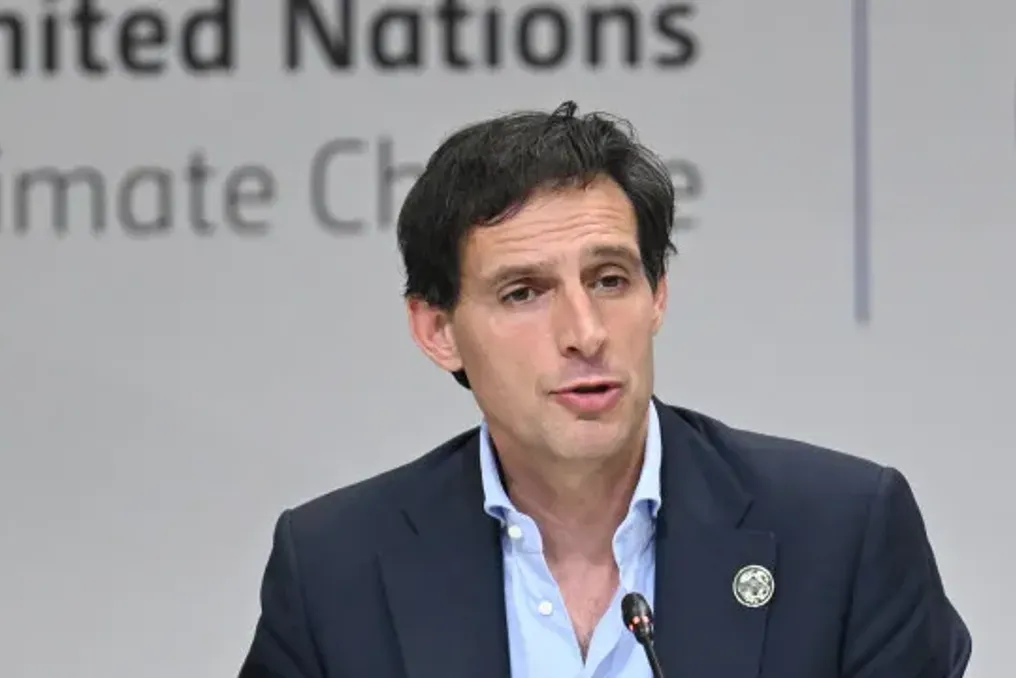
Commissioner for Climate Action of the European Commission, Wopke Hoekstra, stated that 'broader clean electrification' must become a central element of any potential agreement at COP31 in Turkey, which he said remains uncertain.

He emphasized that clean electrification is precisely what Europe needs, and it must be at the heart of any agreements reached. These statements were made by him at a press conference in Antalya following the public rejection on Tuesday of the first version of the Turkish and Australian presidency, which aims to electrify 35% of global energy systems by 2035 (without specifying that this refers to clean energy).

Hoekstra added that, based on his experience in conducting such negotiations, it is impossible to say exactly where they will be in 48 hours or even longer.

Earlier, the European Union rejected the first document published on Monday under the joint chairmanship of Turkey and Australia. The EU criticized it, calling it a 'wish list' due to the inclusion of new discussions on financing and trade.

Immediately after this rejection, Brazil's Minister of Environment, João Paulo Capobianco, asked the EU team to take the lead at COP31—the annual UN climate conference taking place in Antalya, Turkey, this year.

The EU representative avoided controversial statements, noting that the round of talks between the European bloc and other partners went 'very well and constructively.' Among these partners, he mentioned the ABU group (Argentina, Brazil, and Uruguay), AILAC (Association of Latin America and Caribbean Islands), China, South Korea, AOSIS (Alliance of Small Island States), and South Africa.

When asked about the timeline for talks with key countries such as India and Saudi Arabia—which have been accused of delaying the publication of the IPCC report (Intergovernmental Panel on Climate Change)—Wopke Hoekstra stated that the essence of diplomacy is not only communicating with those who already agree. He reported: 'We will talk to India tomorrow morning, and regarding Saudi Arabia, I do not know if it is scheduled or when. But for us, the main thing is to connect with everyone present here.'

Wopke Hoekstra ironically commented on the alleged interference with the IPCC schedule and those who question scientific data, saying: 'We spent many centuries recognizing that the Earth is not flat. I suggest not going back to that, but continuing to use science as the basis for our climate actions.'

It is crucial for this Dutch politician that the world remains united in fulfilling commitments made at other climate summits, including Paris in 2015 and Dubai in 2023. He noted: 'This is the key to everything, and these are commitments signed by everyone. Therefore, we will ensure they are met: whether it is the transition away from fossil fuels, tripling renewable energy capacity, or doubling energy efficiency.'

Furthermore, the commissioner explained that politicians cannot afford to choose one crisis and leave others in limbo. This is why Europe is forced to address four areas simultaneously: the climate crisis, Russia's 'aggression' in Ukraine and other actors, economic problems, and artificial intelligence challenges.

UN calls on governments to accelerate energy transition and protect vulnerable countries at COP31 in Turkey
Read more
noticiasaominuto.com

UN calls on governments to accelerate energy transition and protect vulnerable countries at COP31 in Turkey

At the opening of the 31st Conference of the Parties on Climate Change (COP31) in Turkey, the United Nations appealed to governments to accelerate the energy transition and ensure the protection of the most vulnerable countries in the face of global warming.

The UN Executive Secretary for Climate Change, Simon Stiel, stated at the beginning of the meeting, which gathered representatives from nearly 200 countries until November 20 in Antalya, that COP31 must promote decisive solutions.

He noted that previous summits served to 'send signals,' such as establishing global goals and directing political and economic decisions. However, given that global warming is exceeding efforts to contain it, it is now necessary to turn commitments into tangible results.

The UN representative warned that 'progress is far from fast or fair' and strongly urged COP31 to accelerate the implementation of agreements through practical measures.

Priorities identified included achieving the tripling of global renewable energy potential by 2030, increasing grid growth, reducing methane emissions, and facilitating access to climate finance.

Stiel emphasized that combining electrification and methane emission reduction could lower projected global warming by half a degree, adding that 90% of large renewable energy projects are already cheaper than fossil fuel alternatives.

He also called for progress in fulfilling the commitment to triple adaptation finance, agreed upon last year at the summit in Brazil, noting that financing remains one of the most contentious issues in negotiations between industrialized and developing economies.

'Deep injustice threatens our solidarity and collective progress,' he warned, pointing out that the most vulnerable populations suffer the most from the consequences of climate change.

COP31 is taking place under an unprecedented arrangement: Turkey holds the formal chairmanship, while Australia leads the consensus-seeking negotiations.

At the conference opening, Turkish Environment Minister Murat Kurum and Australian Climate Minister Chris Bowen called for greater international cooperation in combating global warming. They noted that a world divided by wars, trade tensions, and economic inequality hinders a joint response to the crisis affecting all nations, according to the Spanish news agency EFE.

Kurum warned that international crises reinforce each other and exacerbate the effects of global warming, especially for the most vulnerable populations. He cited the example that drought can affect food prices on other continents, and water scarcity impacts the economy, migration, and security.

The Turkish Minister stated that COP31 should serve to restore international trust, as 'trust is also infrastructure for climate action.' In turn, Chris Bowen called for demonstrating to the world that 'multilateralism works.'

Kurum summarized the ambitions of the Turkish chairmanship with three principles: 'Dialogue, Consensus, and Action.'

EU, Africa, Caribbean and Pacific region insist on limiting global warming
Read more
noticiasaominuto.com

EU, Africa, Caribbean and Pacific region insist on limiting global warming

The European Union and 77 countries from Africa, the Caribbean, and the Pacific region have reaffirmed their commitment to strengthening climate cooperation within the framework of the COP31 summit and emphasized the critical need to limit global warming.

In a joint statement published today, although dated Friday, partners noted the urgency of accelerating global efforts to limit temperature rise to 1.5°C, highlighting the particular vulnerability of developing countries.

In connection with the UN Climate Summit, COP31, which begins today in Turkey and will last until the 20th, as well as the subsequent period, the EU and the Organization of African, Caribbean and Pacific States (OEACP) have identified six priority areas for enhanced cooperation.

These areas include adaptation and climate resilience; access to climate finance; clean electrification and a just energy transition; exchange of data, science, technologies, and climate capacity building; creation of sustainable food, water supply, and ecosystem systems; and international ocean governance.

The EU and OEACP represent 104 countries covering about two billion people and more than half of the UN members. They believe that it is necessary to move from declarations to practical implementation so that climate actions bring tangible benefits to people, economies, and communities.

Financially, both organizations supported the goal of mobilizing at least $300 billion (approximately €262 billion) annually for climate action by 2035.

Furthermore, they advocated for easing access for the most vulnerable countries to subsidies and loans on favorable terms, as well as strengthening international mechanisms to counter losses and damages caused by climate change.

In the energy sector, signatories committed to accelerating clean electrification and energy access through investments in renewable sources, power grids, and energy storage, as part of a transition away from fossil fuels 'justly, orderly, and equitably.'

On November 15, 2023, the EU and OEACP signed the Samovar Agreement, which serves as a framework partnership basis for their relationship over the next 20 years. This agreement temporarily takes effect on January 1, 2024, and covers a wide range of topics, including sustainable development and growth, human rights, peace and security, as well as strengthened cooperation between OEACP and the EU in international forums.

Popular