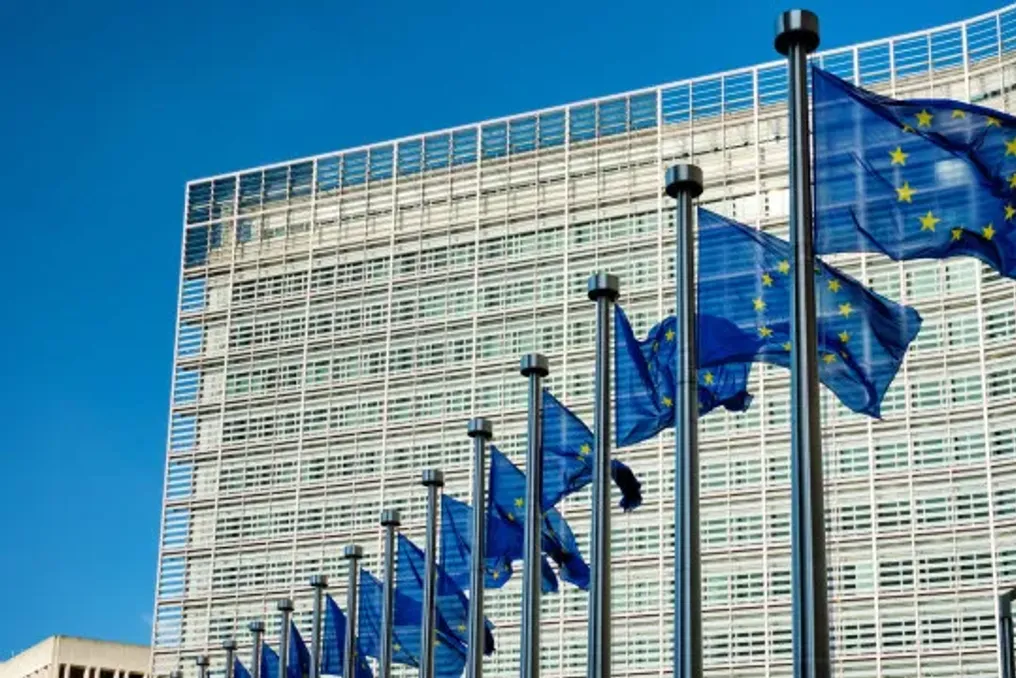
EU Commission promises to restrict 'forever chemicals' and review limits of these substances in food products
Read more
Noticias ao Minuto
noticiasaominuto.com

EU Commission promises to restrict 'forever chemicals' and review limits of these substances in food products

The European Commission has announced plans to soon propose a general restriction on 'forever chemicals' within the European Union, as well as a review of the maximum permissible concentrations of these substances in food products, although no specific deadlines have been set.

This statement was made in response to a report by the European Toxicological Council (TCE) published today, which warns that the EU is not taking sufficient measures to curb the spread of 'forever chemicals,' noting that most of these substances are not being assessed.

'Forever chemicals' are per- and polyfluoroalkyl substances (known as PFAS), which do not break down in the environment or in the human body and are linked to diseases such as cancer, infertility, or hormonal disorders.

In response to the TCE report, the EU Commission commits to presenting a proposal for a general ban on the use of 'forever chemicals' in the EU shortly, which will subsequently be reviewed by the European Parliament and the EU Council.

However, the executive body emphasized that it needs to receive a final opinion from the European Chemicals Agency (ECHA) before the public presentation, which is expected by the end of the year.

As an explanation for why the general ban promised in 2021 has not yet been presented, the EU Commission points out that it involves introducing limits for over 10,000 chemical substances, which requires a 'phased approach to ensure thorough assessment.'

The executive body defends this position, arguing that such an approach guarantees legal justification and the possibility of implementing measures, minimizes PFAS emissions to protect human health and the environment, and allows for the continued use of these substances in critical areas where no alternatives are currently available.

Furthermore, the EU Commission plans to review the limits for 'forever chemicals' in food products established in 2022. According to the TCE, these limits are already insufficient to protect human health given recent scientific data, as moderate consumption of eggs, salmon, or beef can exceed the allowable weekly dose.

Brussels noted that it received data from member states through the European Food Safety Authority in October and plans to begin discussions with capitals in early 2027 regarding the 'possibility of setting new maximum PFAS levels in food products or revising existing ones.'

The TCE report also called for a review of 'forever chemical' limits in drinking water, but the EU Commission has not commented on this issue.

Another criticism noted in the report relates to the fact that the vast majority of 'forever chemicals' are not registered under the Registration, Evaluation, Authorisation and Restriction of Chemicals (REACH) Regulation because they are imported below the threshold requiring mandatory assessment.

In response, the executive body stated that the REACH regulation has already been used 'effectively to regulate broad groups of substances such as microplastics, tattoo inks, or 'forever chemicals' found in fire extinguishing foams,' but acknowledges the need for a new general restriction.


Similar stories

European Court of Auditors points out that the European Union does not effectively control persistent chemicals
Read more
noticiasaominuto.com

European Court of Auditors points out that the European Union does not effectively control persistent chemicals

The European Court of Auditors (ECA) issued a warning indicating that the European Union (EU) is not taking the necessary measures to prevent the spread of persistent chemicals. The ECA emphasized that most of these substances are not subject to evaluation.

In a recently published report, the ECA assessed the EU's regulatory procedures for so-called persistent chemicals, concluding that they are excessively complicated and time-consuming, making them inadequate to deal with this problem.

These persistent chemicals are defined as per- or polyfluoroalkyl substances (PFAS), characterized by not degrading in the environment or the human body. They are linked to health problems such as cancer, infertility, and hormonal changes.

The ECA recognized that the EU was a global pioneer in restricting these chemicals in 2006, limiting their production, import, and use through the Registration, Evaluation, Authorisation and Restriction of Chemicals (REACH) Regulation.

However, the Court warned that most persistent chemicals are not registered under REACH, either because they are produced or imported in annual quantities below one ton, or because they appear in the form of polymers. This situation prevents the obtaining of complete data on these substances and their potential risks.

One example cited is polytetrafluoroethylene (PTFE), widely used in non-stick kitchenware and waterproof fabrics. Because it is a polymer, PTFE was not investigated by the European Chemicals Agency (ECHA).

Furthermore, even when persistent chemicals are registered, the ECA considered that the risk assessment and restriction processes in the EU are very slow, taking an average of five years. This period is considered sufficient for manufacturers to replace a banned substance with another similar one, which can be equally harmful, a phenomenon called 'undesirable substitution,' demonstrating the inadequacy of the current system.

The court used the case of perfluoramine as an illustration. After being registered under REACH in 2013, Belgium requested an assessment in 2016. Due to several delays, this assessment only began in March 2020 and concluded only in December 2025, almost ten years after the initial Belgian request.

Additionally, the ECA mentioned that the European Commission established new limits for persistent chemicals in drinking water in 2020 and for food in 2022. However, considering recent scientific data, the Court argues that these limits do not guarantee human health protection and need updating.

If not updated, the limits in drinking water will be exceeded more frequently in the future, increasing risks to consumers and water treatment costs. In the food sector, the situation is even more serious: the ECA calculates that if certain foods reach the maximum level permitted by the EU, a person can exceed the tolerable weekly intake by consuming slightly more than three eggs (181 grams), 39 grams of wild salmon, or 237 grams of beef.

Joëlle Elvinger, who was responsible for the audit mentioned in the ECA's statement, argued that although these chemicals may be persistent, there are methods to reduce their negative effects on humans and the environment. She warned that the EU must address this problem with determination and speed to neutralize this 'ticking time bomb' before it is too late.

European Union remains on track to achieve the 55% greenhouse gas emission reduction goal
Read more
noticiasaominuto.com

European Union remains on track to achieve the 55% greenhouse gas emission reduction goal

The European Union (EU) maintains its course toward achieving climate goals by 2030. According to a report published in Brussels today, equivalent greenhouse gas (GHG) emissions decreased by 1.6% in 2025.

In accordance with the 'Trends and Forecasts in Europe' report by the European Environment Agency (EEA), despite a slowdown in the rate of net GHG emissions reduction in 2025, the EU's mitigation plans and national plans remain on track to meet the target of a 55% net reduction by 2030.

Emissions covered by the EU Emissions Trading System (EU ETS) decreased by approximately 2% in 2025. Meanwhile, emissions in sectors regulated by the Effort Sharing Regulation remained globally stable, and preliminary data indicates an improvement in terrestrial carbon uptake in the EU.

In 2025, emissions were at a level 39% below 1990 levels, while the EU economy grew by 74% over the same period, according to data from Brussels.

However, the EEA warns that to achieve this emissions reduction goal, reductions in sectors regulated by the Effort Sharing Regulation must collectively match those achieved over the previous two decades within the next five years.

The Agency emphasizes the need to improve progress in the transport sector, as well as in end-use sectors such as buildings and agriculture.

The annual carbon market report also concludes that revenues from the EU ETS increased by 43.2 billion euros in 2025, representing an 11% growth compared to 2024.

EU, Africa, Caribbean and Pacific region insist on limiting global warming
Read more
noticiasaominuto.com

EU, Africa, Caribbean and Pacific region insist on limiting global warming

The European Union and 77 countries from Africa, the Caribbean, and the Pacific region have reaffirmed their commitment to strengthening climate cooperation within the framework of the COP31 summit and emphasized the critical need to limit global warming.

In a joint statement published today, although dated Friday, partners noted the urgency of accelerating global efforts to limit temperature rise to 1.5°C, highlighting the particular vulnerability of developing countries.

In connection with the UN Climate Summit, COP31, which begins today in Turkey and will last until the 20th, as well as the subsequent period, the EU and the Organization of African, Caribbean and Pacific States (OEACP) have identified six priority areas for enhanced cooperation.

These areas include adaptation and climate resilience; access to climate finance; clean electrification and a just energy transition; exchange of data, science, technologies, and climate capacity building; creation of sustainable food, water supply, and ecosystem systems; and international ocean governance.

The EU and OEACP represent 104 countries covering about two billion people and more than half of the UN members. They believe that it is necessary to move from declarations to practical implementation so that climate actions bring tangible benefits to people, economies, and communities.

Financially, both organizations supported the goal of mobilizing at least $300 billion (approximately €262 billion) annually for climate action by 2035.

Furthermore, they advocated for easing access for the most vulnerable countries to subsidies and loans on favorable terms, as well as strengthening international mechanisms to counter losses and damages caused by climate change.

In the energy sector, signatories committed to accelerating clean electrification and energy access through investments in renewable sources, power grids, and energy storage, as part of a transition away from fossil fuels 'justly, orderly, and equitably.'

On November 15, 2023, the EU and OEACP signed the Samovar Agreement, which serves as a framework partnership basis for their relationship over the next 20 years. This agreement temporarily takes effect on January 1, 2024, and covers a wide range of topics, including sustainable development and growth, human rights, peace and security, as well as strengthened cooperation between OEACP and the EU in international forums.

Popular