
Hone Health raises $228 million to expand AI-powered longevity services
Read more
Ventureburn
ventureburn.com

Hone Health raises $228 million to expand AI-powered longevity services

Hone Health announced the raising of $228 million to develop its physician-managed longevity platform and personalized medical services. In this round, the company secured $28 million in equity capital and $200 million in growth capital.

Marcy Pen Capital Partners played a leading role in the Series A extension round. This venture firm was previously the lead investor in Hone's undisclosed Series A round. The $200 million funding was provided by the Customer Value Fund from General Catalyst, as well as numerous private investors.

Hospitality entrepreneur David Grattman joined as a strategic investor and advisor. Investors also included Nick Jonas, Joe Jonas, Kevin Jonas, Marcello Hernandez, and Kelly Rowland. These funding rounds provide Hone with a total of $65 million in equity capital.

The funds will be directed towards expanding clinical care, implementing new diagnostic methods, clinical technologies, new therapies, and research. Furthermore, plans include developing physician-curated programs in metabolism, PCOS, inflammation, and immunity. Hone will also offer new diagnostic services to help patients better understand various aspects of their long-term health.

The company plans to introduce updates, including whole-body MRI, DEXA scanning, coronary CT angiography, and gut microbiome testing. Hone will also add physician-led peptide programs. The company aims to integrate this data with existing patient data to gain a more complete picture of individual health trends. The system integrates laboratory test results, medical history, current symptoms, and medication information.

In addition to securing funding, Hone today launched Hone Black publicly. This concierge-style membership program was previously in soft launch for selected patients. The program combines comprehensive diagnostic testing with continuous medical monitoring. All participants undergo testing across more than 1600 health metrics, and patients receive support from a team of physicians managing all bodily care. Treatment plans include prescription medications, supplements, peptides, and lifestyle coaching. The program also includes exosome and stem cell therapies. Hone Black represents the company's approach to providing personalized care outside of consultations, integrating diagnostic information with ongoing medical relationships.

Hone claims to have served over 200,000 patients, conducted 750,000 tests, and analyzed 25 million health metrics. Co-founder and CEO Saad Alam stated that the funding will allow Hone to scale its products into other therapeutic classes.

Hone's new funding comes amid growing demand for preventive medicine. According to the company, people are striving to take control of their health before problems arise, citing a survey where 89% of women expressed a desire to be more proactive about their health. It was also noted that personal care and nutrition accounted for over 90% of consumer health spending in 2025. The £33 million Series A round announced by Hone in January 2025 will help the business move beyond hormone optimization into other areas of longevity. Since then, the company has expanded into other medical fields, including cardiovascular care programs using biomarker analysis and Prenuvo whole-body scanning, as well as DEXA Body Spec scanning. The new funding will provide Hone with capital to develop its technology platform and clinical network.

Similar stories

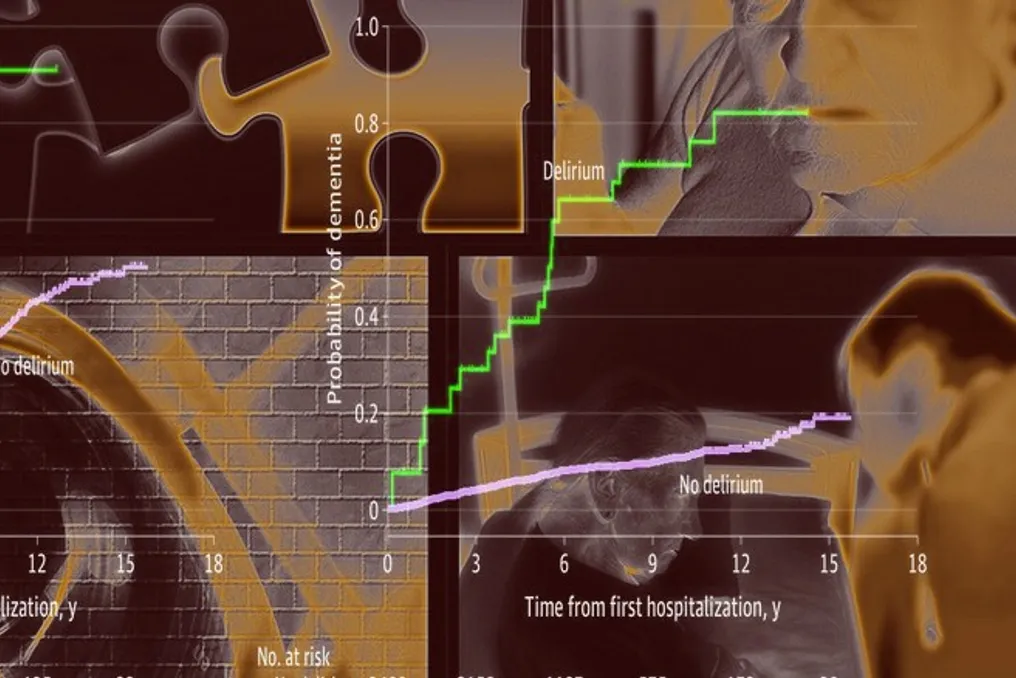
Study shows increased risk of dementia in elderly after hospital delirium
Read more
nplus1.ru

Study shows increased risk of dementia in elderly after hospital delirium

Colleagues of Allison Palmer from the Mayo Clinic in Rochester conducted a long-term cohort study and found that older adults who experienced delirium while hospitalized have an increased probability of developing dementia and mild cognitive impairment.

The study analyzed data from 3501 elderly individuals who participated in the MCSA study and initially showed no signs of cognitive problems but had been treated in a hospital at least once. The median age of participants was 7.1 years, with 47.9 percent being women.

Cox proportional hazards models were used to assess the link between delirium that occurred within thirty days of hospital admission and the subsequent development of dementia or moderate cognitive impairment. The results of this study were presented in the scientific journal JAMA Neurology.

Discussion on increasing minimum pension from 1000 to 3000 rupees at EPFO meeting
Read more
www.aajtak.in

Discussion on increasing minimum pension from 1000 to 3000 rupees at EPFO meeting

There is an expectation among millions of pensioners across the country that the minimum monthly pension could be increased from 1000 to 3000 rupees. This is linked to the upcoming 240th Central Board of Trustees (CBT) meeting of the Employees' Provident Fund Organisation (EPFO), scheduled for November 19, 2026. According to sources, the government is seriously considering this proposal, but official approval for this increase has not yet been received.

Initially, the 240th CBT EPFO meeting was supposed to take place in Gir, Gujarat, and members of the Board were sent a letter on September 30 for this purpose. However, later, in a new letter issued on November 4, the venue was changed. The meeting will now take place on November 19, 2026, at 10:15 AM at the EPFO headquarters in East Kheda Nagar, New Delhi. The letter, issued by the Regional Commissioner of Employees' Provident Fund II, Dr. Subratom Bomic, states that the agenda will be sent to members shortly.

The main question for EPS pensioners is whether the government plans to increase the minimum monthly pension. According to sources, negotiations were held between the Ministry of Labour and the Ministry of Finance regarding the pension hike, and the possibility of reaching an agreement on a minimum pension of 3000 rupees was discussed. Nevertheless, neither the Ministry of Labour and Employment nor the Ministry of Finance has officially confirmed this decision, so it cannot be considered that the pension increase to 3000 rupees has been approved at this time.

The system of minimum monthly pension of 1000 rupees under EPS was introduced on September 1, 2014, and the amount has not changed since then. Because of this, pensioner organizations and trade unions are constantly demanding an increase in this amount. Some organizations insist on raising the minimum monthly pension to 7500 rupees, arguing that the current pension is insufficient to cover daily expenses. The government had previously also reported in parliament about receiving numerous petitions from trade unions and pensioner organizations demanding a pension increase.

The government increased the wage ceiling for mandatory coverage by EPFO from 15,000 to 25,000 rupees per month, effective September 17, 2026. This step has led to an increase in the number of employees falling under EPFO jurisdiction. However, employees should understand that increasing the wage threshold does not automatically mean an increase in the EPS minimum pension, as these are two separate provisions. A separate approval and official notification from the government are required to change the minimum pension amount.

If you are an EPS pensioner expecting to receive a minimum pension of 3000 rupees, you should not consider any changes valid yet. Currently, the minimum monthly pension is 1000 rupees. News about an increase to 3000 rupees is based on media reports, and the government has not confirmed them. Therefore, pensioners should await an official announcement from EPFO or the Ministry of Labour and Employment. The mere holding of a meeting will not automatically lead to a pension increase.

Millions of pensioners will be watching the 240th CBT EPFO meeting to find out what issues will be discussed and whether pension increases will be addressed. However, it is not yet clear whether the issue of increasing the minimum pension has been included in the agenda. The final decision will only become clear after approval by the government and publication of an official notification.

Q-CTRL raises $290 million to scale AI-based quantum technologies
Read more
ventureburn.com

Q-CTRL raises $290 million to scale AI-based quantum technologies

The Australian quantum technology firm Q-CTRL has successfully raised $290 million USD in funding, positioning it as one of the new unicorns in the sector. The company described this funding round as the largest in the history of software-oriented quantum technology enterprises.

The round was extended for a second time in response to growing investor demand. New and returning investors from private equity (PE), venture capital (VC), and technology sectors participated. New participants include AMD Ventures, EDGE Group, MPower Partners, and Australia’s National Reconstruction Fund Corporation.

Existing investors, alongside the new ones, include Bullhound Capital, DCVC, In-Q-Tel, Lockheed Martin Ventures, and Square Peg. The funds raised will be used to deepen the company's software capabilities and facilitate its global expansion.

Q-CTRL's hardware-agnostic software platform utilizes artificial intelligence to enhance the performance of quantum computers and sensors. Its Fire Opal product helps minimize errors in quantum algorithms. The software suite includes enhancements for quantum computing, such as tools for assessing quantum computer performance. Researchers can use Boulder Opal to assist with qubit calibration, which contributes to improving the stability and practicality of quantum machines.

Furthermore, the company demonstrated material simulations on IBM quantum hardware. Developers have the ability to run their simulations on the IBM Quantum platform. Salesforce Ventures noted this achievement when explaining its investment decision.

Robert Kate, a partner at Salesforce Ventures, stated: 'The hardest part in quantum is not building the machine. It is extracting actionable results from it.' Q-CTRL's software is capable of integrating quantum technologies into corporate data centers, making them accessible to a wider range of users and applications.

Q-CTRL is also commercializing quantum sensing through its Ironstone Opal navigation systems. These systems are designed to provide navigation in the absence of GPS signals. The company's next step is planned international growth and scaling of operations.

Ironstone Opal uses magnetometers (quantum sensors) to measure variations in Earth's magnetic and gravitational fields. The resulting data allows for vehicle localization. This sensor data is supplemented with mapping data via advanced software. Q-CTRL asserts that its technology is resilient to both interference and spoofing. The product is already being installed on commercial aircraft and autonomous vehicles. The company is also collaborating with Lockheed Martin on unmanned aerial vehicle development.

It is reported that this is the first quantum navigation technology to meet flight safety requirements. CEO Michael J. Biercuk previously stated that the technology can determine its position with an error margin of about 10 meters, indicating the technology's transition out of laboratory settings.

The capital raise also signifies the addition of strategic connections through the expanded investor syndicate. Q-CTRL anticipates that these partnerships will unlock opportunities through joint sales and integrated technologies. Investors may also help create direct revenue streams in the sectors served by Q-CTRL.

Bullhound Capital highly praised the company's client relationships and revenue growth, noting that Q-CTRL skillfully commercializes research and development. The reinvestment demonstrates confidence in the company's ability to execute its plans. Square Peg highlighted Q-CTRL's work in aviation and autonomous navigation, while MPower Partners saw additional prospects for the company in Japan, mentioning industrial applications and government support for quantum commercialization.

Popular