Hidden glaciers exist on Mars, which, under the planet's atmosphere prone to ice sublimation, can persist for millions of years, protected by a layer of dust and rocks.
Understanding the conditions for ice preservation on the Red Planet is critically important for reconstructing the history of Martian climate and has practical significance for identifying locations where future astronauts can find water.
In a study published in the journal Earth and Planetary Science Letters, scientists discovered 29 sharp walls on the surface of Mars. These formations are located inside craters and reach a height of 209 meters, but they are not composed of rock. According to the team, these are the front parts of glaciers covered with debris: ice tongues descending along the crater wall for up to 3 kilometers and abruptly terminating.
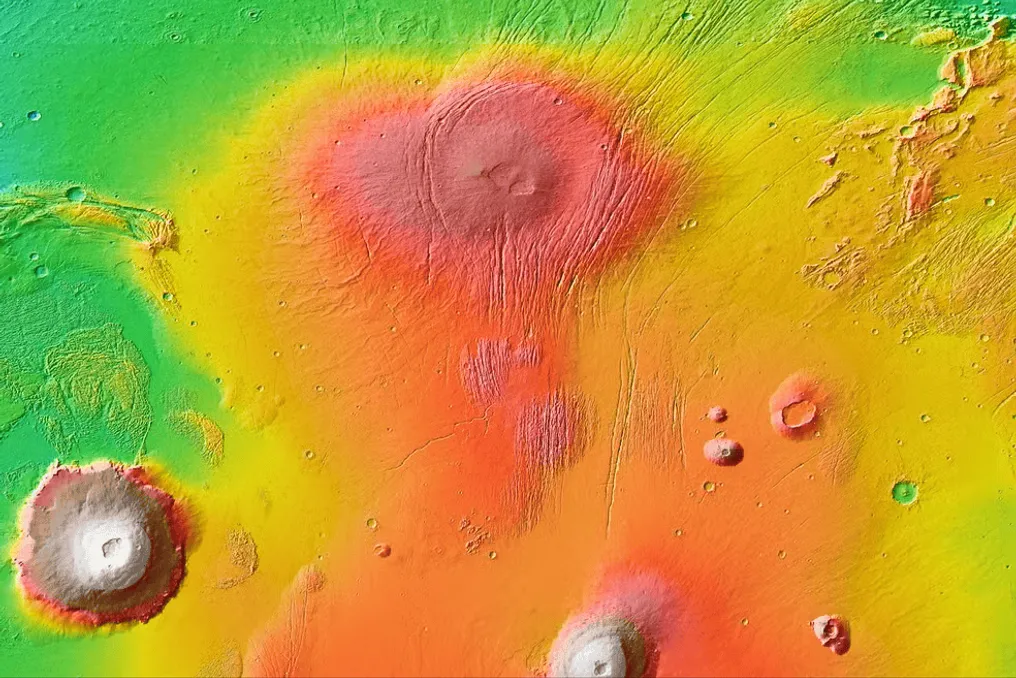
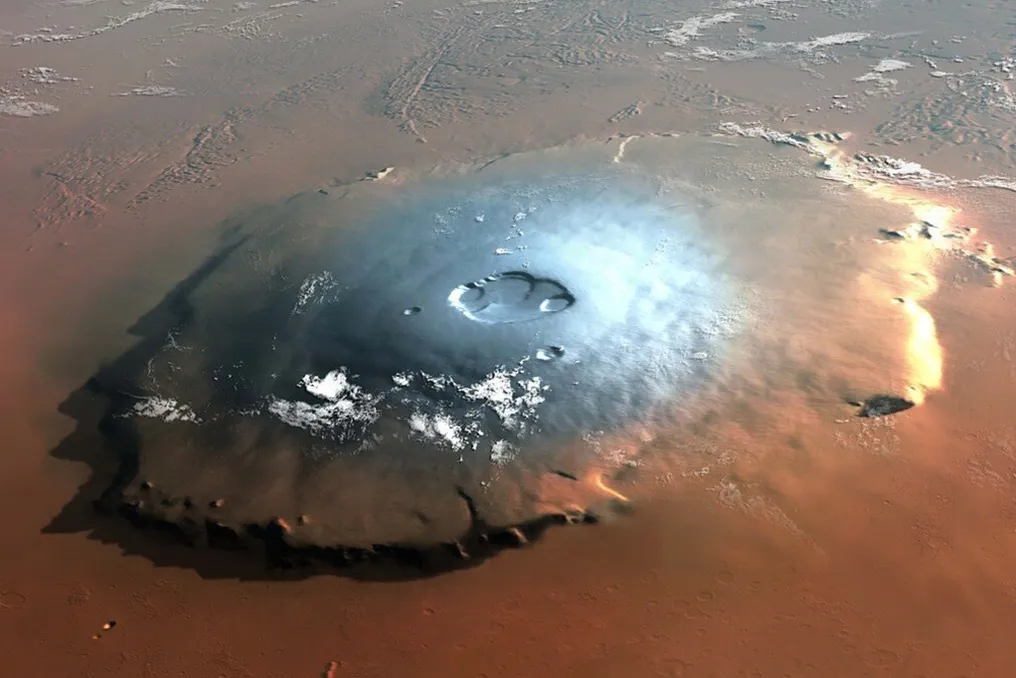
These glaciers are located in the Alba Mons region, a volcano with a diameter of over a thousand kilometers at its base, in the northern hemisphere of Mars. The craters have a small diameter, and the ice concentrates on the slopes facing the pole because these slopes act as 'cold traps', receiving less sunlight.
The international team, led by Noé Le Bec from the University of Nantes in France, used images obtained by two Martian orbital probes: the Mars Reconnaissance Orbiter from NASA and the ExoMars Trace Gas Orbiter from the European Space Agency. By analyzing pairs of photographs of the same location taken from different angles, researchers created three-dimensional topographic maps using a method similar to how two human eyes perceive depth.
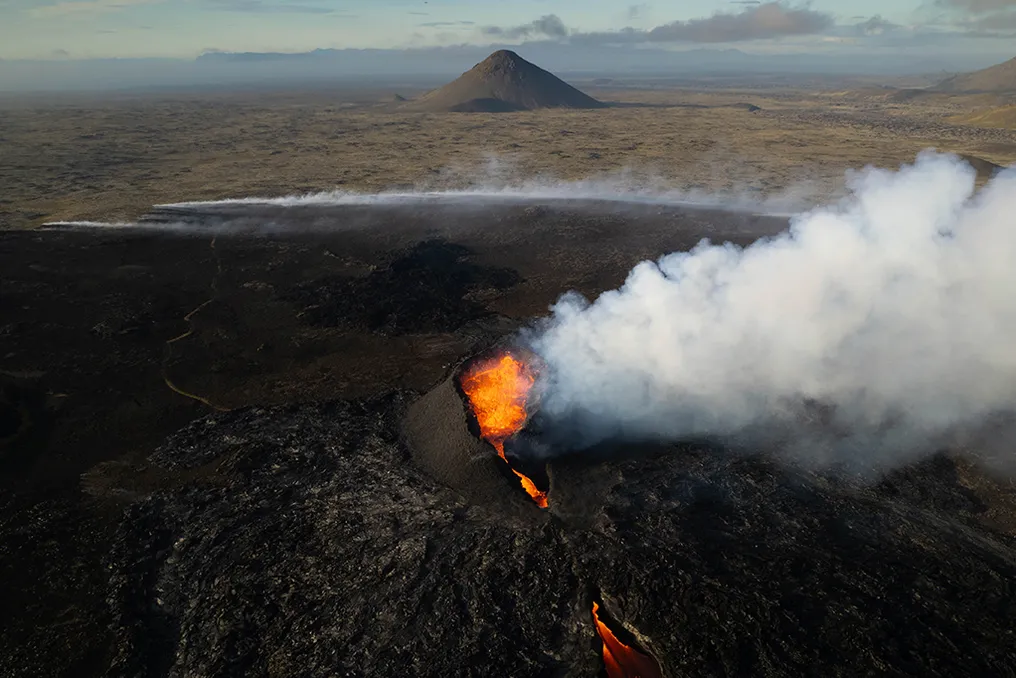
Although debris-covered glaciers are not new to Mars, their shape has attracted attention. The authors note that such a steep frontal section has never been previously described in Martian glaciers. For comparison, they referred to similar formations in Iceland. High-resolution images show rocks that detached from the crater rim, rolled down the slope, and accumulated at the foot of these walls.
The team's hypothesis, supported by climate and ice flow models, is that these deposits represent remnants of a colder and relatively recent period in Mars's history. 'Recent' in a geological sense refers to a period estimated in previous studies to be between 10 and 100 million years.
The explanation lies in the tilt of Mars's axis. Unlike Earth, which is stabilized by the Moon, Mars's axis fluctuates significantly over millions of years. Changes in the axis affect the amount of sunlight received by each latitude. Ice from the poles can turn into vapor and then refreeze far from them, leading to the formation of glaciers in mid-latitudes.
Currently, the glaciers are considered only hypothetical, not confirmed, as the conclusion is based on the shape of the deposits and models rather than direct measurement of ice. However, if confirmed, they will be useful for future missions. Manned missions will require water for drinking, growing food, as well as for producing oxygen and fuel. Knowing the location of the ice and the amount of dust above it is crucial for selecting a landing site, and such walls serve as a kind of geological cross-section, demonstrating the internal structure of the glacier without the need for excavation.