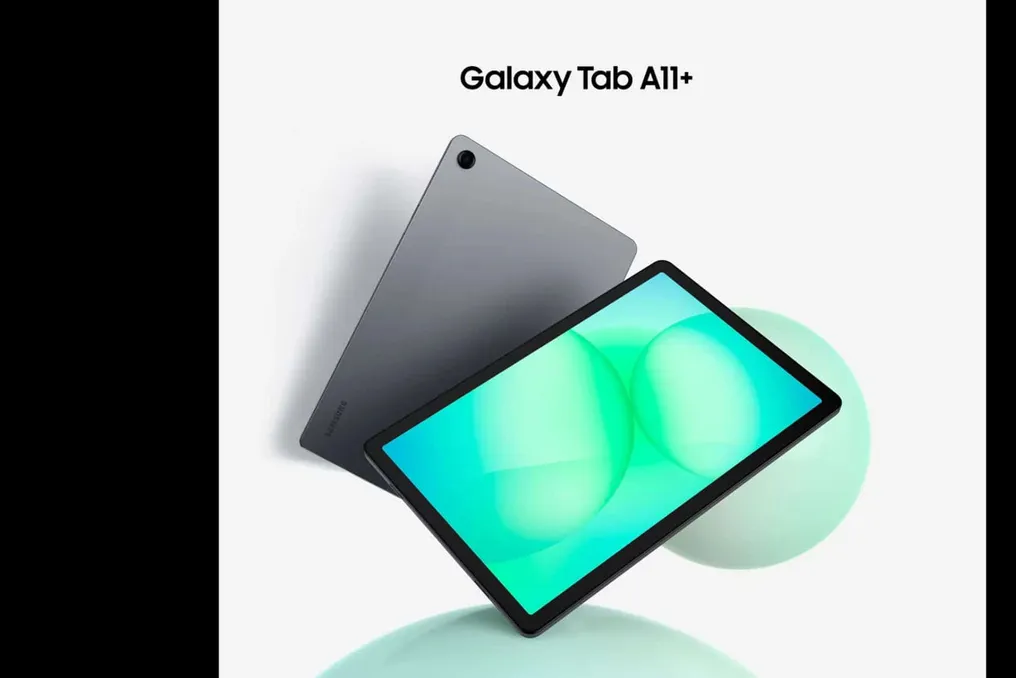
Comparison of Galaxy Tab A11+ and Lenovo Idea Tab: Which Offers the Best Price-to-Quality Ratio?
Read more
Olhar Digital
olhardigital.com.br

Comparison of Galaxy Tab A11+ and Lenovo Idea Tab: Which Offers the Best Price-to-Quality Ratio?

For those looking for an affordable tablet for studying, work, video viewing, or simple internet browsing, two mid-range devices were compared: the Samsung Galaxy Tab A11+ and the Lenovo Idea Tab.

Both tablets feature an 11-inch screen, a 7040 mAh battery, and four speakers. However, their strengths differ: Lenovo emphasizes screen resolution and an accessible accessory package, while Samsung offers a more powerful processor and a longer security support period.

This comparison examined versions with 8 GB of RAM on the Lenovo and 6 GB on the Samsung. Both devices are equipped with 11-inch displays with a 90 Hz refresh rate, ensuring smooth animation and navigation.

The key difference lies in the resolution. The Lenovo Idea Tab has a panel with a resolution of 2560 x 1600 pixels (2.5K standard) and a claimed brightness of up to 500 nits. In contrast, the Galaxy Tab A11+ uses a TFT LCD screen with a resolution of 1920 x 1200 pixels.

In practice, Lenovo provides sharper images, which is useful for reading documents, watching videos, or drawing. Samsung, despite having lower pixel density, maintains high smoothness thanks to 90 Hz support. In this aspect, Lenovo has the advantage.

Regarding processors, the Galaxy Tab A11+ is equipped with the MediaTek Dimensity 7300, while the Lenovo Idea Tab uses the Dimensity 6300. Both are octa-core processors, but the Samsung configuration is considered more advanced and capable of handling demanding tasks.

With a 2 GB difference in RAM between the compared models, both tablets can handle tasks such as web surfing, using educational apps, video conferencing, streaming, and multitasking. Nevertheless, performance in games and heavy applications will likely be higher on the Galaxy Tab A11+ due to its more advanced processor, even with less memory.

Storage capacity is also important: the Samsung version with 6 GB of RAM is available in a 128 GB configuration, as is the Lenovo Idea Tab. Both support expansion via a microSD card, though the compatible limit must be checked for each model.

For content consumption, both tablets have four speakers. Lenovo's system is enhanced with Dolby Atmos technology, which enhances the sense of sound spaciousness, beneficial when watching movies and series.

The cameras on both models are quite basic, which is typical for this price segment. Lenovo offers an 8 MP rear camera and a 5 MP front camera. The Galaxy Tab A11+ has a similar system: an 8 MP rear camera and a 5 MP front camera. These cameras are best suited for video calls, scanning documents, and casual shots, rather than professional photography.

Manufacturers used similar specifications for the batteries—7040 mAh. The difference appears in charging power: Lenovo supports charging up to 20W, while Samsung supports up to 25W. In reality, battery life depends more on screen brightness, connection type, applications used, and usage time than just the nominal capacity. Samsung has a slight advantage in charging speed, but this is not a deciding factor in the choice.

One of the advantages of the Lenovo Idea Tab is its focus on studying and productivity. Depending on the configuration, the device may come with a Tab Pen and a protective case, opening up possibilities for note-taking, drawing, and annotating documents, potentially saving money for students.

The Galaxy Tab A11+ can also be used with a Bluetooth keyboard and compatible accessories, but it lacks the same appealing active pen functionality as the Lenovo Idea Tab.

Another important aspect is software support. The Lenovo Idea Tab comes with Android 15, and the manufacturer promises two OS updates up to Android 17, along with four years of security updates until 2029. The Galaxy Tab A11+ runs on Android 16 and, according to Samsung, will receive security updates until November 2032, which is a significant plus for long-term use.

The Samsung Galaxy Tab A11+ and Lenovo Idea Tab are interesting options, but they cater to different priorities. Lenovo stands out with its detailed 2.5K screen and the option to purchase kits with a pen and case, making it particularly attractive for students and note-takers.

The Galaxy Tab A11+, on the other hand, demonstrates advantages in data processing. However, when compared to a competitor with 2 GB more RAM, it remains a balanced choice and offers longer security update support. This is appealing to those planning to use the tablet for a long time.

The conclusion is this: if studying, reading, drawing, and enjoying a highly detailed screen are priorities, one should look at the Lenovo Idea Tab. However, considering the balanced memory settings and long-term security support, the Galaxy Tab A11+ might prove more advantageous in the long run. If the price difference between them is negligible, and a Samsung version with 8 GB/256 GB is available, it might offer a more compelling package. In the 6 GB RAM version, the decisive factor may be the price itself.
Similar stories

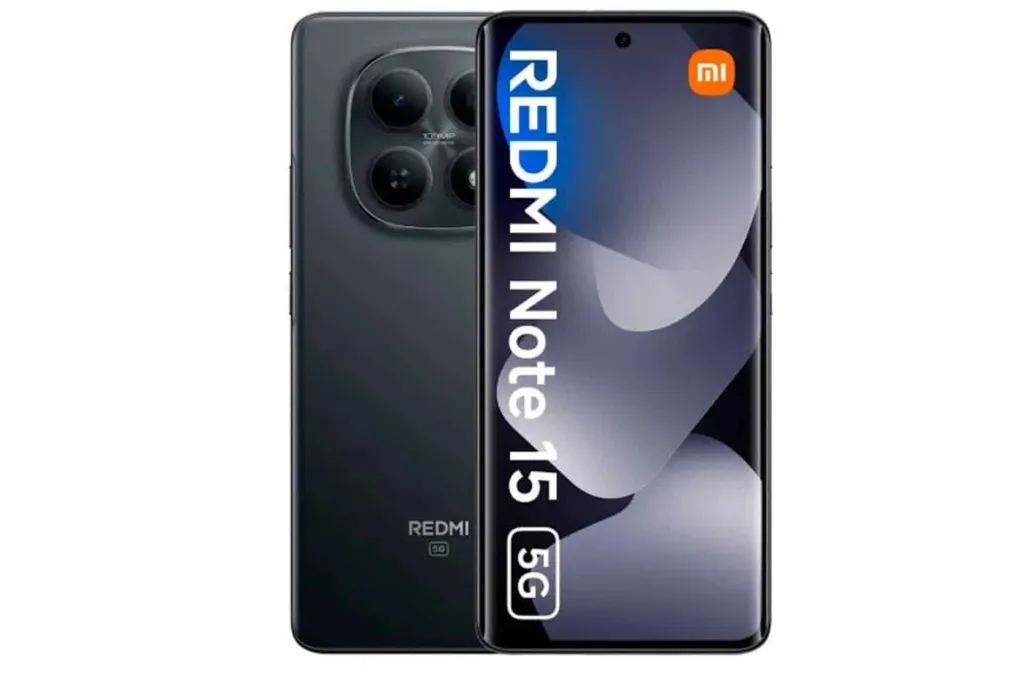
Xiaomi Redmi Note 15 5G vs. Motorola Moto G86 Comparison: Which Mid-Range Smartphone is Better for the User?
Read more
olhardigital.com.br

Xiaomi Redmi Note 15 5G vs. Motorola Moto G86 Comparison: Which Mid-Range Smartphone is Better for the User?

Xiaomi and Motorola offer good options for those looking for advanced features without needing to purchase a flagship device. The Redmi Note 15 5G focuses on large battery capacity and a 108 MP main camera. Meanwhile, the Moto G86 attracts attention with its 1.5K resolution pOLED display, MediaTek Dimensity 7300 processor, and enhanced dust and water resistance.

Both devices feature an 8GB RAM and 256GB internal storage configuration in the compared model, but there are differences beyond technical specifications. Both smartphones are equipped with displays with up to 120Hz refresh rates, ensuring smoother scrolling and animation, though the difference lies in the technology and resolution.

The Redmi Note 15 5G is equipped with a 6.77-inch AMOLED display with a resolution of 2392 x 1080 pixels and a stated maximum brightness of 3200 nits. This combination is very interesting for watching videos, navigation, and using the device outdoors.

The Moto G86, on the other hand, uses a 6.7-inch pOLED panel with a 1.5K resolution, a maximum brightness of 4500 nits, and Gorilla Glass 7i protection. This combination provides higher detail and, according to manufacturer data, greater brightness in intense lighting. In this aspect, Motorola has an advantage in technical specifications, although Xiaomi also offers a high-class screen for this category.

Different solutions are used for the platforms. The Redmi Note 15 5G runs on the Snapdragon 6 Gen 3, manufactured using a 4nm process, featuring an octa-core CPU and a frequency up to 2.4 GHz. The Moto G86 is equipped with the MediaTek Dimensity 7300, which is also produced in 4nm. This platform comes with 8GB of RAM and 256GB of internal storage. Motorola additionally claims the ability to increase memory up to 16GB via RAM Boost, which uses part of the storage as virtual memory.

Both sets are suitable for social media, navigation, streaming, productivity apps, and gaming. However, the Dimensity 7300 will likely provide a more powerful platform for demanding tasks, putting the Moto G86 in a favorable position for users prioritizing performance. It is important to remember that user experience also depends on system optimization, memory management, and application behavior, and the claimed amount of virtual RAM does not equal physical memory.

Xiaomi emphasizes impressive figures. The Redmi Note 15 5G has a 108 MP main camera with Optical Image Stabilization (OIS), an f/1.7 aperture, and a 1/1.67-inch sensor. This setup is complemented by an 8 MP wide-angle camera and a 20 MP front camera. Rear video recording reaches 4K at 30 frames per second.

Motorola takes a different approach. Its main sensor uses Sony LYTIA 600 with a 50 MP resolution, also featuring optical stabilization. It also includes an 8 MP ultra-wide/macro camera and a 32 MP front camera. A key difference is the ability to record video in 4K from the front camera, according to the manufacturer's information.

In practice, 108 MP from Xiaomi does not automatically guarantee better photos than Motorola. Sensor size, aperture, image processing, and stabilization directly affect the final result. Redmi offers a higher resolution main lens, while the Moto G86 relies on the Sony sensor and AI functions for image optimization.

Battery life is another standout feature for the Redmi Note 15 5G. The device is equipped with a 5520 mAh lithium-carbon battery and 45W turbo charging. Xiaomi also includes 18W reverse charging, allowing the smartphone to power other compatible devices.

The Moto G86 has a 5200 mAh battery and 33W TurboPower charging. Motorola claims up to 41 hours of use, but this figure depends on testing conditions and usage profile. A higher-power charger is sold separately, according to the manufacturer's information.

On paper, Redmi has an advantage in both battery capacity and charging speed. Reverse charging is also a useful extra feature for users of wireless headphones, smartwatches, or other accessories.

If durability is important, Motorola demonstrates a significant advantage. The Moto G86 has IP68 and IP69 certifications and has passed tests based on military standard MIL-STD-810H procedures. The screen is also protected by Gorilla Glass 7i. This means increased protection against dust, immersion in fresh water within specified limits, and jets of water under controlled conditions. However, this does not mean the device is invulnerable or can be used in water normally.

The Redmi Note 15 5G has an IP65 certification, which provides protection against dust and water jets, but does not allow for immersion. Xiaomi also highlights drop tests from heights up to 1.7 meters under specific laboratory conditions. For those who work outdoors, engage in active recreation, or simply seek more peace of mind in daily use, the Moto G86 offers a more comprehensive protection package.

The Xiaomi Redmi Note 15 5G and Motorola Moto G86 are well-equipped mid-range smartphones, but each excels in different areas. The Redmi Note 15 5G is a good choice for those who value large battery capacity, faster charging, a 108 MP main camera, and the ability to charge other gadgets. It also offers a wide AMOLED screen and a balanced set of features for daily use.

The Moto G86, conversely, attracts attention with its 1.5K resolution pOLED screen, Dimensity 7300 processor, 32 MP front camera capable of 4K recording, and most importantly, IP68/IP69 protection. This is an attractive option for those seeking a device better prepared for various situations throughout the day.

Conclusion: If autonomy, charging, and high-resolution photo capabilities are priorities, the Redmi Note 15 5G is worth considering. For those who value a more advanced screen, performance, and physical protection, the Moto G86 appears to be the more complete option. Since prices vary significantly in stores and during promotions, the final decision must also take into account the price difference between the two models. If they are in close price ranges, Motorola offers a very strong technical package; if Redmi is significantly cheaper, it might offer a very interesting price-to-quality ratio. The article appeared in Olhar Digital.

Lenovo Idea Tab with 33% discount available on AliExpress during the 11.11 promotion
Read more
tecnoblog.net

Lenovo Idea Tab with 33% discount available on AliExpress during the 11.11 promotion

The 128GB, 8GB RAM Lenovo Idea Tab Wi-Fi is presented as an excellent alternative for study, reading, and increasing productivity activities. During the 11.11 campaign on AliExpress, this tablet can be purchased for R$ 1,679, allowing installment payments of up to 12 interest-free times using the coupon AEMEGA6, although the validity of this offer is rapidly expiring.

This model of the Lenovo Idea Tab already comes with a case, keyboard, and S Pen in the package, which facilitates its use for notes, studies, and work. The device features an 11-inch screen with a 90Hz refresh rate, providing a smooth user experience, according to tests.

Equipped with the MediaTek Dimensity 6300 processor and 8GB of RAM, the tablet demonstrated the ability to manage multiple applications simultaneously without slowing down, according to Tecnoblog's evaluation. This configuration allows for the use of multi-screen mode and smooth navigation in streaming, productivity, and reading applications, although it is not ideal for very demanding games.

The 7,040 mAh battery was tested and proved capable of sustaining a full day of use, depending on usage frequency. Regarding the device's longevity, Lenovo guarantees software updates until 2029, but it is important to note the absence of water or dust resistance certifications.

In terms of audio, the bass performance is considered unsatisfactory, and the treble has a slight metallic tone; however, the overall volume is satisfactory, and the device features Dolby Atmos technology. It is reiterated that, within the context of 11.11, the Lenovo Idea Tab costs R$ 1,679 in up to 12 interest-free installments with the coupon AEMEGA6, representing a 33% reduction from the launch price.

With only a few hours remaining before the end of 11.11 on AliExpress, it is recommended to check the coupons and main offers on the Achados do TB channels on Telegram or WhatsApp to take advantage of the promotion.

Galaxy Tab S10 Lite with stylus available at a discount before Black Friday 2026
Read more
tecnoblog.net

Galaxy Tab S10 Lite with stylus available at a discount before Black Friday 2026

The 128 GB Galaxy Tab S10 Lite can be purchased for R$ 2,077.57 in cash using Pix and the coupon TECNO200 at the Magalu store, representing a 26% discount compared to the original price of R$ 2,799.

This Samsung tablet features a 10.9-inch LCD screen and already includes an S Pen, a tool that facilitates both drawing and handwritten note-taking.

This offer takes place before Black Friday 2026, presenting a good chance for savings for those who wish to acquire the electronic device.

The 10.9-inch screen operates with a 90 Hz refresh rate, providing a very smooth and pleasant browsing experience for the eyes. Additionally, support for the integrated S Pen stylus on the tablet converts it into a digital notebook ideal for classroom notes or document signing.

The device is equipped with the Exynos 1380 processor and has 6 GB of RAM, which allows it to run intermediate games and productivity applications without freezing. Users can use multiple applications simultaneously and study with peace of mind, thanks to 128 GB of storage that can be expanded via a MicroSD card.

The battery, with a capacity of 8,000 mAh, offers autonomy for up to 16 hours of video playback, according to Samsung. For charging, support for 25 W fast charging reduces waiting time, allowing for a quick return to daily tablet use.

Consumers are encouraged to take advantage of the Black November promotion to buy the Galaxy Tab S10 Lite for R$ 2,077.57 in cash via Pix, using the code TECNO200 at Magalu. Black November is recognized as the period of Black Friday, being the largest annual sales campaign in the retail sector. In celebration, Magazine Luiza makes several exclusive coupons and promotions available, as do its main competitors. It is recommended to follow the Achados channels on Telegram or WhatsApp to receive the best deals directly on your phone.

Popular