Evolution of the Chinese automotive industry: from copies to electrification leaders before the release of GTA 6
Read more
AutoPapo
autopapo.com.br

Evolution of the Chinese automotive industry: from copies to electrification leaders before the release of GTA 6

In 2026, vehicles manufactured in China consolidated themselves as an essential part of the global automotive market. In Brazil, these cars represented 22.65% of accumulated sales in 2026, with BYD being the fourth best-selling brand. This scenario contrasts significantly with the landscape of 2013, the year GTA 5 was released.

The Chinese industry has shown a remarkable transformation over the last thirteen years. Between the release of GTA 5 and GTA 6, the Asian country surpassed the phase of producing low-quality vehicles or mere copies of established models, assuming a leading position in electrification.

Brazil began receiving Chinese automobiles in 2007 with the introduction of the Effa M100. At that time, the selling appeal lay in the affordable cost combined with a more complete set of equipment, but the inferior quality generated apprehension in many consumers.

Although China maintains the strategy of offering more economical and well-equipped vehicles compared to Western competition, its current quality standards are equivalent or even superior. Furthermore, there is strong investment in hybrid and electric technologies. To illustrate this progression, changes in five distinct brands were analyzed.

BYD

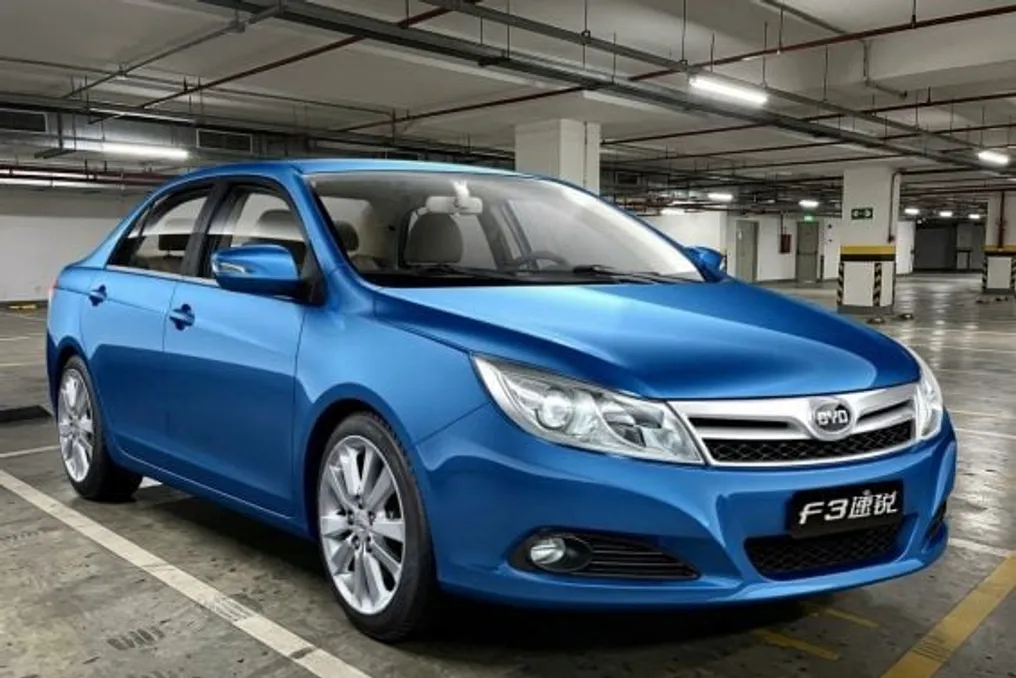
BYD started its operations as a battery manufacturer before expanding into automobile production. One of its first models was the medium sedan F3, which was a replica of the ninth-generation Toyota Corolla and was known in Brazil as "Brad Pitt".

In 2013, the second generation of the BYD F3, now with the Plus suffix, was still a copy of the Corolla, this time the tenth generation, featuring larger modifications to the front and rear. Its engine was a 1.5 naturally aspirated unit. Later, the F3 was replaced by the Qin, whose second generation shares a platform with the King sold in Brazil. The current model has no direct link to the Toyota Corolla, only sharing market segmentation, and operates exclusively with plug-in hybrid mechanics.

GWM

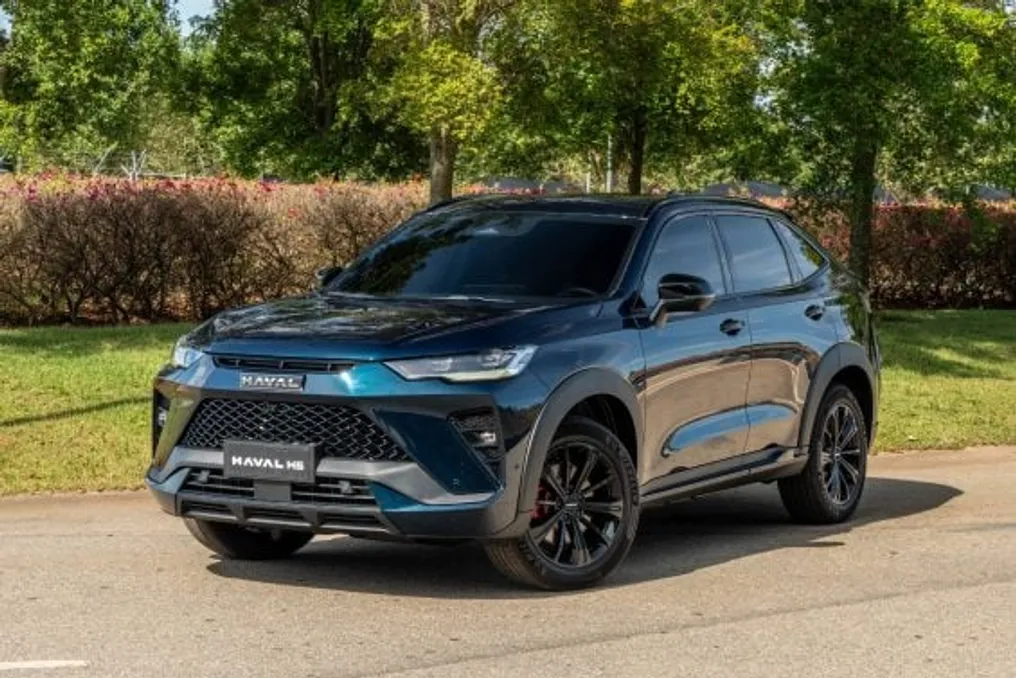
When GTA 5 was released, GWM still used its full name, "Great Wall Motors". Initially, the company produced a pickup truck that imitated the Toyota Hilux before diversifying its product line. The first Haval H6 was launched in 2011 and gained great acceptance, directing the brand's focus to pickups and SUVs. In 2013, the year GTA 5 was released, Haval established itself as an independent brand.

At that time, GWM was already signaling its current trajectory, and the Haval H6 was praised for its high level of comfort, good equipment, and high quality standard. It became the best-selling SUV in China for 103 consecutive months. Currently, Brazil receives the third generation of the Haval H6, which is always electrified and features flex engines. This model is already a sales success in the country and ranks among the top ten best-sellers.

Chery

Chery entered the Brazilian market during the first wave of Chinese cars, presenting the subcompact QQ. In 2013, the brand offered a more varied line in Brazil, including the Tiggo SUV, the Cielo mid-hatch, and the Face compact.

To illustrate this evolution, the focus was on the Tiggo, which had larger dimensions and was comparable in price to the Ford EcoSport. The first version of the SUV was an obvious copy of the Toyota RAV4, with a front design reminiscent of the Honda CR-V. Its direct successor, the Tiggo 5X, is manufactured in Brazil by Grupo Caoa. The contemporary SUV features high build quality, refined interior finishing, ADAS package, and competitive prices. A hybrid variant is expected to arrive in 2027.

Changan

Changan previously had a presence in Brazil under the name Chana, which eventually became a joke. Its initial operation focused on small utilities, aiming to attract customers from the old Volkswagen Kombi and Fiat Fiorino. In China, the brand also had a passenger car line. A model launched in 2013 was the CS35, a compact SUV with a length of 4.20 meters. This vehicle was designed at Changan's design center in Turin, Italy, without inspiration from other automobiles.

The CS35 was also the first car to adopt the current nomenclature used by the brand in its popular SUVs. Equipped with a 1.5 turbo engine from Mitsubishi or a 1.6 naturally aspirated engine, it served as a base. Currently, Changan is represented in Brazil by Grupo Caoa, marketing the Uni-T, CS55, and CS75 SUVs, all equipped with flex engines and a wide technological package.

Geely

When GTA 5 was released, Geely already owned Volvo but only marketed its own projects. Its entry-level model was the LC, an urban hatchback that competed with the Chery QQ. Its design was inspired by the Panda bear, featuring headlights resembling paw prints. The LC was briefly sold in Brazil during Geely's operation, represented by Grupo Gandini.

Currently, in the era of GTA 6, the successor to the LC is the Geely EX2. This compact electric hatchback was launched in China in 2024, generating a long waiting list, and has become the best-selling car in the country. In Brazil, its launch occurred in 2025, also with long queues. It offers low prices, good autonomy, and interior space superior to many SUVs. By the end of 2026, the EX2 will begin production in Brazil.

Similar stories

Brazilian automotive market in 2013 contrasted with the current scenario, the time of GTA 5's launch
Read more
autopapo.com.br

Brazilian automotive market in 2013 contrasted with the current scenario, the time of GTA 5's launch

The Brazilian automotive market presented distinct characteristics in 2013, coinciding with the launch of the game GTA 5. During that period, while players explored Los Santos on seventh-generation consoles, the automotive sector was undergoing a significant phase of transformation.

The Inovar-Auto Program, implemented in 2013, injected more capital into the country. A crucial change that impacted the market was the requirement, starting in 2014, that all vehicles sold in Brazil must have ABS brakes and dual airbags. For this reason, 2013 marked the end of domestic production of two traditional models: the Fiat Mille and the Volkswagen Kombi.

This year was also the last in which it was possible to purchase new cars without these safety features. This change contributed to the modernization of the fleet, especially in popular models. In contrast, the most affordable vehicles available today already come equipped with four doors, traction and stability control, hill start assist, air conditioning, electric steering, and onboard computer. In 2013, a two-door Fiat Mille offered only standard hot air; items such as power steering, electric windows, air conditioning, wiper, and rear defroster were optional, and electronic controls were non-existent in the compact model.

In terms of sales volume, 2013 registered 3,575,894 annual registrations, although the market suffered a slight contraction of 1.61% compared to 2012. The brand ranking was very different from the current one, as only JAC and Chery were among the top 20 best-selling, while brands like Kia, Mercedes-Benz, Land Rover, Audi, and Suzuki had a greater presence.

Although Fiat was the leading brand in sales, the Strada pickup did not hold the title of best-selling car. At the time of the GTA 5 launch, the Volkswagen Gol led sales, with 255,049 units registered that year. Second place belonged to the Fiat Uno, followed by Fiat Palio, Ford Fiesta, VW Fox, Fiat Siena, and the newly arrived Chevrolet Onix and Hyundai HB20. The best-selling SUV was the Ford EcoSport, occupying the 13th position, and the mid-segment car with the highest number of registrations was the Honda Civic, in 15th place.

The 2013 launches continued the innovations introduced in 2012. The compact sedan segment received the Chevrolet Prisma and the Hyundai HB20S, which are variations of hatches launched the previous year. Furthermore, Renault presented the new generation of the Logan at the end of the year, postponing the launch of the Sandero hatchback. The Franco-Romanian sedan was redesigned to be larger, with superior finishing and a more refined look, surpassing the perception of being a simple first-generation car.

Peugeot sought to reverse stagnation in 2013 by definitively discontinuing the 207 model, which was an update of the 206 launched in 1999. Its replacement, the 208, arrived with a modern platform, advanced construction, panoramic sunroof, dual-zone air conditioning, and a design aligned with European standards. In the premium compact niche, the national version of the Ford Fiesta also arrived, expanding its line beyond the single Mexican version, and receiving a facelift.

To complete the compact innovations, Volkswagen introduced the Fox BlueMotion, a version that replaced the 1.0 EA111 four-cylinder engine with the EA211 three-cylinder engine, resulting in greater power and economy. Ford had launched the national compact SUV segment with the EcoSport in 2002, but it took time to face strong competition. In 2013, the model was already in its second generation and gained a promising competitor, the Chevrolet Tracker.

The luxury SUV came from Mexico without tax incidence and used the mechanicals of the Cruze sedan. Despite its qualities, it did not achieve the expected success. HPE Automotores adopted a different approach to nationalizing the Suzuki Jimny, which began to be manufactured at the Catalão (GO) plant along with Mitsubishi vehicles. A notable addition to the market was the Lifan X60, a Chinese compact SUV that achieved some success in 2013, as did its rival Chery Tiggo, although the brand no longer exists in China.

For enthusiasts, the most relevant vehicle launched in 2013 was the seventh-generation Volkswagen Golf. It was introduced in September, simultaneously with GTA 5, initially imported from Germany. In this initial phase, the hatchback was equipped with a 1.4 TSI gasoline engine, electronic parking brake, and a dual-clutch transmission option, sophistication that was later removed when it began to be imported from Mexico.

A competitor to the Golf launched in 2013 was the second-generation Hyundai i30, but it did not replicate the success of the previous model. The design similar to the HB20 and the replacement of the 2.0 engine with the 1.6 ended up obscuring the model's improvements.

In the mid-size sedan segment, the market received the new generation of the Nissan Sentra and the Citroën C4 Lounge. The segment leaders, Toyota Corolla and Honda Civic, maintained their position and only underwent changes in subsequent years.

The outlook for the Brazilian automotive market in 2026 is characterized by the large supply of Chinese brands offering electric and hybrid cars at competitive prices. In 2013, the reality was very different. The most successful Chinese car was the JAC J3, which offered a flex engine and various adaptations for Brazil. Chery was preparing its factory in Jacareí (SP) and marketed models such as QQ and Tiggo. Although brands like BYD, GWM, GAC, and BAIC already existed, they had not yet planned to enter the Brazilian market. With so many transformations in 13 years, it is difficult to predict what the market will be like when the next GTA is released.

Geely President warns that worn batteries could make maintenance of used electric vehicles unviable
Read more
autopapo.com.br

Geely President warns that worn batteries could make maintenance of used electric vehicles unviable

The president of Geely warned that although an electric car can have a lifespan of up to 15 years, the battery rarely lasts that long. This warning was given by Li Shufu, founder and president of Geely Holding Group, the Chinese conglomerate that owns brands such as Volvo, Lotus, and Zeekr.

According to the executive, if the battery deteriorates before the rest of the vehicle, repair or replacement costs can become so high that it is no longer worthwhile to keep the car. The businessman made these statements on November 5th during the World Internet Conference in China, alongside William Li, founder of Nio, the Chinese electric vehicle manufacturer known for its battery swap stations.

William Li illustrated the issue with a scenario: what to do with a car that reaches 10 years or 200,000 kilometers but still has five or six years of projected use? At this stage, the battery has already suffered capacity loss, which can hinder use and significantly decrease resale value.

There is a Chinese regulation, effective since July, stipulating that the battery must retain at least 70% of its capacity after 10 years or 200,000 km. In practice, this means a vehicle that traveled 400 km on a full charge would only reach approximately 280 km.

For Li Shufu, the problem has not yet manifested on a large scale due to the youth of the Chinese electric fleet. However, when it does occur, current solutions are insufficient: replacing the entire battery is excessively expensive, as is repairing the old one.

According to the International Energy Agency (IEA), about four in five traders interviewed in China refuse 100% electric cars older than five years, mainly motivated by concerns about the battery's condition.

Reports indicate that a three-year-old Chinese EV is currently worth about 45% of its original price, a drop compared to the nearly 55% recorded in 2023, according to the country's dealer association.

In Brazil, depreciation is also sharp: 2022 models of electric cars registered a depreciation of 50.46% by October, surpassing the 15.64% depreciation of equivalent combustion engine cars, according to the BV Auto Index from BV bank.

An alternative option to complete replacement is repair, which involves replacing only the damaged cells—the smaller units that make up the battery. An engineer from CATL, the world's largest battery manufacturer, estimated that completely replacing a battery costs about 100,000 yuan (approximately R$ 84.5 thousand), while repair ranges between 10,000 and 20,000 yuan (equivalent to R$ 8.5 thousand to R$ 17 thousand), according to the Chinese newspaper Yicai.

However, not all batteries are repairable. In Cell-to-Pack (CTP) designs, the cells are integrated directly into the casing, which complicates the disassembly process.

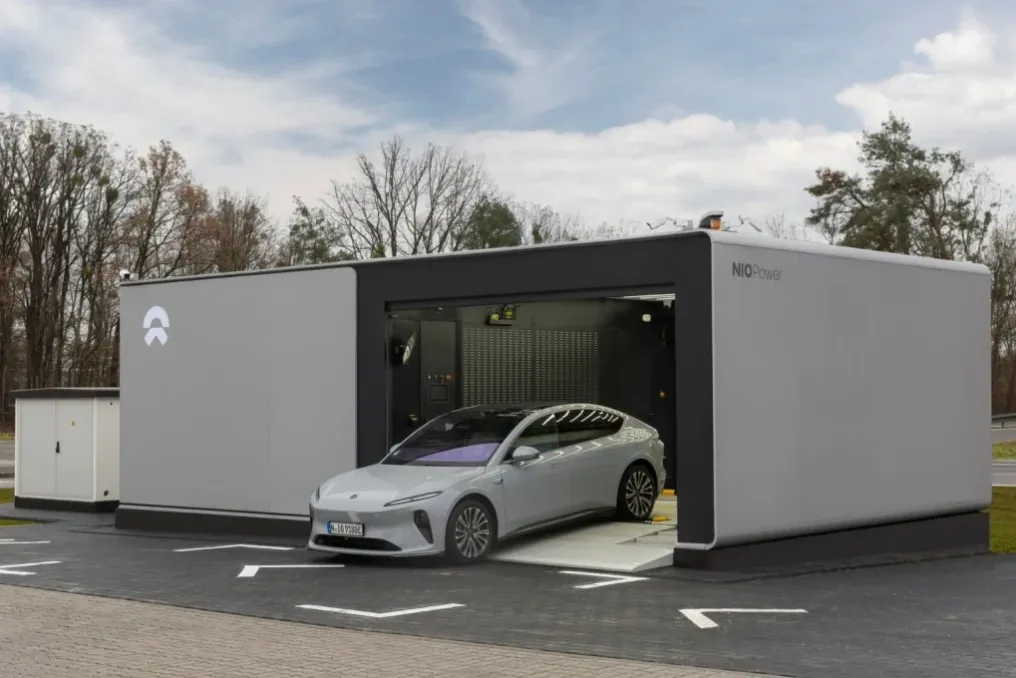
Li Shufu advocates for battery swapping as the ideal solution: the driver stops at a station and receives a charged battery in place of the discharged one. He argues that since batteries circulate through the network and can be swapped for units in good condition, the vehicle could operate for up to 20 years.

This approach has strategic backing, as Geely signed an agreement in September to acquire 30% of Nio Power, Nio's battery swapping division, in exchange for its own operation in the sector and a payment of 640 million yuan (about R$ 540 million).

At the end of September, Nio's network had 4,126 swap stations in China and plans to expand to 10,000 by 2030. However, for the system to work across different brands, the batteries need standardization in terms of size, connections, and cooling.

Haval H6 approaches leadership among best-selling cars in Brazilian retail
Read more
autopapo.com.br

Haval H6 approaches leadership among best-selling cars in Brazilian retail

Over the last three years, the retail sector has shown distinct growth in the Brazilian market, presenting a sales profile different from that observed in direct sales. In October, the most commercialized vehicle in this modality was the BYD Dolphin Mini, which achieved a minimal advantage of only 100 units over the GWM Haval H6.

For comparison, in direct sales, the Hyundai HB20 registered the highest number of registrations. However, in the retail segment, this model occupied the 36th position, totaling only 993 units sold.

The progress of Chinese vehicles is notable in this type of sale, although established brands maintain a strong presence. In October, the Toyota Yaris Cross ranked third, followed by its competitor, the Volkswagen T-Cross.

The combustion engine hatchback with the best performance in retail was the Chevrolet Onix. Regarding entry-level SUVs, the Volkswagen Tera leads the ranking, positioning itself in sixth place.

The hybrid SUVs Omoda 5 and Jaecoo 7 have been standing out in retail. These brands belonging to Chery are achieving the best results among new Chinese models launched in 2025 and 2026.

There was a drop in new car sales in retail during October; the participation of this channel decreased from 53.7% to 51.9% when compared to September. This reduction can be partly attributed to the electoral period.

Considering the year-to-date accumulation, retail accounts for 55% of all automobile registrations in Brazil. In this annual overview, Volkswagen leads sales in this modality, followed by BYD. Chevrolet holds the third position, Fiat is in fourth place, and Toyota is in fifth place.

Popular