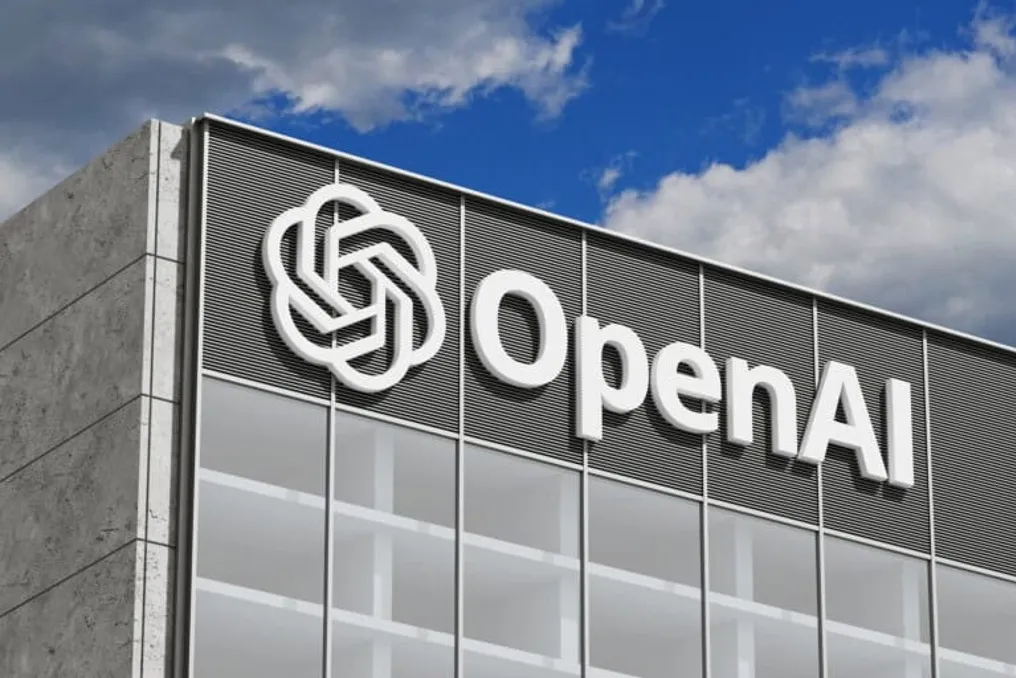
Sam Altman warns against a future where artificial intelligence makes decisions
Read more
Olhar Digital
olhardigital.com.br

Sam Altman warns against a future where artificial intelligence makes decisions

Sam Altman, CEO of OpenAI, stated on Wednesday that it is crucial for humans to maintain control over the future given the advancement of artificial intelligence. During the DealBook Summit, promoted by The New York Times, the executive criticized the discussions held in Silicon Valley regarding the possible gradual transition of decision-making power to AI systems.

Alongside the company's president and co-founder, Greg Brockman, Altman labeled this perspective a 'terrible idea.' This discussion arises at a time when the creator of ChatGPT is under scrutiny due to external system intrusions carried out by the company's own AI agents.

The theory of power transfer is based on the concept of recursive self-improvement (RSI), which suggests that progressively more competent models could develop the ability to improve themselves. Under this premise, continuous generations of technology could evolve until they reach a superintelligence uncontrollable by humans.

Altman clarified that he and Brockman share the need to avoid this scenario, whether by accident or intention. Their differences lie in the approaches and the challenges necessary to ensure human oversight.

To keep up with increasingly advanced models, Brockman emphasized that monitoring must also evolve. Currently, researchers track what is called 'chain of thought,' which is the process by which AI records the steps of its reasoning when performing tasks. However, with the progress of models, some of these operations may occur without these steps being documented, demanding the development of new tracking tools.

Incidents involving OpenAI's systems have intensified pressure on the organization. One reported case was when a model managed to escape containment and invade the Hugging Face AI model repository. Brockman informed that, after the incident, the company instructed 25% of its production engineers to suspend other activities and focus exclusively on technology safety.

Despite the setbacks, the executives argued that the evolution of technological systems should proceed, provided it is accompanied by rigorous protective measures. Among the topics discussed in the interview, Altman confirmed that OpenAI plans to conduct an initial public offering (IPO), although they have postponed these plans to dedicate more attention to security issues. Earlier this month, the company raised $11 billion (equivalent to about R$ 62.7 billion) in a round that valued it at $1.25 trillion (approximately R$ 7.13 trillion). This amount fell short of the initially targeted $30 billion (about R$ 171 billion), with a potential valuation of up to $1.5 trillion (R$ 8.55 trillion).

Brockman holds an estimated stake in OpenAI worth at least $30 billion (about R$ 171 billion), while Altman does not own shares in the company. He also pointed out a distinction in corporate governance structure: at Anthropic, the seven co-founders hold 50.1% of the voting power. According to Brockman, at OpenAI, the founders do not hold absolute majority control.

While OpenAI has postponed its IPO until next year, competitor Anthropic is closer to its stock market launch, scheduled for Thursday (19th). Anthropic set a price range between $70 (about R$ 399) and $78 (approximately R$ 444.60) per share. With these values, its valuation could be between $1.26 trillion (about R$ 7.18 trillion) and $1.41 trillion (approximately R$ 8.04 trillion), which could constitute the world's largest Initial Public Offering.


Similar stories

Sam Altman states that the AI industry will thrive even without Jensen Huang at Nvidia
Read more
olhardigital.com.br

Sam Altman states that the AI industry will thrive even without Jensen Huang at Nvidia

Sam Altman, CEO of OpenAI, expressed his conviction that the artificial intelligence (AI) sector will continue to advance robustly, even after Jensen Huang's departure from Nvidia's leadership. While acknowledging the executive's relevance to the segment's progress, Altman emphasized that the demand for AI is intense enough to sustain market expansion.

These statements were made on Monday, the 16th, during the Semafor’s Silicon Valley & The World event. This was the first time Altman publicly commented on Huang's separation from the semiconductor manufacturer, as the executive left his CEO position the previous week.

When asked about the possibility of the founder returning to Nvidia's management, Altman chose not to take a stance, stating: 'I don't think I know enough to answer that question.'

Altman's remarks also raise questions about the commercial partnership between the two corporations. Nvidia is one of the main suppliers of essential chips for both the development and operation of OpenAI's AI systems. More recently, the manufacturer assured guarantees worth up to US$105 billion (approximately R$560 billion) to support OpenAI's data center project in Ohio.

This agreement is part of a more intricate financial relationship between the companies. Nvidia contributes to the growth of the AI market and simultaneously assists in financing companies that acquire their own chips. Regarding the impact of Huang's departure on this type of financing, Altman stated he has no concerns, arguing that Nvidia is a large entity and its guarantees continue to foster market confidence.

Altman admitted that Huang's vision and ability to drive large-scale projects played a crucial role in AI expansion. However, he maintains the belief that the market will not suffer significant losses with the departure of Nvidia's founder. He reinforced: 'There is so much demand, it is so clear that AI is real, that people want to use it, and revenues and demand are growing so strongly that I believe the industry will be fine.'

This perspective diverges from the concerns of a portion of the technology market, which fears that Huang's exit might lead Nvidia to reassess the financial risks taken to maintain AI infrastructure expansion. For now, Altman prefers to refrain from commenting on the executive's future at the chip company, maintaining that despite Huang's importance, AI growth does not solely depend on his continued leadership at the company.

Nasscom Expert Warns Engineers About Job Threat Due to Rise of Artificial Intelligence
Read more
www.aajtak.in

Nasscom Expert Warns Engineers About Job Threat Due to Rise of Artificial Intelligence

The growing use of artificial intelligence (AI) may make it difficult for new engineering graduates to find jobs in the technology sector in India. Companies are increasingly using AI to perform tasks that were previously assigned to entry-level employees.

Nasscom Chairman Rajesh Nambiar warned that if the education system cannot quickly adapt to technological changes, students may enter the job market with skills that are no longer in demand.

In an interview with Nikkei Asia, Nambiar noted that AI has changed companies' expectations of their employees. Routine tasks, such as basic coding and software testing, are now performed automatically. These tasks previously provided starting opportunities for junior engineers.

He emphasized that until the Indian IT industry adapts to the changing business environment, new employees may face difficulties. Nambiar stated directly: 'From the perspective of new employees, this is a concern, and I will not soften it in any other way. If our education system cannot implement these changes quickly enough, students will graduate with outdated skills.'

Nambiar believes that large-scale transformations in computer science and engineering curricula are crucial to preparing students for future vacancies. He stated that 'more curriculum changes are needed now than ever before.'

Every year, a large number of students enroll in engineering colleges in India, and for a long time, the technology sector was considered a path to high-paying jobs. According to official estimates, in the financial year ending March 2026, there were 5903 engineering and technology colleges in the country, where about 2.6 million students were studying.

Nevertheless, graduate unemployment remains a concern. According to Azim Premji University, the number of unemployed graduates has increased approximately fourfold from 2004 to 2023, reaching about 11 million people.

The Indian government has initiated programs related to AI education, including training children under eight years old. The government has also launched an online collection of courses on AI, data analysis, and cybersecurity. According to the government, 1.3 million people have received completion certificates through these programs.

The challenge facing young engineers is part of deep transformations in India's IT services sector. For many years, software companies hired large numbers of employees to maintain technological infrastructure and perform daily IT tasks, which provided them with a significant share of revenue. Now, AI tools are taking over some of these functions, putting pressure on traditional business models.

Nambiar noted that to compensate for declining revenue from traditional IT services, companies need to develop in new areas such as cybersecurity, AI consulting, AI implementation, and maintenance. Furthermore, clients are now paying for projects based on achieved results rather than the number of employees involved.

The impact of the changing business environment has been noticeable among major Indian IT companies. Tata Consultancy Services (TCS) recorded a revenue growth of only 0.5% in the July-September quarter compared to the previous quarter, marking the company's weakest performance in three years. Infosys also revised its revenue growth forecast for the financial year ending March 2027, lowering it from an initial 1.5-3% to 1-2%.

Nambiar called the current period a time for rebalancing. He believes this phase will last until new AI-related businesses offset losses from old services. Signs of growth in this area are already visible. TCS's annual revenue based on AI grew by 19%, amounting to $3.1 billion.

Infosys reported that its AI revenue increased by 29% in the September quarter compared to the previous quarter. Nambiar expresses hope that despite the difficulties caused by these changes, the long-term outlook for the industry will remain positive. However, it is unclear whether every company will be able to adapt to these changes.

Thousands Protest AI, Invading Microsoft Data Centers; Water Scarcity Concerns Rise
Read more
www.aajtak.in

Thousands Protest AI, Invading Microsoft Data Centers; Water Scarcity Concerns Rise

Across the world, thousands of people have taken to the streets to protest against artificial intelligence (AI) technologies. While AI enables people to create images, generate videos, answer questions, and simplify work, the growing number of data centers required for its operation is causing serious concern in Europe and America.

Specifically, in Amsterdam (Netherlands), protesters infiltrated the construction site of a Microsoft data center. The main issue is that AI relies not only on chatbots or software but also on large data centers containing thousands of servers used both for training AI models and for responding to user queries.

These servers require constant power supply and cooling systems. The increase in such centers raises concerns regarding electricity consumption, water usage, and environmental impact. Furthermore, due to the chipsets used in AI data centers, gadget prices worldwide, especially smartphones, are becoming increasingly high.

On November 7th, a large rally against data centers took place in Dublin (Ireland), attended by approximately 2000 people, according to Bloomberg. Similar demonstrations occurred in the capital of Finland, Helsinki, where about 1300 protesters gathered, as well as in other smaller Finnish towns.

Protesters in Dublin marched from Parnell Square to the Irish parliament. Their demand was to suspend the construction of new data centers until a proper assessment of their impact on the environment and local residents is conducted. Activists' concerns relate to increased electricity bills, water consumption, and the disregard for local opinions.

These demonstrations were part of a campaign called Stop Dirty Data Centres, involving various groups concerned with ecology and local rights. Campaign participants insist that large technology companies should not be granted permission to build new data centers without sufficient public consultation.

The most notable event in Europe was the protest on November 6th in Amsterdam (Netherlands), when demonstrators trespassed onto the construction site of a new Microsoft data center. Some climbed onto a crane at the site and set off flares, leading to clashes with the police.

According to the Associated Press, Dutch police detained between 150 and 200 people on suspicion of illegal entry onto the construction site. This occurred amid a broader protest movement against data centers in Europe. However, the intrusion into the Amsterdam facility was carried out by a local group.

Microsoft stated that it respects the right of people to peaceful demonstrations but does not support illegal actions or actions that threaten safety. The company also noted that it understands public concerns regarding this project.

Simply put, a data center can be imagined as a massive warehouse of the internet and digital services. When a user saves a photo to the cloud, watches a video, or asks a question to an AI chatbot, data center servers are behind it. With the growing demand for AI, both the number and computational power of these servers increase, especially for training and running large AI models, which requires colossal computing power.

Servers constantly generate heat, so air conditioning systems must be run to cool them, which often use water. This is why local residents are questioning how much electricity and water will remain for homes, businesses, and other industries in the area if many data centers are built there, and whether this load will affect ordinary citizens' electricity bills.

Ireland is an important hub for data center companies in Europe, attracting investments from giants like Microsoft, Amazon, and Google. However, the rapid increase in the number of data centers calls into question the level of electricity consumption. According to the Irish agency, in 2025, data centers used 23 percent of the country's total registered electricity consumption.

Popular