Mona Chalabi Discusses the Influence of Social Class on Financial Insecurity in Book Ten Lives
Read more
Middle East Eye
www.middleeasteye.net

Mona Chalabi Discusses the Influence of Social Class on Financial Insecurity in Book Ten Lives

Pulitzer Prize winner and data journalist/illustrator Mona Chalabi appeared again on the program Real Talk to discuss her new book, 'Ten Lives'. This book tracks the lives of ten Americans from different income levels over five years.

During the conversation with Mohammed Hashem, she shared the reasons for publishing her own financial information, explained why wealthy people often do not feel rich, and talked about what her public statement was worth after October 2023.

Similar stories

UNICEF and Indian Academy of Pediatrics launch platform to protect children's rights
Read more
timesofindia.indiatimes.com

UNICEF and Indian Academy of Pediatrics launch platform to protect children's rights

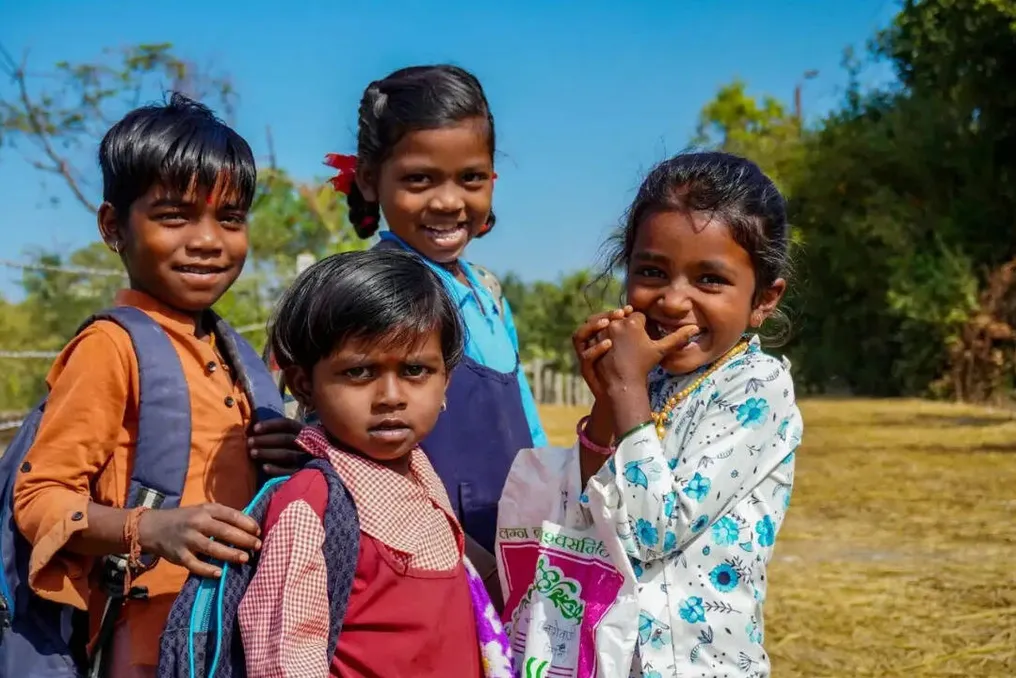
UNICEF and the Indian Academy of Pediatrics (IAP) have joined forces to support pediatricians in advocating for children's interests by launching the 'Pledge for Children's Rights Platform' on Tuesday on the official IAP website. This initiative aims to help pediatricians across India become child rights advocates, strengthening their understanding of the United Nations Convention on the Rights of the Child (UNCRC) and promoting the integration of children's rights principles into daily interactions with children and their families.

The partnership is designed to integrate children's rights into daily consultations by providing pediatricians with information, education, and engagement regarding the Convention on the Rights of the Child.

Dr. Nilam Mohan, President of IAP, noted that for over 50,000 pediatricians in India, this program represents an opportunity to affirm their commitment not only to children's health but also to their overall well-being and rights.

She emphasized that since pediatricians observe children at all stages of development, they are capable of recognizing when their health, nutrition, development, or general condition is compromised. Furthermore, they can identify and respond to cases of abuse, neglect, exploitation, discrimination, and other threats to children's safety. Dr. Mohan added that the trust of families and communities allows their voices to influence attitudes, practices, and behavior.

She particularly highlighted that given the close interaction pediatricians have with children and their ability to notice difficulties, it is crucial for them to be the voice of the children to ensure their rights. By taking the pledge, participants commit to promoting, protecting, and developing every child's rights through daily engagement with children, families, and communities.

The platform provides visitors with a simple guide to children's rights, allowing them to learn not only about survival rights, such as the right to life, health, nutrition, clean water, and a healthy environment, but also about rights related to development, protection, participation, non-discrimination, access, and equality.

Visitors can register by providing basic details such as name and email address to support the promotion of children's rights. In addition to rights information, the platform also features a short video from UNICEF on the topic. Users can download a Child Rights Champion certificate, which can be used to demonstrate their commitment and raise awareness.

As of the publication date, one day after the launch, approximately 900 people had taken the pledge and received the Child Rights Champion certificate. These included healthcare workers, concerned citizens, parents and guardians, educators, teachers, and IAP members, as well as pediatricians.

Pew Research Center studies predict Muslims may surpass Christians in population by 2035
Read more
www.aajtak.in

Pew Research Center studies predict Muslims may surpass Christians in population by 2035

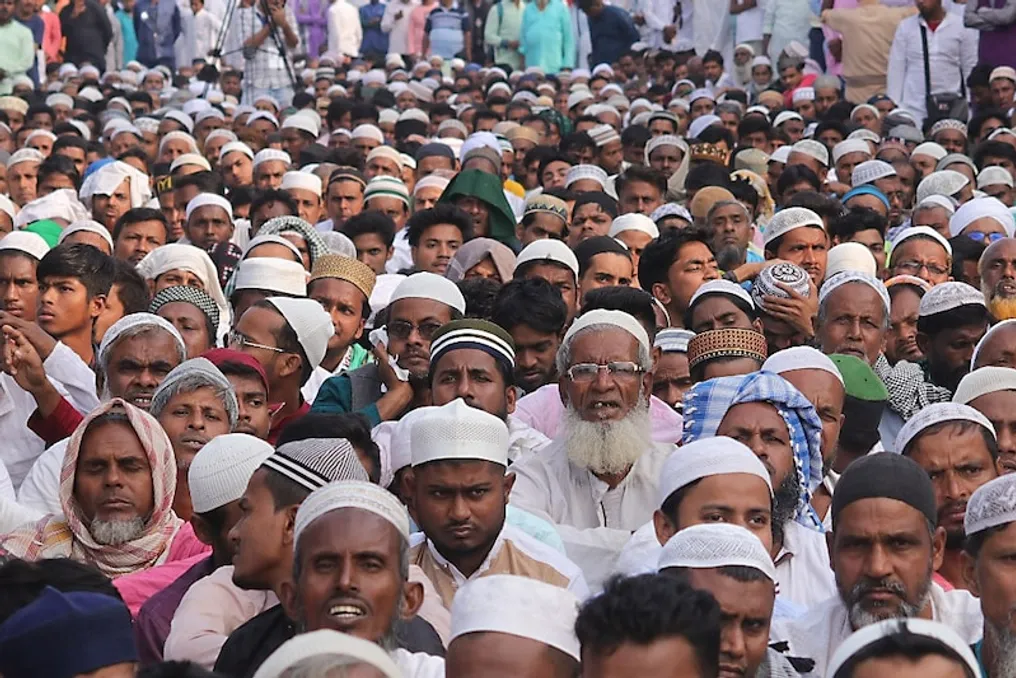
According to detailed forecasts published by the Pew Research Center on Wednesday, Islam may become the world's largest religion, overtaking Christianity by 2035. It is projected that the number of Muslims will exceed the number of Christians, and this process could take less than ten years.

These changes are expected to see a decrease in the proportion of Hindus and Jews in the global population. Pew Research Center, which has produced reliable reports on religious demographics for the past 25 years, notes that while both Islam and Christianity are growing, the growth rate of Islam is significantly higher.

The main reason for this, according to Pew, is the higher birth rate among Muslims compared to other major religious groups. Pew's senior demographer, Conrad Heikert, emphasized that the fertility factor is far more significant than other methods of religious or religious identity change.

According to Pew, between 2020 and 2025, the birth rate among Muslims was 3.1 children per woman, while for Christians it was 2.5. The average birth rate for all other women was 1.6, which is below the 2.1 level needed to maintain a population without external influx.

Recent Pew estimates show that in 2020, there were 2.27 billion Christians and 2.02 billion Muslims worldwide. According to new forecasts, by 2035, the number of Muslims will reach 2.57 billion, and Christians will be 2.52 billion. If current trends continue, by 2070, the global Muslim population will exceed 3.6 billion, while the Christian population will be slightly less than 3 billion.

These forecasts are part of a large-scale Pew project studying how the sizes of major religious groups' populations might change between 2020 and 2070. The calculations account for recent differences in age structure, birth rates, religious conversion, and migration patterns of religious groups.

One of Pew's key findings is the projection that the Christian group will not retain a majority in the United States over the next 40 years. Currently, Christians make up 62% of the total US population, but this share is expected to fall below 50% by 2065.

Pew also indicated that in neighboring Canada, the share of Christians is likely to drop below 50% by 2030. A significant reason for this decline in both countries is the rise in the number of people who are not affiliated with any religion. Estimates suggest that by 2070, the share of such people in the US population will reach 41%, and in Canada, their number will exceed that of Christians.

According to Pew, the global population is expected to grow by 29% between 2020 and 2070. Among the analyzed religious groups, only Muslims and Christians are expected to grow at this rate or higher; Christians account for an increase of 30%, and Muslims for 80%.

Although the overall numbers of Hindus and Jews continue to grow, Pew believes their share of the world population will decrease. A decline in the number and share of Buddhists is also predicted, partly due to a potential overall population reduction in China, South Korea, and Japan.

According to Pew Research estimates, between 2020 and 2025, Muslim women gave birth to more children than women of any other religion. About 252 million children were born to Muslim mothers, compared to 208 million from Christian mothers. Muslims are the only major religious group whose number of births is expected to increase in the coming decades; other groups are expected to stabilize or see a gradual decline in fertility.

Pew also predicts that if current trends persist, Pakistan will have the largest Muslim population by 2070, followed by India, Nigeria, and Indonesia.

Popular